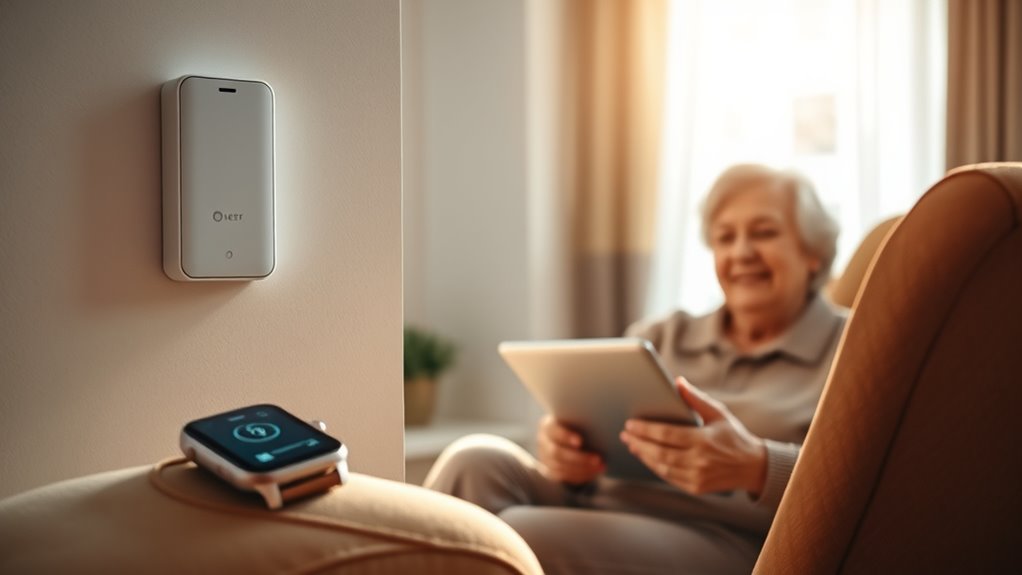
Choosing the right safety monitoring system for elderly loved ones involves balancing features like fall detection, ease of use, and coverage. The top picks this year include the Newly Upgraded 2026 Bed Alarm for reliable in-home fall detection, the Safety+ 4G Medical Alert System for nationwide emergency support, and the Lunderg Wireless Bed Alarm for dignified, wire-free prevention. Each offers unique strengths and tradeoffs, so I’ll walk through what makes each one suited to different needs and how they compare on critical factors.
Complete the kit


Key Takeaways
- Wireless range and ease of setup vary significantly, affecting home coverage options.
- Subscription costs and cellular coverage are key considerations for ongoing expenses.
- Fall detection accuracy and false alarm reduction are critical for reliable safety.
- Design choices like wire-free sensors or GPS tracking target different care scenarios.
- Choosing the right system depends heavily on home size, mobility risks, and caregiver involvement.
| Newly Upgraded 2026 Bed Alarm for Elderly Dementia Patients – Wireless Fall Detection & Motion Sensor Alert System |  | Best for in-home fall detection with flexible alert options | Power Source: 3xAA batteries or Micro USB | Batteries Required: 3 AA batteries (included) | Maximum Range: 918 feet | VIEW ON AMAZON | See Our Full Breakdown |
| Safety+ 4G Medical Alert System with Fall Detection and GPS |  | Best for nationwide emergency support and real-time tracking | Connectivity: 4G LTE | Includes First Month of Service: Yes | Battery Life: Up to 6 days | VIEW ON AMAZON | See Our Full Breakdown |
| Lunderg Wireless Early Alert Bed Alarm System for Elderly & Fall Prevention |  | Best for dignified, wire-free fall prevention | Sensor Pad Size: 10×33 inches | Range: up to 400 ft. | Battery Life: 15 months | VIEW ON AMAZON | See Our Full Breakdown |
| CallToU Bed Alarm for Elderly and Dementia Patients with Vibration and Silent Alert |  | CallToU Bed Alarm for | Detection Range: 3-10 feet | Volume Levels: 5 levels (0–110dB) | Ringtones: 18 options | VIEW ON AMAZON | See Our Full Breakdown |
| SecuLife Medical Alert Pendant for Seniors with Fall Detection and GPS Tracking |  | Best for mobile seniors needing GPS and emergency communication | Fall Detection: Yes | GPS Tracking: Yes | Water Resistance: IP67 | VIEW ON AMAZON | See Our Full Breakdown |
| elderly safety monitoring system | Connectivity | Battery Life |
|---|---|---|
| Newly Upgraded 2026 Bed Alarm | — | — |
| Safety+ 4G Medical Alert Syste | 4G LTE | Up to 6 days |
| Lunderg Wireless Early Alert B | Wireless | 15 months |
| CallToU Bed Alarm for Elderly | — | — |
| SecuLife Medical Alert Pendant | 2-Way Calling | Up to 6 days |
More Details on Our Top Picks
Newly Upgraded 2026 Bed Alarm for Elderly Dementia Patients – Wireless Fall Detection & Motion Sensor Alert System
This model stands out for its extended wireless range of over 900 feet, making it ideal for larger homes or multi-room setups. Its customizable alert settings, including sound, vibration, and volume, provide tailored notifications, especially useful during nighttime. Compared with other systems, it’s very straightforward to set up and self-test, with pre-paired components that are ready to go. However, it relies on batteries or USB power, which means regular replacements or charging are necessary. It offers only basic motion detection, so it might miss some fall scenarios, and some users may find the alert volume too loud or too soft depending on personal preference.
Pros:- Long wireless range for flexible coverage
- Multiple alert options including vibration and volume control
- Easy setup and self-test
Cons:- Requires regular battery or USB power management
- Limited to basic motion detection
- Potentially too loud or soft for some users
Best for: Caregivers seeking reliable, in-home fall detection with flexible alert customization
Not ideal for: Those needing comprehensive fall detection beyond motion sensors or with very large property boundaries
- Power Source:3xAA batteries or Micro USB
- Batteries Required:3 AA batteries (included)
- Maximum Range:918 feet
- Sensor Technology:Motion Sensor
- Audible Alert:110 db
- Mounting Type:Floor Mount
Our verdict“A solid choice for in-home fall detection with customizable alerts, ideal for those prioritizing range and simplicity.”
Safety+ 4G Medical Alert System with Fall Detection and GPS
This system is designed for seniors who need immediate access to emergency services anywhere in the country. Its key feature is automatic fall detection combined with GPS location, which can be a lifesaver outside the home. The caregiver app provides real-time activity updates, and the device’s water resistance makes it suitable for daily wear. Nonetheless, the ongoing subscription fee of $40 per month adds up, and it only works where cellular coverage exists. In areas with poor 4G LTE signals, reliability may decrease, so it’s better for those living in well-covered regions.
Pros:- Immediate emergency response with nationwide coverage
- Long battery life of up to 6 days
- Water-resistant and easy to wear
Cons:- Monthly service fee of $40 after the first month
- Dependent on cellular coverage
- Limited to areas with strong 4G LTE signals
Best for: Seniors who frequently go outside or live in areas with reliable cellular coverage
Not ideal for: Caregivers seeking cost-effective solutions without ongoing fees or those in poor cellular zones
- Connectivity:4G LTE
- Includes First Month of Service:Yes
- Battery Life:Up to 6 days
- Water Resistance:Yes
- Fall Detection:Yes
- GPS Location:Yes
Our verdict“Ideal for active seniors needing location tracking and emergency connectivity across the country, with manageable ongoing costs.”
Lunderg Wireless Early Alert Bed Alarm System for Elderly & Fall Prevention
This system offers a wireless, non-restrictive approach to fall prevention, featuring a pressure sensor pad that alerts caregivers before the individual gets out of bed. It’s particularly suited for those who value dignity and want to avoid cumbersome wires. The long-range wireless alert and adjustable volume make it adaptable to various home layouts. However, the sensor pad’s durability lasts about 15 months, requiring replacement, and it necessitates the caregiver to carry a pager for alerts. Its range is limited to about 400 feet, which might not be suitable for very large homes.
Pros:- Wire-free and dignified design
- PreRise alert helps prevent falls
- Long-range wireless connectivity
Cons:- Sensor pad durability may decline in about 15 months
- Caregiver must carry a dedicated pager
- Limited range for very large homes
Best for: Elderly individuals at risk of falls who value dignity and wire-free solutions
Not ideal for: Large homes where longer-range alerts are necessary or caregivers who prefer app-based notifications
- Sensor Pad Size:10×33 inches
- Range:up to 400 ft.
- Battery Life:15 months
- Connectivity:Wireless
- Incontinence-Resistant:Yes
Our verdict“A respectful, wire-free option for fall prevention that prioritizes dignity and ease of use in standard-sized homes.”
CallToU Bed Alarm for Elderly and Dementia Patients with Vibration and Silent Alert
This pick emphasizes personalization and smart detection with adjustable volume, silent, and vibrate modes. Its infrared sensor, which can rotate 360°, helps reduce false alarms and supports smart detection to avoid unnecessary alerts. The portable, rechargeable receiver enhances flexibility, making it suitable for both home and hospital environments. The main downside is that sensors require regular battery replacement, and improper placement can cause false alarms. Its detection range is limited to 3-10 feet, which might not cover larger spaces effectively.
Pros:- Adjustable volume and silent/vibrate modes
- Supports smart detection to reduce false alarms
- Portable and rechargeable receiver
Cons:- Sensor batteries need frequent replacement
- Limited detection range
- Requires proper sensor placement to avoid false alarms
Best for: Caregivers looking for customizable alerts with minimal false alarms in controlled environments
Not ideal for: Large or open spaces where broader detection coverage is needed or those who prefer wired setups
- Detection Range:3-10 feet
- Volume Levels:5 levels (0–110dB)
- Ringtones:18 options
- Power Source:3 AAA batteries, Type-C port
- Sensor Rotation:360°
Our verdict“A tailored, smart detection system suitable for indoor environments where false alarms are a concern.”
SecuLife Medical Alert Pendant for Seniors with Fall Detection and GPS Tracking
This pendant combines automatic fall detection and GPS tracking in a sleek, waterproof design, making it perfect for active seniors who want safety on the go. Its two-way calling feature allows instant communication with loved ones or emergency services, and the extended battery life of up to 6 days minimizes charging hassle. The monthly subscription fee of $20 is relatively affordable, but it does depend on cellular coverage, limiting use in remote or poorly covered areas. Its interface is simple, designed for ease of use by seniors, but the reliance on cellular connectivity means it’s less suitable for those in rural zones with weak signals.
Pros:- Automatic fall detection
- Real-time GPS tracking and geo-fencing
- Waterproof and user-friendly design
Cons:- Monthly subscription required
- Limited to cellular coverage areas
- Battery life varies with usage
Best for: Active seniors who need GPS tracking and emergency communication while outside
Not ideal for: Those seeking a purely in-home system or in areas with limited cellular service
- Fall Detection:Yes
- GPS Tracking:Yes
- Water Resistance:IP67
- Battery Life:Up to 6 days
- Connectivity:2-Way Calling
- Subscription Cost:$20 per month
Our verdict“An excellent mobile safety device for seniors who want to stay active while maintaining safety features like GPS and fall detection.”

How We Picked
Our selection process centered on key factors that matter most in elderly safety systems: reliability of fall detection, ease of installation, range of alerts, user-friendliness, and cost. We prioritized systems with proven technology, positive user feedback, and features that address common safety concerns such as wandering or falls. We also compared battery life, connectivity options, and the flexibility of alert customization to ensure these picks serve a variety of home environments and caregiver needs.
Factors to Consider When Choosing Elderly Safety Monitoring Systems
When selecting an elderly safety monitoring system, it’s essential to weigh factors like the type of coverage needed—whether in-home or mobile—the level of fall detection accuracy, user-friendliness, and ongoing costs. Think about the home’s size, the senior’s mobility risks, and whether caregiver involvement is primarily local or remote. This guide highlights key features to consider and how each system aligns with different needs, helping you make an informed choice.
In-Home vs. Mobile Monitoring
Systems like the Newly Upgraded Bed Alarm and Lunderg Wireless Bed Alarm excel in in-home settings, offering long-range wireless alerts and fall prevention before the senior gets out of bed. Conversely, portable options like the SecuLife Pendant are better suited for active seniors who venture outside or need GPS tracking. Matching the system to your loved one’s lifestyle ensures effective safety coverage without unnecessary complexity or expense.
Fall Detection and False Alarms
Accurate fall detection is vital for minimizing false alarms that can cause distress or desensitize caregivers. Systems with advanced sensors, like the CallToU or SecuLife, support smart detection features, reducing false positives. Basic motion sensors may be less precise but are easier to maintain and less costly—consider your environment and risk level when choosing.
Ease of Use and Setup
Devices that are wire-free, with simple pairing and minimal setup, tend to be more user-friendly for seniors and caregivers alike. For example, the Lunderg system requires no Wi-Fi or app setup, while the Safety+ offers straightforward activation but relies on cellular service. Consider whether your senior is comfortable with technology or if you prefer a plug-and-play setup.
Costs and Subscription Fees
Recurring costs vary widely—from free basic systems to those with monthly subscriptions like Safety+ or SecuLife. Evaluate your budget alongside features; a system with a higher upfront cost but no ongoing fees might be preferable for long-term affordability, while subscription-based systems often provide extra features like GPS or emergency monitoring.
Frequently Asked Questions
How accurate are fall detection systems?
Fall detection accuracy depends on the sensor technology and placement. Systems with smart sensors and multiple detection modes tend to reduce false alarms and increase reliability. However, no system can guarantee 100% accuracy, so pairing detection with caregiver awareness remains important.
Are these systems difficult to set up?
Most modern systems aim for straightforward installation, often with pre-paired components or wireless setup. In-home sensors like the Lunderg or CallToU typically require minimal effort, while GPS-based devices like SecuLife are designed for quick activation. Complexity increases with additional features or longer-range networks.
What ongoing costs should I expect?
Many systems include a one-time purchase cost, but some require monthly subscription fees for services like emergency monitoring or GPS tracking. For example, Safety+ and SecuLife operate on monthly plans, which can add up over time. Consider your budget and whether the added features justify ongoing expenses.
Can these systems be used in large homes?
Yes, but coverage varies. Systems with longer wireless ranges, like the Newly Upgraded Bed Alarm, are more suitable for larger homes. Shorter-range systems like Lunderg work well in standard-sized spaces but may require multiple sensors or placement adjustments in bigger residences.
Are these systems suitable for dementia patients?
Many options, including the Bed Alarms and CallToU, are designed with dementia care in mind, offering non-intrusive alerts and easy-to-use features. However, for wandering or more complex needs, GPS-enabled devices like SecuLife provide additional reassurance and safety outside the home.
Conclusion
For caregivers prioritizing in-home safety and fall prevention, the Newly Upgraded Bed Alarm and Lunderg Wireless System offer reliable, easy-to-use solutions. Those with active seniors who venture outdoors regularly will find the SecuLife GPS pendant most suitable, while families with limited budgets may prefer the basic but effective Bed Alarm systems. Ultimately, matching the system’s features to your loved one’s lifestyle and your monitoring needs results in the best safety outcome.