TL;DR

Turn quiet afternoons into listening time
- Thousands of audiobooks, podcasts and originals
- Listen on your phone, tablet or Echo — also offline
- Cancel anytime
Fall prevention grab bars are sturdy handholds that can support sitting, standing, and stepping in places such as bathrooms. Their value depends on a comfortable grip, task-matched placement, and secure installation into suitable structural support; they work best alongside good lighting, nonslip surfaces, and clear pathways.
A bar that looks solid can still pull away from a bathroom wall when someone needs it most. Secure mounting and useful placement make the difference between a dependable handhold and a fixture that only looks reassuring.
This guide explains what fall prevention grab bars do, where they may help, and how to think through grip, installation, and everyday use. You’ll also see why a grab bar is only one part of a safer home: a wet floor, a dark hallway, or a towel bar mistaken for support can still create trouble.
Imagine helping your father step out of a tub: a well-placed bar gives his hand a firm target as he shifts his weight, much like a sturdy stair rail. The right setup depends on his movements, strength, height, and bathroom layout, so a qualified installer or clinician can help when the details are uncertain.
Match each bar’s position to the movement it will support, such as standing from the toilet or stepping over a tub edge.
Check that the bar fits the user’s grip, reach, strength, and hand size before buying.
Follow the product’s load rating and mounting instructions; use suitable structural support and hardware.
Do not lean on towel bars or assume suction-cup products can carry full body weight.
Pair grab bars with safer lighting, nonslip surfaces, clear pathways, and help from a qualified professional when placement or installation is uncertain.
What Fall Prevention Grab Bars Actually Do for You
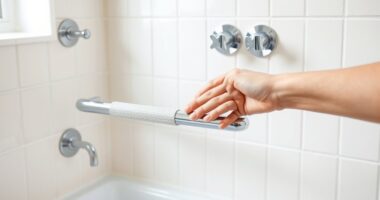
Fall prevention grab bars are sturdy handholds installed where you may need support to sit, stand, step over a threshold, or steady yourself. They give your hand a fixed point to hold during a movement, such as lowering onto a toilet or stepping into a shower. This matters because transitions often combine balance, reaching, and shifting body weight; a stable handhold can make those motions feel more controlled when selected, mounted, and used correctly.
Think of the bar as a handrail for a small, specific movement. If Maya finds it hard to rise from a low toilet, a bar beside the toilet may offer a place to brace her hand while she stands. The support can reduce how much she must rely on leg strength alone, but the bar’s position and her ability to grasp it determine whether it actually helps. Someone who is steady on level floors but uneasy crossing a tub edge may need support near that entrance instead, because a bar in another part of the room will not help at the moment balance is challenged.
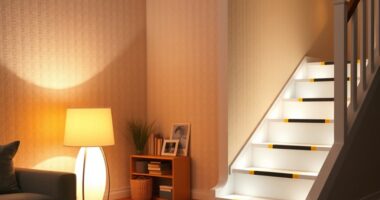
A grab bar does not prevent every fall or replace a person’s usual mobility aid. It also cannot make a slippery floor safe by itself. A bright light, a dry nonslip surface, clear access to controls, and appropriate footwear all affect how safe a bathroom feels and works. These measures address different causes of falls: the bar offers a handhold, while lighting helps someone see hazards and a nonslip surface helps maintain footing.
One practical test is to watch the movement the user wants help with. Does the person reach forward, turn, or push up with one arm? That small routine can point toward a useful location, though a clinician or qualified installer can assess needs and recommend equipment. Think of the bar as one dependable part of a larger safety setup, not a magic solution; its benefit depends on matching support to the movement and making the rest of the route workable too.
grab bars for bathroom installation
As an affiliate, we earn on qualifying purchases.
As an affiliate, we earn on qualifying purchases.
Choose Bar Locations That Match Everyday Movements
Place a grab bar where the user’s hand can reach it during the movement that needs support, often beside the toilet, inside the shower or tub, or near the tub entrance. There is no single placement that suits every body and bathroom. The person’s height, strength, mobility, habits, and room layout all matter because even a short reach can shift balance, and a bar that is easy to reach while standing may be awkward once someone is seated or turning.
For example, a person who steps into a bathtub leading with the left leg may reach differently from someone who sits on a shower bench and transfers sideways. A bar that feels natural in one situation may be too far away in another. Try to understand the movement before choosing a position, and seek help if the user’s needs or balance are changing. The tradeoff is that a bar positioned for one task may not serve another; adding a second bar may improve access, but each location still needs suitable mounting and should not obstruct the person’s movement.
Accessibility codes and standards set dimensions and locations for some buildings, but the rules vary by jurisdiction and building type. A residential bathroom may not follow the same requirements as an accessible public restroom. Those standards provide useful consistency, but they cannot account for every individual reach pattern or existing wall condition. A qualified installer can check local requirements and the wall structure; an occupational therapist or other qualified professional can help assess daily movements.
Walk through a typical routine together, without asking the person to test an uninstalled bar or take an unsafe step. Notice where they reach to lower themselves, rise, turn, or cross a threshold. Placement should follow the task, not just the empty patch of wall that looks convenient. A convenient-looking spot may leave the user reaching across their body or twisting at a moment when they need stability, so the safest position is the one that supports the actual motion within the room’s structural limits.
Check Grip, Shape, and Mounting Before You Buy
A useful grab bar should feel comfortable in the user’s hand and stay firmly in place under its intended use. Consider its diameter, length, shape, surface texture, clearance from the wall, and the user’s hand size and grip strength. These details affect whether the person can close their hand around the bar and keep hold while shifting weight. A bar that is too thick, slippery, or awkwardly spaced from the wall may be difficult to grasp, even if it looks sturdy.
Current designs include straight, angled, curved, and fold-down bars, plus products that combine a bar with a shelf. A longer bar may offer several hand positions along a shower wall; an angled bar may better match a particular reach. These choices involve practical tradeoffs: a shape that helps one person reach comfortably may take up more space or be less useful for another movement. Added features can make a product fit a room, but appearance and convenience do not replace secure mounting and comfortable use.
Check the manufacturer’s load rating and installation instructions. The rating only applies when the bar is mounted in a suitable surface with the specified hardware. Fastening to a wall stud is common, and other structural mounting systems may work when designed for that wall and installed correctly. Ordinary drywall anchors may not be adequate for a person’s support. This distinction matters because the bar and its fasteners transfer force into the wall; a strong bar cannot compensate for a weak attachment point.
For instance, a polished bar on a tiled wall may look like a clean, simple upgrade, but the installer still needs to know what sits behind the tile and which fasteners the product requires. Tile can conceal the structure and may crack if drilled or fastened incorrectly, while plumbing behind the wall can constrain where the bar can safely go. If the wall material, plumbing location, or mounting method is uncertain, ask a qualified installer. A bar should not rotate, shift, or feel loose; do not rely on it if it does.
Follow These Steps to Install and Check a Grab Bar
Install a grab bar by matching its location to the task, choosing a suitable wall and hardware, and following the product instructions. A product’s load rating does not prove that any wall or fastener can carry that load. The bar, fasteners, and wall work together to support force, so a failure at any point can make the handhold unreliable. If you cannot confirm the structure or installation method, bring in a qualified installer rather than guessing.
- Identify the movement. Decide whether the bar will support standing from the toilet, turning in the shower, or crossing a tub edge. For example, note whether a person naturally reaches to the left when rising. This helps avoid installing a strong bar where the user cannot comfortably reach it during the task.
- Check the wall and the instructions. Find out what the wall is made of and whether the product requires a stud or a specific structural anchor. Account for plumbing and follow local requirements. The wall condition affects which mounting system can work, and the instructions connect the product’s rating to the correct hardware and method.
- Choose a comfortable position. Consider reach, hand strength, bar shape, and the room layout. Ask a qualified professional to help if the right position is unclear. A position that seems convenient for one motion can interfere with another, so account for the whole routine rather than a single reach.
- Install with the specified hardware. Follow the manufacturer’s instructions precisely, or have a qualified installer do the work. Substituting hardware or skipping steps can change how force is carried into the wall, even if the finished bar looks secure.
- Inspect before relying on it. Look for movement, loose fasteners, corrosion, cracks, or other damage. Regular checks matter because moisture and repeated use can loosen or damage components over time. If the bar shifts, stop relying on it until it has been checked and repaired or replaced.
Suppose a bathroom renovation leaves the homeowner unsure whether a tiled wall has a stud behind the planned location. That is the point to pause and check the structure, not to improvise with ordinary drywall anchors. Careful installation protects the handhold’s usefulness and gives you a way to spot problems before someone depends on it. A small delay to confirm the wall and method is less costly than discovering a weak attachment during a transfer.
Know Why Suction Bars and Towel Bars Can Mislead You
A towel bar is not a grab bar; bathroom fixtures meant to hold towels are not designed or tested to bear a person’s weight. Even a metal towel rail that feels firm when you tug it may be attached only to drywall or light-duty hardware. Leaning on it while stepping out of a tub could pull it loose. The risk is especially hard to judge by touch: a fixture can resist a brief pull yet fail under a person’s changing weight and movement.
Suction-cup bars need similar caution. Their grip can fail, especially on textured, dirty, or uneven surfaces, and they should not be treated as permanent weight-bearing support. A suction seal depends on the surface and correct setup, so small imperfections or loss of suction can remove support suddenly. Some products are marketed as no-drill options, but marketing alone does not show whether a particular bar is suitable for a person’s intended use.
Read the manufacturer’s directions to understand what a product is designed to do, what surfaces it allows, and how to inspect it. A suction product may provide limited temporary balance support in circumstances allowed by its instructions, but do not assume it can hold full body weight. For example, a smooth-looking shower tile can still be unsuitable if it is uneven where the cup must seal. The consequence of a failed seal can be sudden loss of the handhold, which is why a temporary product should not be treated as equivalent to a structurally mounted bar when dependable support is needed.
Sturdy handholds installed with suitable mounting systems are the safer choice when someone needs a dependable support point. If you already have a bar, check for loose fasteners, corrosion, cracks, damage, or any movement. Ask a qualified installer to assess a shifting fixture before the user depends on it again. A visual inspection cannot confirm what is behind the wall, but it can reveal obvious problems that warrant stopping use and getting an assessment.
Make the Whole Bathroom Easier and Safer to Use
Grab bars work best as part of a broader home-safety plan, because falls can involve more than a missing handhold. Poor lighting, slippery floors, clutter, hard-to-reach controls, and unsuitable footwear may all make a bathroom routine harder. Fixing those conditions can make the room easier to move through and use. Each adjustment addresses a different part of the task: the bar helps with balance during a transition, while clear paths and good visibility reduce the chance of stumbling before reaching it.
Picture an older adult heading to the toilet at night: a secure bar helps only if the path is clear and the light switch or night light is easy to find. A nonslip bath surface can help with footing, while commonly used soap and controls placed within comfortable reach may reduce awkward stretching. These changes involve tradeoffs too: a bath mat can help with traction but may curl or slide if it is not secured, and extra equipment can become an obstacle if it narrows the route. None of these changes guarantees that a fall will not happen, but together they address more of the routine.
Start by observing the room at the times it gets used. Is the floor wet after a shower? Does a bath mat curl at one corner? Is a bright ceiling light too harsh to switch on at night, or does the user need a night light near the route? Those specific details are more useful than adding equipment without checking how the room works. The aim is to find where a hazard appears in the routine and choose an adjustment that solves it without creating a new barrier.
For an individualized review, an occupational therapist or another qualified professional can look at how someone transfers, reaches, and balances. If the person uses a cane or walker, the professional can account for how it fits into the bathroom routine. Safer daily habits come from matching the room to the person, one practical adjustment at a time. A change that works for one person may not work for another, so reviewing how the room functions after an adjustment can help identify whether it has made the routine easier.
Frequently Asked Questions
Where should grab bars be installed?
Common locations include beside the toilet, in the shower or tub, and near a tub entrance. The right position depends on the person’s movements, reach, strength, and bathroom layout; an occupational therapist or qualified installer can help assess it.
Do grab bars have to attach to a wall stud?
A wall stud is a common secure mounting point, but another structural system may be suitable if it is designed for the wall and installed correctly. Follow the product instructions and avoid assuming that ordinary drywall anchors can support a person.
Are suction-cup grab bars safe?
They can lose suction, especially on textured, dirty, or uneven surfaces, so do not assume they can support full body weight or serve as permanent support. Check the manufacturer’s instructions for intended use and surface requirements.
Can I use a towel bar to steady myself?
No. Towel bars are not designed or tested to bear a person’s weight, even if they feel firm when touched. Use a grab bar installed with suitable hardware for the wall.
Will grab bars prevent all falls?
No single product removes every fall risk. Grab bars can provide a stable handhold when properly selected and mounted, while lighting, nonslip surfaces, clear pathways, and appropriate footwear address other hazards.
How can I tell if an existing grab bar is loose?
Look for movement, loose fasteners, corrosion, cracks, or visible damage. If the bar shifts or feels loose, do not rely on it; arrange an inspection and repair or replacement.
Conclusion
Choose a grab bar around the person’s real routine, then make sure its mounting suits the wall and the product. If you are unsure where it should go or how it should attach, get help from a qualified installer or clinician before someone relies on it.
A dependable handhold belongs in a room that is bright, uncluttered, and easy to move through. That is how one small bar becomes part of a safer daily path.
Halloween Picks
halloween
As an affiliate, we earn on qualifying purchases.