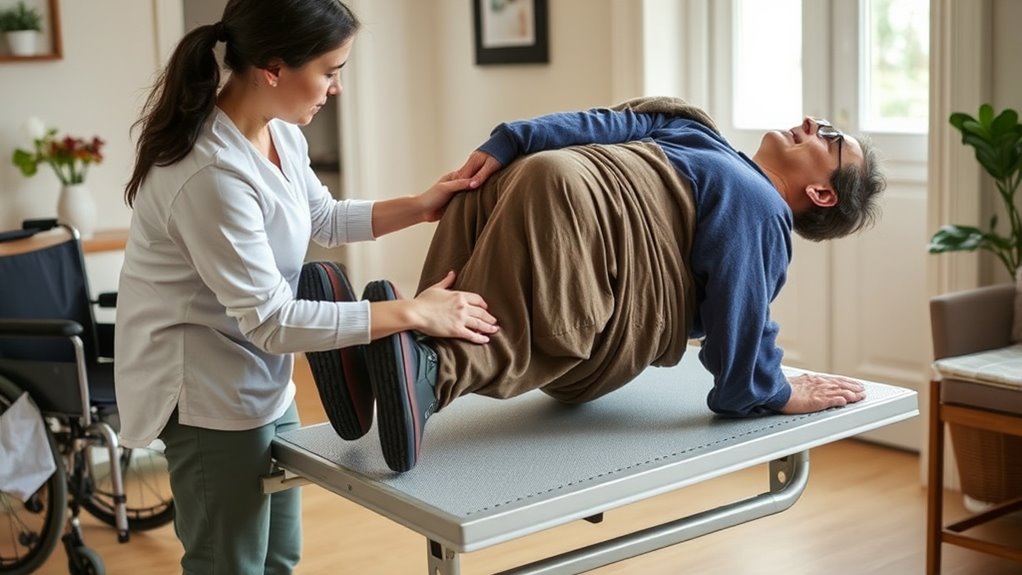

To care for a paralyzed loved one, focus on safe transfer techniques using assistive devices like transfer belts and slide boards, ensuring the environment is clear and stable. Communicate clearly and with patience, offering emotional reassurance and support throughout each move. Practice proper body mechanics to prevent injury, and involve your loved one in decisions to boost confidence. If you keep exploring, you’ll discover more helpful strategies to make these moments safer and more comfortable for both of you.
Key Takeaways
- Use proper assistive devices like transfer belts and slide boards to ensure safety and reduce injury risk during transfers.
- Communicate clearly and gently to reassure your loved one, fostering trust and cooperation throughout mobility routines.
- Prepare a safe environment with a clear, non-slip surface and free of obstacles before initiating transfers.
- Apply correct body mechanics—bend knees, keep back straight, and support gradually—to prevent caregiver and recipient injury.
- Exercise patience and provide emotional reassurance, offering steady support and understanding to boost confidence and comfort.
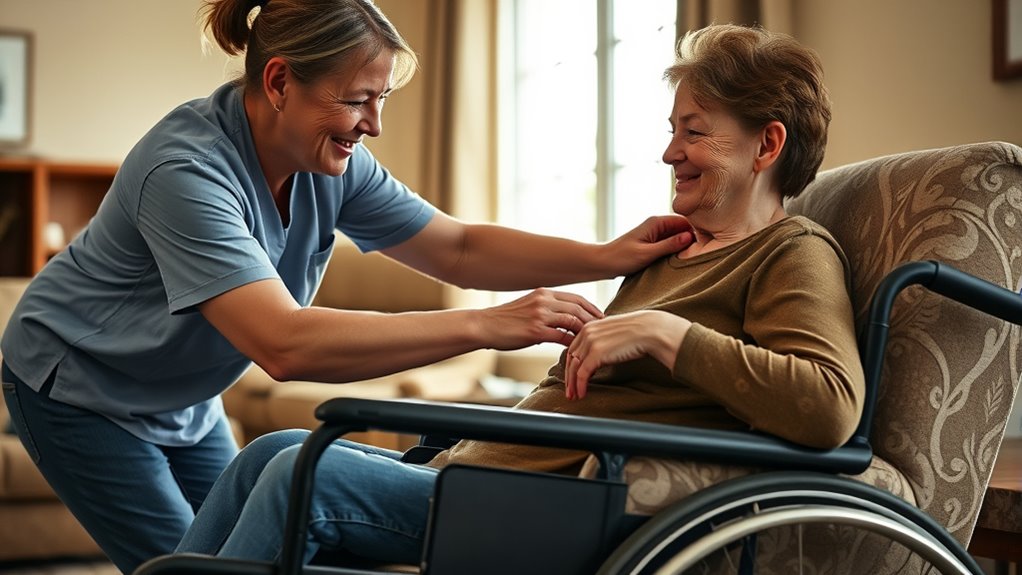
Caring for a paralyzed loved one can feel overwhelming, but understanding their needs and learning how to provide effective support can make a significant difference. When it comes to transfer and mobility, your goal is to promote safety while maintaining their dignity and independence as much as possible. One of the first steps is familiarizing yourself with assistive devices, which can greatly ease the process. Devices like transfer belts, slide boards, and gait belts are designed to help you support your loved one during transfers, reducing the risk of injury for both of you. Using the right tools not only simplifies the process but also boosts your loved one’s confidence, knowing they’re being moved safely and comfortably.
Emotional support plays a vital role in mobility routines. Transferring and repositioning can be physically demanding and emotionally taxing, especially if your loved one is frustrated or anxious about their limitations. Your calm, reassuring presence can help ease their anxiety and foster trust. Encourage open communication, listen to their concerns, and involve them in decisions about their mobility. When they feel heard and respected, they’re more likely to cooperate and stay positive during transfers.
To guarantee safe transfers, always plan ahead. Assess the environment—clear the area of obstacles, ensure the surface is stable and non-slip, and position yourself correctly. When assisting with a transfer, communicate clearly throughout the process. Explain each step, and ask for their input if possible. For example, tell them to sit up slowly, then pivot, or to lean on your arm as you support them. Proper body mechanics are essential; keep your back straight, bend your knees, and use your legs rather than your back to lift or support. This helps prevent injuries and makes the transfer easier. Additionally, understanding the importance of prophetic dreams can offer emotional comfort and spiritual reassurance during challenging times, fostering a sense of connection and hope.
Practice patience and proceed gradually. Rushing can lead to falls or discomfort. If your loved one uses assistive devices, make sure they’re properly fitted and in good condition before each transfer. Regularly check for signs of discomfort or fatigue, and don’t hesitate to take breaks if needed. Remember, your steady, empathetic support helps your loved one feel more secure and encourages their participation, which can improve their overall mobility and emotional well-being.
Frequently Asked Questions
How Can I Prevent Skin Breakdown During Transfers?
To prevent pressure sores during transfers, you should regularly shift your loved one’s position and use proper skin care. Keep their skin clean and dry, and apply moisturizing lotions to maintain skin health. Use gentle, supportive transfer techniques and ensure cushions or pads are properly placed to reduce pressure points. Regularly inspecting their skin for signs of redness or irritation helps catch issues early and stops skin breakdown.
What Specific Exercises Promote Mobility for Paralyzed Individuals?
You can promote mobility in paralyzed individuals through passive stretching and maintaining a proper range of motion. Gently move their limbs through their full range, holding each stretch to prevent stiffness. Incorporate daily passive stretching exercises to keep joints flexible and reduce muscle tightness. These activities help preserve joint health, improve circulation, and support overall mobility, making daily transfers and movements easier for both of you.
How Do I Handle Emergency Situations During Transfers?
In emergencies during transfers, you should immediately follow your emergency protocols, such as calling for help or activating emergency services. Guarantee transfer safety by staying calm, supporting your loved one securely, and avoiding sudden movements. Keep a first aid kit nearby, and communicate clearly with emergency responders. Regularly practicing emergency protocols helps you respond quickly and confidently, minimizing risks and ensuring your loved one’s safety during unexpected situations.
What Adaptive Equipment Best Suits Different Mobility Levels?
You should choose adaptive equipment based on your loved one’s mobility level. For those with limited mobility, wheelchair cushions provide comfort and support, while transfer belts help ensure safe transfers. If they can bear weight, consider sliding boards or gait belts for easier movement. Always assess their strength and stability, and consult a healthcare professional to select the best equipment, making transfers safer and more comfortable.
How Can I Support Emotional Well-Being in My Loved One?
Did you know that emotional support substantially boosts mental health, especially for loved ones with paralysis? You can support your loved one’s well-being by actively listening, encouraging open conversations, and validating their feelings. Incorporate mental health strategies like mindfulness or journaling to help them cope. Your consistent presence and empathy foster a sense of security and hope, making a meaningful difference in their emotional resilience and overall happiness.
Conclusion
Caring for a paralyzed loved one can feel overwhelming, but with the right transfer and mobility tips, you’ll gain confidence and make their daily life safer and more comfortable. Remember, it’s natural to worry about causing pain or injury, but proper techniques and patience reduce those risks. Your support and dedication truly make a difference. Stay patient, keep learning, and don’t hesitate to ask for help—you’re providing essential care that fosters their well-being and independence.