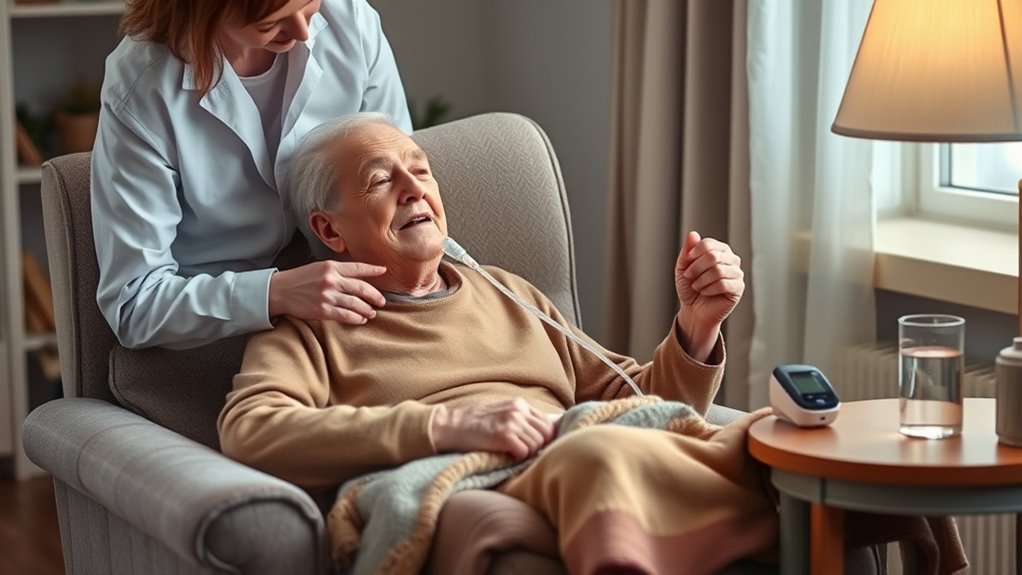

To assist someone with COPD or breathing issues at home, guarantee they use oxygen equipment properly and watch for any discomfort or malfunctions. Keep emergency contacts handy, and remind them to carry medical info. Create a safe, clutter-free environment, avoid irritants, and help them sit upright during flare-ups. Support adherence to medication routines and recognize signs of worsening. Staying informed empowers you to manage their needs confidently—more helpful tips await for better care.

Turn quiet afternoons into listening time
- Thousands of audiobooks, podcasts and originals
- Listen on your phone, tablet or Echo — also offline
- Cancel anytime
Key Takeaways
- Ensure oxygen therapy devices are used correctly and troubleshoot any malfunctions promptly.
- Keep emergency contacts, medications, and medical info easily accessible for quick response.
- Help the person maintain an upright position and a calm environment to ease breathing.
- Remove irritants and ensure good ventilation to prevent symptom worsening.
- Monitor for signs of distress and be prepared to seek urgent medical help if needed.
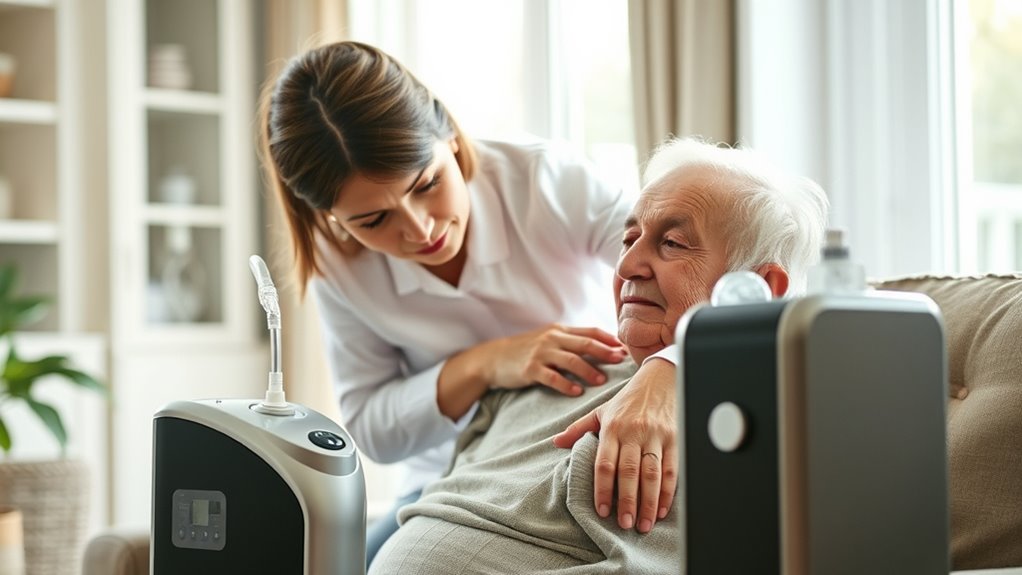
If someone you care about has COPD, understanding how to support them can make a meaningful difference in their quality of life. One of the most effective ways to do this is by helping them manage their oxygen therapy properly. Oxygen therapy can be essential for maintaining their oxygen levels and reducing symptoms like shortness of breath. Make sure they’re using their oxygen equipment as prescribed, and check regularly for any signs of malfunction or discomfort. Keep their oxygen tanks or concentrators well-stocked and accessible, especially in common areas of the home. Educate yourself about how their device works, and be prepared to assist with adjustments or troubleshooting if needed. This not only guarantees their safety but also provides peace of mind for both of you.
Supporting COPD patients involves proper oxygen therapy management and emergency preparedness for their safety and peace of mind.
Additionally, staying informed about their service hours for healthcare appointments or supplies can be crucial in case of emergencies or urgent needs. Emergency preparedness is another critical aspect of supporting someone with COPD. Breathing issues can escalate unexpectedly, so it’s necessary to have a plan in place. Keep a list of emergency contacts, including their healthcare provider, nearby hospitals, and family members or friends who can help. Make sure they carry a card or bracelet with key medical information, such as their diagnosis, medications, and any allergies. Keep quick access to their medications, including inhalers or nebulizers, and ensure everyone in the household knows how and when to use them. Practice emergency drills occasionally so that everyone feels confident responding to worsening symptoms. Knowing when to seek urgent medical help can be lifesaving, especially if their breathing becomes severe or unmanageable.
Creating a calm, organized environment also supports their well-being. Remove potential tripping hazards and ensure good ventilation in the home. Encourage them to avoid respiratory irritants like smoke, strong fumes, or dust, which can worsen breathing problems. When symptoms flare up, help them rest in a comfortable position—often sitting upright can ease breathing. Remind them to stay hydrated and follow their prescribed medication routine diligently. By being attentive and prepared, you help reduce anxiety during health crises and empower them to manage their condition effectively.
Supporting someone with COPD requires ongoing attention and compassion. By mastering their oxygen therapy needs and preparing for emergencies, you can considerably improve their safety and comfort. These efforts foster a sense of security, allowing your loved one to focus on their daily activities with greater confidence. Your proactive approach can truly make a difference in their ongoing health journey.
oxygen concentrator with troubleshooting
As an affiliate, we earn on qualifying purchases.
As an affiliate, we earn on qualifying purchases.
Frequently Asked Questions
How Can I Tell if Their Breathing Is Becoming Dangerously Worse?
You can tell their breathing is worsening by watching for signs to watch for, like increased difficulty speaking or using accessory muscles. Pay attention to their breathing pattern—if it becomes rapid, shallow, or irregular, it’s a red flag. Also, look for bluish lips or face, and if they’re visibly struggling to breathe, seek emergency help immediately. Trust your instincts and act quickly if their condition deteriorates.
What Should I Do During a COPD Emergency at Home?
Imagine you’re the captain steering a ship through a storm. During a COPD emergency, stay calm and act quickly. Call emergency services immediately and activate your support network for help. Keep the person seated comfortably, encourage slow breathing, and use prescribed inhalers if available. Emergency preparedness guarantees you’re ready for this storm, helping you navigate safely until professional help arrives. Your swift action can make all the difference.
Are There Specific Exercises That Help Improve Breathing?
You can improve your breathing by practicing pursed lip breathing, which helps control shortness of breath, and diaphragmatic exercises that strengthen your diaphragm. To do pursed lip breathing, breathe in slowly through your nose, then exhale through pursed lips. For diaphragmatic exercises, lie down, place one hand on your chest and the other on your belly, and breathe deeply through your nose, focusing on expanding your belly.
How Can I Manage Medication Schedules Effectively?
Did you know that medication adherence drops by 50% without proper routines? You can manage medication schedules effectively by setting daily alarms or reminders on your phone. Keep a medication chart to track doses and monitor symptoms regularly. Consistent medication adherence and symptom monitoring guarantee your loved one gets the best care, reduces flare-ups, and improves overall breathing. Make it a daily habit for better health management.
What Environmental Changes Can Reduce Breathing Difficulties?
You can diminish breathing difficulties by maintaining your environment clean and free of irritants. Use air purifiers to filter airborne pollutants and allergens, creating a cleaner breathing space. Additionally, using a humidifier helps sustain ideal humidity levels, preventing dry air from irritating airways. Regularly ventilate rooms to guarantee fresh air circulation. These changes can considerably improve breathing comfort and reduce COPD symptoms at home.
Conclusion
By staying calm and supportive, you become a steady anchor in their stormy seas. Remember, your presence can turn panic into calm, guiding them gently through their breathing struggles. Keep communication open, encourage their medication routine, and know when to seek emergency help. Your caring touch is like a lighthouse, shining hope and safety. Together, you can help them navigate even the roughest waters, making each breath a little easier to catch.
Fall Picks
fall essentials
As an affiliate, we earn on qualifying purchases.