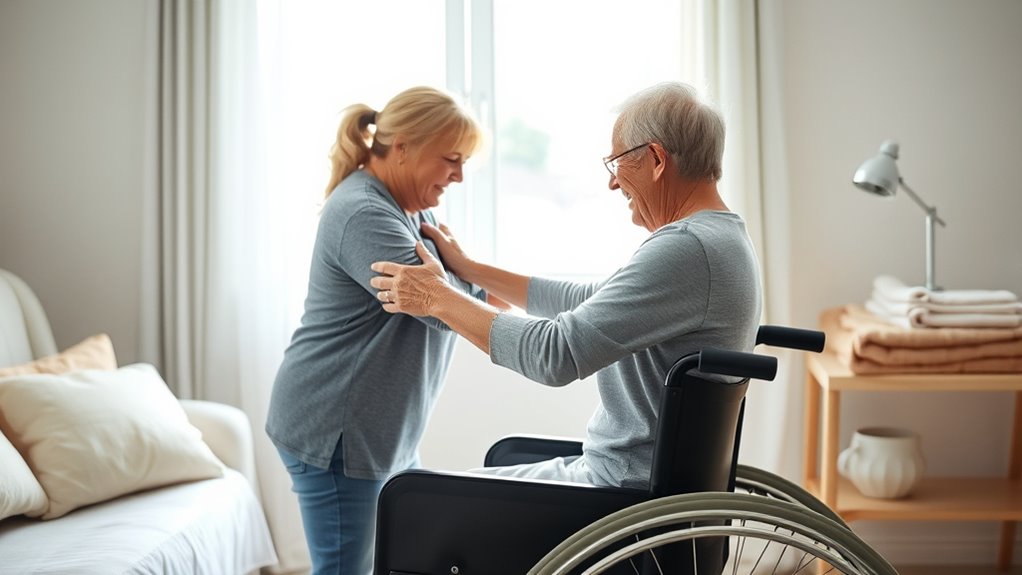

When caring for a paralyzed loved one, use adaptive devices like transfer boards, gait belts, and hoists for safe, stable movements. Always communicate clearly and offer reassurance to build trust, while practicing proper body mechanics by keeping your back straight and bending your knees. Create a safe environment by removing obstacles and ensuring surfaces are non-slip. Employ a caring attitude and attentive support to promote dignity and independence. Continue exploring these techniques to feel more confident during transfers and mobility assistance.
Play games included with Prime
Start a Prime free trial and play with Amazon Luna on your devices.
As an affiliate, we earn on qualifying purchases.
Key Takeaways
- Use proper body mechanics, such as keeping your back straight and bending your knees, to prevent injury during transfers.
- Communicate clearly and reassuringly with your loved one to promote trust and cooperation during mobility tasks.
- Ensure transfer devices like gait belts or transfer boards are secure and correctly positioned before assisting.
- Prepare a safe environment by removing obstacles and ensuring slip-resistant surfaces for smoother transfers.
- Combine practical transfer techniques with emotional support to maintain dignity, independence, and confidence in your loved one.

Caring for a loved one who is paralyzed can be challenging, but your support makes a significant difference in their quality of life. One of the most important aspects of their daily routine is assisting with transfers and mobility. It’s essential to create a safe environment and use the right tools to make movements smoother and reduce the risk of injury. Adaptive devices are incredibly helpful in this process. These tools, such as transfer boards, gait belts, or hoists, are designed to provide stability and leverage, making it easier for you to move your loved one without straining yourself or causing discomfort. Familiarizing yourself with these devices and knowing when to use them can greatly improve safety and independence during transfers.
When helping your loved one move from a bed to a wheelchair or from a chair to a standing position, always prioritize communication. Let them know what you plan to do and ask for their input when possible. This not only keeps them informed but also helps them feel more in control of their situation, which is imperative for their emotional well-being. Remember that emotional support plays a key role in their overall health. Encouragement, patience, and a positive attitude can boost their confidence and reduce feelings of frustration or helplessness. Your reassurance can help them feel more secure during transfers, especially if they’re nervous or unsure about moving independently.
While assisting with mobility, pay attention to body mechanics. Keep your back straight, bend your knees, and avoid twisting your torso. Use your leg muscles to lift or pivot rather than relying solely on your back. This not only protects you from injury but also allows for smoother, more controlled movements. Make sure the area around the transfer is clear of obstacles and that the surface is stable and non-slip. If your loved one uses adaptive devices, ensure they are positioned correctly and securely to facilitate easier transfers. Additionally, understanding the importance of contrast ratio can help you recognize how visual clarity impacts their environment, especially in terms of safety and ease of movement.
In addition to physical assistance, maintaining a supportive emotional environment is essential. Offer plenty of encouragement, celebrate small achievements, and listen attentively to their concerns. A positive, compassionate attitude reassures your loved one that they’re not alone in this journey. By combining practical transfer techniques with ongoing emotional support, you help your loved one maintain dignity, independence, and hope, making everyday tasks more manageable for both of you.
As an affiliate, we earn on qualifying purchases.
Frequently Asked Questions
How Do I Prevent Skin Breakdown During Transfers?
To prevent skin breakdown during transfers, you should perform regular skin assessments to identify early signs of pressure or redness. Use proper transfer techniques, such as lifting instead of dragging, and make sure your loved one is repositioned frequently. Keep their skin clean and dry, and utilize cushions or pads to reduce pressure points. These steps help protect their skin and minimize the risk of breakdown during every transfer.
What Are Signs of Pressure Ulcers to Watch For?
You should regularly perform skin assessments to spot signs of pressure ulcers early. Look for redness, swelling, or open sores, especially over bony areas like hips or heels. Risk factors include prolonged pressure, moisture, and poor circulation. If you notice any discoloration, warmth, or skin breakdown, act quickly. Monitoring these signs helps prevent worsening and guarantees prompt treatment, reducing discomfort and complications for your loved one.
How Can I Improve My Loved One’s Comfort During Transfers?
Imagine easing your loved one onto a soft, supportive surface; you can do this by using adaptive cushions that contour to their body, reducing pressure and discomfort. Focus on proper transfer techniques—bend your knees, keep them close, and move slowly—to prevent pain. These small adjustments make transfers smoother and more comfortable, showing you care. Your gentle approach and the right tools can transform a difficult task into a moment of reassurance.
Are There Specific Exercises to Enhance Mobility?
You can enhance your loved one’s mobility by incorporating gentle stretching routines and muscle strengthening exercises into their daily routine. Focus on stretches that improve flexibility and prevent contractures, like shoulder and leg stretches. Pair these with muscle strengthening activities, such as resistance band exercises or isometric holds, to build strength. Always guarantee exercises are tailored to their abilities and consult a healthcare professional for personalized guidance.
How Do I Manage Emotional Well-Being After Injury?
You might think managing emotional well-being is impossible, but building emotional resilience is key. Prioritize self-care, set realistic expectations, and seek caregiver support groups to share your feelings. Remember, taking time for yourself isn’t selfish; it restores your strength. Staying connected with loved ones and professionals helps you process emotions and maintain mental health. You’re not alone—support is available to help you navigate this challenging journey.
Conclusion
Caring for a loved one with paralysis can be challenging, but your dedication makes a difference. Remember, about 17,000 new spinal cord injuries occur each year in the U.S., emphasizing how common this experience is. By staying patient and attentive to their needs, you help improve their quality of life. Keep learning and adapting—your support truly matters. With the right knowledge and compassion, you can make every transfer and mobility task safer and more comfortable for both of you.
Fall yard work Picks
leaf blowers
As an affiliate, we earn on qualifying purchases.