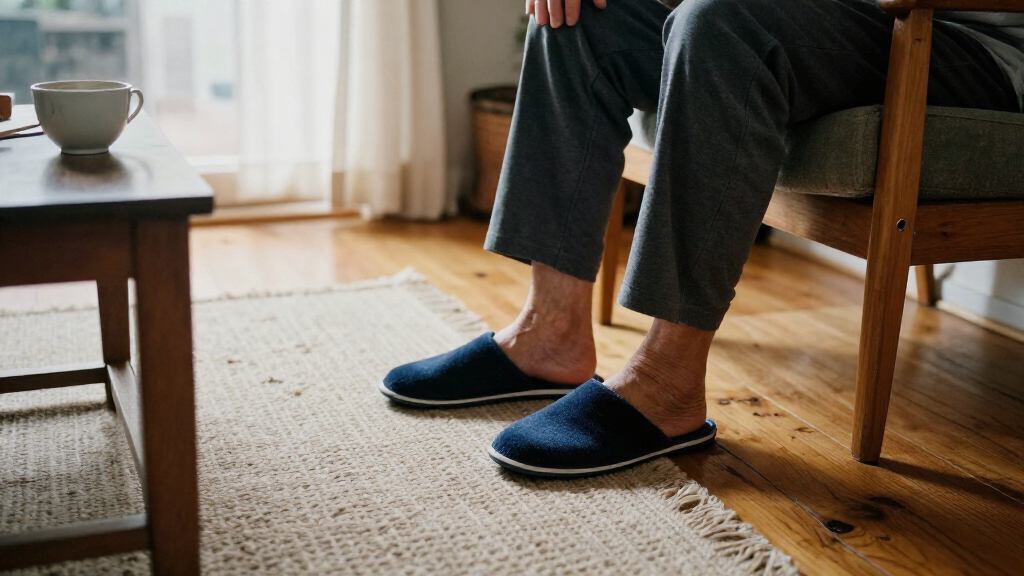
Choose comfortable slippers for a senior by measuring both feet, matching the slipper to their mobility and foot needs, and testing the fit on a clean indoor floor. This guide is for older adults, family members, and caregivers shopping for everyday home footwear. The task is beginner-friendly and usually takes 30–60 minutes, including a fitting and walking check.

Turn quiet afternoons into listening time
- Thousands of audiobooks, podcasts and originals
- Listen on your phone, tablet or Echo — also offline
- Cancel anytime
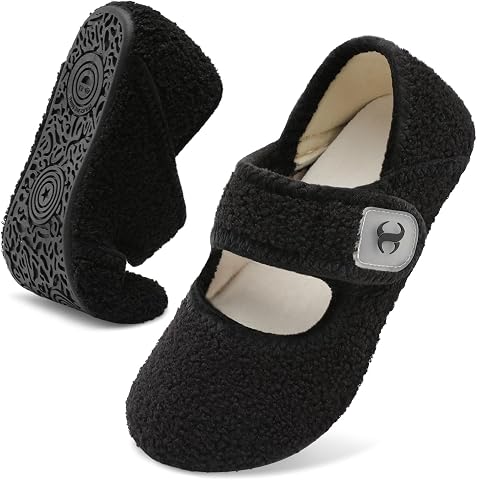
Comfy Wide Diabetic Sock Slippers for Women and Men
- ✔ Upper: Faux fur
- ✔ Lining: Soft velvet
- ✔ Insole: Fleece

Women’s and Men’s Diabetic House Slippers – Adjustable Orthopedic Indoor Slip-On
- ✔ Outer material: Faux fur
- ✔ Inner material: Fleece
- ✔ Sole: Rubber

Women’s Wide Toe Box Adjustable Diabetic House Slippers
- ✔ Outer material: Soft fabric
- ✔ Inner material: Plush
- ✔ Sole: Rubber
Difficulty: Beginner | Time: 30-60 minutes
What You’ll Need
Tools & Materials:
- Flexible tape measure or ruler
- Paper and pen
- The socks the wearer usually uses indoors
- A clean, level indoor walking area
Knowledge:
- Basic shoe sizing and the wearer’s usual mobility needs
Shop when the wearer can try the slippers on, ideally later in the day when feet may be slightly larger. If the wearer has diabetes, reduced foot sensation, significant swelling, foot deformities, or a history of falls, ask a podiatrist or clinician for footwear guidance before buying. Slippers do not replace a prescribed brace or therapeutic shoe.
Comfy Wide Diabetic Sock Slippers for Women and Men
For seniors who want warmth with less of a rigid shoe feel, this pair makes the strongest all-around case in the group. Its sock-like, lightweight design is paired with a wide toe fit and hook-and-loop closure, so the opening can be adjusted rather than relying on a fixed slip-on shape. The curly faux-fur upper, soft velvet lining, and fleece insole also give it the most specifically described soft interior among these three options.Compared with the machine-washable unisex pair, this slipper emphasizes a flexible, cozy feel rather than easy laundering. The women’s wide toe-box option is another adjustable alternative, but it describes its materials less precisely. For buyers prioritizing a balance of stated fit flexibility and plush warmth, this one earns the top position.There is a meaningful compromise: the product information says arch support is limited, so it may disappoint anyone who needs cushioning or structure under the foot. Its soft build also may not feel as supportive as a more shoe-like slipper. We would shortlist it for warmth and adjustable room, but check sizing and support details before choosing it for a specific foot condition.
Pros:
- Hook-and-loop closure allows fit adjustment.
- Wide toe design leaves more room around bunions, corns, and calluses.
- Faux-fur upper, velvet lining, and fleece insole create a plush feel.
- Rubber sole is described with non-slip treads.
Cons:
- Limited arch support may not suit users who need more cushioning.
- The sock-like lightweight build may feel less structured than a shoe-style slipper.
Best for: Seniors who want a lightweight, sock-like indoor slipper with an adjustable wide toe fit and plush lining.
Not ideal for: People who need substantial arch support, a structured shoe feel, or a verified medical fit.
Bottom line: We rank it first for its clearly described combination of flexible sock-like comfort, adjustable width, and plush materials, provided limited arch support is acceptable.
“We rank it first for its clearly described combination of flexible sock-like comfort, adjustable width, and plush materials, provided limited arch support is acceptable.”
Women’s and Men’s Diabetic House Slippers – Adjustable Orthopedic Indoor Slip-On
This pair is the practical pick for seniors who expect to wash their slippers regularly or want a wide, adjustable opening. It is the only option in the lineup explicitly described as machine washable, a useful distinction for routine care. Its faux-fur upper and fleece lining provide warmth, while the hook-and-loop buckle can be adjusted as fit needs change.Against our top-ranked sock-style pair, this model puts more emphasis on care and a described buckle closure than on a lightweight sock-like shape or layered velvet-and-fleece interior. Compared with the women’s-only option, it is identified as a unisex style and includes more specific material and washability information. Those details make it easier to assess for buyers who value upkeep and a clearly stated wide toe box.The tradeoff is seasonal comfort: the warm faux-fur and fleece construction may feel too warm in hot weather. The description mentions traction indoors and on smooth outdoor surfaces, but does not provide independent grip results. We would choose it for adjustable fit and care convenience, while checking its current care label and fit guidance before relying on it for frequent outdoor steps.
Pros:
- Machine-washable construction is specified.
- Adjustable hook-and-loop buckle supports a customizable opening.
- Wide toe box provides room for feet that need extra space.
- Rubber sole is described as non-slip for indoor and smooth outdoor surfaces.
Cons:
- Faux fur and fleece may feel overly warm in summer or hot climates.
- The supplied details do not specify arch support or cushioning level.
Best for: Seniors who want an adjustable unisex slipper and value an explicitly machine-washable design.
Not ideal for: People in hot climates or anyone who prefers a cooler, less fleece-lined slipper.
Bottom line: We place it second for its useful washability and adjustable unisex fit, with warmth as the main comfort tradeoff.
“We place it second for its useful washability and adjustable unisex fit, with warmth as the main comfort tradeoff.”
Women’s Wide Toe Box Adjustable Diabetic House Slippers
This women’s style is a straightforward choice for shoppers whose main priority is toe room. Its wide toe box is intended to let the foot sit in a more natural shape, and the hook-and-loop closure gives some flexibility around the fit. A rubber sole with an anti-slip pattern and plush lining round out the basics for indoor wear and light outdoor use.Compared with the two unisex pairs, this option is specifically presented for women and keeps the feature list simpler. It does not offer the same stated material detail as the first slipper’s velvet lining and fleece insole, or the second pair’s machine-washable claim. That makes it a reasonable alternative when a women’s wide-fit style is the deciding factor, but less compelling for buyers comparing construction and care specifics.Its own fit caution matters: narrow feet may find it too roomy. The product description also does not specify arch support, cushioning, or a detailed closure-access design beyond hook and loop. We would consider it for a shopper who needs toe space and wants a warm slipper, then verify sizing before purchase. Those who need a closer fit or stronger support should compare alternatives carefully.
Pros:
- Wide toe box allows more room for toes.
- Hook-and-loop closure permits fit adjustment.
- Rubber sole has an anti-slip pattern description.
- Plush lining adds warmth for indoor use.
Cons:
- May feel too roomy for people with narrow feet.
- Material and support details are less specific than those supplied for the other options.
Best for: Women seeking an adjustable slipper with extra toe room for indoor wear and occasional light outdoor use.
Not ideal for: Seniors with narrow feet or those seeking clearly specified arch support and cushioning.
Bottom line: We recommend it as the women’s-focused roomy-toe choice, though its less detailed construction information and narrow-foot caveat place it third.
“We recommend it as the women’s-focused roomy-toe choice, though its less detailed construction information and narrow-foot caveat place it third.”
As an Amazon Associate we earn from qualifying purchases.
Before You Start
Check for changes in foot health first. Do not fit slippers over painful blisters, open sores, or sudden swelling. Seek clinical advice for those problems. If the wearer uses a cane or walker, plan to test the slippers with that aid and on the floors where they will be worn. A soft, roomy slipper can still be unsafe if it slips off or has a sole that slides on the home’s flooring.
Step-by-Step Instructions
Step 1: List the wearer’s needs
Write down when and where the slippers will be worn, whether the wearer has trouble bending, and whether they walk independently or use a cane, walker, or wheelchair. Note specific needs such as wide feet, swelling, sensitive skin, orthotics, or difficulty fastening shoes. Use this list to compare features instead of choosing by appearance alone.
Tip:If the wearer has balance problems or a recent fall, involve their clinician or physical therapist in footwear decisions.
Check: You have a short list of fit, mobility, and fastening needs to use while shopping.
Step 2: Measure both feet
Put on the socks the wearer expects to use with the slippers. Have them stand with weight evenly distributed, if they can do so safely. Trace or measure each foot from the heel to the longest toe, then measure the widest part. Record both feet and use the larger measurement when selecting a size. If standing is unsafe, measure while seated and check fit carefully in person.
Tip:Feet can differ in size and may swell during the day. Do not assume the size on an old shoe still fits.
Check: You have the length and width of each foot, measured with the intended socks.
Step 3: Choose a secure sole and stable shape
Look for a sole with a broad, flat contact area and a tread designed to grip indoor surfaces. Choose a heel that stays on during walking, such as a closed back or a heel strap that can be adjusted securely. Avoid loose scuffs if the wearer shuffles or has balance concerns, and avoid deep, uneven tread that catches on rugs or thresholds. Check that the sole bends enough for a natural step but does not fold or twist easily.
Tip:Rubber or other nonslip materials may help with traction, but no sole grips every surface. Test the pair on the wearer’s actual floor types.
Check: The sole sits flat, feels stable, and the heel design can keep the slipper in place.
Step 4: Select an easy entry and adjustable upper
Choose an opening the wearer can use without forcing the foot in. Wide openings, hook-and-loop straps, or adjustable closures can help when bending is difficult or feet swell. Check that seams and lining feel smooth where the foot touches them. If the wearer has swelling or a bunion, select a roomy upper that does not press on those areas; do not rely on stretching a tight slipper to solve the problem.
Tip:For reduced hand strength, try the fastening several times. A closure is useful only if the wearer can open and secure it independently or with their usual assistance.
Check: The wearer can put the slipper on and fasten it without pain, pinching, or excessive effort.
Step 5: Try the slippers on while standing
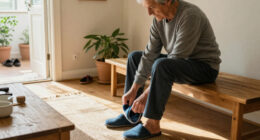
Fit both slippers with the usual socks and any approved orthotics. Have the wearer stand while holding a stable support or using their usual mobility aid. Check that toes are not pressed against the front, the heel does not slip out, and the upper does not squeeze the top or sides of the foot. Ask the wearer to report pressure, numbness, rubbing, or heat. Do not size up so much that the foot slides around.
Tip:Leave a little space in front of the toes, but keep the foot centered and held securely. Compare both slippers because one foot may need more room.
Check: Both feet feel supported, with room to move the toes and no rubbing or pressure points.
Step 6: Walk and check the fit at home
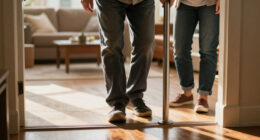
On a clear, level area, have the wearer walk several short passes, turn, and stop while using their normal support. Watch for heel lift, shuffling, stumbling, toe catching, or a need to grip the slipper with the toes. Test on the home’s main floor surfaces, including near rugs or thresholds, with someone close enough to assist. Remove the slippers and inspect the skin for red marks that persist, rubbing, or discomfort.
Tip:Stop the test if the wearer feels unsteady or develops pain. Do not ask them to walk unaided to test footwear.
Check: The slippers stay in place during steps and turns, feel comfortable afterward, and do not leave persistent pressure marks.
Common Mistakes to Avoid
- Buying the usual shoe size without measuring. — Measure both feet with the intended socks and follow the slipper maker’s size chart; fit the larger foot.
- Choosing a loose, backless slipper because it is easy to put on. — Select an easy-entry style with a secure heel or adjustable strap so the foot does not slide out.
- Assuming a textured sole prevents every slip. — Test traction on the actual home floors and replace soles that are worn, slick, or damaged.
- Keeping slippers that cause rubbing because they may soften over time. — Return or replace any pair that pinches, causes pain, or leaves lasting red marks; do not wait for a poor fit to break in.
Troubleshooting
Problem: The heel lifts or the foot slides forward.
Solution: Try a smaller or narrower size if toes still have room, or choose a closed-back or adjustable style. Repeat the walking check before regular use.
Problem: The slipper feels tight later in the day.
Solution: Recheck sizing when feet are normally largest and look for a wider or more adjustable upper. Ask a clinician about new or worsening swelling.
Problem: The sole catches on rugs or feels slippery.
Solution: Test a different sole and shape on the same flooring. Secure or remove loose rugs where appropriate, and avoid wearing damaged or wet slippers.
Problem: The wearer cannot put the slipper on or operate its closure.
Solution: Try a wider opening and simpler fastening, and practice while seated. Choose a design the wearer or caregiver can secure without forcing the foot.
What Success Looks Like
The chosen pair fits both feet with the usual socks and any approved orthotics, leaves the toes room, and does not pinch, rub, or slip off. The wearer can put it on and fasten it with their usual level of help. During a supervised test on home floors, the slippers stay secure through short walks and turns without catching or sliding, and the wearer remains comfortable afterward.
Next Steps
Check the wearer’s feet and the slipper soles regularly, especially if sensation is reduced or the wearer has diabetes. Replace the pair when the tread wears smooth, the sole cracks, the heel loosens, or the upper no longer holds the foot securely. Recheck fit after a change in swelling, mobility, or orthotic use. Seek advice from a podiatrist or clinician if suitable slippers remain uncomfortable or walking feels less steady.
Frequently Asked Questions
Should senior slippers have a closed back?
A closed back or secure heel strap can help keep the foot in place, especially for someone who shuffles or has balance concerns. The best style depends on the wearer’s mobility and ability to put it on.
How much room should slippers have at the toes?
Leave enough space for the toes to move without pressing against the front, while keeping the heel and midfoot secure. The foot should not slide forward when walking.
Are memory foam slippers a good choice for seniors?
They may feel cushioned, but cushioning alone does not provide a secure fit or stable footing. Check the sole, heel hold, adjustability, and walking comfort along with the feel of the footbed.
Can slippers be worn all day?
They can be worn as indoor footwear if they remain comfortable, secure, and in good condition. Check feet and soles regularly, and use prescribed footwear or braces when directed by a clinician.