TL;DR
Comfortable slippers for seniors should stay securely on the foot, provide a stable sole and suitable support, and fit well with the wearer’s usual socks. Check them while standing and walking at home, and seek advice from a healthcare professional if the wearer has diabetes, reduced sensation, wounds, significant swelling, or repeated falls.
Fit slippers while standing, with the wearer’s usual socks, and leave toe room without allowing the foot to slide.
Test a firm, stable sole on the actual flooring at home; tread patterns alone do not guarantee grip.
Choose adjustable closures and an easy entry if swelling, mobility, or dexterity makes a fixed design hard to use.
Soft cushioning and warm lining can add comfort, but check that the footbed does not feel wobbly during turns.
Ask a healthcare professional about footwear when diabetes, reduced sensation, wounds, significant swelling, or repeated falls are part of the picture.

Turn quiet afternoons into listening time
- Thousands of audiobooks, podcasts and originals
- Listen on your phone, tablet or Echo — also offline
- Cancel anytime
Check these four things before buying a pair
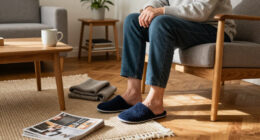
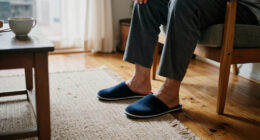
Comfortable slippers for seniors should stay on without toe gripping, feel steady underfoot, fit comfortably with usual socks, and suit the wearer’s home floors. Check those four things together; a plush lining cannot make up for a loose heel or a sole that feels unstable. For instance, a pair that feels cozy while seated may slide when the wearer steps from carpet onto tile. Try slippers late in the day if the wearer’s feet tend to swell, and have them stand during the fit check. Toes should have room to move without the foot sliding forward, and the upper should not pinch across bunions or swollen areas. If the wearer has limited dexterity, see whether they can put the pair on and fasten it without struggling.- Check the fit: Look for a secure hold without squeezing or requiring the toes to grip.
- Test the sole: Feel for a firm, stable base and try a few ordinary steps on the home’s flooring.
- Walk and turn: Notice whether the heel lifts, the slipper twists, or the wearer shuffles.
- Recheck comfort: Ask about pressure, rubbing, warmth, and room for the toes.
Products Worth Considering

Coway Mighty Air Purifier AP-1512HH(W), White

Oral-B iO Series 7 Deep Clean + Protect Rechargeable Electric Toothbrush, Black, with 2 Brush Heads and Charging Travel Case

Blueair Blue Pure 311i Max Smart Air Purifier
As an affiliate, we earn on qualifying purchases.
Choose a sole that feels steady on your floors
A suitable indoor sole feels firm and stable, with traction that works on the floors where the wearer walks. A textured tread can help, but its appearance alone does not prove that it will grip well; performance varies with the sole material and surface. The same pair may feel secure on a carpeted bedroom floor and less sure on polished kitchen tile. Try a few normal steps on a clean, dry patch of each common floor. Listen for a firm, even footfall, and watch for sliding, twisting, or hesitation. For example, if the wearer walks from a rug to a smooth hallway, test that route instead of judging the slipper on carpet alone. Keep floors clear and dry during the check. The aim is dependable contact as the foot lands and pushes off. A very soft, collapsible sole may compress unevenly under body weight, making turns or weight shifts feel less predictable. A very rigid sole can create a different problem: it may limit natural foot movement or feel uncomfortable for someone who needs flexibility. The right balance depends on the wearer’s gait and any foot condition, so a sole that feels stable to one person may not suit another. A bold tread or broad marketing claim cannot settle that question. The sole material and the floor’s finish both affect traction, and dust or moisture can change how they interact. Test the actual pair along ordinary routes in the home, and treat hesitation or an altered step as useful feedback rather than something the wearer should simply get used to.If the wearer feels unsteady in slippers despite a careful fit, a secure indoor shoe may be worth discussing with a clinician.No slipper can promise fall prevention. Think of traction as one part of a safer routine, alongside clear walkways, good lighting, and suitable footwear for the person.
Get a secure fit without squeezing swollen feet
A good fit keeps the slipper on during ordinary walking while leaving room for toes and changes in foot size. Feet can widen or swell with age and during the day, so a pair that fits at breakfast may feel tight by evening. Adjustable straps or closures can make it easier to change the fit as foot volume changes. Use this practical fitting routine at home:- Put on usual socks. Thick winter socks change the space inside a slipper.
- Check both feet while standing. One foot may be wider or longer than the other.
- Look for toe room. Toes should not press against the front, and the foot should not slide around.
- Walk, turn, and sit down. Notice heel lift, rubbing, pinching, or the need to clutch with the toes.
- Recheck later in the day. Adjust the closure or reconsider the style if swelling makes the fit uncomfortable.
Balance warmth, cushioning, and support
Warmth and cushioning can make indoor walking more pleasant, but the slipper should still feel supportive and steady. Fleece or wool blends may suit cold rooms, while breathable fabrics can feel better for someone whose feet overheat. The right lining depends on the wearer’s comfort, circulation, and home climate. That choice has a practical tradeoff: a warm, thick lining can reduce the room available for toes and make the foot hotter over a full day. A lighter lining may be more comfortable in a warm home but leave feet cold in a drafty room. Try the slipper with the socks the wearer normally uses, since the combined layers affect both temperature and fit. Memory foam can feel like a gentle cushion when you first press into it. Yet a very soft or collapsing footbed may compress unevenly as weight shifts, making a turn feel less steady. Cushioning that feels pleasant while seated does not necessarily provide useful support while walking. Ask the wearer to walk and turn in the slippers; their balance and comfort during those movements matter more than how plush the sole feels in a hand. A removable footbed can help with cleaning or provide room for an insert, but do not assume every removable insole suits a prescribed orthotic. Taking an insole out changes the height and fit inside the slipper, and an insert that shifts or crowds the toes may create pressure. If a podiatrist or other clinician has recommended specific footwear or inserts, check that the slipper can accommodate them safely. A product label saying “orthopedic” does not replace individualized advice. For example, someone who spends a few minutes padding from a warm bedroom to the kitchen may favor a lighter lining, while someone in a chilly home may appreciate more warmth. In either case, test the actual pair during normal movement and at the time of day it will be worn. Choose comfort that supports the routine, while checking that warmth and softness do not compromise fit or steadiness.Make putting slippers on and keeping them clean easier
The best design is one the wearer can put on, fasten, and care for without unnecessary strain. A wide opening, lightweight construction, and simple adjustable closure may help someone with limited mobility or dexterity. A closed heel or secure strap can hold the slipper more reliably than a backless style, which may slip off or prompt toe gripping while walking. Picture a morning routine: the wearer sits at the edge of the bed, opens a wide slipper, slides a foot in, and tightens a strap with one hand. If they have to bend sharply, tug hard, or balance on one foot, the design may not suit them. A long-handled shoehorn or help from a caregiver might make a chosen pair easier to use, but the wearer should still feel secure once standing. Ease of entry and a secure hold can pull in different directions. A very open design may be simple to step into but move around during walking; a close-fitting heel may stay put but be harder to pull on. A wide opening and adjustable fastening can help bridge that gap, provided the wearer can manage the fastening reliably. Consider how much help is available each day, since a pair that is secure only when someone else puts it on may not work for a wearer who is often alone. Washable materials and removable footbeds can simplify care, especially if the slippers get damp or dusty. Check the label before washing; some materials shrink or lose shape in a machine. After cleaning, let the pair dry fully and check that the sole and upper still hold their shape. Dampness can make a slipper uncomfortable, while a misshapen upper may no longer hold the foot as intended. A pair that is easy to clean is useful only if it remains a good fit. Replace it when tread wears down, the upper stops holding the foot, or the wearer’s fit changes. There is no single replacement schedule for everyone.Know when a slipper needs a clinician’s input
Ask a healthcare professional about suitable footwear when the wearer has diabetes, reduced sensation, circulation problems, wounds, significant swelling, or a marked change in balance. These conditions can change what a safe, comfortable fit looks like, and a person with reduced sensation may not notice rubbing or pressure right away. General shopping tips cannot replace advice tailored to the wearer’s feet. For someone with diabetes, comfort alone may not reveal a problem: a seam or tight strap could rub without causing an immediate warning sensation. That means a wearer may continue using a poorly fitting slipper even as pressure builds. A clinician can advise on fit and footwear needs, and regular foot checks can help the wearer notice redness, blisters, or other changes. If a wound or persistent pain is present, seek professional guidance rather than trying to solve it with a roomier slipper, which could create new movement and rubbing. Repeated falls or a new sense of unsteadiness also deserve a conversation with a clinician. A change in balance can have causes beyond footwear, so replacing slippers alone may leave the underlying issue unaddressed. Slippers are only one part of moving safely at home; lighting, handrails where appropriate, clear walkways, and suitable shoes all matter. A relative might notice that an older adult has started grabbing furniture on the way to the bathroom. That observation is worth sharing, especially if the change is recent. If a product claims to be “fall-proof,” treat the wording cautiously. Look for clear details about fit, sole construction, care, intended use, and independent testing where available. Even useful product information cannot account for every person’s health, movement, or floor surfaces.Frequently Asked Questions
Are backless slippers safe for seniors?
They can be convenient to slip on, but they may come off during a step or encourage toe gripping to hold them in place. A closed heel or secure adjustable fit generally offers a steadier feel for walking. The wearer’s balance, comfort, and home flooring matter too.
Should older adults wear slippers or shoes indoors?
It depends on the person’s balance, foot health, and home. A well-fitting indoor shoe may feel more secure for someone who is unsteady in slippers, while another person may prefer a stable slipper for short indoor trips. Ask a healthcare professional if a medical condition or prescribed footwear affects the choice.
Are memory-foam slippers a good choice?
They may feel cushioned, but cushioning alone does not provide support or stability. Have the wearer walk and turn in them; avoid a footbed that collapses or makes movement feel wobbly. Fit and sole stability matter as much as softness.
What should someone with diabetes look for in slippers?
Look for a comfortable, properly fitted style without seams or pressure points that rub. Reduced sensation can make injuries harder to notice, so people with diabetes should ask a clinician for individualized footwear guidance and check their feet regularly.
How often should slippers be replaced?
There is no single schedule that suits everyone. Replace slippers when the sole is worn, the tread has deteriorated, the upper no longer holds the foot securely, or the fit has changed. A quick check of the sole and heel can catch wear before it affects the wearer’s stride.