
Bookshelf speakers are compact and ideal for smaller spaces, fitting on shelves or stands, and allowing you to experiment with placement for better sound clarity. Tower speakers are taller, placed on the floor, and suit larger rooms, filling them evenly with sound. They handle more power and volume, making them great for high-volume listening. To choose the right option, consider your room size, listening habits, and system needs—more details await to help you decide.

Turn quiet afternoons into listening time
- Thousands of audiobooks, podcasts and originals
- Listen on your phone, tablet or Echo — also offline
- Cancel anytime
Key Takeaways
- Bookshelf speakers are compact and ideal for small spaces, while tower speakers are larger and suited for bigger rooms.
- Tower speakers provide higher power handling and volume, suitable for high-volume listening in larger spaces.
- Bookshelf speakers offer flexible placement for better imaging but may struggle to fill large rooms.
- Tower speakers project sound evenly across larger areas, delivering immersive audio experiences.
- Choice depends on room size, desired volume, and system power, with bookshelf speakers fitting smaller setups.
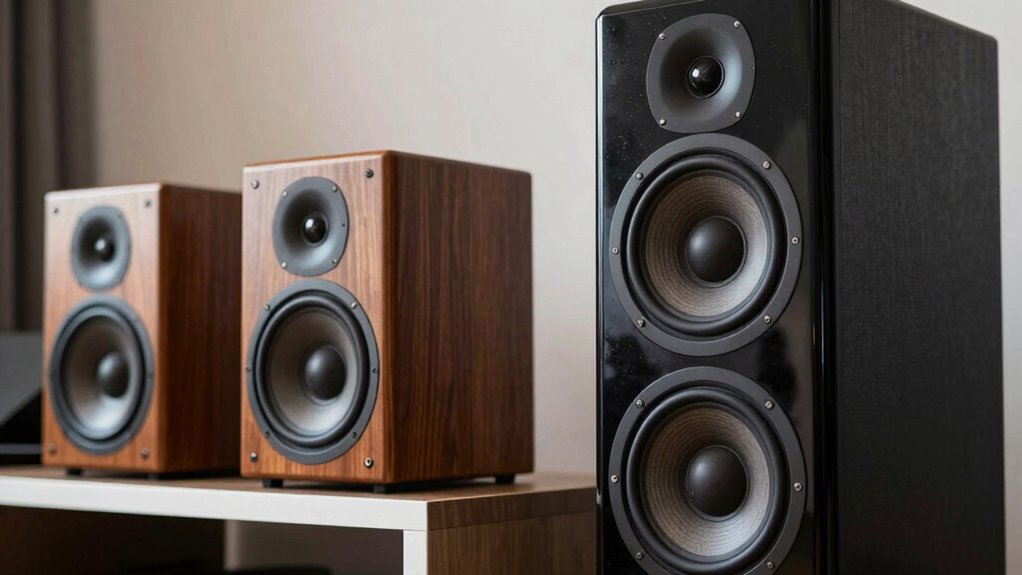
When choosing between bookshelf speakers and tower speakers, understanding their differences can profoundly impact your audio experience. One of the first considerations is room placement. Bookshelf speakers are compact, designed to sit on shelves, stands, or furniture, making them ideal for smaller spaces or rooms where space is limited. They offer flexibility because you can position them closer to your listening area, which can improve sound clarity and imaging. However, their smaller size means they may not fill large rooms with sound as effectively as tower speakers. Tower speakers, on the other hand, are taller and often placed on the floor, which allows them to project sound throughout larger spaces. Their height and volume capacity enable a more immersive experience, especially in rooms where sound needs to reach distant corners or fill the entire space evenly.
Power handling is another critical factor that influences your choice. Tower speakers generally have higher power handling capabilities, allowing them to handle more wattage without distortion. This means they can produce louder volumes with clearer sound, making them suitable if you enjoy high-volume listening or have a powerful amplifier. Bookshelf speakers, by comparison, usually handle less power, which isn’t a drawback if you prefer moderate listening levels. They’re often paired with smaller amplifiers or receivers, providing enough volume for most indoor environments without risking distortion or damage. If you plan to crank up the volume regularly or have a high-powered audio system, tower speakers might be your better option due to their superior power handling. Additionally, size and shape can influence how well each type fits within your space and interacts with your decor.
Another aspect to consider is how each type interacts with your space. Bookshelf speakers benefit from placement flexibility; you can experiment with positioning to optimize sound quality. Placing them slightly away from walls can reduce bass muddiness, while positioning them closer can enhance bass response. Tower speakers, however, are less flexible in placement because their size and shape are fixed, but their design often incorporates built-in drivers that work together to produce a balanced soundstage. This integration can make setup straightforward, especially in larger rooms where the goal is even sound distribution. Additionally, the design and construction of each type can influence their durability and aesthetic fit within your decor.
Ultimately, your choice hinges on the size of your space, your listening preferences, and your audio system’s power capabilities. If you have a smaller room and want a versatile, space-efficient solution, bookshelf speakers with moderate power handling are a solid pick. For larger rooms, high-volume listening, or a more commanding sound presence, tower speakers with higher power handling will serve you better. Understanding these differences ensures you select speakers that complement your environment and deliver the best possible sound experience.
bookshelf speakers for small rooms
As an affiliate, we earn on qualifying purchases.
As an affiliate, we earn on qualifying purchases.
Frequently Asked Questions
Which Speaker Type Is Better for Small Rooms?
For small rooms, bookshelf speakers are often the better choice because they fit comfortably and don’t overwhelm the space. They work well with minimal acoustic treatment and can deliver clear sound without cluttering the room. Tower speakers might overpower small rooms and require more space and acoustic adjustments. You’ll enjoy balanced sound and easier setup with bookshelf speakers, making them ideal for compact environments.
How Do They Compare in Energy Efficiency?
You’ll find that bookshelf speakers use considerably less power, making them practically energy ninjas, while tower speakers demand more power but deliver louder, richer sound. When it comes to acoustic efficiency, bookshelf speakers often convert more electrical energy into sound in smaller spaces, meaning you get more bang for your buck with less power. Tower speakers, though, need more energy to reach their full potential, but can fill larger rooms effortlessly.
Are Tower Speakers More Expensive Than Bookshelves?
Yes, tower speakers tend to be more expensive than bookshelf speakers. Their cost comparison reflects their larger size and more complex design, which often includes additional drivers and power handling capabilities. When considering design aesthetics, tower speakers usually make a more prominent visual statement in a room, while bookshelf speakers offer a sleeker, more discreet look. Your choice depends on your budget and how you want your speakers to complement your space.
Can Bookshelf Speakers Handle High Volumes?
Bookshelf speakers can handle high volumes, but their speaker durability depends on their build quality. Generally, they’re designed for moderate to loud listening, but pushing them to very high volumes may cause distortion or damage over time. Keep in mind their volume limitations, especially if you want powerful sound for large rooms. Choose well-built models with robust components to guarantee they handle higher volumes without compromising sound quality or longevity.
Which Speaker Type Offers Better Sound Quality for Movies?
For movies, tower speakers often offer better sound quality because they provide richer surround sound and greater acoustic clarity. Their larger size allows for deeper bass and more powerful audio, immersing you in the action. Bookshelf speakers can still deliver good quality, but tower speakers typically create a more cinematic experience by filling the room with fuller, more dynamic sound. If you prioritize surround sound, tower speakers are usually the better choice.
Conclusion
So, which speaker type will elevate your listening experience? Will your space benefit from the compact charm of bookshelf speakers, or does the commanding presence of tower speakers call your name? The choice isn’t just about size—it’s about how you want to feel immersed in your music or movies. Imagine the moment you press play, and everything changes. Are you ready to discover what’s waiting on the other side of your decision?
Cold & flu season Picks
humidifiers
As an affiliate, we earn on qualifying purchases.