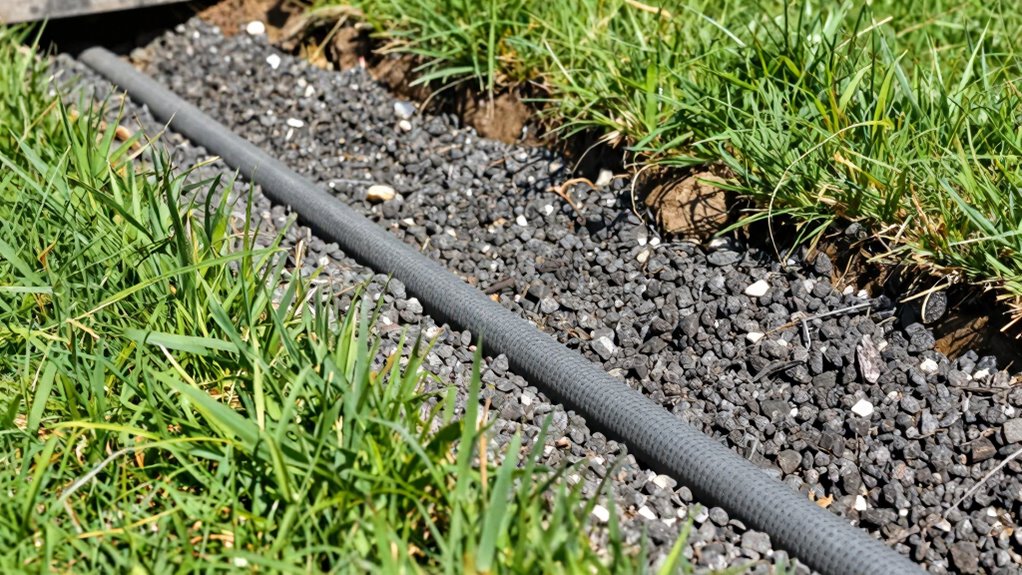

A French drain is a simple method to move excess water away from your property, preventing flooding and water damage. It works by digging a trench filled with gravel and a perforated pipe that directs water to a safe area, like a storm drain or lower yard. Proper installation, considering your soil type, guarantees it works effectively over time. If you want to know how to build one step-by-step, keep exploring this helpful guide.

Turn quiet afternoons into listening time
- Thousands of audiobooks, podcasts and originals
- Listen on your phone, tablet or Echo — also offline
- Cancel anytime
Key Takeaways
- A French drain is a trench filled with gravel and a perforated pipe to redirect water away from areas needing drainage.
- It helps prevent flooding, pooling, and water damage to foundations or lawns.
- The drain uses a sloped trench to guide water naturally to a drainage point or lower area.
- Soil type affects how well a French drain works; sandy soil drains faster than clay.
- Proper installation with fabric, gravel, and correct slope ensures long-lasting, effective water management.
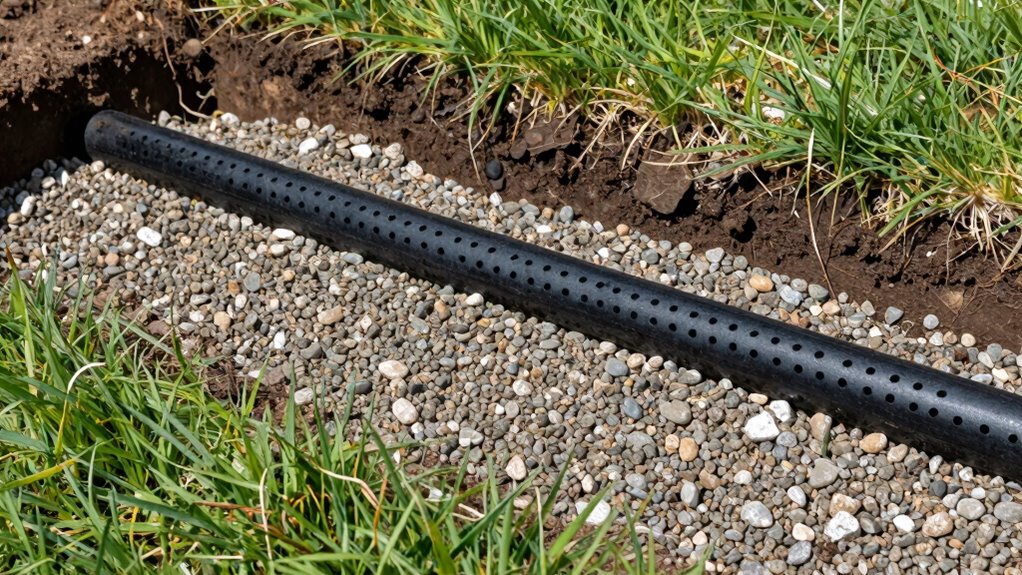
Have you ever wondered how to keep your yard dry during heavy rain? One effective solution is installing a French drain, which is designed to redirect excess water away from your property. The process involves a specific type of drain installation that works with your soil’s natural drainage properties to prevent flooding and pooling. Understanding how a French drain functions can help you decide if it’s the right choice for your landscape.
A French drain redirects excess water, preventing flooding and pooling in your yard.
A French drain is fundamentally a trench filled with gravel and a perforated pipe that collects and redirects water. When heavy rain falls, water seeps into the soil and tends to accumulate in low areas, causing soggy lawns or even water damage to foundations. The French drain acts as a channel for this excess water, guiding it away from problem spots. The key to its effectiveness lies in both the drain installation itself and the soil drainage. Properly installing the drain ensures that water flows efficiently through the pipe and doesn’t clog or back up.
During drain installation, you dig a trench that’s typically around six inches wide and deep enough to reach the water table or the area where water tends to collect. The trench’s slope matters—aim for about a 1% grade so water naturally flows toward a designated drainage point, like a storm drain or a lower part of your yard. Once the trench is ready, you lay down a perforated pipe, cover it with landscape fabric to prevent soil from clogging the pipe, and backfill with gravel. This setup allows water to flow freely into the pipe from surrounding soil, which is critical because soil drainage varies depending on the type of soil you have. Sandy soil drains quickly, while clay soil retains water longer. Understanding soil drainage is essential for designing an effective French drain that prevents water buildup.
Adding proper drainage planning can further enhance the system’s efficiency, especially in areas with challenging soil conditions. Knowing your soil’s drainage characteristics helps in designing an effective French drain. If your soil drains poorly, you might need a wider or deeper trench or additional measures to improve soil drainage. Proper drainage techniques are crucial for ensuring the longevity and effectiveness of your French drain. A well-executed drain installation ensures the water is diverted efficiently, preventing pooling and erosion. Ultimately, a French drain is a reliable way to manage water runoff, protect your yard, and maintain a healthy landscape. By understanding the importance of proper drain installation and soil drainage, you can confidently implement this drainage solution and enjoy a drier, more stable yard even during heavy rains.
French drain kit with perforated pipe
As an affiliate, we earn on qualifying purchases.
As an affiliate, we earn on qualifying purchases.
Frequently Asked Questions
How Long Do French Drains Typically Last?
French drains typically last between 20 to 30 years, depending on factors like water diversion efficiency and drain longevity. Proper installation, regular maintenance, and quality materials can extend their lifespan. You should check the gravel and pipe for clogs or damage periodically. If you notice standing water or poor drainage, it’s a sign you might need repairs or replacements. With proper care, your French drain can effectively manage water for decades.
Can I Install a French Drain Myself?
You can give DIY installation a shot if you’re handy, but don’t bite off more than you can chew. French drains involve careful planning and proper materials, so if you’re unsure, professional help can save you a headache. Think of it as the difference between a quick fix and a long-term solution—sometimes, bringing in an expert pays off in the end. If you’re confident, follow detailed guides and take your time!
What Signs Indicate a French Drain Is Failing?
You’ll notice signs like persistent pooling or soggy areas even after drain installation, indicating your French drain might be failing. Drain maintenance becomes essential here to guarantee proper flow. Check for soil compatibility; if your soil is too clayey or compacted, it can hinder drainage. Additionally, foul odors or mold around the area can signal blockages or leaks. Regular inspections help catch issues early and keep your drain functioning well.
Are French Drains Suitable for All Types of Soil?
Think of French drains as a garden’s lifeline—symbolic pipes guiding excess water away. They’re not suitable for all soil types, especially heavy clay that’s like a stubborn fortress resisting drainage. If your soil erodes easily or retains too much moisture, a French drain helps prevent garden landscaping issues. But for rocky or sandy soils, it might be less effective, so consider your soil’s nature before installing.
How Much Does a French Drain Installation Usually Cost?
A French drain installation typically costs between $1,200 and $2,800, depending on size and complexity. You should consider drainage maintenance costs for ongoing upkeep. Doing a cost comparison helps you find the best value, factoring in materials and labor. Keep in mind that investing in a quality drain can prevent costly water damage later. Getting multiple quotes guarantees you choose an option that fits your budget and drainage needs.
Conclusion
Just as the river finds its way to the sea, a French drain guides excess water away from your property, preventing damage and maintaining stability. By understanding its simple yet effective design, you become the architect of your land’s resilience, much like a master gardener tending to their terrain. When you install a French drain, you’re not just managing water—you’re shaping a landscape that endures, echoing the timeless dance between nature’s flow and human ingenuity.
Fall Picks
fall essentials
As an affiliate, we earn on qualifying purchases.