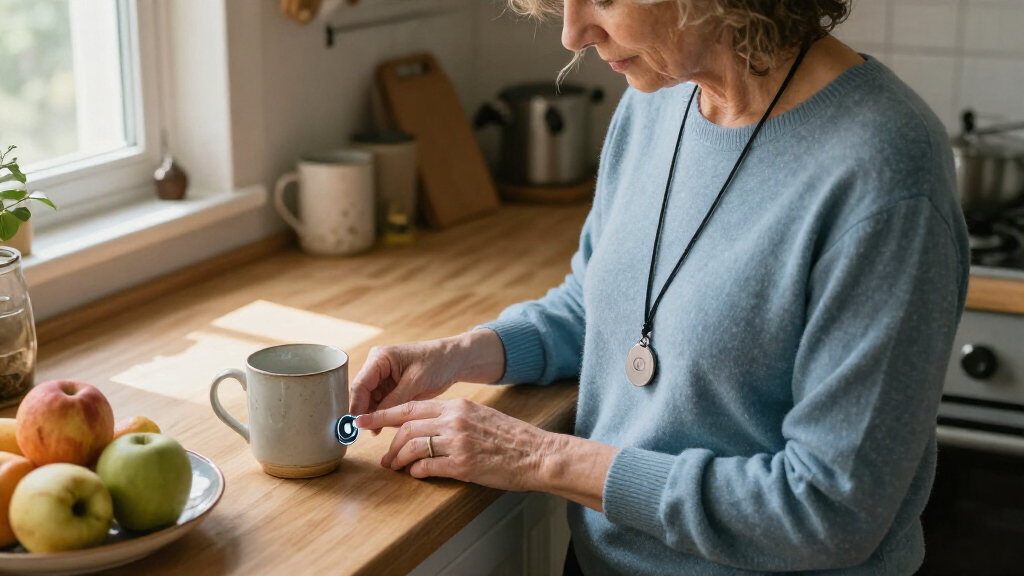
For most older adults who want help beyond the home, I’d start with Bay Alarm Medical SOS Mobile GPS for its mobile coverage and fall-detection option. Medical Guardian MGHome is a stronger fit for a home-based setup, while CallToU caregiver pagers offer a simpler way to summon someone already nearby. The main tradeoff is between a monitored service with broader emergency support and lower-cost, locally managed buttons that depend on a caregiver or phone connection. Coverage, cellular requirements, fall-detection availability, and who receives an alert can matter more than the pendant’s appearance. Read on for my comparison of all 14 options and guidance on choosing the right type of system.

Turn quiet afternoons into listening time
- Thousands of audiobooks, podcasts and originals
- Listen on your phone, tablet or Echo — also offline
- Cancel anytime
Complete the kit


Key Takeaways
- Mobile coverage separates the monitored systems from home caregiver pagers. Bay Alarm Medical SOS Mobile GPS, SecuLife, LIVELY Mobile2, and Medical Guardian MGMini are aimed at people who need help outside the house; pager-style products are better suited to calling someone nearby.
- “No monthly fee” does not automatically mean the same kind of protection. Several products rely on an app, direct 911 calling, a dialer, or a local receiver rather than a staffed monitoring center, so buyers should confirm who responds to an alert.
- Fall detection is not a substitute for pressing the help button. It is offered on some mobile or pendant options, but performance and availability can vary; buyers should verify the feature’s service requirements and treat it as a backup.
- Home Wi-Fi and caregiver presence shape which pager works. DAYTECH and other Wi-Fi pager options can notify phones, while CallToU and FullHouse-style kits focus on an in-home receiver or nearby caregiver. Neither setup gives the same independence as a mobile alert device.
- The best choice depends on the response path, not the number of accessories. A wearable button, wristband, or receiver is useful only if the wearer can reach it and someone will reliably act on its alert.
| SecuLife Medical Alert Pendant for Seniors with Fall Detection, GPS Tracking, 2-Way Calling, Water Resistant Necklace |  | Best for GPS and Fall Detection | Connectivity: 4G LTE cellular | Battery life: Up to 6 days | Battery capacity: 1000 mAh | VIEW LATEST PRICE | See Our Full Breakdown |
| Life Alert Systems for Seniors No Monthly Fee App-Controlled with Waterproof Wristband and LED Display |  | Best for App-Based Home Monitoring | Connectivity: Wi-Fi and wireless signal | Wi-Fi requirement: 2.4GHz | Maximum range: 300 feet | VIEW LATEST PRICE | See Our Full Breakdown |
| Bay Alarm Medical SOS Mobile GPS – 24/7 Medical Alert System with Fall Detection for Seniors |  | Best for Flexible Everyday Wear | Connectivity: Cellular | Battery life: Up to 144 hours | Battery capacity: 420 mAh | VIEW LATEST PRICE | See Our Full Breakdown |
| CallToU Caregiver Pager Wireless Call Button Nurse Alert System for Home Care |  | Best Simple Home Call Button | Wireless range: 500+ feet | Call buttons included: 1 | Ringtone options: 55 | VIEW LATEST PRICE | See Our Full Breakdown |
| DAYTECH WiFi Caregiver Call Button Calls Phone, 2-Button, 1 Wristband, 1 Receiver |  | Best for Multiple Alert Points | Connectivity: 2.4GHz Wi-Fi | Buttons: 2 | Wristband: 1 included | VIEW LATEST PRICE | See Our Full Breakdown |
| Medical Alert Pendant for Seniors – 4G LTE SOS Button with Direct 911 Calling, No Monthly Fees |  | Best for Direct 911 Access | Cellular connection: 4G LTE | Emergency calling: Direct 911 calling with two-way communication | Power source: 3 AAA batteries, included | VIEW LATEST PRICE | See Our Full Breakdown |
| Medical Alert System – No Monthly Fees – Waterproof Necklace and Wristband |  | Best for Whole-Home Coverage | Range: Up to 70,000 square feet | Wearable alerts: Waterproof necklace and wristband | Additional buttons: Supports up to 8 additional panic buttons | VIEW LATEST PRICE | See Our Full Breakdown |
| WiFi Caregiver Pager Life Alert System for Seniors with Waterproof Call Button, Watch Button, and Receiver |  | Best for App-Based Family Alerts | Wi-Fi frequency: 2.4GHz | Range: 656 feet (200 meters) | Waterproof: Yes | VIEW LATEST PRICE | See Our Full Breakdown |
| FullHouse Caregiver Pager Wireless Emergency Call Button for Elderly |  | Best for a Simple In-Home Caregiver Pager | Range: Up to 1,000 feet | Water resistance: IP55; splash-proof, not for immersion | Melodies: 52 | VIEW LATEST PRICE | See Our Full Breakdown |
| LIVELY Mobile2 Medical Alert Device, Waterproof, Lanyard Included |  | Best for Monitored Mobile Support | Emergency support: 24/7 emergency help | Fall detection: Optional; service fee required | Waterproof: Yes | VIEW LATEST PRICE | See Our Full Breakdown |
| Senior HELP Dialer Medical Alert System – No Monthly Fees |  | Best for No-Fee Contact Calling | Panic buttons: 2: wrist and necklace | Range: 100 feet | Water resistance: Yes | VIEW LATEST PRICE | See Our Full Breakdown |
| CallToU Caregiver Pager with 2 Wireless Call Buttons for Elderly at Home |  | Best for In-Home Caregiver Alerts | Call buttons: 2 | Receivers: 2 | Range: Over 500 feet | VIEW LATEST PRICE | See Our Full Breakdown |
| Medical Guardian MGMini Medical Alert Device for Seniors Rose Gold |  | Best for Discreet Mobile Coverage | Connectivity: Cellular and Wi-Fi backup | Monitoring: 24/7 emergency monitoring; subscription required | Location support: GPS | VIEW LATEST PRICE | See Our Full Breakdown |
| Medical Guardian MGHome Medical Alert System for Seniors |  | Best for Long-Range Monitored Home Coverage | Coverage range: Up to 1,400 feet | Monitoring: 24/7 professional emergency support | Power: Standard electrical outlet | VIEW LATEST PRICE | See Our Full Breakdown |
More Details on Our Top Picks
SecuLife Medical Alert Pendant for Seniors with Fall Detection, GPS Tracking, 2-Way Calling, Water Resistant Necklace
For someone who may need help away from home, the SecuLife pendant offers a different kind of coverage from home caregiver pagers such as the CallToU Wireless Call Button. Its 4G LTE connection, GPS tracking, and two-way calling are designed to support contact and location sharing beyond a receiver’s limited home range. Automatic fall detection can add a safety net when the wearer cannot press the button, while the IP67-rated waterproof design supports wearing it in wet conditions.
The tradeoff is ongoing service: full features require a monthly subscription, unlike the listed no-monthly-fee app-controlled system. Battery life is listed as up to six days, so charging is less frequent than daily but still part of the routine. I’d choose it for mobile coverage, not for buyers seeking a simple, subscription-free alert button.
Pros:- GPS tracking and geo-fence zones can help caregivers follow location beyond the home.
- Two-way calling supports direct communication during an alert.
- Automatic fall detection may help when the wearer cannot press the pendant.
- IP67 waterproofing and up to six days of battery life support everyday wear.
Cons:- Full functionality requires a monthly subscription.
- Up to six days of battery life still calls for regular charging.
- Available product details provide limited guidance about the user interface.
Best for: Seniors who leave home regularly and want GPS location, two-way calling, and automatic fall detection in one wearable.
Not ideal for: Buyers who want to avoid recurring service fees or need a system that works without cellular coverage.
- Connectivity:4G LTE cellular
- Battery life:Up to 6 days
- Battery capacity:1000 mAh
- Water resistance:IP67 waterproof
- Calling:Two-way calling
- Location features:GPS tracking and geo-fence zones
- Fall detection:Automatic fall detection
- Supported smartphones:Android and iOS
Our verdict“Choose SecuLife if mobile GPS coverage and fall detection matter more than avoiding a monthly service fee.”
Life Alert Systems for Seniors No Monthly Fee App-Controlled with Waterproof Wristband and LED Display
This system suits households that want caregivers notified through an app without paying a monthly fee for the basic pager function. Its waterproof wrist remote can stay with the wearer in the shower, while the receiver provides a loud 110 dB alert. The stated wireless range of up to 300 feet is intended for use around the home, not for summoning help while out and about.
Compared with the SecuLife Medical Alert Pendant, this option is more focused on home alerts and caregiver monitoring than cellular location tracking or two-way emergency calls. It also depends on 2.4GHz Wi-Fi, and optional SMS notifications may carry a separate subscription. Battery life and long-term durability details are limited, so I’d favor it for a connected household comfortable managing an app rather than someone who needs a standalone mobile alert service.
Pros:- Waterproof wrist remote can be worn in the shower.
- The receiver’s 110 dB audible alert is designed to be heard nearby.
- Caregivers can share access through Tuya Smart or Smart Life.
- Basic caregiver pager use does not require a monthly fee.
Cons:- Requires a 2.4GHz Wi-Fi network.
- Optional SMS notifications may require a separate subscription.
- Battery life and long-term durability are not clearly specified.
Best for: Older adults who mostly stay at home and have caregivers ready to monitor alerts through a compatible 2.4GHz Wi-Fi network.
Not ideal for: Seniors who need GPS tracking, cellular coverage outside the home, or a system that does not depend on Wi-Fi and app setup.
- Connectivity:Wi-Fi and wireless signal
- Wi-Fi requirement:2.4GHz
- Maximum range:300 feet
- Audible alert:110 dB
- Control method:Smartphone app
- Remote:Waterproof wristband
- Batteries:2 A batteries required; included
- App compatibility:Tuya Smart or Smart Life
Our verdict“Pick this for app-connected alerts at home without a basic monthly pager fee, but skip it if you need mobile GPS or cellular backup.”
Bay Alarm Medical SOS Mobile GPS – 24/7 Medical Alert System with Fall Detection for Seniors
The Bay Alarm Medical SOS Mobile GPS is a practical middle ground for someone who wants mobile emergency coverage but prefers a compact device with more than one way to wear it. Its GPS capability, cellular connection, and caregiver app are better suited to trips outside the home than the CallToU Caregiver Pager, which is designed around a home receiver and call button. The listed battery life is up to 144 hours, and a lanyard or belt clip gives the wearer flexibility in how to carry it.
Fall detection is optional, rather than a standard included feature, so buyers should check the service configuration before relying on it. Like SecuLife, this device requires an ongoing service plan; it does not offer the same subscription-free approach as a basic home pager. I’d shortlist it for mobile use and wearing flexibility, while recognizing that service costs and optional features are part of the decision.
Pros:- Cellular connectivity and GPS support alerts beyond the home.
- Lanyard and belt-clip options allow different wearing preferences.
- Listed battery life of up to 144 hours reduces daily charging needs.
- Caregiver app provides a way to support location monitoring.
Cons:- Full functionality requires an ongoing service plan.
- Fall detection is optional rather than a standard feature.
- The device depends on cellular service for mobile coverage.
Best for: Seniors who want a compact cellular alert device for outings and prefer to wear it on a lanyard or belt clip.
Not ideal for: Buyers seeking a one-time-purchase home pager, or anyone who assumes fall detection is included without checking the service plan.
- Connectivity:Cellular
- Battery life:Up to 144 hours
- Battery capacity:420 mAh
- Dimensions:2.72 x 1.38 x 0.57 inches
- Location feature:GPS
- Fall detection:Optional
- Wearing options:Lanyard and belt clip
- Caregiver support:Free caregiver app
Our verdict“Choose Bay Alarm Medical for flexible-wear mobile coverage, provided you are comfortable with a service plan and verify fall detection options.”
CallToU Caregiver Pager Wireless Call Button Nurse Alert System for Home Care
For a senior who mainly needs a nearby caregiver to respond, the CallToU caregiver pager keeps the setup straightforward: press one waterproof button and a receiver sounds an alert. Its stated 500+ foot range gives more room to move around a home or yard than the 300-foot range listed for the app-controlled wristband system in this roundup. Adjustable volume and 55 ringtone options also let households choose a signal that is easier to recognize.
This is a home call system, not a full medical alert service. Unlike the Bay Alarm Medical SOS Mobile GPS, it does not provide cellular coverage, GPS, or a mobile connection to emergency responders. Only one call button is included, and the receiver needs an electrical outlet. I’d choose it when a caregiver is close enough to hear and act on the alert, but not as the sole solution for someone who lives alone or needs help while away from home.
Pros:- Stated 500+ foot range suits use across many home layouts.
- Waterproof and dustproof call button can handle everyday household conditions.
- 55 ringtone choices and five volume levels allow alert customization.
- Portable receiver can move with a caregiver.
Cons:- One call button is included, limiting coverage to a single alert point.
- The plug-in receiver needs an electrical outlet.
- It does not provide GPS, cellular service, or a stated connection to emergency responders.
Best for: Seniors at home with a caregiver nearby who need a simple waterproof button to signal for assistance.
Not ideal for: People who live alone, spend significant time away from home, or need a monitored cellular alert with GPS.
- Wireless range:500+ feet
- Call buttons included:1
- Ringtone options:55
- Volume levels:5
- Sound level:110 dB
- Button protection:Waterproof and dustproof
- Power:Plug-in receiver; battery-powered call button
- Call button battery:1 12V alkaline battery
Our verdict“Pick CallToU for a straightforward home alert when a caregiver can respond nearby, not for independent mobile or monitored protection.”
DAYTECH WiFi Caregiver Call Button Calls Phone, 2-Button, 1 Wristband, 1 Receiver
DAYTECH’s main advantage is the number of ways to summon a nearby caregiver: the set includes two buttons, a wristband, and a receiver. That makes it more adaptable around the home than the CallToU pager, which includes one call button. Multiple alert points can help when a senior spends time in different rooms, while app and phone notifications give caregivers a way to receive alerts remotely. Customizable sounds and adjustable volume add useful control over how the receiver signals.
The system is built around 2.4GHz Wi-Fi, so it is a poor fit for homes without a compatible network or for anyone expecting cellular backup. Although it can send phone notifications, the product data does not establish GPS tracking, two-way calling, or fall detection; it should not be treated as equivalent to the SecuLife pendant for mobile emergency coverage. I’d choose DAYTECH for household call-button coverage, not as a standalone medical alert service.
Pros:- Includes two buttons, a wristband, and a receiver for multiple alert points.
- App and phone notifications can reach caregivers away from the receiver.
- Customizable ringtones and adjustable volume support household preferences.
- Includes a 12V battery for the call-button setup.
Cons:- Requires a 2.4GHz Wi-Fi network to operate.
- No GPS, cellular backup, or fall detection is listed.
- The product details do not specify battery life or the wireless range.
Best for: Families who want several call points around the home and app notifications for caregivers on a 2.4GHz Wi-Fi network.
Not ideal for: Seniors who need cellular coverage outside the home, GPS location, fall detection, or a system independent of Wi-Fi.
- Connectivity:2.4GHz Wi-Fi
- Buttons:2
- Wristband:1 included
- Receiver:1 included
- Dimensions:4.8 x 4.1 x 3.6 inches
- Item weight:10.2 ounces
- Battery:1 12V battery included
- Notifications:App and phone notifications
Our verdict“Choose DAYTECH when multiple in-home alert points and caregiver phone notifications matter more than mobile medical alert features.”
Medical Alert Pendant for Seniors – 4G LTE SOS Button with Direct 911 Calling, No Monthly Fees
This pendant is the clearest fit for someone who wants a wearable button that calls emergency services directly, rather than routing an alert through family or a monitoring center. Its 4G LTE connection, built-in speaker, and microphone allow two-way communication after the large SOS button is pressed, while voice prompts support straightforward operation. Compared with the LIVELY Mobile2, which offers 24/7 assistance and optional fall detection through a service plan, this model avoids a monthly monitoring fee but is focused on 911 calls alone. That simplicity can suit a wearer who wants a direct emergency line, but it leaves out caregiver notifications and extra safety features. It also depends on cellular coverage and replaceable AAA batteries, so it is a weaker fit where reception is unreliable or battery upkeep is difficult.
Pros:- Direct 911 calling with two-way voice communication
- No monthly fee or monitoring contract
- Large push button and voice prompts simplify operation
- Lightweight pendant can be worn with a lanyard or clip
Cons:- Requires cellular service and coverage where it is used
- Provides emergency calling only, without caregiver notifications or added safety features
- Runs on three AAA batteries, so battery condition and replacement matter
Best for: Seniors who want a simple wearable SOS button that calls 911 directly without a monitoring contract
Not ideal for: People who need caregiver alerts, fall detection, or monitored support beyond a direct emergency call
- Cellular connection:4G LTE
- Emergency calling:Direct 911 calling with two-way communication
- Power source:3 AAA batteries, included
- Control method:Push button
- Wear options:Neck lanyard or clip
- Dimensions:1.6 x 0.49 x 2.8 inches
- Weight:2.4 ounces
- Color:White
Our verdict“Choose this pendant if direct 911 access and avoiding a monitoring contract matter more than fall detection or caregiver alerts.”
Medical Alert System – No Monthly Fees – Waterproof Necklace and Wristband
For a wearer who moves around a large home or property, this system’s 70,000-square-foot stated range is its defining advantage. The included waterproof necklace and wristband offer two ways to summon help, and the base can call up to three chosen phone numbers with a personalized message using a home phone line or Bluetooth adapter. That makes it more useful for reaching family than the 4G LTE SOS Pendant, which is designed to call 911 directly. The tradeoff is that this is a home-connected calling system, not a cellular mobile alert device: it relies on a landline or compatible Bluetooth setup and does not provide professional monitoring. The waterproof wearables can support use in the shower, but the base and phone connection still shape where the system works. It is a better match for a household with reachable contacts and reliable home connectivity than for someone living alone without a response network.
Pros:- Includes waterproof necklace and wristband for flexible wearing
- Large stated range supports use across a broad property
- Can call up to three phone numbers with a personalized message
- No monthly fee and can use a home phone line or Bluetooth adapter
Cons:- Depends on a home phone line or Bluetooth adapter for connectivity
- Calls only up to three chosen numbers rather than providing professional monitoring
- Requires two AAA batteries that need replacement over time
Best for: Seniors with a large home, a reliable home phone connection, and several family or caregiver contacts to call
Not ideal for: People who need mobile coverage away from home or professional monitoring rather than calls to chosen contacts
- Range:Up to 70,000 square feet
- Wearable alerts:Waterproof necklace and wristband
- Additional buttons:Supports up to 8 additional panic buttons
- Contact calling:Calls up to 3 phone numbers with a personalized message
- Connectivity:Home phone line or Bluetooth adapter
- Power source:Battery powered
- Batteries:2 AAA batteries
- Base dimensions:6.5 x 4.5 x 1.7 inches
Our verdict“Pick this system for broad at-home coverage and family call routing if you have the required phone connection and do not need professional monitoring.”
WiFi Caregiver Pager Life Alert System for Seniors with Waterproof Call Button, Watch Button, and Receiver
This system makes most sense when a caregiver or family member can respond to app notifications and the home has a 2.4GHz Wi-Fi network. Its kit pairs a waterproof call button and watch button with a receiver, and the stated 656-foot range gives more room to move around the home than many short-range alert buttons. Unlike the FullHouse Caregiver Pager, which emphasizes a receiver, loud alert, and adjustable melodies, this option connects alerts to family through an app. That can make it easier to share notifications without a monthly service fee, but the feature boundary matters: SMS and call alerts require a subscription, and Wi-Fi frequency support is limited to 2.4GHz. It is a caregiver-notification setup, not a direct 911 pendant or professionally monitored system. Buyers should confirm their router and decide whether app alerts alone fit their response plan.
Pros:- App notifications can alert family and caregivers
- Waterproof call button and watch button support different wearing preferences
- Stated range reaches up to 656 feet
- Mounting options include screws, adhesive, and a lanyard
Cons:- Requires a 2.4GHz Wi-Fi network
- SMS and call alerts require a subscription
- App-based caregiver alerts are not the same as professional monitoring or direct emergency dispatch
Best for: Families who want app-based caregiver notifications at home and have a compatible 2.4GHz Wi-Fi network
Not ideal for: Seniors without dependable Wi-Fi, or households that need SMS or phone-call alerts without a subscription
- Wi-Fi frequency:2.4GHz
- Range:656 feet (200 meters)
- Waterproof:Yes
- Included alert devices:Waterproof call button and watch button
- Alert method:App notifications; SMS and call alerts require a subscription
- Mounting options:Screw, adhesive, or lanyard
- Package dimensions:4.13 x 4.13 x 3.11 inches
- Item weight:7.4 ounces
Our verdict“Choose this pager if relatives can respond through its app and your home Wi-Fi meets its 2.4GHz requirement.”
FullHouse Caregiver Pager Wireless Emergency Call Button for Elderly
The FullHouse pager is a practical choice when the goal is to summon someone nearby, not to reach a monitoring center or emergency services automatically. Its 1,000-foot stated range, waterproof call buttons, and wall, door, or neck mounting options give caregivers flexibility to place a button where help is most likely to be needed. The receiver’s 52 melodies and five volume levels also let a household tune the alert to its surroundings; the listed maximum audible level is 110 dB. Compared with the WiFi Caregiver Pager, this model stresses local receiver alerts rather than family app notifications, so it avoids dependence on Wi-Fi but also does not offer the same app-based sharing. The call button is splash-proof, not suitable for immersion, and the system’s value depends on a caregiver hearing and responding to the receiver. It is a home alert aid, not a stand-alone medical alert service.
Pros:- Stated wireless range reaches up to 1,000 feet
- Multiple melodies and five volume levels allow alert customization
- Call button is splash-proof and can be worn or mounted
- Receiver alert can reach a listed maximum of 110 dB
Cons:- Call button is IP55 splash-proof, not suitable for immersion
- Needs a nearby person to hear and respond to the receiver
- Battery replacement will be needed over time
Best for: Households with a caregiver nearby who want a loud, customizable receiver alert and flexible button placement
Not ideal for: People who live alone, need off-site notifications, or require a button that can be submerged in water
- Range:Up to 1,000 feet
- Water resistance:IP55; splash-proof, not for immersion
- Melodies:52
- Volume levels:5
- Maximum audible level:110 dB
- Power source:Lithium-ion batteries, 2 included
- Mounting options:Wall mount, door mount, or worn on the neck
- Control method:Touch
Our verdict“Choose FullHouse for a local caregiver alert with a loud receiver, but skip it if alerts must reach someone outside the home.”
LIVELY Mobile2 Medical Alert Device, Waterproof, Lanyard Included
Unlike the home-based button systems in this group, the LIVELY Mobile2 is designed for a senior who wants 24/7 emergency help while away from home. Its waterproof, portable design and included lanyard support everyday carrying, while optional fall detection and automatic family notifications add layers that the 4G LTE SOS Pendant does not list. That broader support comes with a service commitment: fall detection requires a monthly fee, so this is not the no-contract choice for someone who only wants to call 911. The product data also lists smartphone compatibility and app control, which may add setup or usability hurdles for a wearer who prefers a stand-alone button. Battery-powered operation and a lithium-ion battery avoid disposable AAA cells, but the supplied details do not specify battery runtime or cellular coverage. It fits buyers prioritizing monitored assistance and portability over a minimal, fee-free alert device.
Pros:- Designed to provide 24/7 emergency help
- Waterproof and portable, with an included lanyard
- Optional fall detection adds a safety feature absent from simpler call-button systems
- Automatic family notifications can keep relatives informed
Cons:- Fall detection service requires a monthly fee
- Listed smartphone compatibility may be a hurdle for users seeking a fully stand-alone setup
- Provided product details do not state battery runtime or cellular coverage
Best for: Seniors who leave home regularly and want 24/7 emergency assistance with optional fall detection and family notifications
Not ideal for: Buyers who want no recurring service fee, direct 911-only calling, or a system that does not rely on smartphone compatibility
- Emergency support:24/7 emergency help
- Fall detection:Optional; service fee required
- Waterproof:Yes
- Wear option:Included lanyard
- Power source:Battery powered
- Battery:1 lithium-ion battery, included
- Compatible devices:Smartphone
- Control method:App and touch sensor
Our verdict“Choose the LIVELY Mobile2 if portable, monitored assistance and optional fall detection outweigh the ongoing service requirement.”
Senior HELP Dialer Medical Alert System – No Monthly Fees
The Senior HELP Dialer suits people who want a wearable way to alert family or friends without paying for professional monitoring. It comes with both a wrist button and necklace button, and a press sends a personalized message to as many as three contacts. That gives caregivers a direct call path, while leaving the response to the people on the contact list. Compared with the Medical Guardian MGMini, this system avoids a monitoring subscription but does not offer built-in cellular connectivity, GPS, or professional operators. It also depends on a compatible phone connection: a landline works directly, while cell-phone use requires a separately sold Bluetooth adapter. The 100-foot range and water-resistant wrist button make it a practical home option, but not a substitute for a mobile alert device.
Pros:- No monthly monitoring fee
- Includes both wrist and necklace panic buttons
- Water-resistant wrist button can be worn in the shower
- Personalized emergency message can reach up to three contacts
Cons:- Requires a normal phone line or a separately sold Bluetooth adapter for cell-phone use
- Calls only up to three contacts and does not include professional monitoring
- No built-in cellular connectivity for use away from the home phone connection
Best for: Seniors who mainly stay at home, have a compatible phone connection, and want alerts sent to family or friends without a monitoring subscription.
Not ideal for: People who live alone without reliable contacts, need professional monitoring or location support, or want protection while away from home.
- Panic buttons:2: wrist and necklace
- Range:100 feet
- Water resistance:Yes
- Phone compatibility:Normal phone line
- Cell-phone connection:Bluetooth adapter sold separately
- Contact limit:Up to 3 contacts
- Monthly monitoring fees:None
Our verdict“Choose the Senior HELP Dialer if you want a straightforward, no-subscription way to alert a small circle of contacts from home.”
CallToU Caregiver Pager with 2 Wireless Call Buttons for Elderly at Home
The CallToU caregiver pager is designed for a different job from a monitored medical alert system: it lets someone at home summon a nearby caregiver, rather than connecting to emergency operators. Its two call buttons and two receivers can cover separate rooms, and the claimed range of over 500 feet gives caregivers flexibility to carry a receiver or place it where they can hear it. The adjustable alarm reaches up to 110 dB, which may help when a caregiver is elsewhere in the home, though a loud alert is not the same as an outside response service. Compared with the Senior HELP Dialer, CallToU is more suited to repeated household assistance calls, but it does not call a contact list. Its receivers need outlets, and the system is limited to its included buttons and receivers.
Pros:- Two call buttons and two receivers support coverage across household areas
- Range is specified at over 500 feet
- Adjustable audible alert reaches up to 110 dB
- Waterproof and dustproof call buttons
Cons:- Does not provide professional monitoring or call emergency contacts
- Receivers need access to electrical outlets
- Set is limited to two call buttons and two receivers
Best for: Households where a caregiver is nearby and needs to hear requests for help from different rooms or areas of the home.
Not ideal for: Seniors who live alone, need emergency operators or automatic calls to outside contacts, or need a wearable system for outings.
- Call buttons:2
- Receivers:2
- Range:Over 500 feet
- Maximum audible alert:110 dB
- Waterproof:Yes
- Dustproof:Yes
- Button power:2 included 12V alkaline batteries
- Warranty:1 year
Our verdict“Pick CallToU for quick caregiver alerts inside a home, not as a replacement for a monitored medical alert system.”
Medical Guardian MGMini Medical Alert Device for Seniors Rose Gold
The Medical Guardian MGMini is the strongest fit here for someone who wants an alert device that can go beyond the house without looking like a traditional pendant. Its cellular connectivity, Wi-Fi backup, GPS assistance, and two-way speaker support monitored help while the wearer is out, while the rose-gold finish and included clip and lanyard offer more than one way to wear it. The listed 72-hour battery life can reduce charging frequency compared with a device that needs daily attention, though actual runtime may vary with network conditions. Unlike the MGHome, which is built around a base station and in-home coverage, the MGMini is a portable personal device. The tradeoff is a required monitoring subscription, and its single active device per member may not suit households seeking multiple wearables on one membership.
Pros:- Cellular connectivity with Wi-Fi backup supports use beyond a landline-based home system
- GPS location assistance can help responders locate the wearer
- Up to 72 hours of listed battery life
- Includes a lanyard and clip for different wearing preferences
Cons:- Requires a subscription for monitoring services
- Only one active device is allowed per member
- Battery life can vary with network conditions
Best for: Older adults who leave home regularly and want a discreet wearable with monitored support and GPS location assistance.
Not ideal for: People who want to avoid a monitoring subscription, need a multi-device arrangement for one member, or prefer a base station focused on home coverage.
- Connectivity:Cellular and Wi-Fi backup
- Monitoring:24/7 emergency monitoring; subscription required
- Location support:GPS
- Battery life:Up to 72 hours
- Two-way speaker:Yes
- Wear options:Lanyard or clip
- Finish:Rose gold
Our verdict“Choose the MGMini if discreet, monitored protection for outings matters more than avoiding a subscription.”
Medical Guardian MGHome Medical Alert System for Seniors
The Medical Guardian MGHome is the home-focused pick for seniors who want a wearable call button backed by professional operators. Its 1,400-foot coverage range gives the wearer room to move around the home and nearby areas while keeping the base station as the central connection. The included 32-hour backup battery can keep the system running through a power outage, adding a layer of continuity that a simple caregiver pager like the CallToU does not provide through professional monitoring. Unlike the portable MGMini, MGHome is centered on a base station rather than travel and GPS support. It requires a monitoring subscription, and fall detection costs extra, so the main choice is whether in-home operator access is worth an ongoing service commitment.
Pros:- Up to 1,400 feet of in-home coverage
- 24/7 professional emergency support
- Wearable call buttons provide access to help around the home
- 32-hour backup battery supports operation during power outages
Cons:- Monitoring requires a subscription
- Fall detection is an optional add-on with an additional cost
- Base-station design is less suited to use away from home than the MGMini
Best for: Seniors who spend most of their time at home, want professional emergency operators, and need broad wearable-button coverage around the property.
Not ideal for: People seeking a no-subscription device, portable protection with GPS while out, or included fall detection without an add-on.
- Coverage range:Up to 1,400 feet
- Monitoring:24/7 professional emergency support
- Power:Standard electrical outlet
- Backup battery:Up to 32 hours
- Battery type:Lithium-ion
- Mounting type:Tabletop base station
- Fall detection:Optional add-on
- Included wearables:Call buttons
Our verdict“Choose MGHome for monitored, wide-area protection at home if you are comfortable with a subscription and do not need a portable system.”

How We Picked
I compared these senior medical alert systems by the job they can realistically do: connect a wearer to a response, reach a caregiver at home, or provide an alert while the wearer is away. I looked at the stated connection method, whether the product describes professional monitoring or direct contact, mobile coverage, fall-detection availability, water resistance, wearable formats, and setup demands. I also considered whether an option depends on a smartphone, Wi-Fi, cellular service, a nearby receiver, or an available caregiver.
The ranking favors systems with a clearer path to help across a wider range of everyday situations, then accounts for ease of use and practical fit. Monitored mobile and home systems rank ahead of local caregiver pagers for buyers seeking an emergency-response service; pager kits rank higher for households that mainly need a way to call someone already present. Products described as having no monthly fee are not treated as equivalent to monitored services. Product names and listed features alone cannot confirm coverage, response times, or service terms, so buyers should verify those details with the provider before purchase.
Factors to Consider When Choosing Senior Medical Alert Systems
Before choosing, I’d map the alert system to the person’s routine and to the people who can respond. These broader checks help distinguish a true emergency-response service from a button that simply sends a notification.
Who Receives the Alert—and What Happens Next?
Write down the full response chain before choosing a device: who gets the signal, whether a monitoring center answers, and who contacts emergency services if the wearer cannot speak. A caregiver pager usually alerts someone nearby, while a monitored system may connect to a response center; those are different services, not interchangeable features. Ask whether the system can reach more than one contact and what happens if the first person does not answer. A device that calls 911 directly may suit someone who can communicate clearly, but it may offer less help with assessing the situation or contacting family. The most common mistake is choosing by the button or pendant and never checking what the alert actually triggers.
Will It Work Where the Person Spends Time?
Make a simple map of the wearer’s usual locations: bedrooms, bathrooms, garden, errands, and regular visits. A home receiver or Wi-Fi-dependent pager may cover the rooms where it is installed but may not help once the person leaves. A mobile unit can expand that range, yet it still depends on compatible cellular coverage and a charged device. Check the provider’s coverage information for the home and frequent destinations, and ask how the system behaves when a signal drops. Don’t assume “mobile” means dependable service everywhere or that “home” means every corner of a large property.
Choose a Wearable the Person Will Actually Keep On
A pendant, wristband, and portable device differ in comfort, visibility, and how easily the wearer can activate them. Ask the person to handle the controls and consider whether they prefer something on the wrist or around the neck; a technically capable device is of little use if it stays on a table. Water resistance matters because falls and medical problems can happen during bathing, but the label does not tell the whole story. Confirm the manufacturer’s stated water-use limits, cleaning guidance, and charging routine. If dexterity, hearing, or vision affects use, prioritize straightforward controls and clear confirmation that an alert has been sent.
Treat Fall Detection as Backup, Not a Promise
Automatic fall detection can help when a person cannot press a button, but it may not identify every fall and can sometimes trigger an alert during non-fall movements. Ask whether the feature is included or optional, whether it requires a particular service plan, and how the wearer or caregiver is notified after a possible fall. A pendant that must be worn consistently may be more useful than an advanced sensor that is often left charging. Families should agree on what to do when a fall alert arrives and how to respond if the wearer does not answer. Keep a manual help button in the plan rather than relying on automatic detection alone.
Compare the Full Service Commitment, Not Just the Device
Separate equipment cost from ongoing service, activation, cellular connectivity, replacement, and cancellation terms. A no-monthly-fee device can reduce recurring charges, but the buyer may be responsible for arranging contacts, maintaining an app, or responding to alerts. A monitored plan may provide a different level of support, but its terms and included features need checking. Ask what happens if the device is lost, damaged, or stops working, and whether a return window or service agreement applies. The right comparison is the total cost and responsibility over time—not simply whether a monthly charge appears.
Plan for Caregiver Availability and Backup
Local pager systems make the most sense when a caregiver is close enough to hear or receive the alert and can respond promptly. If the household is often empty, caregivers work shifts, or the wearer lives alone, a local receiver may leave a gap that a monitored service is designed to address. For app-connected systems, check which phones can receive notifications, whether multiple caregivers can be added, and what happens if a phone is offline or muted. Set a backup contact and test the alert path with everyone involved. A realistic response plan is more valuable than adding extra buttons without deciding who will act.
Frequently Asked Questions
Is a no-monthly-fee medical alert system comparable to a monitored service?
Not necessarily. Some no-monthly-fee devices call 911 directly, use an app, or notify a local caregiver rather than connecting to a staffed monitoring center. That can work well when the wearer can make the call and a trusted person is available, but it shifts more responsibility to the wearer or household. Before buying, ask who receives an alert, whether anyone checks in if there is no answer, and whether cellular or app service carries a separate charge. Compare the response arrangement, not just the billing model.
Should I choose a mobile system or a home caregiver pager?
Choose based on where the person needs help and who can respond. A mobile system is a better match for someone who goes on walks, runs errands, or spends time away from home, provided the device has coverage where they travel. A caregiver pager can be a practical fit when the person stays at home and a family member or aide is close enough to hear the receiver or get the notification. Some households need both a reliable home response and protection outside; check whether a system can cover those routines without adding unnecessary complexity. Don’t buy a home-only pager expecting it to provide off-site emergency coverage.
Can I rely on fall detection if the wearer cannot press the button?
Fall detection can add a layer of support, but no automatic detector should be treated as a guarantee that every fall will be recognized. Ask how the feature works, whether it is included in the selected plan, and what happens after a suspected fall if the wearer does not respond. The wearer still needs a manual alert option for emergencies the detector may miss. Check charging and wear habits too, since a detector cannot help when the device is not being worn or powered. Families should decide in advance who will follow up on an alert.
What should I check before buying a Wi-Fi or app-connected alert button?
Confirm the system works with the home’s internet setup and that notifications reach the caregiver phones that will actually be monitored. Ask whether the button still alerts anyone if Wi-Fi fails, a phone is silenced, or the app is closed. Check the range between the call button and receiver, then test it in the rooms where the wearer spends time. A notification is useful only when someone receives it and can respond, so set more than one contact when possible. If the household needs help when no caregiver is on call, compare the system with a professionally monitored option.
How do I decide whether a senior living alone needs monitoring or a caregiver pager?
Start with the likely response time, not the living arrangement alone. If a trusted person is consistently nearby, available, and able to respond to a pager alert, a local system may meet the household’s needs. If the person may be alone for long periods or needs someone to coordinate help when they cannot explain what happened, a monitored service may offer a clearer response path. Discuss the wearer’s comfort with calling emergency services, their ability to use a phone, and whether they leave home regularly. Revisit the decision if caregiving schedules or health needs change.
Conclusion
For most buyers seeking one system that can support life beyond the home, my best overall pick is Bay Alarm Medical SOS Mobile GPS, subject to confirming coverage and service terms. I’d look at CallToU for best value in a caregiver-pager setup when a nearby person can respond, and Medical Guardian MGHome as the best premium home-focused option for buyers who want a dedicated system rather than a basic local alert. For beginners, start with the simplest setup that matches the person’s routine: a home pager when help is reliably close, or a monitored mobile device when outings matter. For specific needs, compare SecuLife or Medical Guardian MGMini for mobile wear, and consider Wi-Fi pager choices such as DAYTECH when caregiver phone notifications are the priority. My final check would be to confirm who answers, where the device works, and what the household must do when an alert arrives.
Cold & flu season Picks
humidifiers
As an affiliate, we earn on qualifying purchases.