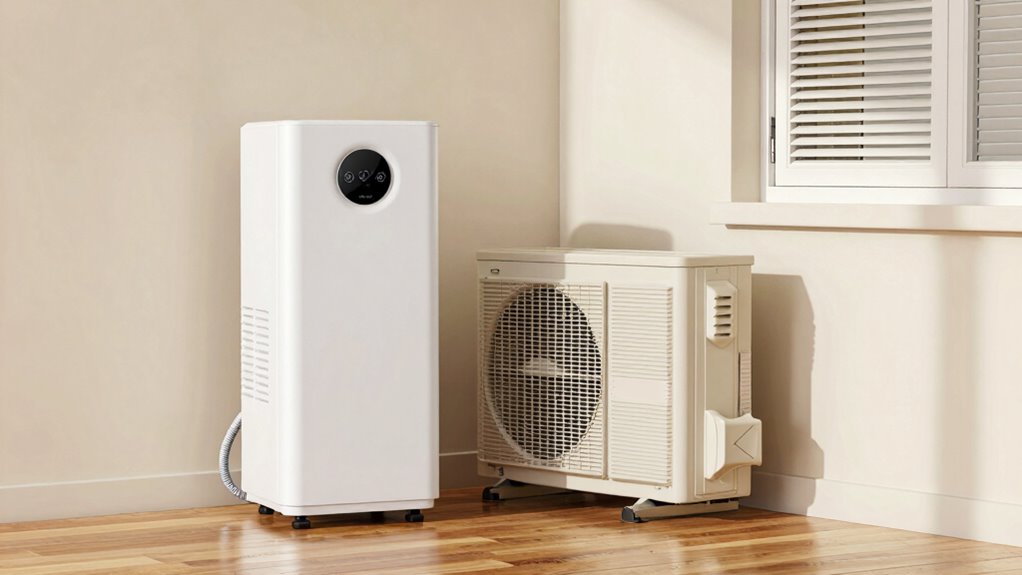

If you want quick, flexible cooling, portable air conditioners are a great choice because they’re easy to set up and move around. But if you’re looking for long-term energy savings, window units are more efficient with better insulation and higher SEER ratings. Portable units tend to be less efficient and rely on exhaust hoses, but they need less installation effort. Keep exploring to learn more about how each option could fit your space and needs.

Turn quiet afternoons into listening time
- Thousands of audiobooks, podcasts and originals
- Listen on your phone, tablet or Echo — also offline
- Cancel anytime
Key Takeaways
- Window units generally offer higher energy efficiency and better cooling performance than portable air conditioners.
- Portable units are easier to install, requiring minimal setup and no window modifications.
- Window units provide more effective ventilation and humidity control for enclosed spaces.
- Portable air conditioners are more suitable for renters or those needing mobility and flexibility.
- Technological features like smart thermostats are increasingly common in both types, enhancing user convenience.
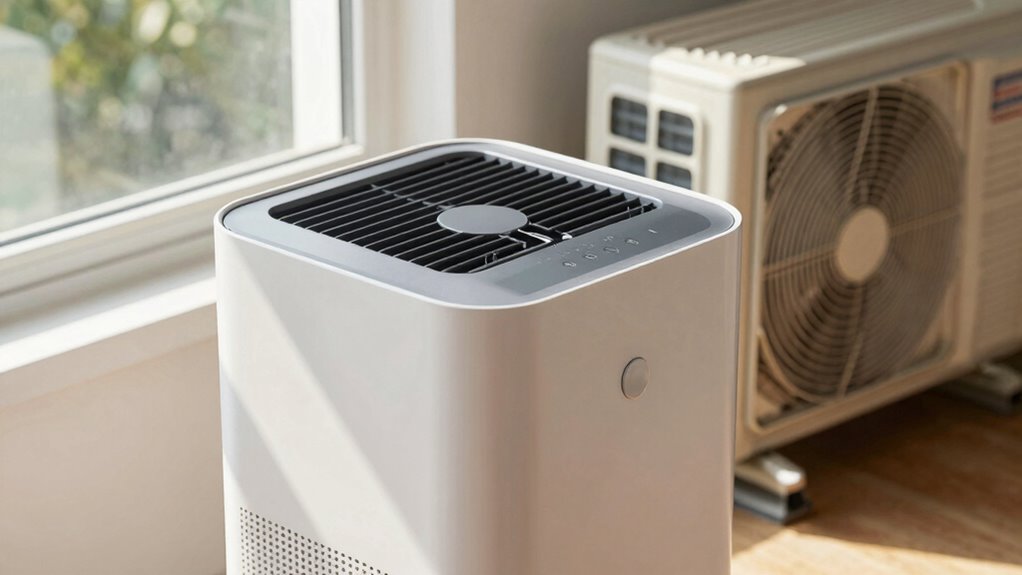
When choosing between portable air conditioners and window units, understanding their differences can help you make an informed decision for your cooling needs. One of the key factors to consider is energy efficiency. Generally, window units tend to be more energy-efficient because they are designed to fit tightly into a window frame, minimizing air leaks and maximizing cooling performance. They often have higher SEER (Seasonal Energy Efficiency Ratio) ratings, which means they use less electricity to cool a space effectively. Portable air conditioners, on the other hand, are typically less efficient because they rely on exhaust hoses that vent hot air out through a window or door, which can sometimes lead to air leaks and reduced cooling efficiency. However, modern portable units are improving in energy efficiency with better insulation and advanced compressor technology, so they’re becoming more competitive. energy efficiency is a crucial aspect to evaluate when selecting a cooling unit, as it directly impacts your electricity bills and environmental footprint. Additionally, technological advancements in portable units are helping to close the efficiency gap with window models, making them a more viable option for many users. As technology continues to evolve, innovative features like smart thermostats and auto-swing louvers are becoming more common in both types of units, enhancing user experience. Proper ventilation is essential to prevent humidity buildup and ensure optimal cooling performance, especially in smaller or enclosed spaces. The installation process is another major difference that impacts your decision. Installing a window unit is usually straightforward but requires some effort. You need to remove or adjust your window sash, secure the unit in place, and sometimes seal gaps to prevent hot air from entering. This process can be completed within an hour or two and doesn’t usually require professional help unless you want extra security or have a complex window setup. Portable air conditioners are designed for easy setup, often requiring only a simple placement near a window and attaching the exhaust hose. You don’t need to alter your window or structure significantly, making them ideal for renters or those who frequently move. The installation process for portable units is quick and less invasive, often taking less than an hour. However, you’ll need to ensure there’s a suitable window or vent to connect the exhaust hose, and sometimes you’ll need to secure the hose to prevent air leaks. Both options can benefit from proper ventilation to maximize cooling efficiency and prevent humidity buildup indoors. While both units are designed for convenience, their installation and energy efficiency trade-offs can influence your choice. If you’re looking for maximum energy savings and don’t mind a more involved setup, a window unit might be better. Conversely, if you prefer something that’s easy to move and set up without much hassle, a portable air conditioner could be your ideal choice. Both options offer effective cooling, but understanding these differences ensures you pick the one that best suits your space, lifestyle, and budget.
Products Worth Considering

Levoit Vital 200S-P Smart Air Purifier for Large Rooms

LEVOIT Vital 100S-P Smart Air Purifier with Washable Pre-Filter

OMRON VIVA 360+ Body Composition Monitor and Smart Scale
As an affiliate, we earn on qualifying purchases.
Frequently Asked Questions
Which Unit Is More Energy-Efficient Long-Term?
A window unit is generally more energy-efficient long-term because it has lower energy consumption and better cooling capabilities. You’ll notice reduced operating costs over time, making it more cost-efficient. Portable air conditioners tend to use more energy due to their design and need for additional ventilation. If you’re prioritizing long-term savings and efficiency, a window unit is the smarter choice for cooling your space effectively and economically.
Can Portable Units Cool Multiple Rooms?
Imagine trying to cool a whole house with one portable unit—it’s challenging. Portable air conditioners typically can’t cool multiple rooms effectively because they are designed for room zoning, focusing cooling on a single space. Their mobile convenience allows you to move them easily, but for multi-room cooling, window units or central systems are more efficient. So, if you need to cool multiple rooms, consider options beyond portable units.
How Noisy Are Each Type During Operation?
You’ll find that portable air conditioners tend to be noisier than window units, with sound levels ranging from 50 to 70 decibels, which might be noticeable during quiet times. Window units usually operate more quietly, often between 40 to 60 decibels. The sound comparison shows that if noise is a concern, window units are generally quieter, making them better for bedrooms or quiet spaces, while portable units may produce more background noise.
Are Portable Units Suitable for Large Spaces?
Like a lighthouse guiding ships, portable units can sometimes lead you astray in large spaces. They’re generally not ideal for extensive coverage, as their cooling capacity is limited. If you need portable cooling for a big area, you might find that window units or central air are more effective. For small to medium rooms, however, portable units can provide convenient, flexible comfort without the hassle of installation.
Do Window Units Require Professional Installation?
Window units typically require professional installation due to specific installation requirements, such as securing the unit safely and sealing the window opening properly. You’ll need to take aesthetic considerations into account, as these units can be bulky and visible outside your window. While some models are easier to install yourself, many benefit from professional help to ensure safety, proper functioning, and a neat appearance.
Conclusion
So, which option will keep your space cool when the heat hits hardest? Will you choose the portability of a portable air conditioner, or the tried-and-true efficiency of a window unit? The decision isn’t simple, and each has its own hidden strengths and surprises. Think carefully—because in the end, your comfort might depend on the choice you make today. Are you ready to uncover the secret that will keep you coolest of all?