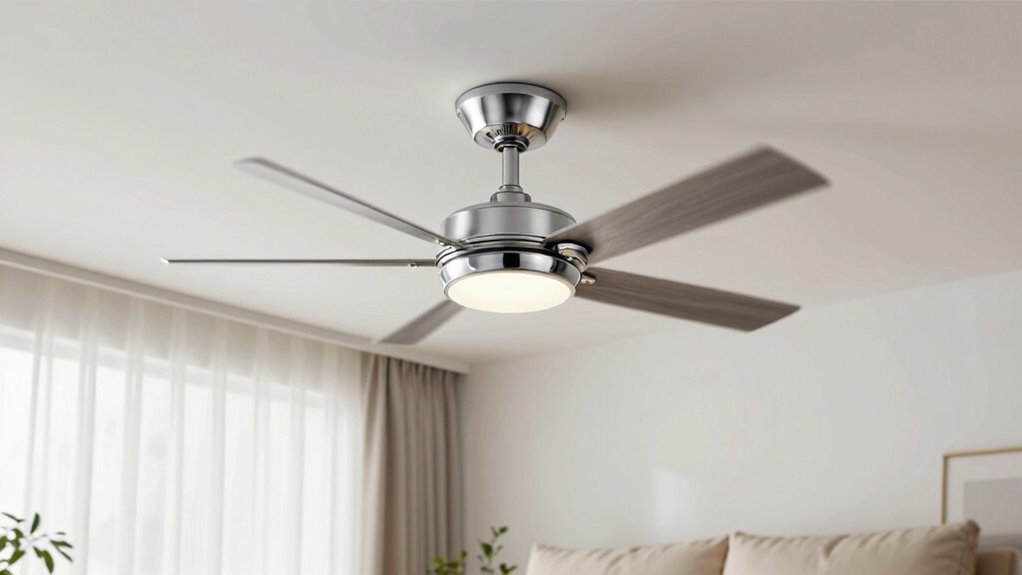
Ceiling fans boost your comfort by improving airflow and creating a pleasant environment, which can help you rely less on air conditioning. They also save energy and lower electricity bills when used properly. The noise level depends on the fan’s motor and blade design, but quiet models and good maintenance keep things peaceful. Choosing blades with the right material and balance can improve efficiency and reduce noise. If you want to discover how to optimize your fan’s performance, keep exploring these factors.

Turn quiet afternoons into listening time
- Thousands of audiobooks, podcasts and originals
- Listen on your phone, tablet or Echo — also offline
- Cancel anytime
Key Takeaways
- Ceiling fans improve comfort by enhancing airflow and maintaining a consistent temperature.
- Properly used fans reduce reliance on air conditioning, lowering energy consumption.
- Quiet, well-maintained fans provide effective airflow without noise disturbances.
- Blade material and design influence efficiency and noise levels, affecting overall comfort.
- Regular motor and blade maintenance ensure optimal performance and energy savings.
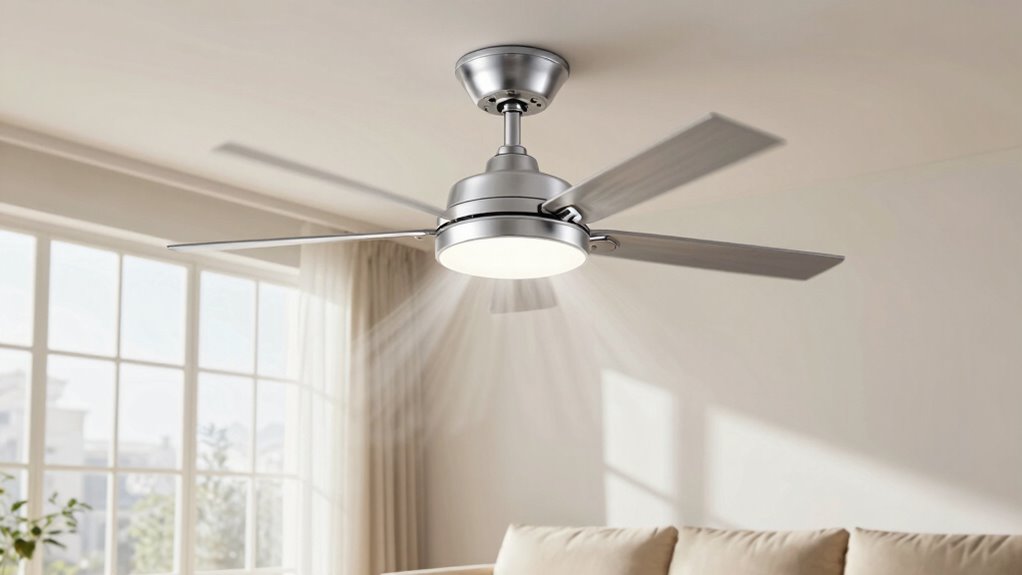
Ceiling fans are a simple yet effective way to improve both comfort and energy efficiency in your home. When used properly, they can help create a more pleasant environment while reducing your reliance on air conditioning. However, to maximize their benefits, it’s important to understand how factors like ceiling fan noise and fan blade materials impact performance. Noise levels can be a concern, especially if you plan to use your fan in quiet spaces like bedrooms or offices. Some fans produce more noise due to motor quality or design, which can be distracting or disruptive. Choosing a fan with a quiet motor, or one designed specifically for low noise, guarantees you enjoy the airflow without the unwanted hum or rattling sounds. Additionally, the material of the fan blades influences both noise and overall efficiency. Fan blade materials, such as wood, plastic, or metal, each have their own characteristics. For instance, wooden blades tend to produce less noise and provide a smoother, quieter operation. Plastic blades are lightweight and can be cost-effective, but may generate more noise at higher speeds. Metal blades, while durable, can sometimes produce a louder, more rattling sound if not well-balanced or if the mounting hardware isn’t secure. Beyond noise considerations, the fan blade material also affects how efficiently the fan moves air. Heavier materials like wood or metal can generate stronger airflow, helping cool a room more quickly and evenly. Lighter plastic blades might be less effective at moving large volumes of air but are often sufficient for smaller spaces. Proper balancing of the blades is essential regardless of material, as unbalanced blades can increase noise levels and reduce efficiency. When selecting a ceiling fan, pay attention to the blade pitch and design, as these features work together with the blade material to influence airflow and noise. A higher pitch typically moves more air, but it can also generate more noise if not engineered properly. To optimize comfort and energy savings, choose a fan with a blend of quiet operation and efficient blade materials suited to your space. It’s also beneficial to consider the fan blade design and how it influences both airflow and noise levels. Additionally, understanding fan motor quality can help you select a model that remains quiet and reliable over years of use. Regular maintenance, such as cleaning and tightening mounting hardware, also contributes to maintaining optimal performance and reducing unnecessary noise. Keeping blades properly balanced and ensuring the motor is well-lubricated can further enhance the fan’s longevity and quiet operation.
As an affiliate, we earn on qualifying purchases.
Frequently Asked Questions
Do Ceiling Fans Reduce Energy Bills Effectively?
Yes, ceiling fans can effectively reduce your energy bills by promoting energy savings. They use less electricity compared to air conditioning, especially when used with your AC or alone in milder weather. A cost comparison shows that ceiling fans are a budget-friendly way to stay comfortable. By lowering your reliance on central AC, you cut down on energy consumption, which leads to noticeable savings on your utility bills.
Can Ceiling Fans Improve Air Quality?
Ceiling fans don’t directly improve air quality, but they can help with air filtration and dust circulation. By continuously moving air, fans prevent stagnant air, reducing dust buildup and helping airborne particles disperse. This circulation can make indoor air feel fresher. However, to truly enhance air quality, you should combine ceiling fans with air purifiers or regular cleaning to remove pollutants and allergens effectively.
Are Ceiling Fans Suitable for Outdoor Use?
Yes, ceiling fans are absolutely suitable for outdoor use! They’re built with incredible outdoor durability and weather resistance, making them tough enough to withstand rain, humidity, and even blazing sun. Whether you’re relaxing on your porch or hosting a backyard party, outdoor ceiling fans keep the air moving and your space comfortable. Just make certain you choose fans specifically designed for outdoor environments to enjoy reliable performance year-round!
How Often Should Ceiling Fans Be Maintained?
You should maintain your ceiling fan every 6 to 12 months. Regular fan blade maintenance keeps dust and dirt off, ensuring peak airflow. Check the motor lubrication once a year if your fan has oil ports; if not, avoid over-lubricating. Turn off the fan before cleaning or lubrication, and tighten any loose screws. Proper maintenance prolongs the fan’s lifespan and keeps it running efficiently.
Can Ceiling Fans Help in Winter Heating?
Yes, ceiling fans can help with winter warmth by improving fan circulation. When set to run clockwise at a low speed, they push warm air trapped near the ceiling down into the living space, making rooms feel cozier. This simple adjustment can reduce your heating costs and improve overall comfort during winter months. So, using your ceiling fan strategically can keep you warmer without overusing your heating system.
Conclusion
Remember, a penny saved is a penny earned. By using your ceiling fan wisely, you can boost comfort and cut energy costs at the same time. Keep it turning in the summer to keep cool and reverse it in winter to circulate warm air. When you understand how your ceiling fan works, you make smarter choices that benefit both your comfort and your wallet. After all, a little effort goes a long way in creating a cozy, efficient home.
Fall Picks
fall essentials
As an affiliate, we earn on qualifying purchases.