To assess pain in nonverbal dementia patients, watch for behavioral cues like facial grimacing, restlessness, vocalizations, or posture changes. Use validated tools such as PAINAD or NOPPAIN to measure these signs systematically. Keep detailed notes of any behavioral shifts and consider the context to distinguish pain from other causes like agitation. Combining observation with assessment scales helps guarantee you recognize and address discomfort promptly. Exploring these techniques further can enhance your ability to provide compassionate, effective care.
Key Takeaways
- Utilize validated pain assessment tools like PAINAD or NOPPAIN to interpret behavioral cues accurately.
- Observe and document behavioral changes such as grimacing, agitation, or vocalizations over time.
- Link observed behaviors to potential pain triggers, differentiating from anxiety or environmental factors.
- Train caregivers to recognize subtle nonverbal pain indicators specific to individuals with dementia.
- Combine behavioral observations with gentle assessments and environmental adjustments for effective pain management.
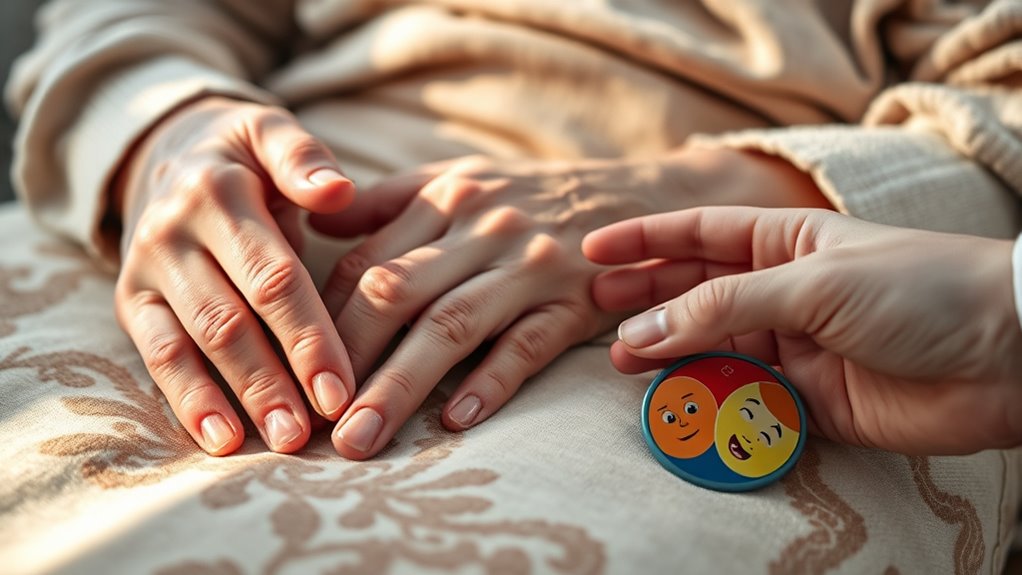
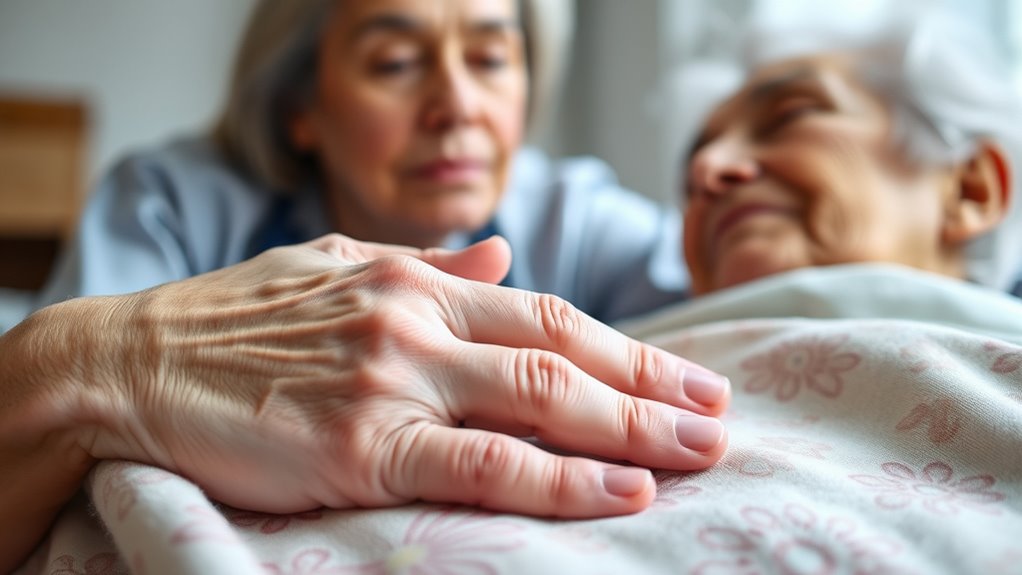
Evaluating pain in individuals with nonverbal dementia can be challenging because they cannot communicate their discomfort verbally. Without the ability to express pain directly, you need to become attentive to subtle signs that indicate distress. Behavioral cues are essential in this process; these can include facial grimacing, restless movements, vocalizations such as moaning, or changes in activity levels. Recognizing these cues requires careful observation, as they often serve as the primary indicators of pain for those who cannot articulate it themselves.
Nonverbal dementia patients show pain through facial grimacing, movements, vocalizations, and activity changes.
To systematically assess pain, you should rely on validated assessment tools designed specifically for nonverbal individuals with dementia. These tools provide a structured way to interpret behavioral cues, helping you distinguish pain-related behaviors from other possible causes like anxiety or agitation. For example, scales like the Pain Assessment in Advanced Dementia (PAINAD) or the Non-Communicative Patient Pain Assessment Instrument (NOPPAIN) assign scores based on observable behaviors, guiding you toward appropriate pain management strategies.
When using assessment tools, it’s important to observe the individual over a period, noting any changes in behavior that might signal discomfort. These tools often include categories such as facial expressions, body language, and vocalizations, which you should evaluate consistently. For instance, a sudden increase in grimacing or a shift in posture might indicate that pain has worsened. Document your findings meticulously, as this information is vital for ongoing care and for communicating with other healthcare providers.
You should also consider the context of the behaviors you observe. Sometimes, movements or vocalizations might be mistaken for agitation or frustration, but when linked to specific triggers—like movement, touch, or certain times of day—they could actually be pain responses. Combining behavioral cues with assessment tools enables a more accurate determination of pain levels. Remember, no single cue should be relied upon exclusively; instead, look for patterns and multiple signs that collectively suggest discomfort.
In addition, becoming familiar with specific essential oils that can help soothe discomfort may support overall well-being, although they should complement medical assessment rather than replace it. Ultimately, your goal is to identify pain early and accurately so you can intervene appropriately. By honing your skills in recognizing behavioral cues and utilizing assessment tools effectively, you can profoundly improve the quality of life for individuals with nonverbal dementia. Your attentive, informed approach ensures that pain doesn’t go unnoticed and unaddressed, fostering a more compassionate and effective care environment.
PAINAD pain assessment tool for dementia
As an affiliate, we earn on qualifying purchases.
As an affiliate, we earn on qualifying purchases.
Frequently Asked Questions
How Can Family Members Help With Pain Recognition?
Family members can help with pain recognition by staying involved in daily care and observing subtle changes in behavior or mood. Your involvement is vital, and caregiver training can teach you to identify signs like facial grimacing, restlessness, or reduced activity. By sharing observations with healthcare professionals, you guarantee that your loved one receives timely pain management, making their comfort a priority. Your attentive presence truly makes a difference.
Are There Specific Tools for Nonverbal Pain Detection?
You can use specific tools like pain scales designed for nonverbal individuals, such as the Abbey Pain Scale. Imagine a resident who grimaces and clenches fists during care; these behavioral cues are scored on the scale to assess pain levels. These tools help you systematically observe and document pain, making it easier to identify discomfort and provide appropriate relief even when the person can’t communicate verbally.
How Often Should Pain Assessments Be Conducted?
You should conduct routine monitoring of pain in nonverbal dementia patients at least daily, especially during significant activity changes or medication adjustments. Make certain caregivers are well-trained to recognize subtle signs of pain, using specific tools designed for nonverbal assessment. Regular assessments help catch pain early, improve comfort, and prevent complications. Consistent monitoring and caregiver education are essential for effective pain management in these patients.
Can Medication Effectively Manage Pain in Nonverbal Patients?
Medication can effectively manage pain in nonverbal patients when prescribed carefully, considering medication efficacy and individual needs. You should monitor their response closely and adjust doses as needed. Be mindful of side effect management, as some medicines may cause adverse effects. Regular assessments help ensure the medication provides relief without compromising safety, allowing you to optimize pain control while minimizing risks.
What Are Signs of Pain Beyond Facial Expressions?
You might notice signs of pain beyond facial expressions, such as vocalization cues like moaning or groaning, or changes in body language, including restlessness, guarding a specific area, or tense muscles. Pay attention to these subtle cues, especially if your loved one can’t communicate verbally. These signs help you identify pain and guarantee they get the appropriate care and comfort they need.

Pain Assessment Tool Scale Reference Vinyl Sticker 8" x 4"
Apply this vinyl waterproof sticker to any surface. Quick reference tool for use in hospitals, clinics or other…
As an affiliate, we earn on qualifying purchases.
As an affiliate, we earn on qualifying purchases.
Conclusion
Understanding pain in nonverbal dementia is like tending to a silent garden—you must observe carefully, sensing the unspoken signs of distress. By paying close attention to their behaviors and using proper assessment tools, you become their voice, uncovering hidden suffering. Your compassionate efforts can be the gentle rain that eases their pain and nurtures comfort. Remember, your vigilance and care are the keys to revealing peace for those who cannot speak for themselves.

Panelee Classroom Behavior Chart Stoplight Behavior Pocket Chart for Kids Classroom Management Tools Behavioral Learning Tool with Blank Student Paper Cutouts(43 Pieces)
Multi Purpose Learning Tool: you will receive 1 set of classroom behavior chart with 2 pieces of white…
As an affiliate, we earn on qualifying purchases.
As an affiliate, we earn on qualifying purchases.

Aphasia Communication Cards for Adults & Stroke Survivors, Non Verbal Communication Board & AAC Aid, Dementia Products for Elderly, Speech Therapy Materials for Recovery
[IMMEDIATE COMMUNICATION BRIDGE] Designed as an essential non-verbal communication tool for adults suffering from Aphasia, Stroke, or Dementia….
As an affiliate, we earn on qualifying purchases.
As an affiliate, we earn on qualifying purchases.