To prevent burns and scalds in your bathroom, set your water heater below 120°F and always check the temperature before bathing. Install anti-scald devices like thermostatic mixing valves and ensure faucets are easy to operate. Keep an eye on children and the elderly during baths, and use non-slip mats to prevent falls. Maintaining a safe environment and supervising hot water use can greatly reduce risks—keep going to discover more safety tips.
Key Takeaways
- Set water heater temperatures below 120°F (49°C) and regularly verify water temperature before use.
- Install anti-scald devices like thermostatic mixing valves to automatically control water temperature.
- Supervise children and elderly during baths, and ensure they test water temperature beforehand.
- Use non-slip mats and keep hot liquids and appliances away from edges to prevent slips and accidental burns.
- Educate household members on bathroom safety, including proper testing of water and avoiding contact with hot surfaces.
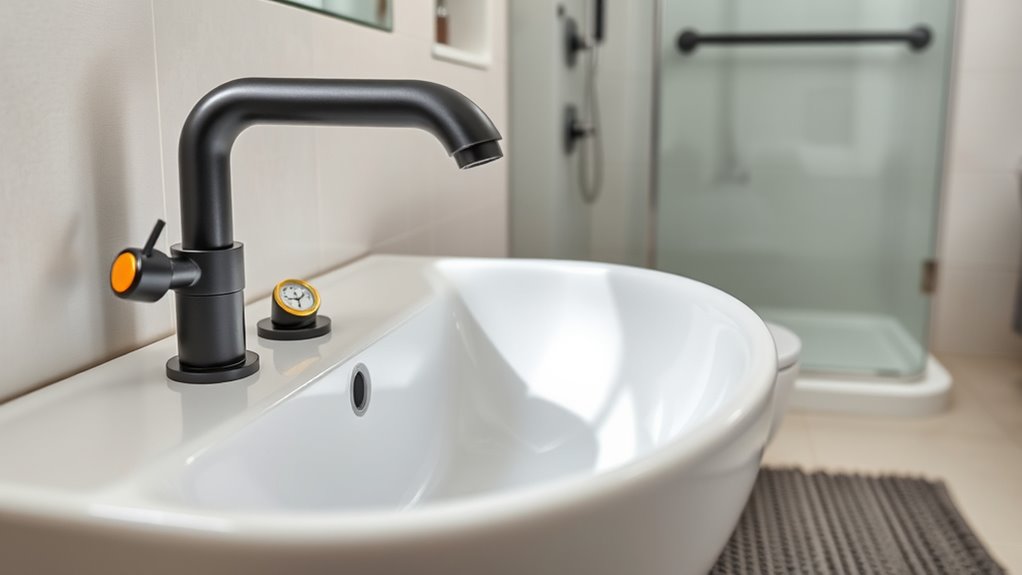
Bathrooms can be a common place for burns and scalds, especially for children and the elderly. Recognizing this risk is the first step toward creating a safer environment. As a caregiver or homeowner, you should implement effective safety measures to prevent accidents. Simple actions, like setting your water heater to a safe temperature, can make a significant difference. Experts recommend keeping the water heater below 120°F (49°C) to prevent scalding injuries. Additionally, regularly checking the temperature of bathwater before use guarantees it’s not too hot, especially when giving baths to young children or seniors with sensitive skin.
Bathrooms are common sites for burns; setting water temperatures below 120°F (49°C) helps prevent scalding injuries.
Caregiver tips also include supervising bath time closely. Never leave a child or an elderly person unattended in the bathroom. It’s easy for sudden movements or slips to lead to contact with hot water or surfaces. Installing anti-scald devices, such as thermostatic mixing valves or pressure-balancing valves on faucets and showerheads, can help maintain a consistent, safe water temperature. These devices automatically shut off or regulate the flow if the water gets too hot, providing a vital safety net.
Another key safety measure involves your bathroom fixtures. Ensure that faucets are easy to operate with minimal force, and consider installing lever handles if hand strength or mobility is an issue. Non-slip mats or rugs in the bathtub and on the bathroom floor can prevent slips and falls that might lead to burns or injuries from hot surfaces. Keep all electrical appliances, like hairdryers, away from water sources to avoid any risk of electric shock, which can compound burn injuries.
For caregivers, education is essential. Make sure everyone in your household understands the importance of testing water temperature before use and keeping hot water out of reach of children. Use warning signs or labels, especially if you have young children or elderly family members with cognitive impairments. Keep hot liquids and appliances away from the edge of counters and sinks, and always supervise during bathing or showering.
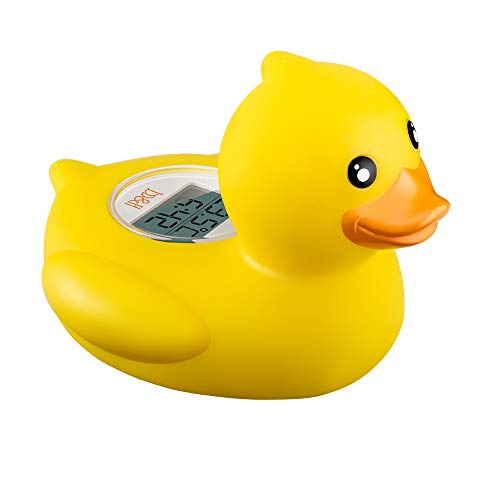
b&h Baby Bath Thermometer, Safety Water Temperature Monitor, Classic Duck
- Multi-purpose Water and Room Thermometer: Measures water and room temperature, also functions as a clock
- Safety Temperature Alerts: Flashing and beeping alarms for hot or cold water
- Dual Temperature Units: Displays in Fahrenheit and Celsius, switchable easily
As an affiliate, we earn on qualifying purchases.
As an affiliate, we earn on qualifying purchases.
Frequently Asked Questions
How Can I Test Water Temperature Safely Before Bathing?
To test water temperature safely before bathing, use a bath thermometer to check the water’s heat. Turn on the water flow gradually to prevent sudden splashes. Dip the thermometer into the water and wait for an accurate reading; ideally, it should be around 100°F (38°C). Always test the water before stepping in, especially if you’re unsure about the temperature, to avoid burns or scalds.
Are There Specific Safety Devices to Prevent Scalds in Bathrooms?
Yes, you can use thermostatic valves and safety covers to prevent scalds in bathrooms. Thermostatic valves automatically regulate water temperature, ensuring it stays at a safe level, while safety covers on taps and outlets prevent accidental contact with hot surfaces. Installing these devices provides an extra layer of protection, especially for children and elderly individuals, helping you enjoy a safer bathing experience without the worry of burns or scalds.
What Age Group Is Most at Risk for Bathroom Burns?
You should know that infants and the elderly are most at risk for bathroom burns. Imagine the danger lurking in everyday moments—an unattended hot bath or a sudden spill. Infants, with their delicate skin, can suffer severe burns quickly, while the elderly may have reduced sensation or mobility, making them vulnerable to scalds. Protecting these groups requires vigilance, proper safety devices, and quick responses to prevent tragic accidents.
How Often Should Bathroom Fixtures Be Checked for Safety?
You should check bathroom fixtures for safety at least once a month. Regular fixture maintenance helps prevent accidents caused by leaks, faulty handles, or temperature issues. Conduct safety inspections to verify thermostats are set correctly, and that faucets and showerheads aren’t dripping or leaking. Staying vigilant with these checks keeps your bathroom safe, especially for children and seniors, reducing the risk of burns and scalds.
Can Certain Medications Increase the Risk of Burns in the Bathroom?
Sure, certain medications can turn your bathroom into a fiery danger zone. Medication interactions and increased skin sensitivity mean you might not notice a scald until it’s painfully obvious. Your skin becomes more fragile, so even a hot tap or splash could cause burns. So, if you’re on meds, double-check with your doctor or pharmacist, and always test water temperature carefully—your skin’s safety depends on it.
Conclusion
By staying vigilant and following these simple tips, you can turn your bathroom into an impenetrable fortress against burns and scalds. Imagine a world where no one ever suffers from scorching water surprises again—where safety reigns supreme and your bathroom becomes a fortress of protection. Don’t let a tiny mistake turn into a disaster; take action now and keep everyone safe. Because when it comes to burns, prevention isn’t just smart—it’s lifesaving!