
When talking with someone with dementia, use simple words and short sentences to make your message clear. Be patient and give them time to process what you say. Use visual cues like pictures or gestures to support your words and help them understand better. Maintain a calm, reassuring tone and use body language to create a sense of safety. By applying these techniques, you’ll find it easier to connect and make conversations more meaningful, and there’s more you can explore to improve your approach.
Key Takeaways
- Use short, clear phrases and simple words to facilitate understanding.
- Incorporate visual aids like pictures or labels to provide context.
- Maintain a calm tone, speak slowly, and give plenty of time for responses.
- Use gestures, facial expressions, and body language to support verbal communication.
- Be patient, gentle, and consistent to build trust and meaningful connection.

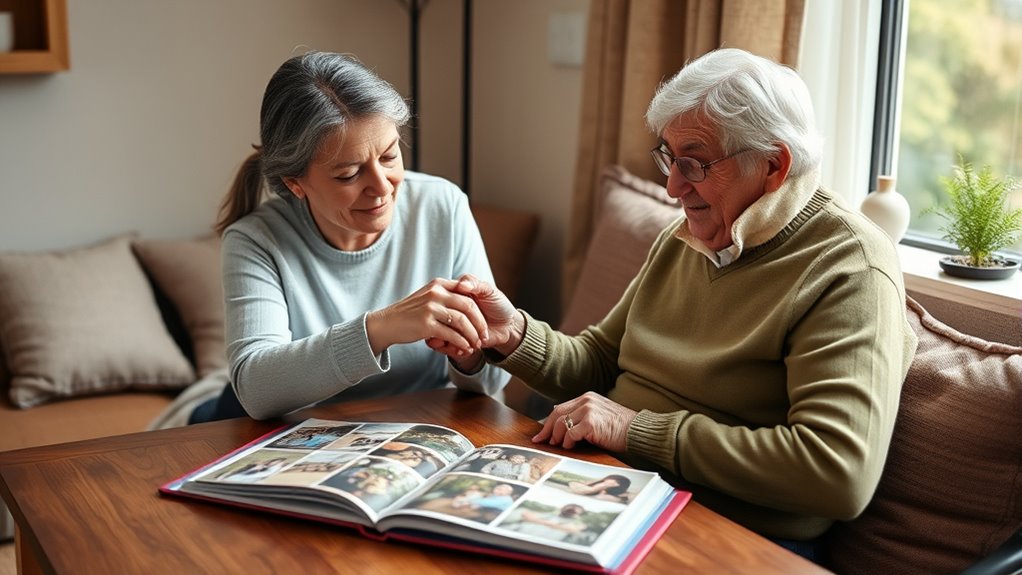
Have you ever wondered how to communicate effectively with someone who has dementia? It can be challenging, but using simple language and cues makes a big difference. When talking to a person with dementia, your goal is to make your message clear and easy to understand. This is where memory aids and gentle communication come into play. Memory aids, like pictures, labels, or familiar objects, help trigger memories and give context to conversations. For example, showing a photo of their pet or a favorite place can spark recognition and emotional connection. These tools support understanding and reduce frustration for both of you.
Gentle communication involves speaking in a calm, reassuring tone, using simple words, and maintaining patience. When you keep your language straightforward, it’s easier for your loved one to follow along. Instead of complex sentences or abstract concepts, stick to short, clear phrases. For instance, instead of saying, “Would you like to go to the park today?” you might say, “Let’s go to the park now.” This direct approach helps avoid confusion and makes decisions easier for them. Always give plenty of time for responses; rushing can cause anxiety and hinder understanding. If they seem confused, gently rephrase or reframe your message without expressing frustration or impatience.
Using cues like gestures, facial expressions, and body language can also enhance communication. Smile warmly, point to objects, or use hand signals that match your words. These cues reinforce your message and make it easier for the person with dementia to grasp what you’re saying. Remember, your tone and non-verbal cues matter just as much as your words. It’s important to stay positive and empathetic, even if your loved one struggles to respond. Maintaining eye contact and speaking softly can create a sense of safety and comfort, encouraging them to engage.
Incorporating memory aids and practicing gentle communication techniques not only helps convey your message but also makes your interactions more meaningful. Your patience, clarity, and kindness can turn everyday conversations into moments of connection. Additionally, understanding how home theatre projectors work, such as their contrast ratio and color accuracy, can make choosing the right device easier, especially if visual clarity is important. Your patience, clarity, and kindness can turn everyday conversations into moments of connection. By simplifying your language, using cues, and employing gentle communication strategies, you foster trust and understanding. It’s about making your loved one feel safe and supported, even when their memory and cognition are changing. Ultimately, these approaches help you communicate more effectively and nurture the bond you share.
Frequently Asked Questions
How Can I Tell if My Loved One Understands Me?
You can tell if your loved one understands you by paying attention to their verbal cues and emotional responses. If they respond with a smile, nod, or attempt to say something back, it shows they’re engaged and understanding. Even if they don’t speak clearly, their facial expressions, gestures, and emotional reactions can indicate comprehension. Keep your communication simple, clear, and positive to help them feel connected and understood.
What Are Common Signs That Communication Is Improving?
You’ll notice communication improving like a sunrise breaking through darkness. Your loved one may respond with clearer words, engage more often, and show positive emotional responses. Pay attention to nonverbal cues like eye contact, smiles, or gestures, which signal understanding. When they seem more relaxed and initiate conversations, it’s a sign your efforts are paying off. These signs mean your connection is strengthening, and communication is becoming more effective and meaningful.
How Do I Handle Sudden Agitation During Conversations?
When sudden agitation occurs during conversations, stay calm and offer gentle reassurance. Speak softly and maintain a reassuring tone to help soothe them. Use a gentle touch on their hand or shoulder if appropriate, to provide comfort. Redirect their attention to a calming activity or change the topic gently. Your calm presence and reassurance can help de-escalate the situation and make them feel safe and understood.
Are There Specific Topics That Are Easier for Dementia Patients?
Think of conversations as a gentle dance—you want to stay in step. You’ll find that topics related to their past, like childhood memories or favorite hobbies, are easier for dementia patients. Use sensory cues like familiar smells or pictures to spark memory recall. These familiar subjects act as bridges, helping them connect and feel comfortable. Keep it simple, warm, and engaging, and you’ll both enjoy a smoother, more meaningful chat.
How Can I Encourage Participation Without Causing Frustration?
You can encourage participation by simplifying language and using cues like gestures or visual aids. Keep your sentences short and clear, and pause to give them time to respond. Use familiar objects or pictures to spark conversation and make it easier for them to join in. Always stay patient and gentle, avoiding pressure, so they feel comfortable and motivated to participate without becoming frustrated.
Conclusion
Talking with someone with dementia is like tending a delicate garden—you must nurture patience, clarity, and kindness. Simple words act as gentle watering can, helping memories bloom even in cloudy skies. When you use cues and a warm tone, you’re planting seeds of connection that can flourish despite the fog. Remember, your voice is a guiding light through their changing landscape, illuminating moments of familiarity and comfort in the quietest corners of their world.