Using plain language for health information helps you understand your health conditions, treatments, and instructions clearly. It involves avoiding jargon and technical terms, replacing them with simple words you easily recognize. Effective communication builds trust, encourages you to ask questions, and actively participate in your care. Prioritizing plain language makes healthcare less confusing and more approachable, empowering you to make better decisions. Keep exploring to discover more ways to communicate effectively with your healthcare team.

Turn quiet afternoons into listening time
- Thousands of audiobooks, podcasts and originals
- Listen on your phone, tablet or Echo — also offline
- Cancel anytime
Key Takeaways
- Use simple, everyday words instead of medical jargon to ensure patient understanding.
- Break down complex information into clear, manageable steps or points.
- Encourage patients to ask questions and repeat information in their own words.
- Check for understanding regularly to confirm the patient comprehends the message.
- Use visual aids and written materials with plain language to reinforce key health information.
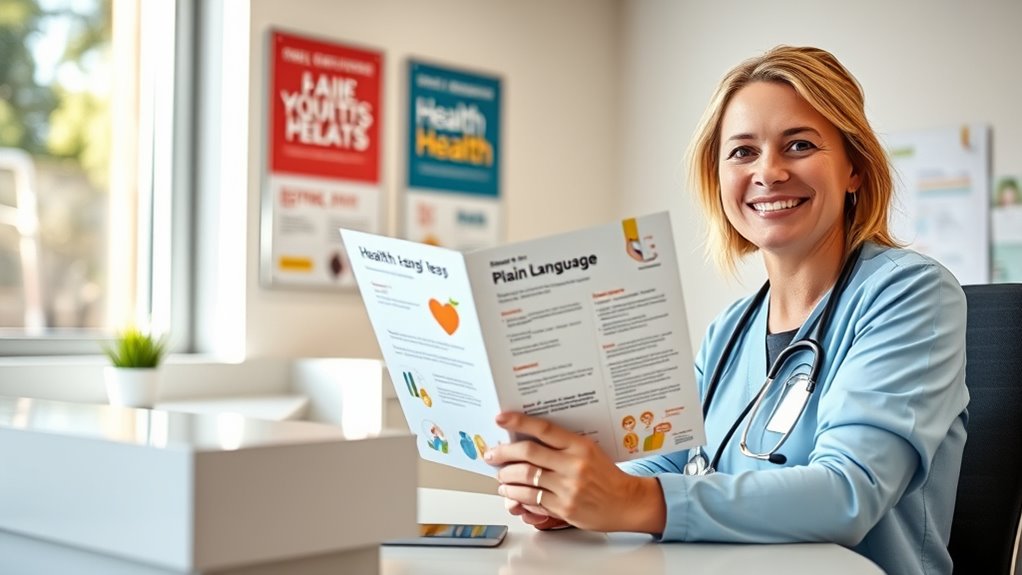
Clear communication is fundamental when sharing health information, especially because complex medical terms can easily confuse or overwhelm you. When healthcare providers use complicated language, it can be hard for you to understand your condition, treatment options, or instructions. That’s why improving health literacy is so important. Health literacy refers to your ability to read, understand, and act on health information. If the information isn’t clear or accessible, you might miss important details or make decisions based on misunderstandings. As a patient, effective communication with your healthcare team relies on clear, straightforward language. This helps ensure you grasp what’s happening with your health and what steps to take next.
Using plain language in patient communication isn’t just about simplifying words; it’s about making information accessible and meaningful for you. Healthcare providers should avoid jargon, abbreviations, or technical terms that aren’t commonly understood. Instead, they should use everyday words and clear explanations. For example, instead of saying “hypertension,” they might say “high blood pressure.” Instead of “prescription,” they could say “medicine your doctor gives you to take at home.” When your provider takes this approach, it becomes easier for you to ask questions, express concerns, and participate actively in your care.
Use everyday words and clear explanations to better understand and participate in your healthcare.
Effective patient communication also involves checking for understanding. Healthcare providers should encourage you to repeat information or explain it back in your own words. This ensures you’re not just hearing the words but truly understanding what they mean. If you’re confused about a medication schedule or lifestyle changes, don’t hesitate to ask for clarification. Clear communication builds trust and confidence, making it more likely you’ll follow through with treatment plans correctly. It also reduces the risk of errors and complications that can result from misunderstandings.
As someone receiving health information, you play a crucial role in this process. Don’t be afraid to ask questions or request simpler explanations if something isn’t clear. You have a right to understand your health and the steps you need to take. Remember, your healthcare team’s goal is to support you, and using plain language makes that support much more effective. When health literacy is prioritized through patient communication that’s straightforward and respectful, you’re empowered to make informed decisions about your health. Clear, plain language bridges the gap between complex medical concepts and your real-life needs, making healthcare a more collaborative and less intimidating experience for you. Additionally, understanding that home theatre projectors can vary in features helps you choose the right device for your needs and enhances your overall experience.
health information plain language guide
As an affiliate, we earn on qualifying purchases.
As an affiliate, we earn on qualifying purchases.
Frequently Asked Questions
How Can I Tell if Health Information Is Credible?
You can tell if health information is credible by checking your health literacy skills and verifying the information. Look for sources like reputable health organizations, government websites, or peer-reviewed studies. Be cautious of sensational claims or websites with lots of ads. Always cross-check facts with trusted sources, and ask healthcare professionals if you’re unsure. This way, you guarantee the health info you rely on is accurate and trustworthy.
What Are Common Barriers to Understanding Health Information?
Think of health information as a tangled ball of yarn. Medical jargon can be the knots that make it hard to pull apart, and literacy challenges are like fog obscuring your view. These barriers slow your understanding, leaving you frustrated and unsure. To untangle it, ask for simpler explanations, use plain language, and seek resources designed for easy comprehension. This way, you clear the fog and see the path to better health.
How Does Plain Language Improve Patient Outcomes?
Plain language improves your health outcomes by boosting your health literacy, making it easier for you to understand medical instructions and health risks. When information is clear and simple, you’re more likely to engage actively in your care, ask questions, and follow treatments properly. This increased patient engagement leads to better decision-making, fewer errors, and improved overall health, empowering you to take control of your well-being confidently.
Can Plain Language Be Used for Complex Medical Topics?
Yes, plain language can be used for complex medical topics. You simplify medical jargon, making information easier for patients to understand. This boosts patient comprehension, even with intricate subjects like treatments or diagnoses. By breaking down complicated concepts into clear, straightforward language, you help patients make informed decisions and follow medical advice more effectively, ultimately improving their health outcomes.
What Training Is Available for Healthcare Providers on Plain Language?
Think of plain language training as a map guiding you through complex healthcare terrain. You can enroll in healthcare literacy programs or attend workshops offered by medical associations, universities, and online platforms. These programs teach you how to communicate clearly, simplify medical jargon, and enhance patient understanding. By participating, you become better equipped to deliver information that patients can easily grasp, ultimately improving their health outcomes and fostering trust.
Conclusion
Using plain language makes health information clear and easy to understand. It bridges the gap between complex medical terms and your everyday life, empowering you to make better decisions. Imagine reading a confusing medical report and then seeing it rewritten in simple words—like a friendly guide rather than a foreign language. When health info is easy to grasp, you gain confidence and control. Don’t settle for confusion; choose plain language for a healthier, more informed you.
Fall Picks
fall essentials
As an affiliate, we earn on qualifying purchases.