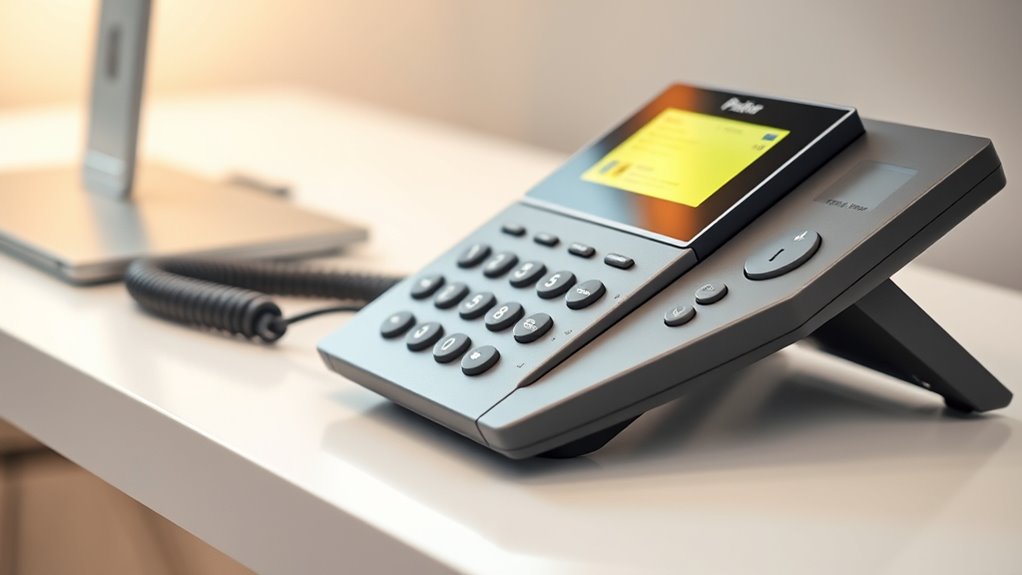

Captioned telephone services work by converting spoken words into text instantly during your calls, allowing you to follow conversations more easily. You use a special phone that connects via internet or landline, which displays real-time captions of what the other person says. It also transcribes your speech for the caller to see. This seamless system helps you communicate effectively despite hearing challenges. Keep going to discover more about how this technology can enhance your conversations.

Get comfort and care essentials delivered free — and shop member deals
- Fast, free delivery on millions of items
- Access to Prime Big Deal Days deals on October 6–7
- Prime Video, Amazon Music and more included
Key Takeaways
- Captioned telephone services use speech recognition technology to transcribe spoken words into text in real time during calls.
- The service connects through specialized phones, displaying live captions of the caller’s speech automatically.
- Both parties can read transcribed speech, enabling seamless two-way communication despite hearing difficulties.
- Users can customize caption size, contrast, and save transcripts for later review.
- These services are often offered at low or no cost via government programs, improving accessibility for users with hearing impairments.
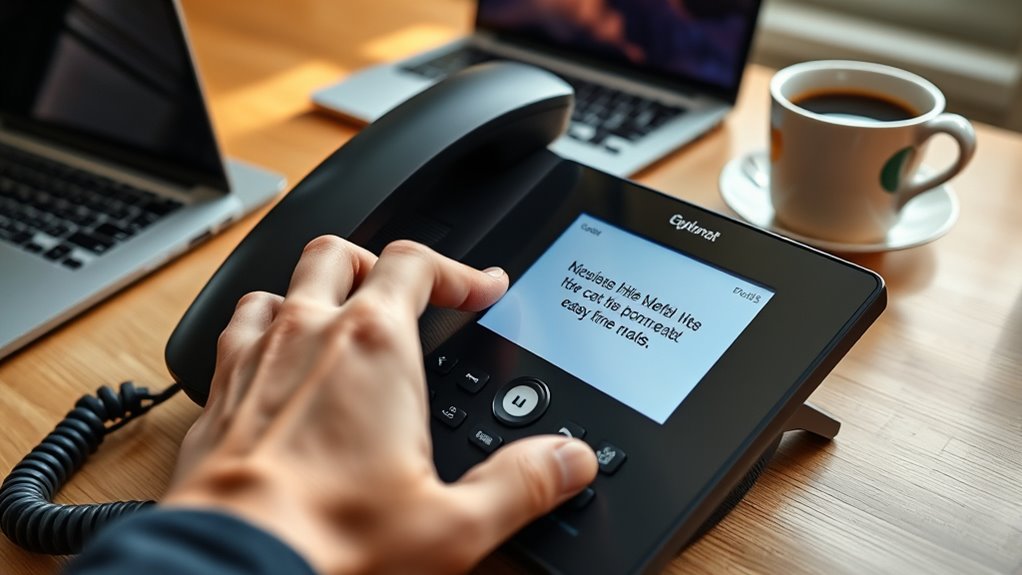
Have you ever struggled to understand phone conversations due to hearing difficulties? If so, you’re not alone. Many people face challenges when trying to follow spoken words over the phone, which can lead to frustration and missed information. Fortunately, assistive technology has advanced to provide solutions that improve communication accessibility. One such solution is captioned telephone services, designed to make phone conversations clearer and more manageable for those with hearing impairments.
Captioned telephone services work by integrating real-time captioning with your traditional phone calls. When you make or receive a call, the service transcribes the speaker’s words into text that appears on a screen on your phone or a connected device. This enables you to read what the caller is saying almost instantaneously, helping you keep up with the conversation without straining to hear every word. The captions are generated using speech recognition technology, which converts spoken language into written text in real time. This process allows you to follow along effortlessly, even if your hearing loss makes understanding speech difficult.
Real-time captioning transcribes calls for easier understanding and seamless communication.
These services are designed with communication accessibility in mind, ensuring that users can participate fully in conversations without relying solely on auditory cues. They typically function through a specialized phone that connects to the internet or a traditional landline, depending on the provider and your setup. When you answer a call, the device automatically displays live captions of what the caller is saying. If you’re speaking, the system transcribes your words for the caller to read, facilitating two-way communication that’s both accessible and natural. Additionally, many services leverage remote collaboration tools to enhance user experience and support remote communication needs.
Many captioned telephone services also offer additional features to enhance your experience. Some allow you to customize the size and contrast of captions for better visibility, while others include options for saving and reviewing transcripts of conversations. These services are often provided at little or no cost through government programs or local service providers, recognizing the importance of accessible communication. They’re especially beneficial for seniors, individuals with moderate to severe hearing loss, or those who prefer visual cues to supplement auditory information.
As an affiliate, we earn on qualifying purchases.
Frequently Asked Questions
What Equipment Is Necessary to Use Captioned Telephone Services?
You need a captioned telephone device, which acts as the assistive device for captioned services. To get started, follow the installation procedures provided by your service provider, which often include connecting the captioned phone to your landline and internet. Some systems may require a compatible tablet or computer for transcription. Once set up, you can enjoy real-time captions during your calls, making communication clearer and more accessible.
Are Captioned Telephone Services Available for International Calls?
Think of captioned telephone services as your bridge across language oceans. While primarily designed for domestic use, some providers offer international accessibility with language translation features. You can connect with global callers, and the captions help you understand spoken words in different languages. Check with your service provider, as options vary. This way, you stay connected worldwide, breaking down language barriers just like crossing a bridge with ease.
How Much Do Captioned Telephone Services Typically Cost?
You’ll find that captioned telephone services typically cost between $0 and $50 per month, depending on the provider and features. Consider the pricing options carefully, as some services offer free basic plans, while others charge for additional features. Doing a cost comparison helps you choose a plan that fits your budget and needs. Keep in mind that many providers offer trial periods or discounts, making it easier to find the best deal.
Can Captioned Telephone Services Be Used During Emergencies?
Absolutely, captioned telephone services can be used during emergencies. They provide reliable, real-time emergency communication, ensuring you’re never left in the dark. With dependable service reliability, you can confidently connect with emergency responders or loved ones when it matters most. These services are designed to support urgent situations, so you can stay safe, secure, and connected during any crisis, making them an essential tool for emergency communication.
Are Captioned Telephone Services Compatible With Mobile Phones?
Yes, captioned telephone services are compatible with mobile phones. You can use your mobile device for captioned calls through specialized apps or integrated features offered by your service provider. Many providers offer options designed for smartphones, making it easy to stay connected. Check with your service provider for specific mobile device compatibility and available options to guarantee you can access captioned services conveniently wherever you go.
Conclusion
Now that you understand how captioned telephone services work, you can see how they make communication more accessible for everyone. Did you know that over 4 million people in the U.S. rely on these services to stay connected? This statistic highlights just how essential captioned phones are in bridging communication gaps. With this technology, you’re not just talking—you’re connecting more comfortably and confidently, no matter your hearing ability.
Halloween Picks
halloween
As an affiliate, we earn on qualifying purchases.