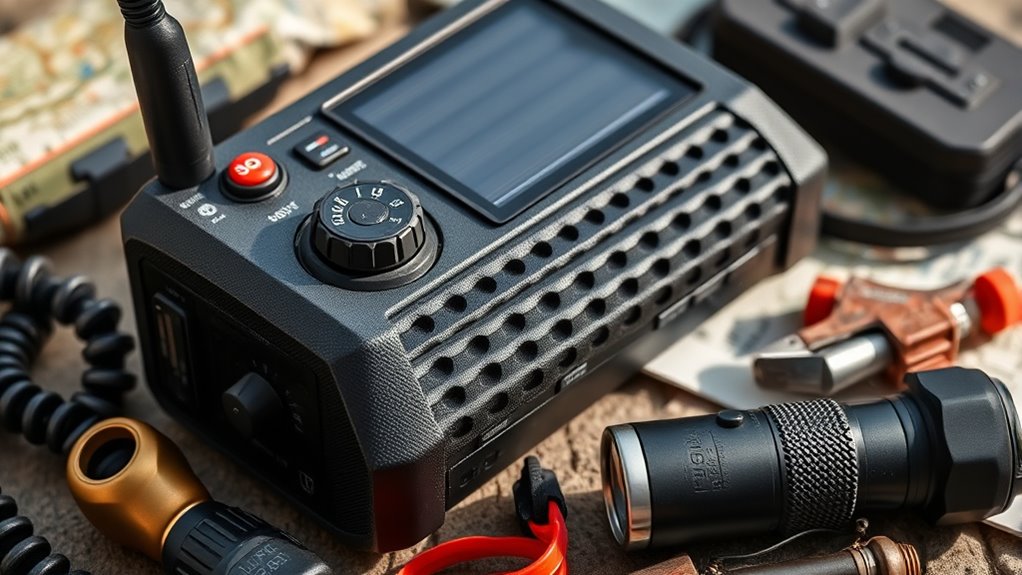

For an emergency radio that balances weather alerts, useful backup power, and practical operation, I’d put the Midland ER310 first; the Raynic 5000mAh models offer more charging features, while the 12000mAh options favor longer phone-power reserves. The main tradeoff is between a larger battery and a radio that is easier to carry and keep charged. Crank and solar charging can help when outlets are unavailable, but neither should be treated as a quick replacement for a full charge. I compare all 15 options by alert access, power choices, ease of use, and portability. Continue reading for the full breakdown and a recommendation matched to your needs.

Turn quiet afternoons into listening time
- Thousands of audiobooks, podcasts and originals
- Listen on your phone, tablet or Echo — also offline
- Cancel anytime
Complete the kit


Key Takeaways
- The Midland ER310 is the strongest all-around starting point in this lineup, while the ER310PRO adds Bluetooth for buyers who value everyday listening as well as emergency use.
- Battery capacity separates the main use cases: 12000mAh models emphasize reserve power, while the 5000mAh Raynic radios make a more compact feature-and-power compromise.
- Charging methods are not interchangeable: hand cranks and solar panels can provide backup input, but stored battery capacity is the more dependable short-term reserve.
- Feature-heavy radios vary in practical usefulness: built-in cables, lights, sirens, and multiple bands can help, but added features do not replace checking alert reception and controls.
- The lineup includes a lower-capacity option for simpler needs: the 2000mAh radio is easier to justify as a basic alert-and-light backup than as a phone-charging source.
| Midland ER310 Emergency Crank Weather AM/FM Radio |  | Best Overall for a Home Emergency Kit | Model: ER310 | Radio bands: AM/FM | Power sources: Solar, hand crank, USB, or 6 AA batteries | VIEW ON AMAZON | See Our Full Breakdown |
| Raynic Emergency Weather Radio with 5000mAh Battery, NOAA Alerts, and Multiple Charging Options |  | Best for Outdoor Readability | Battery capacity: 5000mAh | Radio bands: AM/FM/SW/NOAA | Charging options: 6-way charging, including a built-in rechargeable battery | VIEW ON AMAZON | See Our Full Breakdown |
| Raynic Emergency Radio, 5000mAh Weather Radio with NOAA Alert, Solar Hand Crank, AM/FM/SW, Cell Phone Charger, Flashlight, SOS Siren |  | Best for Multiple Radio Bands | Battery capacity: 5000mAh | Radio bands: AM/FM/SW/NOAA | Power sources: AC adapter, USB, hand crank, solar panel, or AAA batteries | VIEW ON AMAZON | See Our Full Breakdown |
| 12000mAh Emergency NOAA Weather Radio with Solar Panel, Hand Crank, Flashlight, and SOS |  | Best for High-Capacity Backup Power | Battery capacity: 12000mAh / 44400mWh | Power sources: USB-C, solar panel, hand crank, or 3 AAA batteries | Radio bands: NOAA (7 channels), AM (520–1710 KHz), FM (87.5–108 MHz) | VIEW ON AMAZON | See Our Full Breakdown |
| Emergency Weather Radio, 12000mAh Solar Hand Crank NOAA Radio, Army Green |  | Best Rugged-Style Pick | Battery capacity: 12000mAh | Solar panel: 8500mm² | Power sources: Solar, hand crank, USB-C | VIEW ON AMAZON | See Our Full Breakdown |
| Leaton Hand Crank Emergency Radio, NOAA Weather Radio AM/FM, 10000mAh |  | Best for Rugged, All-in-One Readiness | Battery capacity: 10,000mAh | Charging modes: Solar, hand crank, USB-C | Water resistance: IPX6 | VIEW ON AMAZON | See Our Full Breakdown |
| Midland ER310PRO Portable Emergency Bluetooth Weather AM/FM Radio |  | Best for Alerts and Emergency Signaling | Power bank capacity: 10,000mAh | Listed radio battery life: Up to 200 hours | Power sources: Solar panel, hand crank, rechargeable lithium-ion battery | VIEW ON AMAZON | See Our Full Breakdown |
| Hand Crank Emergency Radio with 7400mWh Battery, Solar Charging, and Built-in Cables |  | Best for Charging Mixed Devices | Battery capacity: 7,400mWh (2,000mAh) | Power sources: USB-C, hand crank, solar panel, AAA batteries | Built-in cables: Lightning, USB-C, Micro USB | VIEW ON AMAZON | See Our Full Breakdown |
| Hand Crank Radio with LED Flashlight, 2000mAh NOAA AM FM Emergency Radio |  | Best Compact Pick | Battery capacity: 2,000mAh | Power sources: Hand crank, solar panel, rechargeable battery | Radio bands: AM, FM, NOAA | VIEW ON AMAZON | See Our Full Breakdown |
| FosPower NOAA Emergency Weather Radio A1 |  | Best for Simple, Battery-Backed Preparedness | Battery capacity: 7,400mWh (2,000mAh) | Power sources: Solar, hand crank, AAA batteries | Radio bands: NOAA Weather, AM, FM | VIEW ON AMAZON | See Our Full Breakdown |
| Emergency Weather Radio with Large Solar Panel, 12000mAh Battery |  | Best for Wet-Weather Preparedness | Battery capacity: 12,000mAh | Solar panel: 8500mm² monocrystalline | Power sources: Solar, hand crank, USB, and 3 AAA batteries | VIEW ON AMAZON | See Our Full Breakdown |
| 10,000mAh Emergency Weather Radio with NOAA Alerts, AM/FM, Flashlight, and Multiple Charging Options |  | Best for Bright, Multi-Purpose Lighting | Battery capacity: 10,000mAh (37,000mWh) | Weather channels: 7 NOAA channels, 162.400–162.550 MHz | AM range: 510–1710 kHz | VIEW ON AMAZON | See Our Full Breakdown |
| Weather Radio Portable AM FM NOAA Alert with Battery Backup and 12000mAh Capacity |  | Best for Compact Storage | Battery capacity: 12,000mAh | Power sources: Solar, hand crank, 5V/2A Type-C, and 3 AAA batteries | Radio bands: NOAA, FM, and AM | VIEW ON AMAZON | See Our Full Breakdown |
| Solar Emergency Hand Crank Radio with 12000mAh Power Bank and LED Light |  | Best for Hand-Crank Backup | Battery capacity: 12,000mAh lithium battery | Power sources: Solar, hand crank, 5V/2A Type-C, and 3 AAA batteries | Radio bands: NOAA, FM, and AM | VIEW ON AMAZON | See Our Full Breakdown |
| Emergency Weather Radio with Large Solar Panel and Hand Crank |  | Best for Dual Emergency Lighting | Battery capacity: 12,000mAh | Solar panel: 8500mm² monocrystalline | Charging options: 5 ways; individual methods not specified | VIEW ON AMAZON | See Our Full Breakdown |
| emergency radio | Battery capacity | Power sources | Radio bands | Water resistance |
|---|---|---|---|---|
| Midland ER310 Emergency Crank | — | Solar, hand crank, USB, or 6 AA batteries | AM/FM | Not water resistant |
| Raynic Emergency Weather Radio | 5000mAh | — | AM/FM/SW/NOAA | IPX3 |
| Raynic Emergency Radio | 5000mAh | AC adapter, USB, hand crank, solar panel, or AAA batteries | AM/FM/SW/NOAA | IPX3 |
| 12000mAh Emergency NOAA Weathe | 12000mAh / 44400mWh | USB-C, solar panel, hand crank, or 3 AAA batteries | NOAA (7 channels), AM (520–1710 KHz), FM (87.5–108 MHz) | Described as waterproof; specific rating not provided |
| Emergency Weather Radio | 12000mAh | Solar, hand crank, USB-C | — | — |
| Leaton Hand Crank Emergency Ra | 10,000mAh | — | — | IPX6 |
| Midland ER310PRO Portable Emer | — | Solar panel, hand crank, rechargeable lithium-ion battery | AM, FM, Weather | — |
| Hand Crank Emergency Radio wit | 7,400mWh (2,000mAh) | USB-C, hand crank, solar panel, AAA batteries | NOAA Weather, AM, FM | — |
| Hand Crank Radio with LED Flas | 2,000mAh | Hand crank, solar panel, rechargeable battery | AM, FM, NOAA | — |
| FosPower NOAA Emergency Weathe | 7,400mWh (2,000mAh) | Solar, hand crank, AAA batteries | NOAA Weather, AM, FM | — |
| Emergency Weather Radio with L | 12,000mAh | Solar, hand crank, USB, and 3 AAA batteries | AM, FM, and 7 NOAA bands | IPX6 waterproof |
| 10,000mAh Emergency Weather Ra | 10,000mAh (37,000mWh) | Solar panel, hand crank, and AC adapter | — | — |
| Weather Radio Portable AM FM N | 12,000mAh | Solar, hand crank, 5V/2A Type-C, and 3 AAA batteries | NOAA, FM, and AM | Listed as water resistant; no rating specified |
| Solar Emergency Hand Crank Rad | 12,000mAh lithium battery | Solar, hand crank, 5V/2A Type-C, and 3 AAA batteries | NOAA, FM, and AM | Listed as water resistant; no rating specified |
| Emergency Weather Radio with L | 12,000mAh | — | — | — |
More Details on Our Top Picks
Midland ER310 Emergency Crank Weather AM/FM Radio
I rank the Midland ER310 first for buyers who want a familiar, practical backup radio with several ways to keep it powered. Solar, hand-crank, USB, and included AA batteries give it useful flexibility during an outage, while the NOAA weather scan and alerts focus the feature set on receiving emergency information. Its flashlight, SOS alarm, and dog whistle add useful signaling options without requiring a separate kit item. Compared with the Raynic 5000mAh Emergency Weather Radio, the Midland trades an LCD display and SW reception for included AA batteries and a simpler AM/FM setup. The main limitation is its lack of water resistance: I would keep it sheltered in wet weather. It is a balanced choice for home preparedness, but not my pick for exposed outdoor use.
Pros:- Solar, hand-crank, USB, and included AA-battery power options offer several ways to keep the radio running.
- NOAA weather scan and alerts help users receive local hazard information.
- Flashlight, SOS alarm, and ultrasonic dog whistle provide multiple signaling and visibility tools.
- At 16 ounces, it is relatively easy to store in an emergency kit.
Cons:- It is not water resistant, so wet-weather use calls for reliable shelter.
- The six-AA battery option adds separate batteries to store and manage.
- AM/FM-only reception offers fewer band choices than the Raynic model with shortwave.
Best for: Households building a home outage kit that want included battery backup, NOAA alerts, and basic signaling tools in one radio.
Not ideal for: Campers or storm-response users who need a water-resistant radio for use in rain or damp conditions.
- Model:ER310
- Radio bands:AM/FM
- Power sources:Solar, hand crank, USB, or 6 AA batteries
- Display:LED
- Water resistance:Not water resistant
- Dimensions:9.61 × 2.95 × 6.85 inches
- Weight:16 ounces
- Additional features:Built-in flashlight, SOS alarm, ultrasonic dog whistle, NOAA weather alert
Our verdict“Choose the Midland ER310 for a home emergency kit that prioritizes flexible power and straightforward weather alerts over water resistance and extra radio bands.”
Raynic Emergency Weather Radio with 5000mAh Battery, NOAA Alerts, and Multiple Charging Options
The Raynic 5000mAh Emergency Weather Radio suits buyers who want a readable display and lighting for both navigation and close-up tasks. Its large HD LCD makes controls and information easier to see than on the Midland ER310’s LED display, while the reading lamp serves a different purpose from a forward-facing flashlight during a power outage. AM/FM/SW and NOAA reception also give it broader band coverage than the Midland’s AM/FM-only setup. This radio lists six charging options and has an IPX3 rating, so it is better suited to light splashes than the Midland, though that rating is no substitute for protection from heavy rain. The tradeoffs are its 1.2-pound weight and a backlight that can draw battery power. I’d pick it for a sheltered campsite or household that values display legibility, not for the lightest carry kit.
Pros:- Large HD LCD is easier to read than the Midland ER310’s LED display.
- AM/FM/SW/NOAA reception adds shortwave listening beyond the Midland’s AM/FM bands.
- Reading lamp and flashlight support both close-up tasks and general visibility.
- IPX3 water resistance offers some protection from splashes.
Cons:- At 1.2 pounds, it weighs substantially more than the 16-ounce Midland ER310.
- The IPX3 rating does not make it suitable for heavy rain or immersion.
- Leaving the LCD backlight on can reduce available battery runtime.
Best for: Campers and household emergency planners who want a large, easy-to-read display, a reading lamp, and multiple radio bands.
Not ideal for: Minimalist hikers seeking the lightest possible radio or people who need reliable operation in heavy rain.
- Battery capacity:5000mAh
- Radio bands:AM/FM/SW/NOAA
- Charging options:6-way charging, including a built-in rechargeable battery
- Display:Large HD LCD
- Water resistance:IPX3
- Dimensions:6.8 × 3.7 × 2.9 inches
- Weight:1.2 pounds
- Lighting output:3W flashlight and 2.5W reading lamp
- Connectivity:Headphone jack
Our verdict“Pick this Raynic if display readability, shortwave reception, and dual-purpose lighting matter more than low weight or stronger rain protection.”
Raynic Emergency Radio, 5000mAh Weather Radio with NOAA Alert, Solar Hand Crank, AM/FM/SW, Cell Phone Charger, Flashlight, SOS Siren
This Raynic model is the clearest fit for buyers who want AM, FM, shortwave, and NOAA reception alongside solar and hand-crank charging. Compared with the other Raynic 5000mAh radio in this roundup, it explicitly lists AC adapter, USB, hand crank, solar, and AAA batteries as power sources, plus a USB charging port for a phone. Its flashlight, reading lamp, and SOS alarm also make it more of a combined information-and-lighting tool than the more display-focused Raynic. The tradeoff is a modest 5000mAh battery capacity and a 1.2-pound weight, so the larger-capacity 12000mAh radios are better candidates for longer device-charging needs. IPX3 offers limited splash protection, not waterproofing, and AAA batteries are not included. I’d choose it for band flexibility and varied power inputs rather than maximum stored capacity.
Pros:- AM/FM/SW/NOAA reception offers more band variety than the Midland ER310.
- Power options include AC adapter, USB, hand crank, solar, and AAA batteries.
- USB charging port, flashlight, reading lamp, and SOS alarm cover several emergency tasks.
- The LCD display and 3W speaker support convenient listening and operation.
Cons:- Its 5000mAh capacity is lower than the 12000mAh emergency radios in this lineup.
- AAA batteries are not included.
- IPX3 water resistance does not protect it from heavy rain or immersion.
Best for: Preparedness-minded campers and households that want shortwave alongside NOAA, AM/FM, and several backup charging methods.
Not ideal for: Buyers who prioritize a large power-bank capacity, included AAA batteries, or protection from sustained rain.
- Battery capacity:5000mAh
- Radio bands:AM/FM/SW/NOAA
- Power sources:AC adapter, USB, hand crank, solar panel, or AAA batteries
- Display:Large HD LCD
- Water resistance:IPX3
- Dimensions:6.8 × 3.7 × 2.9 inches
- Weight:1.2 pounds
- Speaker power:3W
- Additional features:Flashlight, reading lamp, USB charging port, SOS alarm
Our verdict“Choose this Raynic for shortwave reception and varied power inputs, but favor a 12000mAh model if extended phone charging is your priority.”
12000mAh Emergency NOAA Weather Radio with Solar Panel, Hand Crank, Flashlight, and SOS
For buyers who want a radio that can also serve as a substantial emergency power bank, this 12000mAh model stands apart from both 5000mAh Raynic radios and the Midland ER310. Its listed capacity, four power sources, and USB-C input make it the stronger fit for longer outages when recharging a small device matters. It also specifies a 300-lumen flashlight, a 250-lumen reading light, a 5W speaker, and a 115dB SOS siren, giving buyers more concrete output details than the other 12000mAh model here. The product is described as waterproof, an advantage over the IPX3 Raynic radios, although no specific rating is supplied. There are limits: the wall adapter is not included, and NOAA alerts work only when the radio is on and tuned to a weather band. That makes it a capable, feature-rich choice, not a set-and-forget alert receiver.
Pros:- 12000mAh capacity exceeds the 5000mAh Raynic models for stored backup power.
- USB-C, solar, hand crank, and AAA batteries provide several power routes.
- Specified 300-lumen flashlight, 250-lumen reading light, and 115dB SOS siren clarify its emergency-lighting and signaling capabilities.
- Described as waterproof, unlike the IPX3 Raynic radios.
Cons:- Wall adapter is not included.
- NOAA alerts function only when the radio is on and tuned to a weather band.
- The supplied details do not give a specific waterproof rating.
Best for: Households and campers who want a large battery for extended radio use and occasional phone charging, plus specified lighting and signaling outputs.
Not ideal for: Buyers who need a radio that monitors NOAA alerts while tuned elsewhere or want a clearly stated water-resistance rating.
- Battery capacity:12000mAh / 44400mWh
- Power sources:USB-C, solar panel, hand crank, or 3 AAA batteries
- Radio bands:NOAA (7 channels), AM (520–1710 KHz), FM (87.5–108 MHz)
- Flashlight output:300 lumens, up to 70 meters
- Reading light output:250 lumens
- SOS alarm:115dB
- Water resistance:Described as waterproof; specific rating not provided
- Speaker power:5 watts
- Connectivity:USB-C, auxiliary
Our verdict“Choose this model for high battery capacity and clearly specified lighting outputs, provided you can manage its tuned-band alert limitation and source a wall adapter.”
Emergency Weather Radio, 12000mAh Solar Hand Crank NOAA Radio, Army Green
The Army Green 12000mAh radio is aimed at outdoor users who want a high-capacity emergency radio in a more rugged-style package. Its stated water-resistant, dustproof, and shock-resistant construction gives it a practical advantage over the Midland ER310, which is explicitly not water resistant, though the Army Green model provides no protection rating or test detail. Both it and the 12000mAh radio with the 300-lumen flashlight include solar and hand-crank power, but that competing model provides more specific output figures, a stated waterproof claim, and USB-C and auxiliary connectivity. Here, those details are sparse: battery life, charging time, and device compatibility are not specified. The 12000mAh capacity and flashlight, reading lamp, and SOS alarm still make it a plausible outdoor backup, but I’d choose it for its stated rugged protection rather than for a fully documented feature set.
Pros:- 12000mAh battery capacity provides more stated reserve than either 5000mAh Raynic radio.
- Solar, hand-crank, and USB-C power options support backup charging.
- Water-resistant, dustproof, and shock-resistant construction is better suited to rough outdoor handling than the Midland ER310.
- Flashlight, reading lamp, and SOS alarm combine lighting and signaling functions.
Cons:- No specific water-resistance rating is provided.
- Battery runtime and charging time are not specified.
- The product details do not identify additional device compatibility features.
Best for: Campers and emergency-kit builders who want a 12000mAh radio with stated resistance to water, dust, and shocks.
Not ideal for: Buyers who need verified water-resistance ratings, detailed runtime information, or clearly specified phone-charging compatibility.
- Battery capacity:12000mAh
- Solar panel:8500mm²
- Power sources:Solar, hand crank, USB-C
- Radio reception:NOAA, AM, FM
- Power output:5W
- Additional features:LED flashlight, reading lamp, SOS alarm
- Construction:Water-resistant, dustproof, shock-resistant
- Color:Army Green
Our verdict“Choose the Army Green model for its stated rugged construction and 12000mAh capacity, but pick the other 12000mAh radio if detailed output and connectivity specifications matter more.”
Leaton Hand Crank Emergency Radio, NOAA Weather Radio AM/FM, 10000mAh
The Leaton suits buyers who want a substantial backup battery without giving up portable lighting and weather-band access. Its 10,000mAh capacity is much larger than the 2,000mAh class represented by the FosPower NOAA Emergency Weather Radio A1, giving it more reserve for charging a small device, though its USB output is limited to 5V/1A. Solar, hand-crank, and USB-C charging offer several ways to replenish it, while IPX6 water resistance adds confidence around splashes and wet conditions—not submersion. The flashlight, reading lamp, and compass make it more useful outdoors than a radio focused on basic reception. The tradeoff is that it has no automatic NOAA alerts, so you must tune in yourself, and the speaker-only audio lacks a headphone option. I would skip it if unattended hazard alerts are a priority.
Pros:- 10,000mAh battery provides more capacity than the 2,000mAh FosPower A1.
- Solar, hand-crank, and USB-C charging give several replenishment options.
- IPX6 rating and built-in compass suit outdoor preparedness.
- Flashlight and reading lamp provide separate lighting options.
Cons:- No automatic NOAA alert function; weather broadcasts require manual tuning.
- 5V/1A USB output is limited for charging external devices.
- No headphone jack, and IPX6 does not mean it can be submerged.
Best for: Campers and household emergency planners who want a large battery, multiple charging methods, and built-in lighting in one portable unit.
Not ideal for: People who need automatic weather alerts, private headphone listening, or a radio rated for immersion.
- Battery capacity:10,000mAh
- Charging modes:Solar, hand crank, USB-C
- Water resistance:IPX6
- Radio frequencies:AM 520–1710kHz; FM 87–108MHz; NOAA 162.400–162.550MHz
- USB output:5V/1A
- Dimensions:6.3 × 3.5 × 3.1 inches
- Weight:1.1 lbs (500g)
Our verdict“Choose the Leaton for its high-capacity battery and outdoor-ready extras, but pick an alert-equipped model if automatic warnings matter more.”
Midland ER310PRO Portable Emergency Bluetooth Weather AM/FM Radio
The Midland ER310PRO prioritizes finding out about hazards and drawing attention over packing the most features into the smallest body. Its NOAA weather scan and alert system can notify you without relying on manual tuning, a meaningful advantage over the Leaton Hand Crank Emergency Radio, which lacks automatic alerts. The ER310PRO also combines solar and hand-crank charging with a claimed 10,000mAh power bank, a flashlight, and a rescue siren. Bluetooth adds a convenient listening option outside emergency broadcasts, though it is an extra rather than a substitute for weather readiness. At 8.1 inches long, this is bulkier than compact picks such as the 2000mAh Hand Crank Radio, and its basic radio feature set may feel limited if you want more than AM, FM, and weather bands. I’d favor it when alerting and signaling outrank pack size.
Pros:- NOAA scan and alert system can provide warnings without manual station monitoring.
- Solar and hand-crank options supplement the rechargeable battery.
- Rescue siren and 130-lumen flashlight add signaling and illumination.
- Bluetooth and USB charging add everyday utility beyond broadcast listening.
Cons:- Its 8.1-inch length makes it less compact than smaller emergency radios.
- Battery life can vary with use, and the stated 200-hour figure is not a guarantee for every mode.
- Radio bands are limited to AM, FM, and weather broadcasts.
Best for: Households and outdoor users who want automatic NOAA alerts, a rescue siren, and a power bank in one radio.
Not ideal for: Backpackers prioritizing a small, light radio or buyers seeking advanced radio-band options.
- Power bank capacity:10,000mAh
- Listed radio battery life:Up to 200 hours
- Power sources:Solar panel, hand crank, rechargeable lithium-ion battery
- Radio bands:AM, FM, Weather
- Connectivity:Bluetooth
- Flashlight brightness:130 lumens
- Dimensions:8.1 × 2.8 × 3.4 inches
- Display:LCD
Our verdict“Pick the ER310PRO if automatic weather alerts and a rescue siren matter more than compact size or broader radio features.”
Hand Crank Emergency Radio with 7400mWh Battery, Solar Charging, and Built-in Cables
This radio’s clearest advantage is reducing the cable scramble during an outage. Its built-in Lightning, USB-C, and Micro USB cables cover several common device types, while USB-C, solar, hand crank, and AAA batteries give you four ways to power the unit. That makes it a more flexible charging companion than the FosPower NOAA Emergency Weather Radio A1, which also uses a 7,400mWh battery but lists solar, crank, and AAA power without built-in device cables. The radio adds NOAA, AM, and FM reception, an SOS alarm, a flashlight, and six reading LEDs. The limitation is battery scale: 7,400mWh (2,000mAh) is modest, and the supplied details do not specify phone-charging output. AAA cells are a useful fallback, but they must be on hand; crank charging can also take effort and time.
Pros:- Built-in Lightning, USB-C, and Micro USB cables cover multiple device connectors.
- Four power sources include USB-C, solar, hand crank, and AAA batteries.
- NOAA, AM, and FM reception support both weather and general broadcasts.
- Flashlight, reading lights, and SOS alarm cover several emergency tasks.
Cons:- The 2,000mAh battery is modest for charging phones or powering extended use.
- AAA batteries are needed as a fallback and are not listed as included.
- Hand-crank charging can be slow and physically demanding.
Best for: Families with a mix of older and newer phones who want built-in charging leads and several backup power choices.
Not ideal for: Buyers who need a high-capacity power bank or want to avoid stocking AAA batteries.
- Battery capacity:7,400mWh (2,000mAh)
- Power sources:USB-C, hand crank, solar panel, AAA batteries
- Built-in cables:Lightning, USB-C, Micro USB
- Radio bands:NOAA Weather, AM, FM
- Lighting:3-mode flashlight and six LED reading lights
- Emergency feature:SOS alarm
- Reception features:Extended antenna and DSP chip
Our verdict“Choose this model for built-in cables and flexible backup power, not for a large phone-charging reserve.”
Hand Crank Radio with LED Flashlight, 2000mAh NOAA AM FM Emergency Radio
At 5 × 1.8 × 2.4 inches and 0.5 pounds, this is the straightforward choice for a small emergency kit or daypack. It combines AM, FM, and NOAA reception with hand-crank, solar, and rechargeable-battery power, so it covers core outage needs without the larger footprint of the Midland ER310PRO. A 1W flashlight and USB output add useful basics, but the 2,000mAh battery is far below the capacity listed for the Midland and the Leaton. Treat its phone-charging function as a backup for limited power, not a replacement for a dedicated power bank. The product data gives no specific runtime and describes the casing only as water repellent, so I would not depend on it for prolonged operation in wet weather. Its appeal is compactness and simplicity, not advanced alerts or richer features.
Pros:- Compact 5-inch body and 0.5-pound weight are easy to carry.
- Hand crank, solar, and rechargeable battery provide multiple power paths.
- AM, FM, and NOAA bands cover general listening and weather broadcasts.
- 1W flashlight and USB output add practical emergency functions.
Cons:- 2,000mAh capacity is small compared with the Leaton and Midland ER310PRO.
- Battery runtime is not specified, limiting planning for extended outages.
- Water resistance is described only as water repellent, with no formal rating listed.
Best for: Day hikers and people assembling a compact emergency kit who want basic radio reception and light with minimal bulk.
Not ideal for: Households needing a large charging reserve, specified long runtimes, or clearly rated protection from heavy rain.
- Battery capacity:2,000mAh
- Power sources:Hand crank, solar panel, rechargeable battery
- Radio bands:AM, FM, NOAA
- Dimensions:5 × 1.8 × 2.4 inches
- Weight:0.5 lbs
- Flashlight:1W LED
- USB output:USB connectivity for device charging
- Water protection:Described as water repellent; formal rating not specified
Our verdict“Choose this radio when compact carry matters most, but look to the Leaton or Midland for more battery capacity and features.”
FosPower NOAA Emergency Weather Radio A1
The FosPower A1 keeps its approach simple: NOAA, AM, and FM reception, basic lighting, and three ways to power the radio. Solar and hand-crank charging can help when outlets are unavailable, while AAA battery backup gives it a practical alternative to relying only on a built-in rechargeable cell. Its 7,400mWh (2,000mAh) power bank is modest beside the 10,000mAh Leaton and Midland ER310PRO, so I’d treat phone charging as an occasional backup rather than a core reason to buy it. Compared with the built-in-cable radio in this lineup, the A1 offers fewer device-connection conveniences, but its simpler setup may suit buyers who want a basic emergency station with both a flashlight and reading light. AAA batteries are not included, and producing useful power by hand crank can take effort.
Pros:- Solar, hand crank, and AAA batteries provide distinct power options.
- NOAA, AM, and FM reception support weather and general broadcasts.
- Separate flashlight and four-LED reading light help with nighttime tasks.
- Limited lifetime warranty is listed in the product data.
Cons:- AAA batteries are not included and must be available for that backup option.
- 2,000mAh capacity is smaller than the Leaton and Midland ER310PRO batteries.
- Hand-crank charging may require significant effort to generate sufficient power.
Best for: Households seeking a simple weather radio with solar, hand-crank, and replaceable AAA battery options.
Not ideal for: Buyers who need a large power bank, built-in device cables, or a low-effort charging method during long outages.
- Battery capacity:7,400mWh (2,000mAh)
- Power sources:Solar, hand crank, AAA batteries
- Radio bands:NOAA Weather, AM, FM
- Power bank:USB charging for phones and small tablets
- Flashlight:1W
- Reading light:4-LED
- Warranty:Limited lifetime warranty
Our verdict“Pick the FosPower A1 for uncomplicated broadcast access and replaceable-battery backup, not for high-capacity device charging.”
Emergency Weather Radio with Large Solar Panel, 12000mAh Battery
I’d put this model near the top for buyers who expect their emergency radio to face rain as well as a power outage. Its IPX6 waterproof rating gives it a clearer outdoor-weather advantage than the other 12,000mAh radios here, including the Weather Radio Portable AM FM NOAA Alert, whose listing only says water resistant. The 12,000mAh battery, solar panel, hand crank, USB, and AAA option also give you several ways to keep the radio and supported devices powered. NOAA alerts, a flashlight, reading lamp, and SOS alarm cover the main emergency jobs without relying on a phone. The tradeoff is bulk: compared with the more compactly specified Weather Radio Portable, this one may be less convenient to pack. Its many power and lighting features may also feel like extra setup for someone who wants a simple radio.
Pros:- IPX6 waterproof rating suits exposure to heavy splashes and wet outdoor conditions.
- 12,000mAh battery is a substantial reserve for radio use and charging supported devices.
- Solar, hand-crank, USB, and AAA power options give multiple fallback paths.
- NOAA alerts, flashlight, reading lamp, and SOS alarm combine useful emergency functions.
Cons:- Bulkier size can make it less convenient to carry than a compact emergency radio.
- The feature set may take more attention to learn than a basic radio and light.
- AAA batteries are a separate power option that buyers need to supply.
Best for: Campers and household emergency planners who want a high-capacity radio with a stated waterproof rating and several backup power choices.
Not ideal for: Minimalist hikers or casual listeners who prioritize a small, simple radio over waterproofing, charging flexibility, and added emergency functions.
- Battery capacity:12,000mAh
- Solar panel:8500mm² monocrystalline
- Power sources:Solar, hand crank, USB, and 3 AAA batteries
- Radio bands:AM, FM, and 7 NOAA bands
- Water resistance:IPX6 waterproof
- Emergency features:LED flashlight, reading lamp, and SOS alarm
- Supported devices:Smartphone, tablet, and MP3 player
Our verdict“Choose this if you want a 12,000mAh emergency radio with a stated IPX6 rating and can accept a bulkier, more feature-heavy design.”
10,000mAh Emergency Weather Radio with NOAA Alerts, AM/FM, Flashlight, and Multiple Charging Options
This radio is the lighting-focused choice in this group. Its 1W flashlight and 48-LED COB reading light serve different needs: the listed 165-foot flashlight range is suited to scanning farther ahead, while the broad reading light can illuminate a nearby task. Add seven NOAA channels, an auto-scan AM/FM radio, a siren, and a 10,000mAh battery, and it covers more than basic broadcast listening. Compared with the 12,000mAh Emergency Weather Radio with Large Solar Panel, it gives up some battery capacity but lists detailed band ranges, an antenna length, and AC-adapter charging. The main caution is weather protection: unlike that IPX6 model, this listing provides no water-resistance claim. Its larger body and several controls also make it less appealing for people who want a compact, uncomplicated radio.
Pros:- Separate flashlight and 48-LED COB light suit both distant visibility and nearby tasks.
- Seven NOAA channels and auto-scan AM/FM support straightforward station finding.
- 10,000mAh battery and solar, hand-crank, and AC charging offer several power routes.
- Listed 165-foot flashlight range and 20.5-inch antenna provide useful concrete operating details.
Cons:- No water-resistance or waterproof rating is provided.
- Its battery capacity is lower than the 12,000mAh radios in this batch.
- The larger form and multiple functions may be cumbersome for minimalist outdoor kits.
Best for: Households and campers who want distinct long-range and area-lighting options alongside NOAA alerts and rechargeable backup power.
Not ideal for: People who expect to use a radio in rain or wet conditions, or hikers seeking the lightest and simplest option.
- Battery capacity:10,000mAh (37,000mWh)
- Weather channels:7 NOAA channels, 162.400–162.550 MHz
- AM range:510–1710 kHz
- FM range:87–108 MHz
- Power sources:Solar panel, hand crank, and AC adapter
- Lighting:1W flashlight and 48-LED COB light
- Flashlight range:165 feet
- Antenna length:20.5 inches
Our verdict“Pick this for its versatile two-light setup and detailed radio specifications, but skip it if water protection or maximum battery capacity matters most.”
Weather Radio Portable AM FM NOAA Alert with Battery Backup and 12000mAh Capacity
Among these large-battery radios, this one has the clearest footprint for buyers planning where it will live: the listed 6.8 x 2.9 x 4.7-inch dimensions make it easier to size for a household kit or shelf. It pairs that compact specification with a 12,000mAh battery, Type-C input, solar charging, hand crank, and three AAA batteries. NOAA, AM, and FM reception, a 5-watt speaker, flashlight, reading lamp, and SOS alarm make it a more fully equipped option than a basic weather receiver. Compared with the Emergency Weather Radio with Large Solar Panel, it lacks a stated IPX6 rating; its description only calls it water resistant, without a level. The analog display may also be less direct than auto-scan controls on the 10,000mAh model, and the range of power features can be a lot for users wanting simple operation.
Pros:- Listed dimensions help buyers plan storage in an emergency kit or cabinet.
- 12,000mAh battery combines with solar, hand crank, Type-C, and AAA backup options.
- NOAA, AM, and FM coverage comes with a 5-watt speaker and analog display.
- Flashlight, reading lamp, and SOS alarm add practical emergency functions.
Cons:- Water resistance is stated without a protection rating, unlike the IPX6-rated model in this group.
- Analog display may be less convenient for users who prefer auto-scan tuning.
- The many power and emergency functions may be harder to operate for some older users.
Best for: Home emergency planners who want a dimensioned, compactly specified 12,000mAh radio with multiple charging methods and useful lighting.
Not ideal for: People who need a clearly rated waterproof radio for exposed use or prefer digital, auto-scan tuning and fewer controls.
- Battery capacity:12,000mAh
- Power sources:Solar, hand crank, 5V/2A Type-C, and 3 AAA batteries
- Radio bands:NOAA, FM, and AM
- Frequency:162 MHz
- Speaker power:5 watts
- Display:Analog
- Water resistance:Listed as water resistant; no rating specified
- Dimensions:6.8 x 2.9 x 4.7 inches
- Emergency features:Flashlight, reading lamp, and SOS alarm
Our verdict“Choose this for a compactly specified 12,000mAh household radio, but favor the IPX6-rated alternative for clearer wet-weather protection.”
Solar Emergency Hand Crank Radio with 12000mAh Power Bank and LED Light
I’d choose this model when hand-crank charging is a central part of the plan rather than an occasional extra. The listing specifically calls out a high-torque hand-crank generator alongside solar, Type-C input, a 12,000mAh battery, and AAA batteries, giving it several routes to power during an outage. It also supplies NOAA, AM, and FM reception, a 5-watt output, flashlight, and soft reading light. Compared with the Weather Radio Portable AM FM NOAA Alert, the core size and battery specifications are similar, but this listing emphasizes the crank and solar panel rather than an SOS alarm or supported audio devices. The tradeoff is that its water-resistance claim has no stated rating, so it is less reassuring for wet conditions than the IPX6 Emergency Weather Radio. Buyers should also be prepared to check its charge and manage power manually.
Pros:- High-torque hand crank is explicitly presented as a key backup charging method.
- 12,000mAh battery, solar, Type-C, and AAA options offer varied power sources.
- NOAA, AM, and FM reception and 5-watt output cover core radio use.
- Flashlight and soft reading light provide distinct emergency illumination.
Cons:- Water resistance is listed without a protection rating, so wet-weather limits are unclear.
- The listing does not specify an SOS alarm or a detailed alert-light setup.
- Manual charging and battery-level checks may require more attention than plug-in-first use.
Best for: Preparedness-minded campers and households who want a large battery plus a prominent manual-crank backup option.
Not ideal for: Buyers needing a defined waterproof rating, a detailed set of alert features, or a radio that requires little charge monitoring.
- Battery capacity:12,000mAh lithium battery
- Power sources:Solar, hand crank, 5V/2A Type-C, and 3 AAA batteries
- Radio bands:NOAA, FM, and AM
- Frequency:162 MHz
- Maximum output power:5 watts
- Water resistance:Listed as water resistant; no rating specified
- Dimensions:6.8 x 2.9 x 4.7 inches
- Weight:1.6 pounds
- Lighting:LED flashlight and soft reading light
Our verdict“Pick this if you want a 12,000mAh radio with hand-crank charging as a priority, and choose a rated waterproof alternative for frequent wet use.”
Emergency Weather Radio with Large Solar Panel and Hand Crank
This model’s clearest distinction is its two-purpose lighting setup: a 5W adjustable flashlight for directing a beam and a 12-LED reading lamp for lighting a nearby area. That pairing, plus NOAA alerts, an SOS alarm, a 12,000mAh battery, and five listed charging options, gives it a strong emergency-kit role. Its 8500mm² monocrystalline solar panel matches the panel specification of the Emergency Weather Radio with Large Solar Panel, 12000mAh Battery, but that competing model provides an explicit IPX6 rating and names its power sources in more detail. This listing leaves the five charging methods unspecified and gives little information about solar performance in weak light, so I would not rank it ahead of the better-documented wet-weather option. It makes more sense for buyers who value adjustable illumination and a broad backup-power claim over precise charging details.
Pros:- 5W adjustable flashlight and 12-LED reading lamp address different lighting needs.
- 12,000mAh battery provides substantial listed backup capacity.
- 8500mm² monocrystalline solar panel and hand crank add non-grid charging options.
- NOAA alerts and a loud SOS alarm support emergency awareness and signaling.
Cons:- The five charging options are not identified individually in the supplied specifications.
- No water-resistance rating is provided.
- Solar performance in low sunlight is not detailed, limiting confidence in that backup method.
Best for: Households and campers who want both a directed flashlight and a separate reading lamp in a high-capacity NOAA radio.
Not ideal for: Buyers who need a specified waterproof rating, detailed charging instructions, or evidence about solar performance in low sunlight.
- Battery capacity:12,000mAh
- Solar panel:8500mm² monocrystalline
- Charging options:5 ways; individual methods not specified
- Emergency lights:5W adjustable flashlight and 12-LED reading lamp
- Radio alerts:NOAA alerts
- Emergency signal:Loud SOS alarm
- Power backup:Hand-crank generator
Our verdict“Choose this for its adjustable flashlight and separate reading lamp, but prefer the IPX6-rated alternative if wet-weather protection is a priority.”

How We Picked
I compared these emergency radios around the tasks buyers may need them to handle: receiving weather information, staying usable during an outage, and supplying limited backup power or light. The ranking gives more weight to a clear emergency role, useful charging options, and a balance of battery reserve and portability than to a long feature list alone. Battery capacity, NOAA alert support, AM/FM access, solar input, hand-crank charging, phone-charging provisions, and lighting features all informed the comparison.
Models with distinct strengths rank ahead of options that appear to overlap heavily, while the order also reflects what their stated features suggest about day-to-day usability. The Midland ER310 leads as a balanced radio-first choice; the ER310PRO earns a separate role for Bluetooth, and the Raynic models stand out for their 5000mAh batteries and broad functions. The 10000mAh and 12000mAh radios suit buyers who put more emphasis on stored power, though their capacity does not automatically make them better radios. Since product names and listed features do not establish reception quality, alert performance, or real charging speed, I treat those as points buyers should verify rather than assume.
| emergency radio | Water resistance |
|---|---|
| Midland ER310 Emergency Crank | Not water resistant |
| Raynic Emergency Weather Radio | IPX3 |
| Raynic Emergency Radio | IPX3 |
| 12000mAh Emergency NOAA Weathe | Described as waterproof; specific rating not provided |
| Emergency Weather Radio | — |
| Leaton Hand Crank Emergency Ra | IPX6 |
| Midland ER310PRO Portable Emer | — |
| Hand Crank Emergency Radio wit | — |
| Hand Crank Radio with LED Flas | — |
| FosPower NOAA Emergency Weathe | — |
| Emergency Weather Radio with L | IPX6 waterproof |
| 10,000mAh Emergency Weather Ra | — |
| Weather Radio Portable AM FM N | Listed as water resistant; no rating specified |
| Solar Emergency Hand Crank Rad | Listed as water resistant; no rating specified |
| Emergency Weather Radio with L | — |
Factors to Consider When Choosing Emergency Radios
Emergency radios often combine several jobs, but buyers can get better results by deciding which job matters most before comparing feature lists. I’d start with how you expect to receive alerts, then work outward to power, portability, and ease of operation.
Choose Alert Access Before Extra Features
For severe-weather use, the radio’s ability to receive the broadcasts relevant to your area matters more than a siren or a high battery number. Check that the model supports NOAA weather broadcasts and learn whether it offers an alert function that can notify you when the radio is otherwise quiet. Alert settings, channel selection, and volume controls should be understandable without a manual in the middle of a warning. AM/FM and shortwave can expand listening options, but they do not all serve the same purpose as local weather broadcasts. A common mistake is assuming that “NOAA” in a product name guarantees strong reception everywhere. Look at your local coverage and, after setup, test reception from the places where you might keep the radio.
Treat Battery Capacity as Reserve, Not a Runtime Promise
A 12000mAh rating signals a larger stated reserve than 5000mAh or 2000mAh, but it does not say exactly how long the radio or a connected phone will run. Actual use depends on factors such as volume, lighting, alert settings, battery condition, and conversion losses during phone charging. If your priority is keeping a phone supplied with some backup power, capacity deserves close attention; if your priority is listening for alerts, portability and efficient use may matter more. Avoid choosing solely by the largest number printed in a listing. A radio with a battery you keep charged and understand can be more useful than a larger one left unmaintained. Check the maker’s guidance for storage and battery upkeep.
Understand What Solar and Crank Charging Can—and Cannot—Do
Solar panels and hand cranks provide alternatives when wall power is unavailable, which is why many radios in this roundup include both. Their practical output depends on conditions: sunlight varies, and hand-cranking takes time and effort. These features are best treated as ways to extend access or add backup power rather than as guaranteed fast charging. A larger panel may be useful when a radio can be placed in steady sun, but it also affects how the unit fits into a bag or storage space. Before an emergency, learn the charging method and any limits described by the manufacturer. Keep the internal battery charged when power is available so the crank or panel is not your only plan.
Match Portability to Where You Will Keep the Radio
A radio stored beside a home emergency kit can prioritize battery capacity and a larger panel; one carried during evacuation benefits from a compact, manageable design. Extra functions such as a flashlight, SOS siren, or built-in charging cables can reduce the number of separate items you need, but they may add bulk or controls. Think about whether you need to operate the radio in darkness, with limited dexterity, or without searching for a separate cable. Place it where alerts can be heard and where the antenna can be positioned for reception. Do not assume a feature is useful simply because it is present; choose the functions you can operate quickly. If a household has several users, simple controls may matter more than an expansive feature set.
Check Phone-Charging Compatibility and Your Backup Plan
Phone charging can be helpful during an outage, but a radio power bank is not a substitute for a dedicated battery pack or a charged phone. Confirm which cable connections are included, whether your device needs a different cable, and what the manufacturer says about charging behavior. Built-in cables can make a radio such as the 7400mWh model convenient for some setups, while other radios may rely on separate cables. Save phone power by using low-power settings and reserving calls for important communication. If you depend on a phone for emergency alerts, maps, or contacting family, plan a separate charging option as well. That layered approach avoids draining the radio’s reserve before you need it for listening.
Prioritize Readiness and Routine Checks
An emergency radio is only useful if it is accessible, charged, and set up for the place where it will be used. Store it with any required cables and written instructions, and check its battery and alert reception on a regular schedule. Learn how to tune the radio, switch bands, activate alerts, and use the light before an outage. A model with more features may take longer to set up, so weigh that learning burden against its added functions. Keep a separate flashlight and power source if a single device failure would leave you without either. Read the manufacturer’s care guidance, particularly for battery storage, and replace or recharge the unit as that guidance directs.
Frequently Asked Questions
Should I choose a 12000mAh emergency radio over a 5000mAh model?
Choose a 12000mAh model if a larger stated power reserve for phone charging and longer use is a priority, and you can accept the unit’s size and weight. A 5000mAh radio, such as the Raynic options, can make more sense when you want a middle ground between backup charging and portability. Capacity alone does not tell you how much energy will reach a phone or how long the radio will operate. Check the manufacturer’s runtime and charging details, and think about whether you will carry the radio or keep it in one place. For many households, pairing a radio with a separate power bank is a more flexible plan.
Can solar or hand-crank charging keep an emergency radio ready without plugging it in?
Solar and hand-crank charging can add power when outlets are unavailable, but I would not make either the sole readiness plan. Solar input depends on available light and placement, while cranking requires repeated effort and may provide power gradually. The built-in battery is the more useful reserve when it has been charged ahead of time. Check the radio’s instructions for how each input works and what charging limits apply. Keep the unit charged when you can, then treat solar and crank charging as backup methods during an extended outage.
Do all NOAA emergency radios automatically sound an alert?
No. A radio may receive NOAA broadcasts without having an alert mode that monitors them while the radio is otherwise off or tuned elsewhere. Product descriptions can use similar wording for different alert functions, so check the manual for how alerts activate, whether they require setup, and how volume behaves. Test the feature before relying on it, using the manufacturer’s instructions and any available test broadcast. Reception can also vary by location, building, and antenna position. Keep another way to receive official warnings if you live in an area with limited radio coverage.
Is a radio with a built-in phone cable better than one with USB charging?
Built-in cables can reduce the number of accessories to pack, which is useful for a grab-and-go kit. They may not match every phone or connector, though, and a cable attached to the radio can be less flexible than carrying the cable your device already uses. Before choosing, confirm the connectors and charging compatibility for your phone. Also check whether the radio can charge your device while remaining available for listening, rather than assuming both tasks work at once. If you own multiple devices, a standard output and separate cables may be the more adaptable arrangement.
Which emergency radio features can I skip if I mainly need weather alerts?
If your main goal is receiving weather information, prioritize NOAA reception, a usable alert function, clear controls, and a battery you can keep charged. Bluetooth, shortwave, an SOS siren, or built-in cables may be helpful for other uses, but they are not substitutes for alert access. A flashlight can be valuable during outages, although a separate flashlight gives you backup if the radio is misplaced or depleted. Choose extras that fit your household rather than paying attention to feature count alone. The simpler choice may be easier to set up and operate when you are under pressure.
Conclusion
My best overall pick is the Midland ER310 for buyers who want a balanced emergency-radio focus; choose the ER310PRO instead if Bluetooth adds useful everyday listening. For a best value balance of charging features and reserve, I’d start with the Raynic 5000mAh options, while the best premium-style choice for buyers who prioritize stated battery capacity is a 12000mAh model. Beginners may prefer the straightforward role of the FosPower A1 or the Midland ER310 over a feature-heavy radio they will need to learn. For phone-power needs, compare the 12000mAh models and the 7400mWh radio with built-in cables; for a simpler backup light and alert radio, the 2000mAh option is a more modest fit. Pick based on your alert needs, charging plan, and where you will store or carry it—not on the longest feature list.
Fall Picks
fall essentials
As an affiliate, we earn on qualifying purchases.