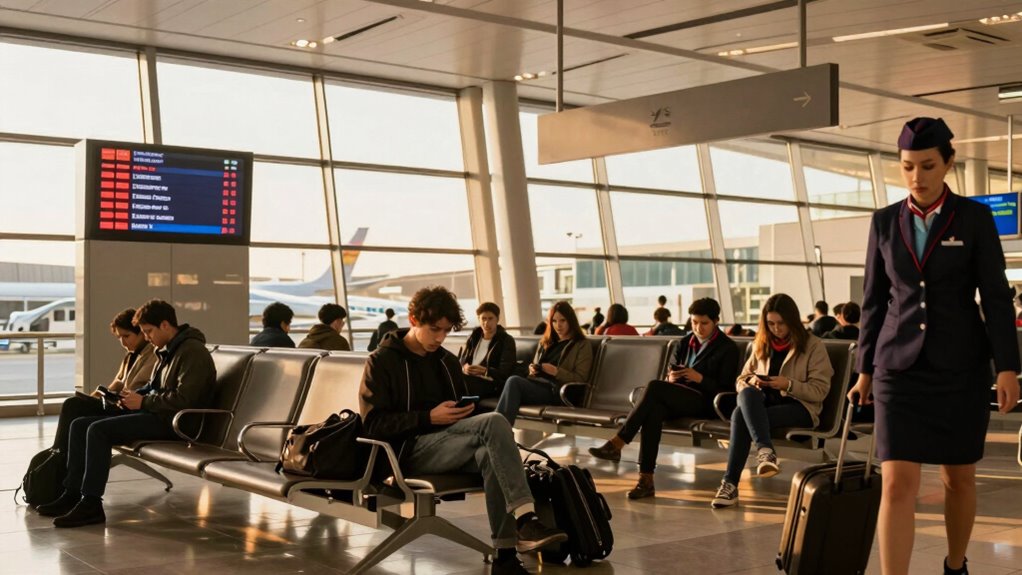

Rolling delays can turn your travel day into a series of unexpected setbacks. When one flight is delayed, it often causes a chain reaction, pushing back connecting flights and increasing wait times both on the tarmac and in terminals. Weather and air traffic issues make this worse, making it hard to stick to your original schedule. If you want to understand how these delays ripple through your entire trip and how to better handle them, keep exploring.

Turn quiet afternoons into listening time
- Thousands of audiobooks, podcasts and originals
- Listen on your phone, tablet or Echo — also offline
- Cancel anytime
Key Takeaways
- Rolling delays cause a chain reaction, extending overall travel time beyond initial schedules.
- A delay in one flight can push back connecting flights or subsequent departures.
- Weather disruptions and air traffic control limits often initiate and prolong these delays.
- Passengers may face long waits, rebooking, or being stranded due to cascading delays.
- Understanding these causes helps travelers manage expectations and reduce stress during disruptions.

Travel delays often seem to happen just when you least expect them, turning a smooth journey into a frustrating experience. When you’re caught in a delay caused by air traffic or weather disruptions, it’s easy to feel overwhelmed, especially if your plans hinge on tight schedules. These delays don’t just affect your departure; they set off a chain reaction that can ripple across your entire travel day, sometimes even longer. Rolling delays happen when one delay causes subsequent flights or connections to be pushed back, creating a domino effect that’s tough to stop.
Air traffic is a common culprit behind rolling delays. When airports are busy, air traffic controllers have to manage a limited capacity, often leading to holdovers, holding patterns, or flight cancellations. If your flight gets delayed, it’s likely your connecting flights will get pushed back as well, especially if they’re on the same airline or booked as part of a connecting itinerary. This means you might find yourself waiting on the tarmac or in the terminal longer than expected, with little control over the situation. As delays accumulate, your entire travel day can shift from a planned departure to a series of unpredictable hold-ups.
Weather disruptions are another major factor that fuels these rolling delays. Storms, fog, snow, or high winds can ground flights or force delays for safety reasons. When weather conditions impact one airport or route, airlines often have to reroute or hold flights, which can then cascade through their schedules. If your initial flight is delayed because of weather, subsequent flights may be canceled or rescheduled, leaving you stranded or forcing you to rebook. Weather disruptions are particularly considerable because they’re often out of your control, yet they substantially extend your travel time. Recognizing that air traffic and weather disruptions are common causes of rolling delays can help you manage expectations and reduce stress when delays occur. Ultimately, understanding how these factors work can make your travel days less overwhelming and more manageable, even when delays happen.
As an affiliate, we earn on qualifying purchases.
Frequently Asked Questions
How Do Rolling Delays Impact Long-Distance vs. Short-Distance Travel?
Rolling delays tend to impact long-distance travel more because weather disruptions and crew scheduling issues compound over extended routes. You might experience longer wait times or missed connections. For short-distance trips, delays are usually shorter and easier to manage, but they can still cause inconvenience. Overall, the ripple effect of weather disruptions and crew scheduling challenges makes long trips more vulnerable to cumulative delays, prolonging your travel day considerably.
Can Rolling Delays Cause Missed Connections or Appointments?
Rolling delays can snowball, causing you to miss connections or appointments like a domino falling in slow motion. When crew scheduling gets tangled or maintenance issues crop up unexpectedly, your travel plans become a delicate tapestry unraveling. These persistent delays ripple through your itinerary, making it tough to stay on schedule. You might find yourself scrambling to rebook or adjust, feeling caught in a whirlwind of logistical chaos.
Are Certain Times of Day More Prone to Rolling Delays?
Yes, certain times of day are more prone to rolling delays. Early mornings and late evenings often experience more delays due to peak travel times and crew scheduling. Additionally, weather-related factors like storms or fog tend to impact flights more during specific times, especially when conditions change rapidly. You should stay alert during these periods, as unpredictable delays can cascade, affecting your entire travel schedule.
How Do Airlines Communicate Rolling Delays to Passengers?
Airlines communicate rolling delays through timely airline notifications via email, text, or app alerts, ensuring you stay informed. They prioritize delay transparency, providing updates on the expected duration and reasons for delays. You can also check real-time status on airline websites or airport displays. This proactive communication helps you plan accordingly, minimizes confusion, and keeps you aware of any changes in your travel schedule, making your journey smoother despite delays.
What Are Passengers’ Rights During Rolling Delays?
During rolling delays, you’re entitled to clear delay notifications from airlines, keeping you in the loop like a lighthouse guiding ships. If your delay stretches beyond a certain time, you could qualify for passenger compensation, especially if the airline is at fault. Know your rights, and don’t hesitate to ask about your options. Airlines are responsible for providing timely updates and fair compensation during these unpredictable delays.
Conclusion
Just like Odysseus faced unpredictable tides on his journey home, rolling delays remind you that travel is never a straight line. Embrace the detours as part of your adventure, and remember, even the longest delays are just chapters in your travel story. Keep your spirits high, for each delay adds a layer to your experience — shaping a trip that’s uniquely yours, full of unexpected tales and lessons, much like the legendary voyages of old.
Cold & flu season Picks
humidifiers
As an affiliate, we earn on qualifying purchases.