

TL;DR

Turn quiet afternoons into listening time
- Thousands of audiobooks, podcasts and originals
- Listen on your phone, tablet or Echo — also offline
- Cancel anytime
Med-El has launched the TICI Unico, a cochlear implant with all components beneath the skin, and says the first four commercial implantations took place on launch day. The device has European regulatory approval but is not yet available in the United States; questions remain about its performance over time and real-world battery life.
Austrian medical-device company Med-El has launched the TICI Unico, a cochlear implant with its microphone, processor and battery implanted beneath the skin, and said four commercial implantations took place on the morning of the announcement. The device has European regulatory approval but is not yet available in the United States, marking an early step toward hearing without an externally worn processor.
Conventional cochlear implants use an external unit worn behind the ear. It contains a microphone, sound processor and battery, and sends signals through the scalp to an electrode array in the cochlea. Med-El’s new system moves the microphone and processing components under the skin, while using the same type of cochlear electrode array as the company’s conventional devices. The implant weighs 20 grams and consists of four connected components.
The system’s battery is rechargeable but cannot be replaced. Users charge it through the skin with a small device that attaches magnetically to a coil in the implant. Med-El says a charge takes about one to 1.5 hours and provides up to 40 hours of use. The company also says performance data indicates the battery should deliver at least 24 hours of use per charge for at least 15 years; that is a company projection, not a reported 15-year outcome.
Med-El says a 30-patient clinical trial found hearing performance comparable to its conventional implants. Philippe Lefebvre, an ear, nose and throat department head at University Hospital of Liège who led a separate six-patient feasibility study, said the results so far suggest comparable performance. The source reports that study was published in Communications Medicine last year. Med-El CEO Ingeborg Hochmair said other studies had similar findings, but their data had not yet undergone peer review.
Hearing Without an External Processor
The launch addresses a practical limitation of conventional cochlear implants: users must wear and manage a visible external processor. That component can affect activities such as swimming and can slip or be lost, according to patient Diana Grosser, who received the new device in a clinical trial. A fully implanted system may allow users to hear without removing the processor for activities or sleep, although individual experiences and results may vary.
The change could also alter the daily routine of implant users, replacing a removable external unit with an implanted rechargeable battery. That trade-off matters: users would not have to wear an external processor, but charging becomes necessary and the battery cannot be replaced. Long-term performance, reliability and how users weigh those benefits and drawbacks will become clearer as more people receive the device and are followed over time.
The device may add pressure for competitors to pursue similar designs. Fan-Gang Zeng, director of the Center for Hearing Research at the University of California, Irvine, who is not affiliated with Med-El, praised the launch and said it could spur competition. That is an outside expert’s view; the source does not report any competing company announcing a comparable product.
Products Worth Considering

Oral-B iO Series 5 Rechargeable Electric Toothbrush with Travel Case and 3 Brush Heads, Black

Oral-B iO Series 3 Rechargeable Electric Toothbrush for Adults, Black, with 2 Brush Heads and Travel Case
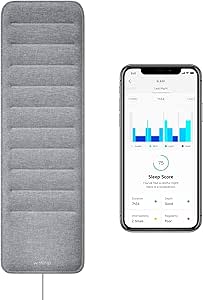
Withings Sleep Under-Mattress Sleep Tracking Pad
As an affiliate, we earn on qualifying purchases.
From External Units to Implantation
Cochlear implants have been used since the 1980s to bypass damaged parts of the ear for people with severe-to-profound hearing loss. They convert sound into electrical signals that stimulate the auditory nerve through an electrode array placed in the cochlea. The conventional external microphone and processor have remained a visible part of the system.
Hochmair said the ambition to make a fully implantable cochlear device dates to the 1970s, but microphone and battery technology held it back. Med-El says development of the TICI Unico took more than 15 years. Moving the microphone beneath the scalp posed a particular engineering challenge because sound travels differently through tissue. Project leader and senior research and development engineer Gerhard Mark said the company spent years researching and refining the system, but did not disclose the technical details.
““For the first time, all components of a cochlear implant, including the microphone, are implanted beneath the skin. There are no external components to wear, to remove, or to manage.””
— Ingeborg Hochmair, Med-El chief executive
Questions on Battery and Results
The available evidence is still limited. Med-El cites a 30-patient clinical trial, while the published feasibility study led by Lefebvre involved six patients. The supplied report does not give detailed measures of hearing outcomes, trial duration, or comparisons across different patient groups. It also says additional studies cited by Hochmair had not yet been peer reviewed.
The long-term battery figures are projections from Med-El, not a record of 15 years of use by patients. It remains unclear how the device performs over extended follow-up, how often users will need to charge it in everyday conditions, and how the implanted microphone compares across varied listening environments. The report does not specify the launch date, pricing, eligibility criteria, or when regulatory review in the United States might occur.
Rollout and Longer-Term Follow-Up
The immediate next step is the device’s rollout in markets where it has European regulatory approval. The first four commercial implantations were reported on launch day; the source does not say where they took place or provide follow-up results for those patients. Further clinical data and longer-term monitoring will be needed to test the company’s performance and battery-life claims in routine use.
Med-El has not given a U.S. launch timetable in the supplied report. Patients and clinicians there will need more information about availability, regulatory review and who may qualify before assessing access to the device. Publication and peer review of additional study results would also help clarify how closely reported performance matches that of conventional implants.
Key Questions
What is the TICI Unico?
It is Med-El’s cochlear implant with its microphone and sound-processing components implanted beneath the skin, rather than an external processor worn behind the ear. It uses an electrode array in the cochlea.
Have patients received the device?
Yes. Med-El said the first four commercial implantations took place on the morning the device was launched. The report also describes clinical-trial participants who received it earlier.
How long does the battery last?
Med-El says a charge of about one to 1.5 hours can provide up to 40 hours of use. The company projects at least 24 hours per charge for at least 15 years, but that figure is not a reported 15-year patient outcome. The battery cannot be replaced.
Is the implant available in the United States?
No U.S. availability is reported. The device has European regulatory approval, and Med-El had not announced a U.S. timetable in the source report.
Does it provide the same hearing performance as a conventional implant?
Med-El says its 30-patient trial found comparable performance, and a clinician who led a six-patient feasibility study said early results also suggest comparability. Longer-term data and further peer-reviewed results are still needed.
Source: hn