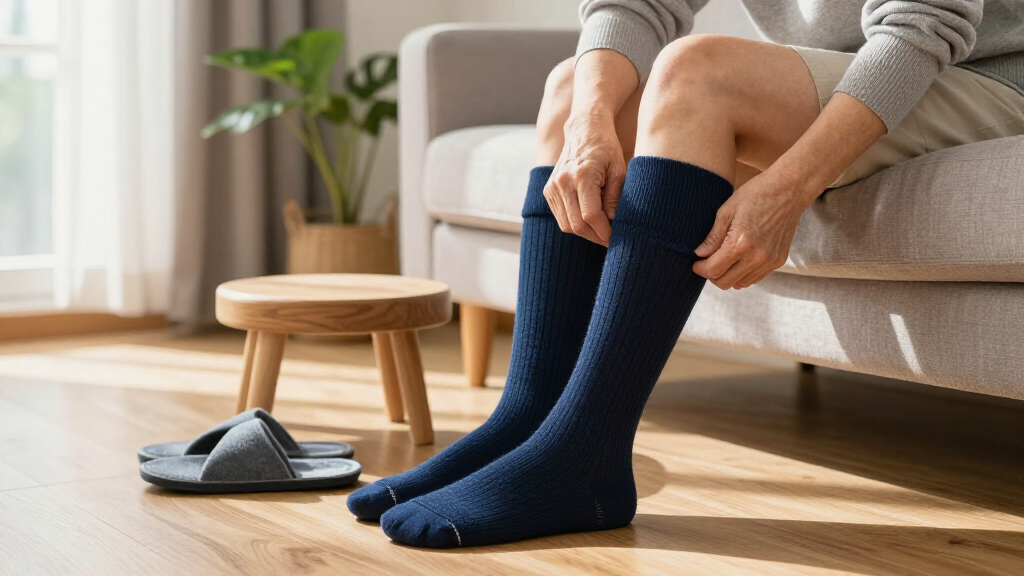
For seniors who find standard compression socks hard to pull on, I would start with the Ailaka Medical Compression Socks with Zipper as the best overall: the side zipper eases dressing, while the open toe avoids enclosing the toes. The 3 Pairs of 15–20 mmHg Compression Socks are a practical value choice for buyers who prefer a multi-pair set, and Cerpite Zipper Compression Socks offer a closed-toe zipper option for those who want more toe coverage. The main tradeoff is between easier access from a zipper and the simpler feel of a conventional pull-on sock; toe coverage, fit, and compression strength matter just as much. I compare all nine options by ease of use, design, and likely fit needs below. Continue reading for the full breakdown and advice on choosing a pair that suits the wearer.

Turn quiet afternoons into listening time
- Thousands of audiobooks, podcasts and originals
- Listen on your phone, tablet or Echo — also offline
- Cancel anytime
Complete the kit


Key Takeaways
- Zippers lead for easier dressing: Several picks use a side zipper, which can reduce the effort of pulling fabric over the heel and calf; the tradeoff is added hardware and a closer fit requirement.
- Open-toe and closed-toe styles serve different needs: Ailaka Medical and the Open-Toe Zipper 2-Pack leave toes uncovered, while Cerpite’s zipper pair keeps them enclosed.
- A multi-pair set is the value-oriented route: The three-pair 15–20 mmHg option supplies spares, but it does not provide the zipper access found in the leading easy-on styles.
- Not every easy-on choice is a zipper sock: The Easy On/Off Energy and Copper Fit Energy options offer pull-on alternatives, which may suit people who dislike zipper hardware but still need to check how much effort dressing takes.
- Most listed compression levels are 15–20 mmHg: That makes fit and usability the main points of comparison here, but buyers should follow a clinician’s advice about compression strength and suitability.
| 3 Pairs of 15–20 mmHg Compression Socks |  | Best for Cushioned Everyday Activity | Compression: 15–20 mmHg | Quantity: 3 pairs | Fabric: 70% microfiber nylon, 20% polyester, 7% cotton, 3% spandex | VIEW LATEST PRICE | See Our Full Breakdown |
| Easy On/Off Energy Compression Socks |  | Best for Beginners | Quantity: 1 pair | Length: Knee-high | Compression: Graduated; specific mmHg level not provided | VIEW LATEST PRICE | See Our Full Breakdown |
| Ailaka Medical Compression Socks with Zipper, Knee High 15-20 mmHg Open Toe for Women and Men |  | Best for Assisted Dressing | Compression: 15–20 mmHg graduated | Length: Knee-high | Material: 75% nylon, 25% spandex | VIEW LATEST PRICE | See Our Full Breakdown |
| Copper Fit Energy Women’s Easy-On/Easy-Off Knee High Compression Socks |  | Best Multi-Pair Pick | Quantity: 3 pairs per box | Length: Knee-high | Material composition: 85% nylon, 8% spandex, 7% polyester | VIEW LATEST PRICE | See Our Full Breakdown |
| PULIOU 15–20 mmHg Graduated Compression Socks for Women and Men |  | Best for Fit-Specific Shoppers | Compression: 15–20 mmHg, graduated | Length: Knee-high | Fabric: 80% polyamide, 15% polyester, 5% spandex | VIEW LATEST PRICE | See Our Full Breakdown |
| Open-Toe Zipper Compression Socks, 2-Pack, 15–20 mmHg |  | Best for Open-Toe Comfort | Pack count: 2 pairs | Length: Knee-high | Toe style: Open toe | VIEW LATEST PRICE | See Our Full Breakdown |
| Cerpite Zipper Compression Socks, 2 Pairs, 15–20 mmHg, Closed Toe, Men and Women |  | Best Closed-Toe Zipper Pick | Quantity: 2 pairs | Length: Knee-high | Toe style: Closed toe | VIEW LATEST PRICE | See Our Full Breakdown |
| Ailaka 15–20 mmHg Zipper Compression Socks for Men and Women |  | Best for Zipper Comfort Against Skin | Compression: 15–20 mmHg, graduated | Compression profile: Strongest support at the ankle | Material: 75% nylon, 25% spandex | VIEW LATEST PRICE | See Our Full Breakdown |
| Women’s Easy-On Over-the-Calf Compression Socks |  | Best Pull-On Option for Cushioned Walking | Length: Over the calf | Fabric: 92% polyester, 6% spandex, 2% other fiber | Pattern: Self Design | VIEW LATEST PRICE | See Our Full Breakdown |
| easy-on compression socks for senior | Compression | Length |
|---|---|---|
| 3 Pairs of 15–20 mmHg Compress | 15–20 mmHg | — |
| Easy On/Off Energy Compression | Graduated; specific mmHg level not provided | Knee-high |
| Ailaka Medical Compression Soc | 15–20 mmHg graduated | Knee-high |
| Copper Fit Energy Women’s Easy | Graduated; specific mmHg level not provided | Knee-high |
| PULIOU 15–20 mmHg Graduated Co | 15–20 mmHg, graduated | Knee-high |
| Open-Toe Zipper Compression So | 15–20 mmHg, graduated | Knee-high |
| Cerpite Zipper Compression Soc | 15–20 mmHg, graduated | Knee-high |
| Ailaka 15–20 mmHg Zipper Compr | 15–20 mmHg, graduated | Full-length |
| Women’s Easy-On Over-the-Calf | — | Over the calf |
More Details on Our Top Picks
3 Pairs of 15–20 mmHg Compression Socks
For seniors who want compression socks that can also handle walks and other active days, this three-pair set stands out for its cushioned soles and ventilated mesh. The seamless toes may reduce rubbing, while the soft cuffs offer a comfort-focused alternative to firmer-feeling styles. Unlike the Ailaka Medical Compression Socks with Zipper, these have no zipper to help with dressing, so the wearer still needs to pull them over the foot and calf. Their 15–20 mmHg compression is specified, but the product data does not give sizing details; that makes fit harder to judge before buying. I’d choose this set for an active wearer who can manage pull-on socks and values having three pairs, but skip it if reduced hand strength makes dressing the main concern.
Pros:- Three pairs provide multiple socks for regular rotation.
- Cushioned soles add comfort during walking and other activities.
- Ventilated mesh and soft cuffs are designed for a more comfortable fit.
- Seamless toes may reduce rubbing and blister irritation.
Cons:- No sizing information is provided, making fit difficult to evaluate.
- Pull-on construction may be difficult for seniors with limited dexterity or mobility.
- The listed activities emphasize sports and do not specify a medical use.
Best for: Active seniors who can pull on knee-high socks and want several cushioned pairs for walking or everyday activity.
Not ideal for: Seniors with limited hand strength or difficulty reaching their feet, since there is no zipper or other specified dressing aid and sizing details are missing.
- Compression:15–20 mmHg
- Quantity:3 pairs
- Fabric:70% microfiber nylon, 20% polyester, 7% cotton, 3% spandex
- Latex:Latex-free
- Design features:Soft cuff, ventilated mesh, cushioned soles, seamless toes
- Care:Machine wash cold; tumble dry low or air dry
- Origin:Imported
Our verdict“Choose this set if cushioning and a three-pair rotation matter more than assisted dressing or clearly documented sizing.”
Easy On/Off Energy Compression Socks
The clearest reason to choose these is their easy-on/off design, which directly addresses a common barrier for seniors who find conventional compression socks hard to pull over the heel. A cushioned footbed plus arch and ankle support also makes them a more foot-focused choice than the 3 Pairs of 15–20 mmHg Compression Socks, whose description highlights cushioning but does not mention targeted support. These are sold as one knee-high pair, so they offer less rotation than the three-pair Copper Fit Energy set. The fabric is moisture-wicking and copper-infused, though those features do not replace a stated compression level: the supplied specs only say “graduated.” I’d start here if ease of dressing and focused foot comfort matter most, but confirm the fit and compression details before buying.
Pros:- Easy-on/off construction is designed to simplify dressing.
- Arch and ankle support add targeted comfort beyond calf coverage.
- Cushioned footbed may be more comfortable for extended standing or travel.
- Moisture-wicking, copper-infused fabric is designed to manage sweat and odor.
Cons:- The provided product data does not state a specific compression strength in mmHg.
- The set contains only one pair.
- Care calls for gentle machine washing and low-heat drying.
Best for: Seniors new to compression socks who want a specifically described easy-on/off design with arch, ankle, and footbed support.
Not ideal for: Buyers who need a stated mmHg level, multiple pairs for rotation, or a fit recommendation based on detailed sizing information.
- Quantity:1 pair
- Length:Knee-high
- Compression:Graduated; specific mmHg level not provided
- Features:Easy on/off, arch support, cushioned footbed, moisture-wicking, copper-infused
- Materials:78% nylon, 14% spandex, 8% polyester
- Care:Machine wash cold on gentle; tumble dry low
- Origin:Made in the USA and imported
- Weave:Knit
Our verdict“Pick this pair for its explicit dressing aid and targeted foot support, provided its fit and compression level meet your needs.”
Ailaka Medical Compression Socks with Zipper, Knee High 15-20 mmHg Open Toe for Women and Men
When pulling a tight sock over the foot is the main obstacle, the YKK zipper gives this Ailaka pair a practical advantage over pull-on choices such as the PULIOU 15–20 mmHg Graduated Compression Socks. The open-toe design can also leave more room around the toes, which may appeal to wearers who dislike covered toes or need space for a swollen forefoot. It provides a clearly stated 15–20 mmHg graduated compression, unlike the Easy On/Off Energy socks, whose supplied information does not specify a numeric level. The tradeoff is that a zipper adds a component to manage and may not suit someone who prefers a simple stretch-knit sock. Sizing can also vary, and the product information suggests some wearers may need to size up, so checking measurements matters.
Pros:- YKK zipper is designed to make putting on and removing the sock easier.
- Open toe leaves the toes uncovered and may offer more room around the forefoot.
- Provides a stated 15–20 mmHg graduated compression level.
- Opaque nylon-spandex material is described as suitable for daily wear.
Cons:- Sizing may vary, and some wearers may need to size up.
- The zipper may be less appealing than a simple pull-on design.
- Open-toe construction does not suit buyers who prefer full toe coverage.
Best for: Seniors who struggle to pull on compression socks and prefer an open toe with a stated moderate compression level.
Not ideal for: Wearers who want a closed toe, dislike managing a zipper, or cannot check sizing carefully before ordering.
- Compression:15–20 mmHg graduated
- Length:Knee-high
- Material:75% nylon, 25% spandex
- Design:Open toe with YKK zipper
- Intended users:Women, men, elderly wearers, pregnant people, nurses, and doctors
- Use cases:Varicose veins, edema, post-surgery recovery, and prolonged standing
Our verdict“Choose this Ailaka model when a zipper and open toe are higher priorities than a simple closed-toe pull-on fit.”
Copper Fit Energy Women’s Easy-On/Easy-Off Knee High Compression Socks
This is the lineup’s strongest option for someone who wants easy-on/easy-off construction in a three-pair pack, rather than choosing between dressing help and a supply for rotation. Compared with the single-pair Easy On/Off Energy Compression Socks, the Copper Fit set offers more pairs and lists two shoe-size ranges, though those ranges are still broad and limited to women’s sizing. Arch support, a cushioned footbed, and moisture-wicking fibers give it a more comfort-oriented feature mix than the basic three-pair compression set, which does not specify targeted arch support. Color choice is less predictable: the assortment is random, and only two size ranges are listed. The supplied specs also do not state a numeric mmHg level, so I would not choose it when a specific compression strength is required.
Pros:- Three pairs support regular rotation without relying on a single pair.
- Easy-on/easy-off construction is designed to simplify dressing.
- Arch support and a cushioned footbed target comfort in the foot as well as the calf.
- Moisture-wicking, copper-infused fibers are designed to help manage odor.
Cons:- Only two women’s shoe-size ranges are listed, which may not fit all wearers.
- Colors are assorted randomly and cannot be selected.
- The supplied specifications do not give a numeric compression level.
Best for: Women who want multiple easy-on/easy-off knee-high pairs with cushioned feet and arch support for regular wear.
Not ideal for: Men, people outside the listed women’s shoe-size ranges, or buyers who need a clearly stated mmHg compression level or a chosen color.
- Quantity:3 pairs per box
- Length:Knee-high
- Material composition:85% nylon, 8% spandex, 7% polyester
- Compression:Graduated; specific mmHg level not provided
- Available sizes:Small/Medium: women’s shoe size 7–10; Large/X-Large: women’s shoe size 10–13
- Fit and stretch:Pull-on closure; high stretch
- Weight class:Medium weight
- Features:Easy-on/easy-off construction, arch support, moisture-wicking fibers, cushioned footbed, copper infusion
Our verdict“Choose this set for several easy-on women’s socks with foot support, but skip it if you need a specific mmHg level or a wider fit range.”
PULIOU 15–20 mmHg Graduated Compression Socks for Women and Men
PULIOU stands out for providing calf and shoe-size ranges alongside a stated 15–20 mmHg graduated compression level. That makes it easier to compare fit before buying than the 3 Pairs of 15–20 mmHg Compression Socks, which provide no sizing information. Its stretchy fabric and seamless toe may help with comfort and reduce toe rubbing, but this remains a conventional pull-on sock: unlike the Ailaka Medical Compression Socks with Zipper, it has no zipper to assist with dressing. Two size options cover a broad range, yet calf circumference still needs to be measured; a shoe-size match alone may not give the right fit. I’d choose PULIOU when fit data and a specified compression level take priority over a dedicated dressing aid.
Pros:- Lists calf and shoe-size ranges for both available size groups.
- Provides a specific 15–20 mmHg graduated compression level.
- Stretchy fabric is designed to make everyday wear more manageable.
- Seamless toe may reduce rubbing during work, travel, or daily activity.
Cons:- Sizing depends on calf circumference, so measurement is needed for a better fit.
- Pull-on design offers no zipper or other specific dressing aid.
- Care guidance advises avoiding bleach and using low-temperature washing and gentle drying.
Best for: Seniors or caregivers willing to measure calf circumference and compare shoe sizes before choosing a stated 15–20 mmHg pull-on sock.
Not ideal for: People who have difficulty pulling socks over their feet or calves, or buyers who cannot measure carefully enough to select a size.
- Compression:15–20 mmHg, graduated
- Length:Knee-high
- Fabric:80% polyamide, 15% polyester, 5% spandex
- S/M fit:Calf 11–15 in; women’s US 5–7.5; men’s US 3.5–6
- L/XL fit:Calf 13.8–17.7 in; women’s US 8–14; men’s US 6.5–12.5
- Care:Machine wash; avoid bleach; use low-temperature washing and gentle drying
- Pattern:Solid
- Origin:Imported
Our verdict“Pick PULIOU if you can measure carefully and want a specified compression level, but choose a zippered style if dressing assistance is the priority.”
Open-Toe Zipper Compression Socks, 2-Pack, 15–20 mmHg
For seniors who dislike pressure over their toes, this open-toe, knee-high design leaves the front of the foot uncovered while the zipper makes the sock easier to put on than a pull-on style such as PULIOU 15–20 mmHg Graduated Compression Socks. Its graduated 15–20 mmHg support is aimed at people who sit or stand for long periods, and the two-pair pack means a spare is available while one pair is being washed. The breathable nylon blend may suit everyday wear, but the listing gives conflicting material details, naming both polyester and spandex alongside nylon. That uncertainty makes fabric-sensitive buyers less able to judge the feel in advance. Fit still depends on careful measurement: the listing offers multiple sizes but no measurements here, and zipper socks can be uncomfortable if the selected size is too tight.
Pros:- Zipper closure can make putting on and removing a knee-high sock easier.
- Open toe avoids fabric covering the toes.
- Graduated 15–20 mmHg compression is specified.
- Two pairs provide a spare for washing or rotation.
Cons:- The listing gives inconsistent fiber details, naming polyester in one place and spandex in another.
- No specific size measurements are provided, so buyers must rely on the size chart.
- Open-toe coverage may feel less warm or protective than the closed-toe Cerpite option.
Best for: Seniors who want easier dressing, prefer their toes uncovered, and can use the size chart to select a measured fit.
Not ideal for: People who want a closed toe for warmth or full-foot coverage, or buyers who need a clearly specified fabric blend before choosing.
- Pack count:2 pairs
- Length:Knee-high
- Toe style:Open toe
- Closure:Zipper
- Compression:15–20 mmHg, graduated
- Materials:Nylon and polyester; another listing passage states nylon and spandex
- Sizing:Multiple sizes; consult the size chart
Our verdict“Choose this two-pair option if an open toe and a zipper matter more than having a fully specified fabric blend.”
Cerpite Zipper Compression Socks, 2 Pairs, 15–20 mmHg, Closed Toe, Men and Women
The Cerpite pair suits seniors who want toes covered without giving up a zipper-assisted dressing routine. Compared with the open-toe Open-Toe Zipper Compression Socks, its closed-toe construction offers fuller foot coverage, while the stated 75% nylon and 25% spandex blend gives buyers clearer fabric information. The knee-high socks provide graduated 15–20 mmHg compression and come as two pairs, a practical setup for regular rotation. Five sizes are listed, though the product details do not supply the measurements themselves, so choosing by the size chart matters. The zipper may simplify handling, but it does not remove the need for a close fit, and a closed toe may feel less comfortable than an open front for people who prefer room around their toes. The listing’s broad activity claims are not a substitute for medical advice.
Pros:- Zipper closure may make the socks easier to put on and take off.
- Closed-toe design provides full toe coverage.
- Specific 75% nylon and 25% spandex fabric composition is listed.
- Two pairs and five size options are specified.
Cons:- The listing does not provide the measurements needed to choose among its five sizes.
- Closed-toe coverage may be less comfortable for buyers who want space around their toes.
- The product details do not substantiate the broad health benefit claims in its description.
Best for: Seniors who want a zipper closure, full toe coverage, and a stated nylon-spandex blend for everyday wear.
Not ideal for: People who prefer open-toe socks, need published sizing measurements, or want a product description limited to clearly supported features.
- Quantity:2 pairs
- Length:Knee-high
- Toe style:Closed toe
- Closure:Zipper
- Compression:15–20 mmHg, graduated
- Material:75% nylon, 25% spandex
- Sizing:Five sizes; refer to the size chart
- Fit range:Men and women
Our verdict“Pick Cerpite over the open-toe zipper pair if you want covered toes and a clearly stated fabric blend.”
Ailaka 15–20 mmHg Zipper Compression Socks for Men and Women
Ailaka’s key distinction is the protective inner fabric over the zipper, which is intended to reduce rubbing against the leg. That detail may matter to seniors with sensitive skin who find a standard zipper irritating; the Cerpite socks also use a zipper but do not list this protective layer. Ailaka combines it with a closed toe, full-length coverage, and graduated 15–20 mmHg compression that is strongest at the ankle. The design is described for all-day wear, but the supplied details do not give specific size measurements. That leaves buyers with less guidance for finding the snug fit a compression sock needs. Unlike the two-pair Cerpite pack, this product’s supplied data do not state a quantity, so I would not assume it offers the same rotation convenience.
Pros:- Protective inner fabric is designed to reduce rubbing from the zipper.
- Zipper can make the socks easier to put on and remove.
- Graduated 15–20 mmHg compression is strongest at the ankle.
- Closed-toe, full-length design is intended for all-day wear.
Cons:- Specific sizing measurements are not provided in the supplied product details.
- The supplied specs do not state how many pairs are included.
- Closed-toe coverage may not suit people who prefer the more open feel of the B093WLMG8Q option.
Best for: Seniors who want closed-toe, full-length compression socks and are especially concerned about zipper contact rubbing their skin.
Not ideal for: Buyers who need published size measurements or want a stated multi-pair pack for regular rotation.
- Compression:15–20 mmHg, graduated
- Compression profile:Strongest support at the ankle
- Material:75% nylon, 25% spandex
- Length:Full-length
- Toe style:Closed toe
- Closure:Zipper with protective inner fabric
- Fit range:Men and women
- Intended use:All-day wear; travel, work, maternity, and general leg swelling support
Our verdict“Choose Ailaka if a zipper’s potential to rub your skin is a concern and you can confirm the fit before buying.”
Women’s Easy-On Over-the-Calf Compression Socks
This women’s sock takes a different route from the zipper models: an extra-wide top band is intended to make over-the-calf socks easier to pull on and remove. The lightly cushioned sole may also make it a better match for seniors who spend much of the day standing or walking than the thinner-feeling zipper options, such as Cerpite Zipper Compression Socks. Breathable fabric adds to the everyday-wear focus. The tradeoff is a major information gap: the listing does not state a compression strength or provide sizing details. Without those, buyers cannot compare its support level with the specified 15–20 mmHg socks or confidently judge fit from the supplied data. I would treat it as a comfort-oriented option, not a direct substitute for a sock with a stated compression rating.
Pros:- Extra-wide top band is designed to make the sock easier to put on and remove.
- Light cushioning may add comfort during standing or walking.
- Breathable fabric is described for all-day comfort.
- Over-the-calf length provides coverage without a listed zipper.
Cons:- Compression strength is not specified, making support difficult to compare with the 15–20 mmHg options.
- Sizing information is not provided in the supplied product data.
- Women’s-only positioning makes it less suitable for buyers seeking a unisex option.
Best for: Women who want a pull-on over-the-calf sock with a wider top band and cushioning for standing or walking.
Not ideal for: Seniors who need a specified compression level, published size guidance, or a zipper closure to reduce the effort of dressing.
- Length:Over the calf
- Fabric:92% polyester, 6% spandex, 2% other fiber
- Pattern:Self Design
- Sole:Lightly cushioned
- Top band:Extra-wide; designed for easier on and off
- Compression strength:Not specified
- Sizing:Not provided in the supplied product data
- Intended wearer:Women
Our verdict“Consider this pull-on pair for a wider top band and cushioned sole, but skip it if you need a known compression level or size measurements.”
How We Picked
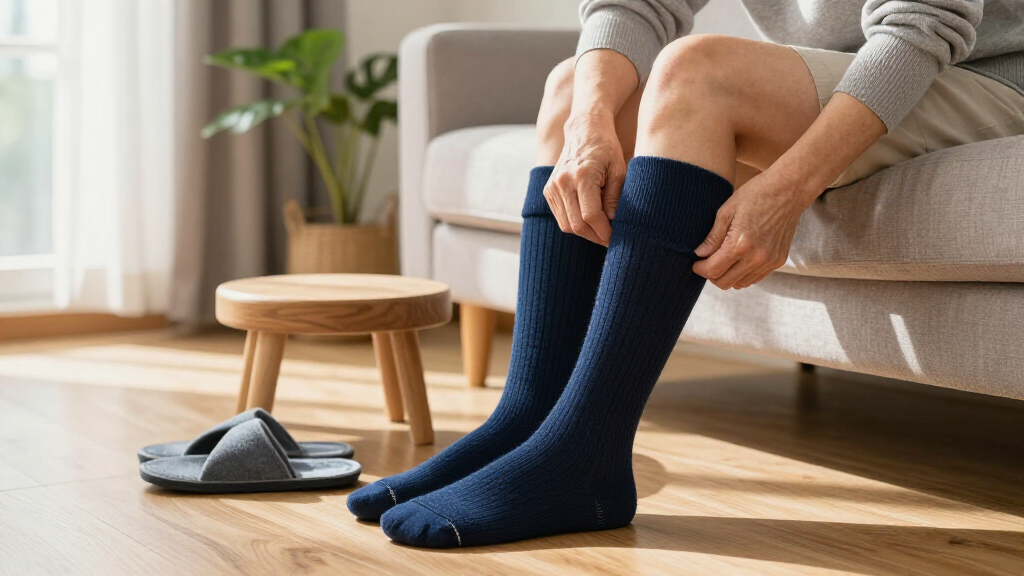
I ranked these socks around the practical meaning of easy-on for seniors: how the design may reduce the effort of getting a sock over the foot and calf, how straightforward the closure or opening is, and whether toe coverage gives buyers a useful choice. I also weighed the stated compression level, the number of pairs where provided, and the differences between zipper and pull-on designs. Those details affect daily use more than a feature list alone.
The Ailaka Medical zipper model leads because its zipper access is paired with an open-toe design, giving it a useful combination for buyers who want easier dressing and uncovered toes. Other zipper options follow according to their distinct toe styles and pack formats; conventional pull-on picks rank lower for people whose main difficulty is putting socks on, though they may suit those who want to avoid a zipper. The ranking reflects the information provided for these products, not hands-on testing or a medical judgment. Compression needs and circulation concerns should be discussed with a qualified clinician.
| easy-on compression socks for senior | Length |
|---|---|
| 3 Pairs of 15–20 mmHg Compress | — |
| Easy On/Off Energy Compression | Knee-high |
| Ailaka Medical Compression Soc | Knee-high |
| Copper Fit Energy Women’s Easy | Knee-high |
| PULIOU 15–20 mmHg Graduated Co | Knee-high |
| Open-Toe Zipper Compression So | Knee-high |
| Cerpite Zipper Compression Soc | Knee-high |
| Ailaka 15–20 mmHg Zipper Compr | Full-length |
| Women’s Easy-On Over-the-Calf | Over the calf |
Factors to Consider When Choosing Easy-on Compression Socks For Seniors
Choosing easy-on compression socks is not just a matter of finding a zipper. I would match the design to the wearer’s dexterity, foot shape, routine, and clinician-recommended compression, then check how the sock will be put on and cared for. These points can prevent a convenient-looking style from becoming uncomfortable or difficult to use.
Choose the access style around the wearer’s dexterity
A zipper can reduce the need to stretch a tight sock over the heel and up the calf, which may help someone with limited hand strength or reach. It also requires the wearer to align the zipper and operate its pull, so it is not automatically easier for people with arthritis or reduced finger control. Pull-on designs avoid hardware but can still take considerable effort, particularly when the fabric is snug. If dressing independently is the goal, think through the exact hand movements the wearer can manage rather than relying on the label “easy-on.” A caregiver may also prefer a zipper style when helping, while someone who values a simple, uninterrupted fabric feel may favor pull-on socks.
Match toe coverage to comfort and daily footwear
Open-toe socks leave the toes exposed and may be preferable for people who dislike fabric around their toes or want room for toe inspection. Closed-toe designs provide coverage, which some wearers prefer with shoes or in cooler conditions. Neither style is universally better: footwear fit, toe sensitivity, and the wearer’s comfort can decide the issue. A common mistake is choosing open-toe solely because it looks easier to put on, without checking whether the footbed or shoe will rub exposed toes. If swelling, skin problems, or reduced sensation are present, ask a clinician which style is appropriate.
Confirm measurements and fit before choosing a size
Compression socks need a suitable fit to feel secure without bunching, pinching, or leaving uncomfortable pressure at the top band. Do not assume the wearer’s usual shoe size is enough to select a compression sock; follow the product’s sizing directions and take the measurements it requests. Measure at the times and locations specified by the maker, since leg swelling can change during the day. Zipper styles need enough room to close without strain, while a loose fit can reduce the intended support. If the sizing chart does not clearly cover the wearer’s measurements, ask the seller or a healthcare professional before buying.
Use the prescribed compression level, not a guess
Many options in this roundup list 15–20 mmHg, but a listed level does not mean that strength is right for every senior. The appropriate compression can depend on health conditions, circulation, swelling, and the reason for wearing the socks. A familiar-looking number should not replace medical guidance, especially for someone with diabetes, arterial disease, fragile skin, or a history of circulation problems. Do not buy a stronger level simply because it seems more supportive. Ask a clinician to confirm both the compression range and whether compression socks are suitable for the wearer.
Weigh zipper convenience against hardware and care
Zippers can make dressing easier, but they add a component that can press against the leg, catch on fabric, or become harder to use if the wearer cannot grasp the pull. Check whether the zipper closes smoothly and whether the sock design protects skin from contact with the hardware. Follow care instructions closely, since laundering can affect both fabric elasticity and zipper function. A pull-on style may be simpler to wash and maintain, even if it asks more effort at dressing time. When buying for daily use, the easier option is the one the wearer can put on, remove, and care for consistently.
Decide whether a multi-pair pack fits the routine
Several pairs can make laundry scheduling easier and leave a clean pair ready while another is being washed. A multi-pair set may be less useful if the wearer is still uncertain about sizing, toe coverage, or whether a zipper design works for them. In that case, confirm the fit and dressing routine before committing to duplicates. Also check that each pair in a pack shares the same design and compression details, rather than assuming the pack count tells the whole story. For a settled daily routine, spare pairs can be useful; for a first purchase, getting the style right matters more.
Frequently Asked Questions
Are zipper compression socks easier for every senior to put on?
No. A zipper can reduce the force needed to pull fabric over the heel and calf, but the wearer still needs to position the sock and operate the closure. Someone with limited finger control may find a zipper pull difficult, while a caregiver may find the access easier when assisting. Fit also matters: a zipper that strains to close or presses against the skin can make a sock uncomfortable. If possible, choose based on the wearer’s specific hand mobility and dressing routine rather than the zipper label alone.
Should I choose open-toe or closed-toe compression socks?
Choose according to comfort, footwear, and any guidance from the wearer’s clinician. Open-toe styles leave toes uncovered and may suit someone who dislikes toe coverage, while closed-toe styles give more coverage inside shoes or in cool weather. Open toes can be a poor match if exposed toes rub against footwear, and closed toes may feel restrictive to someone with toe sensitivity. Check the fit of the sock with the shoes the wearer plans to use. For reduced sensation, skin issues, or circulation concerns, ask a healthcare professional before choosing.
Is 15–20 mmHg appropriate for an older adult?
Age alone does not determine the right compression level. The correct range depends on why the socks are being used and on the wearer’s health, circulation, and skin condition. Many products here list 15–20 mmHg, but that does not make this level suitable for everyone. A clinician can advise whether compression is appropriate and what range to use, particularly if the wearer has diabetes, arterial disease, or fragile skin. Follow that advice rather than choosing by the number on a product listing.
How can I tell whether compression socks fit correctly?
Start with the manufacturer’s measurement chart and use the measurements it requests instead of relying only on shoe size. A suitable sock should stay in place without bunching, pinching, or creating a tight ridge at the top. For a zipper model, the closure should fasten without being forced and should not rub the skin. Check the wearer’s legs and feet after putting the socks on, especially if sensation is reduced. Ask a clinician for help if the fit seems uncomfortable or the wearer has a condition that affects circulation or skin.
Should I buy a multi-pair pack before confirming the style works?
If the wearer has not tried the design or confirmed sizing, I would prioritize finding a comfortable, manageable style before buying multiples. A pack can help with laundry and daily rotation once the fit and routine are settled. But duplicated pairs are a poor trade if the zipper is awkward, the toe design feels wrong, or the size is unsuitable. Check the product’s sizing and return terms before ordering, since socks may have limits on returns after opening or wear. For a first purchase, confidence in fit matters more than having spares immediately.
Conclusion
For most shoppers prioritizing easier dressing and a choice of toe coverage, my best overall pick is the Ailaka Medical Compression Socks with Zipper. The best value is the 3 Pairs of 15–20 mmHg Compression Socks for buyers who want a rotation set and can manage a pull-on design. For a best premium-style choice among the listed options, I would look to the zipper models and select by toe coverage and pack format rather than assuming a higher price means a better fit. The best option for beginners is whichever style the wearer can put on and remove reliably; the Easy On/Off Energy socks are a pull-on alternative for people who want to avoid zipper hardware, while zipper access may suit those who need more help dressing. For specific needs, choose open-toe Ailaka Medical or Open-Toe Zipper socks when exposed toes are preferred, and Cerpite when closed-toe zipper coverage is the priority. Confirm fit and compression guidance with a clinician before settling on a pair.