
TL;DR

Turn quiet afternoons into listening time
- Thousands of audiobooks, podcasts and originals
- Listen on your phone, tablet or Echo — also offline
- Cancel anytime
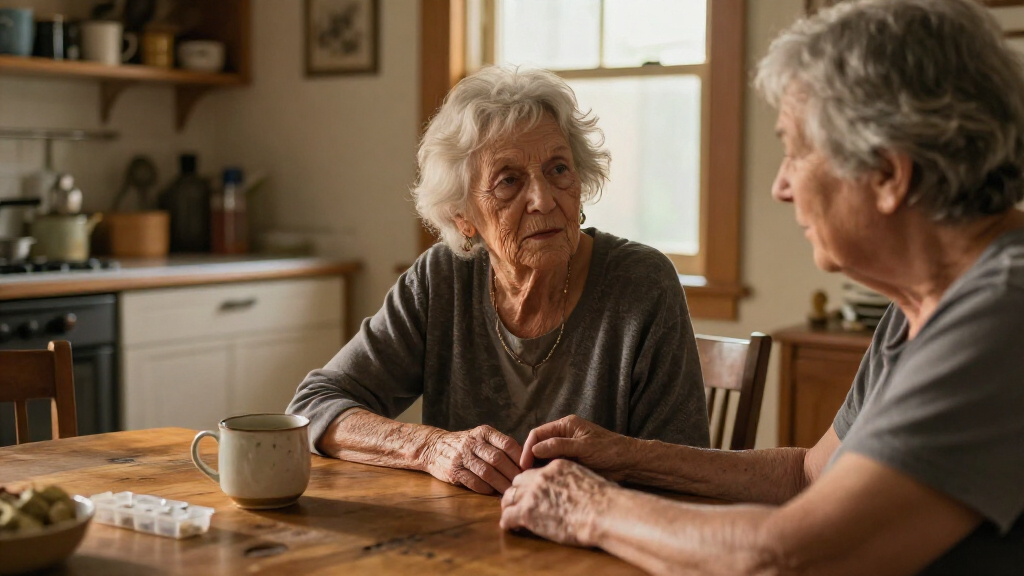
Seniors Guide published an advice column by R. Eric Thomas on Oct. 26, 2026, responding to a 75-year-old man who says he feels trapped in a 45-year marriage affected by his wife’s mental illness. Thomas recommends planning for any change in the relationship and seeking help rather than making the decision alone. The column does not report a separation or a clinical assessment of either spouse.
Seniors Guide published an advice column on Oct. 26 in which R. Eric Thomas responds to a 75-year-old man married for 45 years who says he is considering leaving a relationship he and his counselors describe as codependent. Thomas advises him to think through practical arrangements and seek support; the column does not say the couple has separated or that the man has made a decision.
The reader, writing under the name “Self-imprisoned,” says his wife has experienced treatment-resistant depression and/or bipolar disorder and has received different forms of treatment for about 30 years without success. He reports that mental health professionals and close friends have told him the marriage is harming his mental health and advised him to leave.
He says he has stayed because of a vow, concern that his wife depends on him, and fear about what life apart would involve. He describes feeling compassion for her but not love or respect, and says he hopes to have a healthy relationship before he dies. He also says he has no family to rely on, only friends. These are the reader’s account and statements, not independent findings in the column.
Thomas expresses sympathy for both spouses and says illness and caregiving strain may have changed the marriage. Rather than treating departure as a simple choice, he asks whether the people advising the reader to leave have helped him consider where he would live and what he would do. He suggests the book Codependent No More by Melody Beattie and working with a marriage and family therapist experienced with codependent couples.
Planning for Life Beyond Caregiving
The exchange highlights the practical and emotional questions raised when an older adult considers ending a long marriage while also describing caregiving responsibilities and limited family support. The reader’s account connects his uncertainty to several concerns at once: his own mental health, his wife’s dependence, his age, and fear of being alone.
Thomas’s response does not instruct the reader simply to stay or leave. It emphasizes that a change in a relationship may require planning for both people, including living arrangements and sources of support. That approach matters because the letter describes an intended decision with consequences for two people, not a completed separation.
Products Worth Considering

Levoit Vital 200S-P Smart Air Purifier for Large Rooms

LEVOIT Vital 100S-P Smart Air Purifier with Washable Pre-Filter

Oura Ring 4 Smart Ring – Silver – Size 8
As an affiliate, we earn on qualifying purchases.
A Reader’s Letter, Not a Case Report
The material comes from “Asking Eric,” an advice column published by Seniors Guide and written by R. Eric Thomas, a national bestselling author, playwright and screenwriter. The item is dated Oct. 26, 2026, and appears in the publication’s Boomer Advice for Life section, which addresses subjects aimed at older adults and their families.
The column presents one reader’s description of a marriage and Thomas’s response. It does not include comments from the wife, her clinicians, or the friends mentioned in the letter. Nor does it report a formal evaluation of the couple’s relationship. The description of codependency is attributed to the reader, who says counselors have used that term, and to his own view of the situation.
“I would like to have a healthy relationship before I die.”
— The reader, writing as “Self-imprisoned”
No Decision or Separation Reported
The column does not say whether the man has decided to leave, whether the couple has discussed living apart, or what arrangements might be available to either spouse. It also provides no response from the wife and no independent confirmation of the reader’s account of her diagnoses or treatment history.
It is not clear what support the reader’s friends or mental health professionals have offered beyond the advice he describes, or whether he has access to counseling focused on planning a change in the relationship. The column’s references to depression, bipolar disorder and codependency should be understood as part of the reader’s account and the advice exchange, not as new clinical findings.
Support and Practical Planning
Thomas’s suggested next steps are to explore Codependent No More and work with a marriage and family therapist experienced in codependent couples. He also encourages the reader to seek support from others and to consider concrete questions such as housing and what each spouse’s life could look like under a different arrangement.
No follow-up or decision is reported in the supplied column. Whether the couple pursues counseling, changes their living arrangements, or remains together is unknown.
Key Questions
What happened in the Seniors Guide column?
R. Eric Thomas responded to a 75-year-old reader who says he is considering leaving a 45-year marriage he describes as codependent. Thomas recommends planning carefully and getting support.
Did the reader say he had left his wife?
No. The letter describes his uncertainty and reasons for staying, but the column does not report a separation or a final decision.
What did Thomas suggest?
Thomas suggested reading Codependent No More by Melody Beattie, working with a marriage and family therapist experienced with codependent couples, and thinking through practical arrangements for both spouses.
Are the wife’s diagnosis and treatment history independently confirmed?
No. They appear in the reader’s letter. The column provides no independent clinical information or comment from the wife or her care providers.
Source: rss