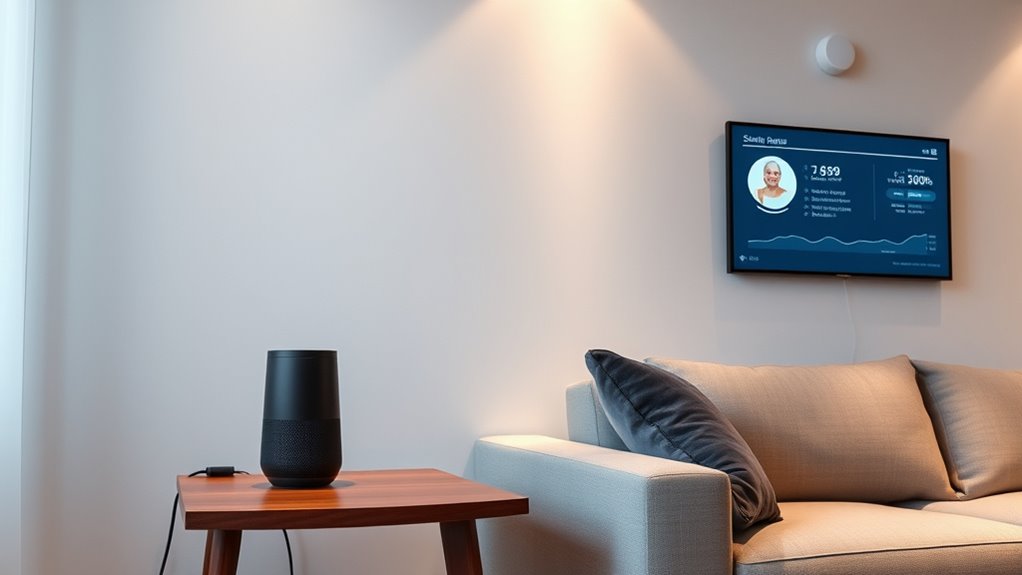

Smart home devices for caregiving, like voice assistants, smart sensors, and emergency alert systems, help you keep your loved ones safe and independent. With automatic medication reminders, fall detection, and environmental monitoring, you can respond quickly to emergencies or hazards. Voice commands make management simple, and remote connectivity keeps you informed in real-time. If you’d like to discover how these solutions can work together for all-encompassing care, there’s more to explore.
Key Takeaways
- Smart medication dispensers and reminders ensure timely doses, reducing risks and easing caregiver oversight.
- Voice-activated emergency systems enable quick help requests and instant alerts to caregivers or emergency services.
- Environmental sensors monitor home conditions like temperature and smoke to prevent hazards proactively.
- Compatibility with voice assistants allows easy control, assistance requests, and activation of safety protocols via simple commands.
- Remote monitoring tools provide real-time updates on medication adherence, emergencies, and environmental conditions for peace of mind.
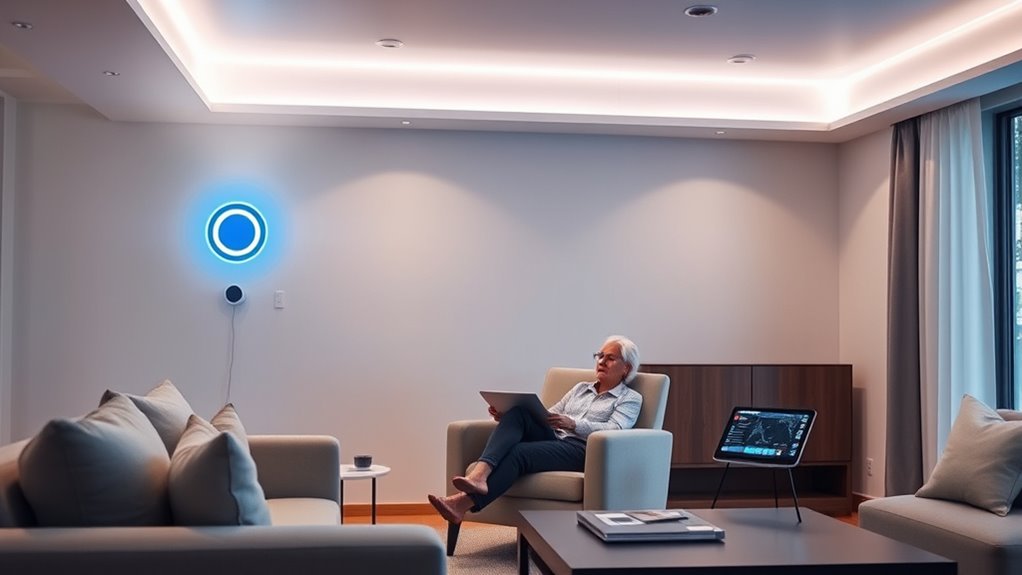
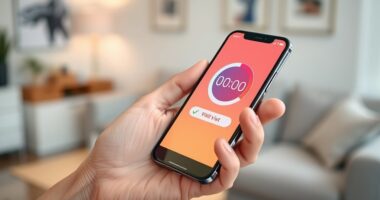
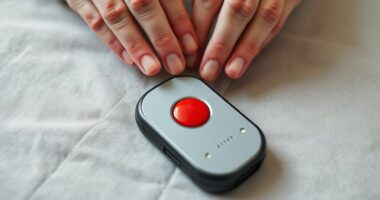
Smart home devices are transforming caregiving by making it easier to monitor and support loved ones from anywhere. With the right technology, you can guarantee that your loved ones stay safe, healthy, and connected, even if you’re miles apart. One of the most essential aspects of caregiving is medication management. Smart pill dispensers and reminder systems help you keep track of medication schedules, reducing the risk of missed doses or accidental overdoses. These devices can be programmed to dispense the correct medication at designated times and send alerts to your phone or a caregiver’s device if a dose is missed. This automation not only promotes adherence but also eases the stress of constant oversight, especially when you’re busy or managing multiple responsibilities. Emergency alerts are another crucial feature that smart home devices offer. With voice-activated emergency systems, your loved ones can quickly summon help by pressing a button or speaking a command, which then alerts caregivers, family members, or emergency services. Smart sensors can detect falls, unusual inactivity, or other health emergencies, automatically triggering alerts to notify you immediately. This rapid response capability ensures that help arrives faster, often before a situation worsens. You can set up these alerts to go directly to your smartphone or a dedicated caregiver hub, giving you peace of mind knowing that help is just a tap or voice command away. Integration with voice assistants like Amazon Alexa or Google Assistant makes it even easier. Your loved ones can simply ask for assistance or check in, and the system can relay information or activate emergency protocols instantly. Smart sensors placed around the home can monitor environmental conditions such as temperature, humidity, or smoke, alerting you to potential hazards before they become dangerous. These devices work seamlessly to create a safety net that responds proactively to your loved one’s needs. The convenience of remote monitoring means you don’t have to be physically present to stay informed. You can receive real-time updates about medication adherence, emergency alerts, or environmental risks through your smartphone or computer. This constant connectivity empowers you to act swiftly if needed, whether it’s reminding your loved one to take their medication or calling emergency services in a crisis. Additionally, the importance of health awareness in caregiving emphasizes the need for proactive monitoring and timely interventions. Overall, smart home devices for caregiving provide an extensive safety and support system that enhances independence while giving you peace of mind. They combine automation, instant alerts, and remote access to create a safer, more manageable caregiving experience, no matter where you are.
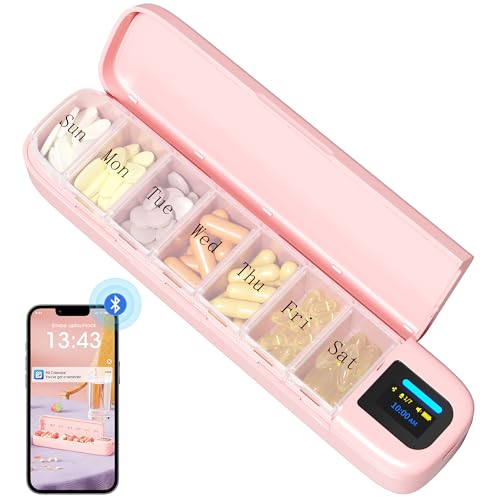
Daviky Automatic Pill Dispenser, Smart Pill Organizer with Alarm, Pill Box 7 Day with APP, Weekly Travel Pill Case, Portable Pill Reminder for Medicines, Supplements and Vitamins (Pink)
【Never Miss a Pill】: Our automatic pill dispenser ensures you never forget to take your medication. With smart…
As an affiliate, we earn on qualifying purchases.
As an affiliate, we earn on qualifying purchases.
Frequently Asked Questions
How Secure Are Smart Home Devices for Sensitive Caregiving Data?
Smart home devices for caregiving are generally secure, but cybersecurity risks exist if you don’t take precautions. You should confirm data encryption is enabled and keep firmware updated to protect sensitive caregiving data. Be cautious about network security, use strong passwords, and regularly monitor device activity. While no system is completely foolproof, these steps help minimize risks, giving you peace of mind when sharing sensitive information.
Can Smart Devices Be Customized for Individual Caregiving Needs?
Ever wondered if smart devices can truly meet your loved one’s unique needs? Yes, they can, thanks to extensive personalization options and user-specific settings. You can customize alerts, device responses, and routines to fit individual caregiving requirements. This flexibility guarantees the technology supports your loved one’s routine and safety seamlessly, making caregiving more efficient and tailored. Isn’t it reassuring to have tools that adapt precisely to your loved one’s lifestyle?
What Is the Average Cost of Setting up a Smart Caregiving Home?
The average cost of setting up a smart caregiving home ranges from $3,000 to $10,000, depending on your needs. You should consider a detailed cost estimation and budgeting considerations to avoid overspending. Prioritize essential devices like voice assistants and smart sensors, then add more advanced tech as your budget allows. Planning ahead helps you create an effective, affordable caregiving environment tailored to your loved one’s needs.
How Do Smart Sensors Detect Emergencies Like Falls or Health Issues?
Imagine a quiet room suddenly interrupted by a fall—smart sensors detect this with high sensor accuracy, instantly alerting emergency response systems. They monitor movement and crucial signs, recognizing abnormal patterns that signal health issues. When a fall occurs or health irregularities are detected, these sensors send immediate alerts, ensuring prompt assistance. You can rely on their precision to safeguard loved ones, providing peace of mind with quick, effective emergency response.
Are Smart Home Devices Easy for Seniors to Operate Independently?
Yes, smart home devices are designed to be user-friendly for seniors. They feature intuitive controls and simple interfaces that make operation easy, even for those with limited tech experience. You can set up voice commands or touch screens that respond clearly, helping seniors operate devices independently. This ease of use guarantees they stay connected, safe, and comfortable without needing constant assistance, promoting greater independence and peace of mind.

Seculife Smartwatch: Medical Alert Bracelet with GPS Tracker, Fall Detection Smart Watch, 2 Way Calling, SOS Button, Medical Watch, Emergency Device for Seniors, Life Alert System, Elderly Monitoring
🆘 𝐅𝐚𝐥𝐥 𝐃𝐞𝐭𝐞𝐜𝐭𝐢𝐨𝐧, 𝐒𝐎𝐒 𝐯𝐨𝐢𝐜𝐞 𝐜𝐚𝐥𝐥𝐬 𝐟𝐨𝐫 𝐒𝐞𝐧𝐢𝐨𝐫𝐬: When the smartwatch detects a fall or the heart button…
As an affiliate, we earn on qualifying purchases.
As an affiliate, we earn on qualifying purchases.
Conclusion
So, as you rely on voice assistants and smart sensors to care for loved ones, remember, these gadgets are only as good as the Wi-Fi connection and your patience. Ironically, in a world where technology promises to make caregiving easier, it often leaves you tangled in cords, updates, and occasional glitches. But hey, at least you’ll have the latest smart device to remind you that even in the future, a little human touch is still irreplaceable.

Newly Upgraded 2025 Bed Alarm for Elderly Dementia Patients – Wireless Fall Detection & Motion Sensor Alert System for Seniors, Dementia & Alzheimer Patients (1 Sensor + 1 Receiver)
【Dual Alert & Power Options】Smart dual alert system with LED light & 110db sound notifications. Flexible power supply…
As an affiliate, we earn on qualifying purchases.
As an affiliate, we earn on qualifying purchases.

SONOFF SNZB-02WD IP65 Zigbee LCD Smart Temperature Humidity Sensor, Waterproof for Greenhouse/Bathroom, App Monitoring with Charts, Flexible Installation
IP65 Waterproof & Multi-Scene Use Boasts an IP65 waterproof rating, making it perfect for water-splash environments like greenhouses,…
As an affiliate, we earn on qualifying purchases.
As an affiliate, we earn on qualifying purchases.