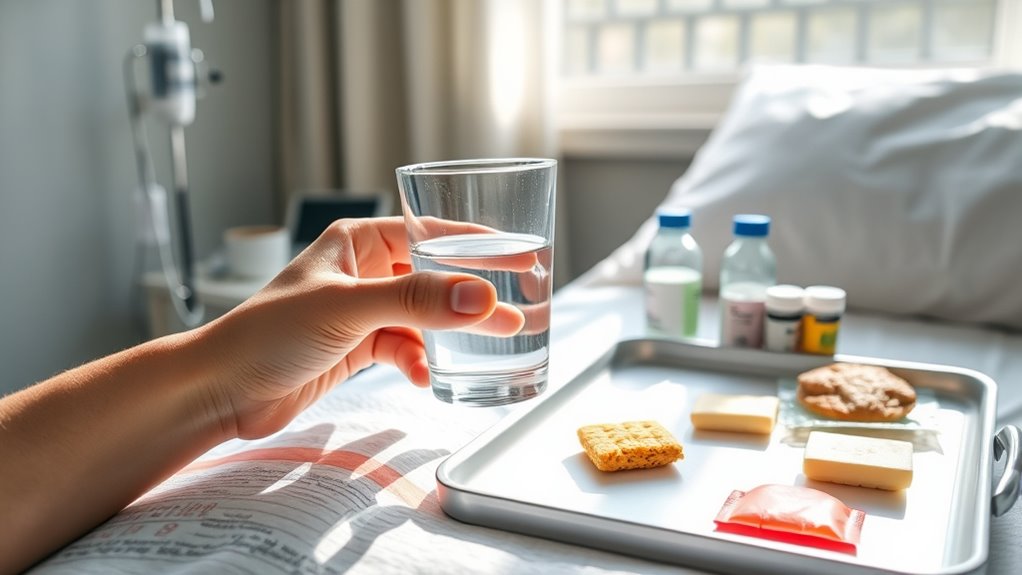

To manage cancer treatment side effects, focus on small, easy-to-digest meals and stay hydrated. Adjust your diet to reduce nausea and taste changes, choosing nutrient-dense foods like smoothies and soups. Seek emotional support from professionals, loved ones, or support groups, and communicate openly with your healthcare team about any concerns. Creating a supportive environment helps you cope better physically and mentally. Keep exploring these strategies to feel more comfortable during this challenging time.
Key Takeaways
- Adopt small, frequent, nutrient-dense meals to combat nausea and appetite changes during treatment.
- Stay well-hydrated with water, herbal teas, or electrolyte drinks to support recovery and manage side effects.
- Adjust food textures and flavors to improve taste and ease digestion, reducing discomfort and enhancing intake.
- Communicate regularly with healthcare providers about side effects to receive appropriate medications and support.
- Build a strong support system and practice stress-reduction techniques to address emotional challenges and promote overall well-being.
Are you prepared to handle the side effects that often come with cancer treatments? Facing chemotherapy, radiation, or other therapies can be intimidating, but knowing how to manage the common effects can make a significant difference in your comfort and recovery. One of the first steps is to focus on nutrition planning. As your body battles the disease and the side effects, your nutritional needs may change. You might experience nausea, loss of appetite, or taste changes, making it harder to eat well. To combat this, consider small, frequent meals that are easy to digest, and incorporate nutrient-dense foods like smoothies, soups, or soft fruits. Avoid greasy or spicy foods if they upset your stomach. Staying hydrated is equally important, so aim to drink plenty of water, herbal teas, or electrolyte solutions. Consulting with a registered dietitian can help you develop a personalized nutrition plan tailored to your specific side effects, ensuring your body gets the fuel it needs to heal and maintain strength.
Alongside physical management, mental health support plays a essential role in handling treatment side effects. The emotional toll of a cancer diagnosis and the stress of ongoing treatment can lead to feelings of anxiety, depression, or isolation. Recognize that these feelings are normal, and seeking support isn’t a sign of weakness—it’s a critical part of your overall care. Connecting with a counselor, joining support groups, or talking openly with loved ones can provide relief and perspective. Mindfulness practices, meditation, or breathing exercises can help reduce anxiety and promote a sense of calm during difficult days. Remember, mental health is just as important as physical health, and nurturing it can improve your resilience and outlook.
Managing side effects is a comprehensive process, combining practical strategies like nutrition planning with emotional support. It’s essential to listen to your body and communicate openly with your healthcare team about what you’re experiencing. They can recommend medications or therapies to alleviate symptoms such as pain, fatigue, or gastrointestinal issues. Don’t hesitate to ask for help or seek additional resources; you’re not alone in this journey. Building a network of support—whether through professionals, family, or friends—can empower you to face each day with greater confidence. Incorporating airless paint sprayers into your home maintenance routines can also be less physically demanding and help create a more comfortable environment during your recovery. By actively addressing both your physical and emotional needs, you’re taking proactive steps toward staying as comfortable and strong as possible during your treatment.
Frequently Asked Questions
How Can I Prevent Hair Loss During Chemotherapy?
To prevent hair loss during chemotherapy, consider using scalp cooling caps, which help reduce blood flow to your scalp and protect hair follicles. Stay gentle with your hair by avoiding harsh shampoos and heat styling. Keep your scalp clean and moisturized, and consider discussing hair preservation options with your doctor. While scalp cooling isn’t foolproof, it can markedly decrease hair loss and help you feel more comfortable during treatment.
Are There Natural Remedies for Managing Nausea?
You can manage nausea naturally by trying herbal supplements like ginger or peppermint, which are known to calm your stomach. Acupressure techniques, such as applying pressure to specific points on your wrist, may also help reduce nausea. Remember to talk to your healthcare provider before using herbal remedies or acupressure, especially during treatment, to make certain they’re safe for you and won’t interfere with your medication.
What Mental Health Resources Are Available for Patients?
You can find mental health resources like counseling, support groups, and online communities that offer emotional support. These resources help you develop coping strategies to manage stress and anxiety related to your diagnosis and treatment. Hospitals often provide access to mental health professionals, and organizations like the American Cancer Society offer helpful information. Remember, reaching out for support is a crucial step in taking care of your emotional well-being during this journey.
How Can I Boost My Immune System While on Treatment?
To boost your immune system during treatment, focus on immune support by eating a balanced diet rich in fruits and vegetables, staying well-hydrated, and getting plenty of rest. Practice infection prevention by washing your hands often, avoiding crowds, and staying up-to-date on vaccinations. Additionally, discuss supplements with your healthcare team to verify they’re safe. These steps help strengthen your immunity and reduce your risk of infections.
What Dietary Changes Can Reduce Treatment Fatigue?
To reduce treatment fatigue, focus on nutritional strategies that include energy-boosting foods like nuts, lean proteins, and whole grains. Incorporate small, frequent meals to maintain your energy levels throughout the day. Stay hydrated and avoid processed foods and excessive sugar, which can drain your energy. Prioritize fruits and vegetables to support overall health. These dietary changes can help you feel more energized and better manage treatment-related tiredness.
Conclusion
Managing treatment side effects is essential to help you stay strong and focused on your recovery. Remember, about 70% of cancer patients experience some side effects, but with the right support and strategies, you can minimize their impact. Stay proactive by communicating openly with your healthcare team and adopting healthy habits. Your resilience and knowledge can make a significant difference in your journey toward better health. You’re not alone—help is available every step of the way.