
To choose the right TV size for your room, start by measuring your space and seating distance. The ideal size depends on your room dimensions and how far you sit from the screen, generally about 1.5 to 2.5 times the TV’s diagonal. Consider lighting conditions and furniture layout to avoid glare and guarantee comfort. Wall mounting can save space and improve aesthetics. Keep these tips in mind, and you’ll discover how to select the perfect fit for your space.
Key Takeaways
- Measure your room and seating distance to determine an appropriate TV size based on optimal viewing range.
- Consider room lighting conditions and furniture placement to select a screen size that minimizes glare and enhances visibility.
- Ensure the TV is mounted at eye level when seated for comfortable viewing and proper visual alignment.
- Balance the TV size with room aesthetics and layout to create a harmonious and functional space.
- Choose a size that fits your room without overwhelming the space, prioritizing comfort and immersive viewing.
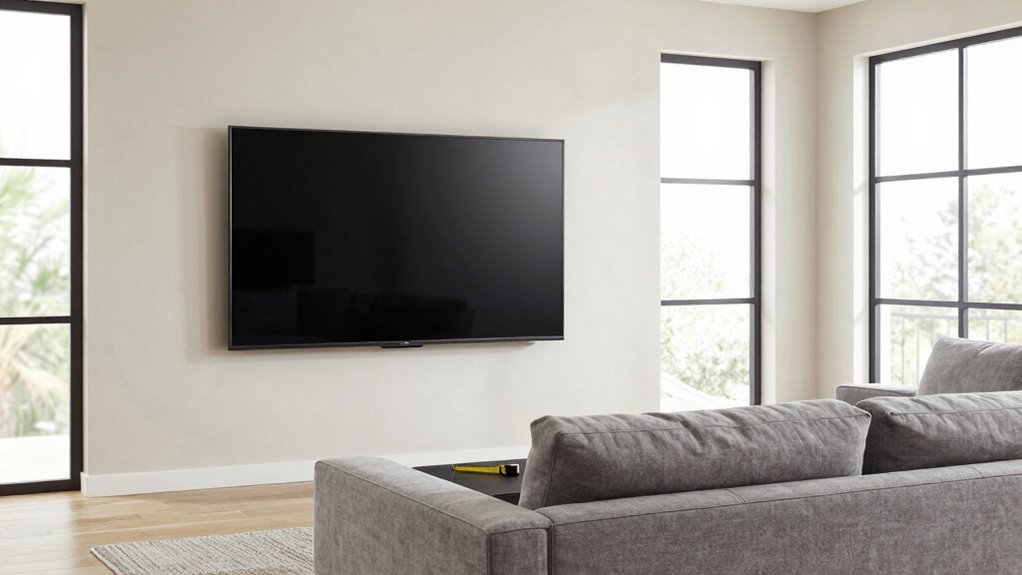
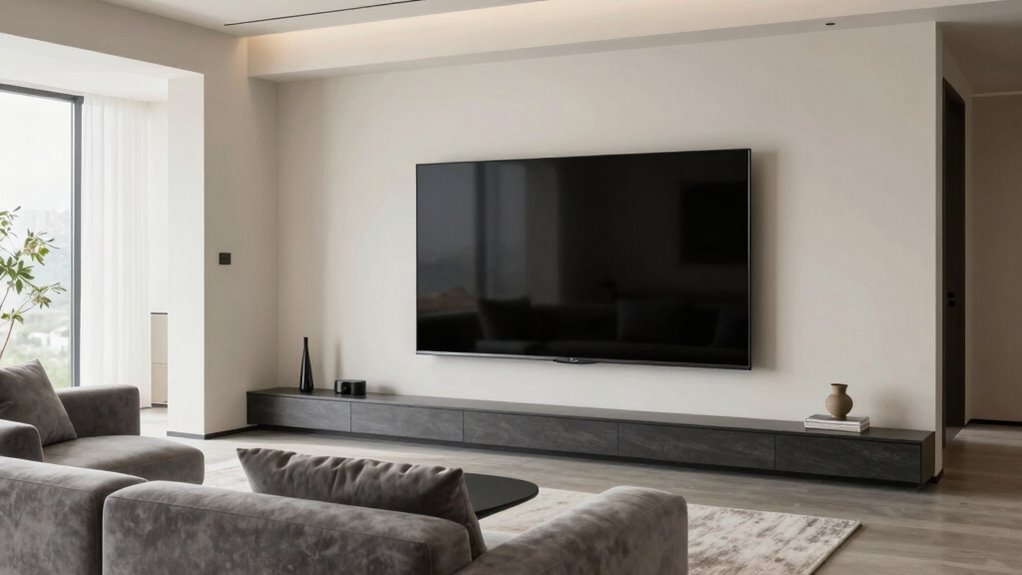
Have you ever wondered what size TV is right for your space? Choosing a TV size involves more than just picking the biggest screen you can fit. It’s about creating an ideal viewing experience that fits comfortably in your room. One key factor to think about is wall mounting. If you plan to mount your TV on the wall, you’ll want to consider how the size will affect your viewing angles. Larger screens can deliver immersive visuals, but if you mount it too high or too low, you could strain your neck or distort the viewing experience. When wall mounting, it’s vital to make sure the TV is positioned at eye level when seated, so your viewing angles stay natural and comfortable. Additionally, considering TV size recommendations can help ensure your setup is optimized for your space.
The size of your room plays an essential role in determining the ideal TV size. In smaller rooms, a large TV might feel overwhelming and could even hinder your viewing angles, causing you to turn your head excessively or strain your neck. Conversely, in a spacious living room, a bigger screen can provide a more cinematic experience without sacrificing comfort. To find the right size, measure the distance between where you’ll sit and the TV location. A good rule of thumb is that the ideal viewing distance should be roughly 1.5 to 2.5 times the diagonal size of the TV. For example, if you sit about 6 feet away, a TV around 55 to 65 inches might be perfect. Being aware of your room dimensions can help make this decision easier and more accurate. It’s also helpful to consider the visual impact of different sizes to visualize how well they will fit into your space. Understanding your room layout can also influence the best placement and size choices for your TV.
Another important aspect is evaluating your room’s lighting conditions. Bright rooms with lots of windows might require a slightly larger screen to combat glare and maintain image clarity. On the other hand, rooms with controlled lighting can accommodate smaller screens without sacrificing viewing pleasure. When contemplating the size, also think about the furniture arrangement. If your seating is spread out, a larger TV will ensure everyone gets a good view. If your seating is close together, a smaller screen can be just as effective.
Ultimately, the goal is to find a balance between size, comfort, and aesthetics. Remember that wall mounting can save space and give your room a sleek look, but it demands attention to proper height and viewing angles. Take your time to measure your space, think about your seating arrangement, and visualize how different sizes will fit in your room. That way, you’ll choose a TV size that’s just right for your space, providing an enjoyable and comfortable viewing experience every time.
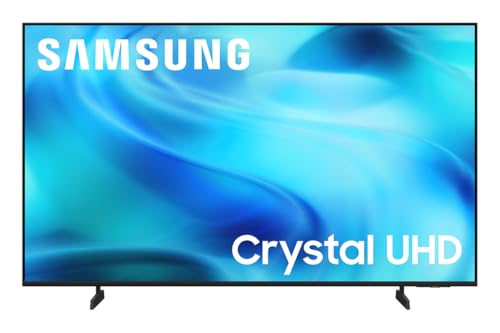
Samsung 55-Inch Class U8000H Series Crystal UHD, 4K, Smart TV, 2026 Model
- Crystal Processor: Enhances colors and sharpens details
- Free Streaming Content: Access 2,700+ free channels and content
- Motion Xcelerator: Delivers smooth motion for gaming and sports
As an affiliate, we earn on qualifying purchases.
As an affiliate, we earn on qualifying purchases.
Frequently Asked Questions
How Does Viewing Distance Affect TV Size Choice?
Viewing distance directly impacts your TV size choice because it influences your viewing angles and sound quality. If you’re too close, smaller screens may strain your eyes and reduce immersion; too far, and larger screens might overwhelm your space. For ideal experience, choose a size that fits your typical viewing distance, ensuring comfortable viewing angles and better sound quality. This balance enhances your overall viewing comfort and enjoyment.
What Is the Ideal Screen Resolution for Different TV Sizes?
Think of your TV as a window to your world; the ideal resolution depends on the view you want. For smaller screens (up to 55 inches), Full HD (1080p) offers sharp clarity, while 4K becomes essential for larger sizes (55 inches and above) to guarantee content compatibility and detail. Higher resolutions bring your content to life, making every scene immersive and true to the creator’s vision.
How Do Room Lighting Conditions Influence TV Size Selection?
Room lighting conditions considerably influence your TV size choice. If your room has high ambient brightness or abundant natural light, opt for a larger screen to reduce glare and improve visibility. A bigger TV helps you see details clearly despite bright surroundings. Conversely, in darker rooms, smaller screens work well since ambient light won’t wash out the picture. Adjust your TV size based on ambient brightness and natural light for the best viewing experience.
Can Wall-Mounted TVS Impact Room Aesthetics and Size Options?
Wall-mounted TVs can considerably influence your room’s aesthetics and size options. Wall mounting creates a sleek, modern look and saves space, making the room appear more open. It allows you to choose larger screens without overwhelming the space, enhancing the aesthetic impact. Just make certain your wall can support the TV’s weight and size, and position it at ideal viewing height for comfort and visual appeal.
What Are the Ergonomic Considerations for Large vs. Small TVS?
Think of your TV as a window to your entertainment, where ergonomic considerations act as the frame. For large screens, you’ll want to maintain a comfortable viewing posture, sitting at an ideal distance to avoid eye strain. Smaller TVs allow closer viewing, but make certain your eyes aren’t strained from squinting or leaning. Prioritize eye comfort by aligning the screen height with your eye level, preventing neck or eye fatigue.
Conclusion
Now that you know how to pick the perfect TV size for your room, imagine the moments you’ll enjoy—crisp images, immersive sound, and countless movie nights. But here’s the twist: the right size isn’t just about measurements; it’s about how you’ll feel when you finally sit back and watch. Will you choose the sleek, giant screen that transforms your space or something more subtle? The choice is yours—ready to make it?