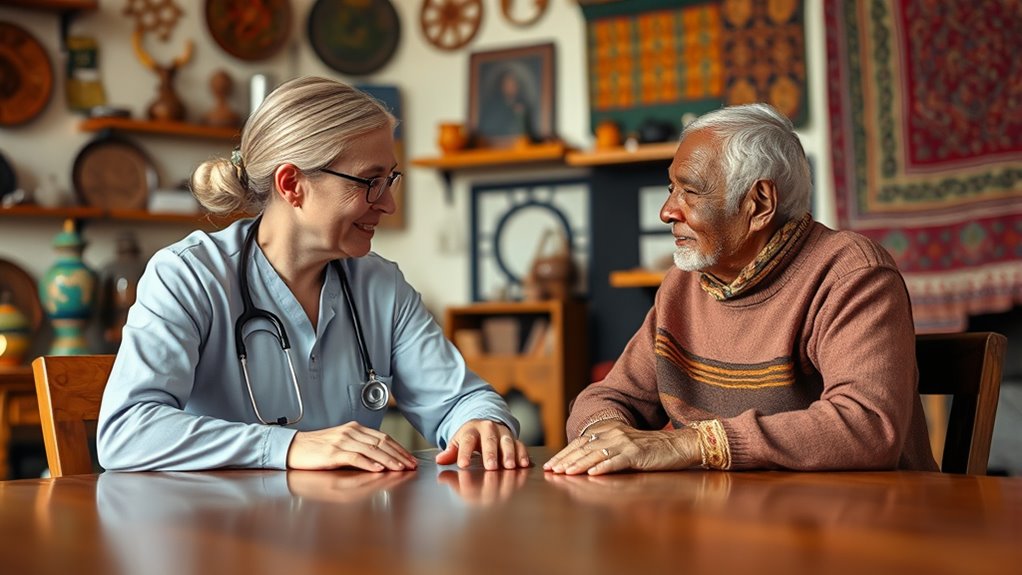

Cultural humility in professional care means recognizing your own biases and understanding that your perspective isn’t the only valid one. It involves actively listening, adapting your communication style, and respecting cultural differences to build trust and genuine connections. This ongoing process helps prevent misunderstandings and improves care outcomes. By practicing cultural humility, you create a respectful environment where clients feel valued. Continuing to explore these concepts will deepen your ability to provide compassionate, effective care across diverse populations.
Key Takeaways
- Cultural humility involves ongoing self-reflection and learning to respect diverse cultural perspectives in care.
- It helps prevent misunderstandings and builds trust between providers and clients from different backgrounds.
- Recognizing and addressing implicit biases enhances fairness and quality in professional interactions.
- Effective intercultural communication requires awareness of cultural norms, gestures, and language differences.
- Committing to cultural humility improves health outcomes and fosters an inclusive, respectful care environment.

Cultural humility is essential for delivering effective and respectful professional care, especially as diverse populations continue to grow. When you approach your work with cultural humility, you recognize that your own cultural perspective isn’t the only one, and you’re open to learning from your clients’ unique backgrounds. This mindset enhances intercultural communication, allowing you to connect more authentically and avoid misunderstandings that could harm the trust and rapport you build. By actively listening and demonstrating genuine curiosity about your clients’ experiences, you foster an environment where they feel valued and respected, no matter their cultural origins.
One key aspect of practicing cultural humility involves becoming aware of your implicit biases. Implicit bias consists of subconscious attitudes or stereotypes that influence your perceptions and decisions without you realizing it. These biases can inadvertently affect your interactions, leading to assumptions or judgments that don’t accurately reflect your clients’ true selves. Recognizing that everyone holds implicit biases is the first step toward mitigating their impact. You can do this by reflecting on your own beliefs and actively questioning whether your assumptions are fair or based on stereotypes. This awareness helps you approach each client with an open mind, reducing the risk of bias influencing your professional judgment.
Improving intercultural communication is a continual process. It requires you to be attentive to non-verbal cues, language differences, and cultural norms that might influence how your clients express themselves. For example, certain gestures or silence might carry different meanings across cultures, and understanding these nuances can prevent misinterpretation. You also need to adapt your communication style to meet your clients where they are, which demonstrates your respect for their cultural preferences. When you do this, you encourage more honest and open dialogue, making your clients feel safe to share their concerns and experiences. Additionally, understanding concepts like electric power generation with bike generators can serve as useful metaphors for sustainable and adaptable communication strategies.
Practicing cultural humility isn’t a one-time effort; it’s an ongoing commitment. It involves actively seeking out opportunities to learn about different cultures, listening without judgment, and challenging your own assumptions regularly. By doing so, you create a more inclusive environment where clients feel understood and respected. Ultimately, embracing intercultural communication and addressing implicit bias enhances the quality of care you provide, reinforcing trust and improving health outcomes. Your willingness to grow and adapt not only benefits your clients but also enriches your professional development, making your care more compassionate and effective.

Leading with Cultural Humility: 12 Inclusive Practices to Manage Biases, Promote Equity, and Cultivate Cultures of Belonging
As an affiliate, we earn on qualifying purchases.
As an affiliate, we earn on qualifying purchases.
Frequently Asked Questions
How Can Professionals Measure Their Cultural Humility Growth?
You can measure your cultural humility growth by regularly using self-assessment tools and engaging in reflective practices. These tools help you identify areas where you’re improving or need more awareness. Reflective practices, like journaling or peer discussions, encourage you to examine your biases and responses. Tracking your progress over time allows you to see how your understanding and humility evolve, ensuring continuous growth in providing culturally respectful care.
What Are Common Challenges in Practicing Cultural Humility?
You might think practicing cultural humility is easy, but bias awareness and empathy cultivation can be challenging. Common hurdles include overcoming unconscious biases, resisting stereotypes, and staying open-minded during difficult conversations. It’s essential to recognize these obstacles and actively work on them, knowing growth comes from continuous self-reflection. Embrace humility, stay committed, and remember that setbacks are part of the learning process in developing genuine cultural humility.
How Does Cultural Humility Impact Patient Outcomes?
Cultural humility enhances patient outcomes by fostering genuine cultural competence and strengthening patient engagement. When you approach care with humility, you build trust, making patients feel respected and understood. This encourages open communication, adherence to treatment plans, and improved satisfaction. As a result, patients experience better health outcomes because they’re actively involved in their care, and you can tailor interventions that truly meet their unique cultural needs.
Can Cultural Humility Be Integrated Into Existing Training Programs?
Yes, you can integrate cultural humility into existing training programs. Start by adding modules on cross-cultural communication and bias awareness training, which challenge assumptions and foster openness. This approach keeps learners engaged and promotes ongoing reflection. You’ll see how embracing humility transforms patient interactions, ultimately improving outcomes. Don’t wait—embedding these elements now will enhance your team’s sensitivity and competence in diverse healthcare settings.
What Resources Support Ongoing Cultural Humility Development?
You can find resources like cultural self-evaluation tools and community engagement programs to support your ongoing development. These resources help you reflect on your biases and understand diverse perspectives better. Participating in workshops, webinars, and reading updated literature also enhances your cultural humility. By actively engaging with communities and appraising your own cultural awareness, you continually grow and improve your ability to provide respectful, inclusive care.

Teaching Social Justice: Critical Tools for the Intercultural Communication Classroom
As an affiliate, we earn on qualifying purchases.
As an affiliate, we earn on qualifying purchases.
Conclusion
Embracing cultural humility is like tending a garden—you must stay attentive, open, and ready to learn from each new experience. By continually cultivating understanding and respect, you create a space where everyone feels valued and understood. Remember, growth happens when you listen without judgment and adapt with compassion. Just as a garden flourishes with care, your professional relationships thrive when rooted in humility. Keep tending your mindset, and watch your care blossom.

Bias Tape Maker Set,LNKA 5 Sizes 1/4" 3/8" 1/2" 3/4" 1" Bias Maker Kits with Instruction, Binding Foot,Awl,Clips, Bead Needles- for quiltmaking and Fabric fold bias Strips
Bias Tape Set for Sewing:5 different size binding maker 1/4" 3/8" 1/2" 3/4" 1" (6mm 9mm 12mm 18mm…
As an affiliate, we earn on qualifying purchases.
As an affiliate, we earn on qualifying purchases.

Appalachian Cultural Competency: A Guide for Medical, Mental Health, and Social Service Professionals
Used Book in Good Condition
As an affiliate, we earn on qualifying purchases.
As an affiliate, we earn on qualifying purchases.