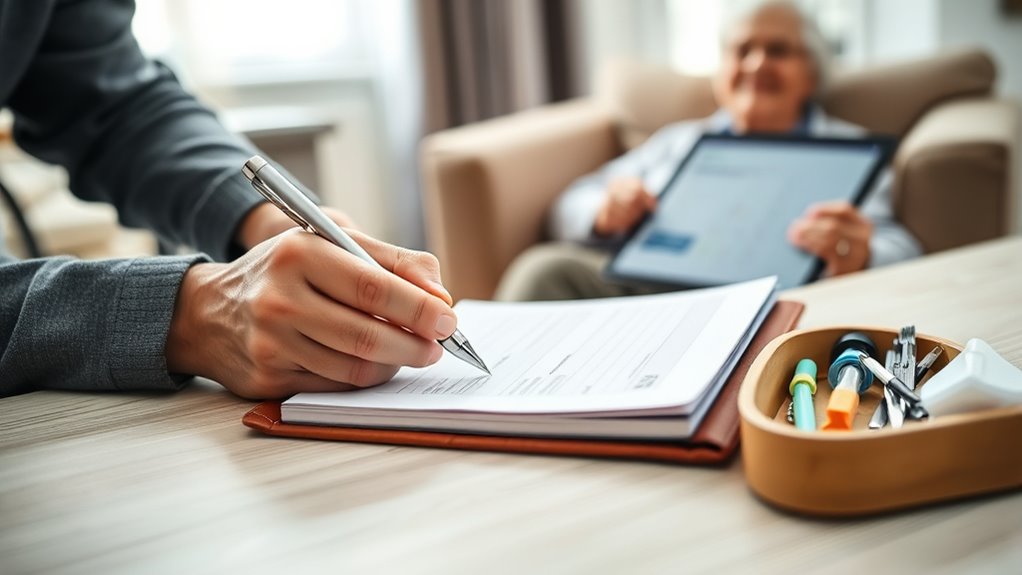

Proper documentation is essential in home care to guarantee client safety, compliance, and quality service. You should record details immediately after providing care, including medication schedules, emergency protocols, and plan updates. Use clear, concise language and follow your organization’s policies, whether paper or electronic. Accurate records protect everyone involved and support ongoing improvements. Keep in mind, mastering these practices will help you deliver the best care possible—discover more tips as you continue exploring.

Turn quiet afternoons into listening time
- Thousands of audiobooks, podcasts and originals
- Listen on your phone, tablet or Echo — also offline
- Cancel anytime
Key Takeaways
- Document care activities immediately, including medication administration, schedule changes, and client responses.
- Use clear, factual language with dates, times, and specific actions for accurate records.
- Follow organizational policies and utilize standardized forms or electronic health records (EHRs) for consistency.
- Record emergency protocols, drills, and updates to ensure preparedness and compliance.
- Regularly review and update documentation to maintain accuracy, legal compliance, and quality of care.

Effective documentation is the backbone of quality home care, ensuring that your clients receive the best possible support and that your care meets legal and regulatory standards. When you document accurately, you create a clear record of the services provided, which helps protect both your clients and your practice. It’s especially important when it comes to medication management—keeping track of medication schedules, dosages, and any changes is essential for your client’s safety. Proper documentation ensures you can quickly reference medication details, identify potential issues, and communicate effectively with other healthcare professionals. It also provides proof of compliance during audits or reviews, demonstrating that you’re adhering to best practices.
Accurate documentation safeguards clients and practice, especially in medication management and regulatory compliance.
In addition to medication management, documenting emergency protocols is equally critical. Emergencies can happen unexpectedly, and having detailed records of your clients’ specific emergency plans can make a significant difference in response times and outcomes. When you document emergency protocols, you clarify procedures for situations like falls, allergic reactions, or sudden health deterioration. This documentation should include client-specific instructions, contacts to notify, and steps to follow, which ensures everyone involved is on the same page. Clear records of these protocols also serve as a training tool for new staff or caregivers, helping them respond confidently and effectively during crises.
Your documentation should be timely, accurate, and thorough. As you provide care, take notes immediately afterwards—don’t rely on memory or vague recollections. Use concise language, focusing on factual information like dates, times, and specific actions taken. This precision minimizes misunderstandings and ensures continuity of care. When documenting medication management, include details about medication administration, any missed doses, or adverse reactions. For emergency protocols, record drills or practice runs and any modifications made to the plan. These records can be invaluable for ongoing care adjustments and for demonstrating compliance with regulatory requirements. Additionally, understanding the role of artificial intelligence in healthcare documentation is becoming increasingly important, as it can assist in maintaining accuracy and efficiency.
Always follow your organization’s policies and legal guidelines. Proper documentation isn’t just about safeguarding your practice; it’s about delivering consistent, safe, and effective care. Use standardized forms or electronic health records to streamline the process and reduce errors. Regularly review and update documentation to reflect any changes in your client’s condition or care plan. This ongoing vigilance not only improves client safety but also ensures your documentation remains accurate and compliant.
Products Worth Considering

Bowflex PR1000 Home Gym

Oura Ring 5 Smart Ring – Silver – Size 10

Garmin Forerunner 55 GPS Running Smartwatch, Black
As an affiliate, we earn on qualifying purchases.
Frequently Asked Questions
How Do I Handle Incomplete or Missing Documentation?
When you encounter incomplete or missing documentation, promptly review your digital templates for accuracy and completeness. Update or fill in any gaps as soon as possible to guarantee compliance. Conduct regular documentation audits to identify issues early and prevent future gaps. If necessary, communicate with your team to gather missing information, and always double-check your records before submitting. Staying proactive helps maintain high-quality documentation and avoids potential compliance problems.
What Are the Legal Implications of Documentation Errors?
Documentation errors can expose you to liability risks if they lead to misunderstandings or incorrect care decisions. They also jeopardize your compliance standards, potentially resulting in legal penalties or loss of licensure. To minimize these risks, guarantee your documentation is accurate, complete, and timely. Always double-check entries and follow your agency’s protocols, because clear, compliant records protect you and your clients from legal complications.
How Often Should Documentation Be Reviewed and Updated?
You should review and update documentation daily to meet documentation standards and guarantee compliance guidelines are followed. Regular updates help catch errors, reflect current patient needs, and maintain legal accuracy. Set a routine schedule, such as at the start or end of each shift, to keep records precise. Staying consistent with these practices minimizes legal risks and keeps your documentation aligned with agency policies and healthcare regulations.
What Tools or Software Can Improve Documentation Accuracy?
You might think tools alone can’t guarantee perfect records, but using digital templates and mobile apps markedly improves accuracy. These tools streamline data entry, reduce errors, and ensure consistency across documentation. By adopting user-friendly software, you make it easier to record details promptly and correctly, which ultimately enhances patient care. Embrace technology to simplify your documentation process and maintain high standards effortlessly.
How Do I Train Staff on Proper Documentation Practices?
You train staff effectively by conducting hands-on workshops focused on creating accurate care plans and securing patient consent. Use real-life scenarios to demonstrate proper documentation practices, emphasizing clarity and completeness. Encourage questions and provide feedback. Regularly review documentation to guarantee compliance, and reinforce the importance of recording details like care plans and patient consent promptly. This approach helps your team understand the critical role of proper documentation in patient care.
Conclusion
Now, as you’ve seen, proper documentation isn’t just about keeping records—it’s about ensuring your clients get the best care possible. When you stay organized and detail-oriented, it often feels like everything falls into place naturally, almost like a coincidence. So, keep practicing your skills, stay diligent, and you’ll find that good documentation becomes second nature. After all, the right notes can make all the difference in providing exceptional home care.