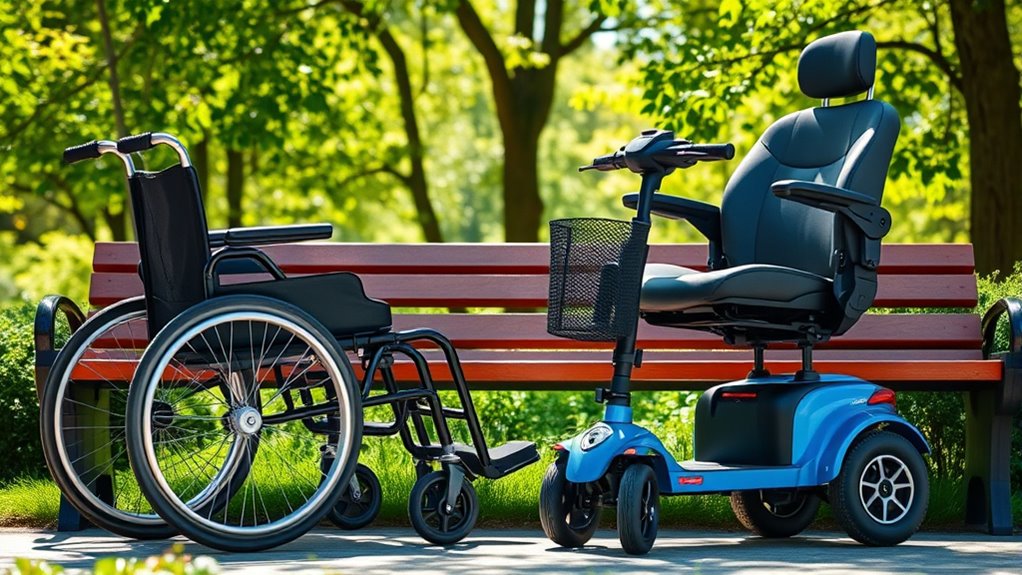

Choosing between a wheelchair and a mobility scooter depends on your loved one’s mobility needs, physical strength, and daily environment. If they mainly stay indoors and need a lightweight option, a wheelchair might suit them best. For outdoor use, longer distances, and stability, a mobility scooter is often more appropriate. Each device offers unique benefits, so understanding their differences helps you make the right choice—exploring these factors further can guide your decision.
Key Takeaways
- Choose a wheelchair for indoor use, tight spaces, and when manual operation is feasible and preferred.
- Opt for a mobility scooter for outdoor travel, longer distances, and when ease of use with minimal effort is essential.
- Consider physical strength: manual wheelchairs need arm power; powered options reduce effort but are bulkier.
- Assess environment: indoor environments favor wheelchairs; outdoor terrains require scooters with larger wheels and stability features.
- Match device choice to mobility needs, routine environment, and comfort for better independence and safety.
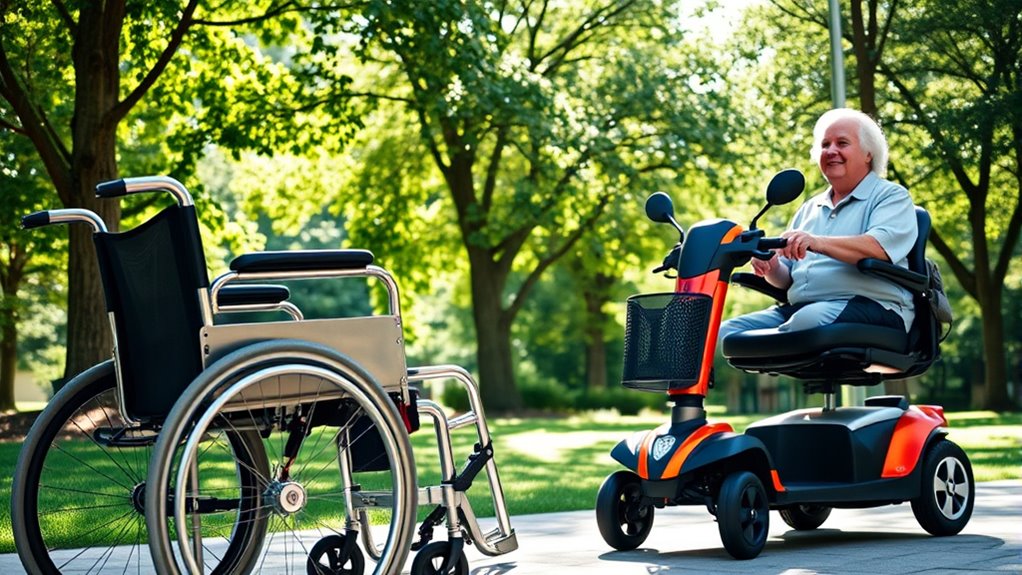
Are wheelchairs and mobility scooters truly interchangeable, or do they serve different needs? The answer depends on your loved one’s specific mobility requirements and lifestyle. If they need a device primarily for indoor use, a wheelchair might be the best fit. Wheelchairs are designed with ergonomic principles in mind, offering adjustable footrests, armrests, and seating to guarantee comfort and proper posture. Their ergonomic design helps prevent discomfort during extended use, making them ideal for those who spend a lot of time seated. Additionally, wheelchairs are lightweight and compact, allowing for easy maneuverability through tight indoor spaces. They are generally simple to operate, with manual models requiring some arm strength, though powered wheelchairs are available for those with limited upper body mobility.
Wheelchairs are ergonomic, lightweight, and ideal for indoor use, providing comfort and easy maneuverability.
On the other hand, mobility scooters are built for longer outdoor journeys and cover greater distances more comfortably. They often come equipped with larger wheels and a stable platform, making it easier to navigate uneven terrain like sidewalks or park paths. When considering a mobility scooter, battery life becomes a pivotal factor. A good scooter offers a substantial battery range, so your loved one can enjoy outings without the constant worry of running out of power. Longer battery life means fewer recharges and more independence, which is essential for outdoor excursions. It’s also worth noting that mobility scooters typically have a higher weight capacity and stability features, providing a sense of security during outdoor adventures.
The choice also hinges on your loved one’s physical strength and daily routines. Wheelchairs, especially manual ones, require arm strength and some level of physical independence. Powered wheelchairs can alleviate this, but they tend to be bulkier and more expensive. Mobility scooters, meanwhile, are easier to operate with minimal effort, often controlled via a simple tiller or joystick. They’re perfect for those who want a hassle-free way to travel longer distances but don’t need the precise control or tight turning radius that wheelchairs offer indoors. Furthermore, reliable power sources play a crucial role in maintaining consistent operation, especially for outdoor mobility.
Ultimately, the decision boils down to where and how your loved one needs to move around. Wheelchairs excel indoors and for short trips, especially when ergonomic design guarantees comfort. Mobility scooters shine outdoors, offering longer range and convenience with their impressive battery life. Understanding these differences guarantees you pick the device that best supports their independence, safety, and comfort—making their daily routines easier and more enjoyable.
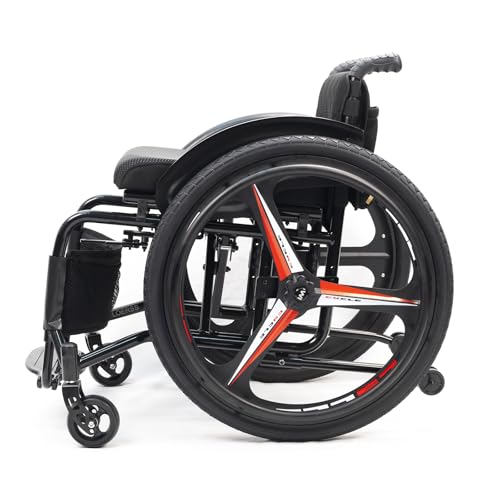
Portable All-Terrain Ultra Lightweight Sports Wheelchair,Foldable Self Propelled Aluminum Alloy Manual Wheel Chair,Transport Wheelchairs With Anti-Tipper,Load Capacity 220 Lbs(Size:42cm/16.5in,Color:B
1. Ultra-Lightweight Aluminum Frame: Crafted from high-quality, ultra-lightweight aluminum, this sport wheelchair ensures easy maneuverability and portability, making…
As an affiliate, we earn on qualifying purchases.
As an affiliate, we earn on qualifying purchases.
Frequently Asked Questions
How Do I Determine the Best Option Based on My Loved One’s Lifestyle?
You can determine the best option by evaluating your loved one’s daily activities and environment. If they mainly need indoor mobility or travel short distances, a wheelchair might be ideal. However, if they enjoy outdoor activities or face uneven outdoor terrain, a mobility scooter offers better stability and outdoor agility. Consider their comfort, independence, and how often they’ll use it outside or inside to make the best choice.
Are There Specific Safety Features to Consider for Each Device?
You should look for safety features like seat belts to keep your loved one secure, whether on a wheelchair or mobility scooter. For scooters, anti-tip features are essential to prevent accidents on uneven terrain. Also, check if the device has sturdy brakes and a stable base. These safety elements guarantee confidence and protection, giving both you and your loved one peace of mind during daily activities.
How Much Maintenance Is Required for Wheelchairs Versus Mobility Scooters?
You’re curious about maintenance, and the answer varies. Mobility scooters typically demand more attention, with regular battery checks, charging, and occasional motor upkeep, plus ample storage to keep parts safe. Wheelchairs, especially manual ones, need less ongoing care—just periodic cleaning and inspections. However, electric wheelchairs do require battery maintenance similar to scooters. So, consider your loved one’s daily routine and storage space to determine which device fits best with minimal fuss.
Can These Devices Be Easily Transported in a Vehicle?
Both wheelchairs and mobility scooters can be transported in a vehicle, but your choice depends on vehicle compatibility and storage considerations. Foldable wheelchairs are lightweight and easily stored in trunks or back seats, while mobility scooters often require more space or a lift device. Consider your loved one’s transport needs, available vehicle space, and ease of loading to determine which device best suits your situation.
What Are the Cost Differences Between Wheelchairs and Mobility Scooters?
You’ll find that wheelchairs generally cost less upfront, often between $100 and $500, while mobility scooters range from $600 to over $2,000. Insurance coverage can help offset expenses, especially for medical needs. Rental options are available for both devices, which can be a cost-effective choice if your loved one needs mobility aids temporarily. Consider your budget and insurance benefits to make the best choice for your loved one.
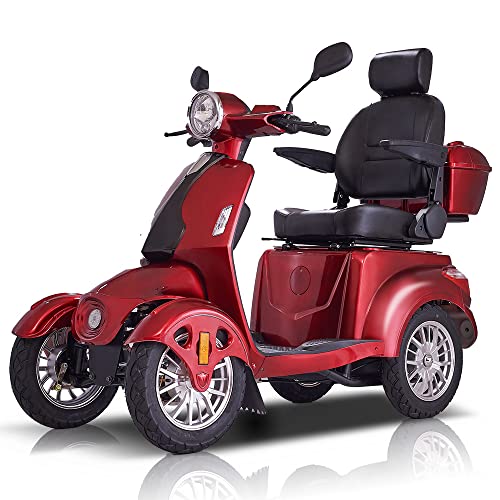
Heavy Duty 4 Wheel Mobility Scooters for Seniors & Adults 500lbs Capacity – Electric Powered Chair – 1000W All Terrain Fast Mobility Scooter for Travel w/Long Range Battery Remote Key
[Fun & Fast 3-Speed Control] This 4-wheel fast electric mobility scooter has it all – comfort, style, speed,…
As an affiliate, we earn on qualifying purchases.
As an affiliate, we earn on qualifying purchases.
Conclusion
Ultimately, choosing between a wheelchair and a mobility scooter is like finding the right dance partner—you want someone who moves seamlessly with your loved one’s needs. Think of the wheelchair as a steady, dependable rhythm, while the scooter offers a lively, adventurous tune. By understanding their unique steps, you help your loved one embrace freedom and comfort, turning each day into a graceful dance of independence. After all, the right choice sets the rhythm for a life well-lived.

28lbs Ultralight Foldable 100% Carbon Fiber Electric Wheelchairs for Adults, FreeWink Rear Control 28 Miles Long Range Power Wheelchairs with 2 Lithium Batteries for All Terrain Airline Approved
【28lbs Ultralight Carbon Fiber】Compared with other carbon fiber electric wheelchairs on the market, FreeWink's wheelchair has a higher…
As an affiliate, we earn on qualifying purchases.
As an affiliate, we earn on qualifying purchases.

WEIZE 12V 35AH Deep Cycle Battery for Scooter Pride Mobility Jazzy Select Electric Wheelchair, Set of 2
LFP1235 Sealed Lead Acid Rechargeable Maintenance Free Battery, Size: 7.68 x 5.12 x 7.09 inches. Quantity: 2 x…
As an affiliate, we earn on qualifying purchases.
As an affiliate, we earn on qualifying purchases.