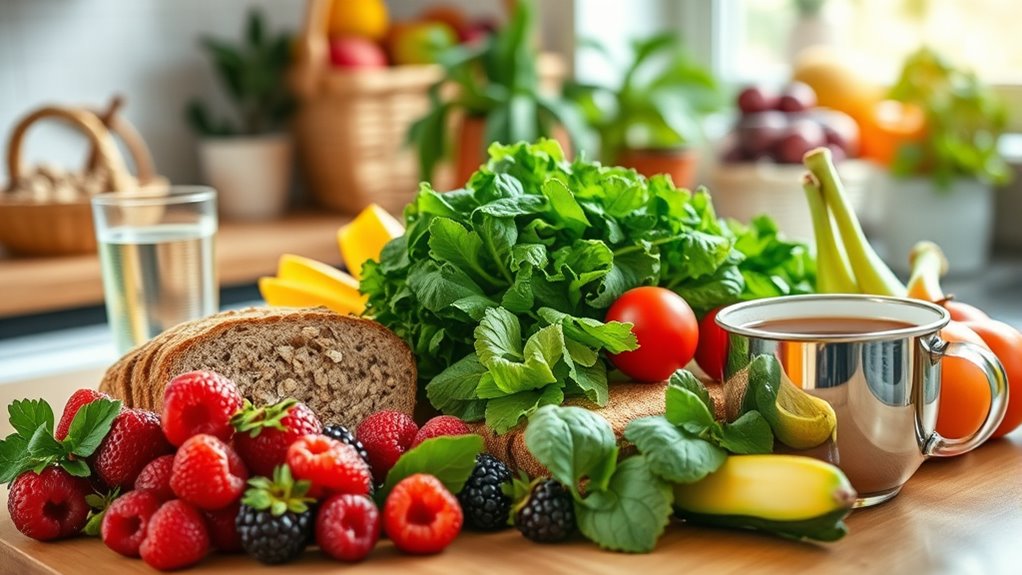

To prevent constipation, focus on eating plenty of fiber-rich foods like fruits, vegetables, and whole grains, and drink enough water daily to keep stool soft. Establish a regular bathroom routine and respond promptly to the urge to avoid hardening stool. Incorporate regular physical activity, such as walking, to stimulate your digestive system. Limiting processed foods and staying hydrated are essential; continue exploring these strategies to support your digestive health effectively.
Key Takeaways
- Increase dietary fiber gradually through fruits, vegetables, whole grains, and legumes, while ensuring adequate hydration.
- Establish a consistent bathroom routine and respond promptly to the urge to prevent stool hardening.
- Engage in regular physical activity like walking or stretching to stimulate bowel movements.
- Limit processed foods and avoid excessive caffeine and alcohol to support digestive health.
- Maintain proper hydration by drinking at least 8 glasses of water daily to keep stool soft and manageable.

Constipation can be uncomfortable and disrupt your daily routine, but you can take simple steps to prevent it. One of the most effective ways is to pay attention to your fiber intake. Increasing the amount of fiber in your diet helps add bulk to your stool, making it easier to pass. Incorporate a variety of fiber-rich foods such as fruits, vegetables, whole grains, and legumes. These foods not only support healthy digestion but also promote regular bowel movements. Start gradually to avoid bloating or gas, and drink plenty of water as you increase your fiber intake. Your body needs enough hydration to soften the stool, so don’t forget that hydration habits are just as essential as your diet.
Maintaining good hydration habits is fundamental for preventing constipation. Drinking enough water keeps your stool soft and manageable. Aim for at least 8 glasses a day, but remember that your needs might be higher depending on your activity level, climate, or health conditions. If you notice your stool becoming hard or difficult to pass, it’s a sign you might need to drink more fluids. Consuming other hydrating beverages like herbal teas or broths can also help, but plain water should be your main source. Avoid excessive caffeine or alcohol, as these can dehydrate you and worsen constipation.
In addition to focusing on fiber intake and hydration habits, establishing a regular bathroom routine can make a difference. Try to set aside time each day to use the toilet, ideally at the same time, to train your body to have consistent bowel movements. Don’t ignore the urge to go; delaying can cause your stool to become drier and harder to pass. Physical activity also plays an essential role—regular exercise stimulates intestinal function and can promote more regular bowel movements. Even simple activities like walking or stretching can help.
Lastly, be mindful of your overall diet. Limit processed foods, which often lack fiber and can contribute to constipation. Instead, focus on whole, unprocessed options that support digestive health. If you’re experiencing ongoing issues despite these adjustments, consider consulting a healthcare professional. They might recommend additional strategies or identify underlying causes. Incorporating a 4K resolution projector into your home entertainment setup can also help create a comfortable environment for relaxation and stress reduction, which can positively influence digestive health. By making these small but consistent changes—enhancing your fiber intake, improving hydration habits, staying active, and maintaining a routine—you can markedly reduce the risk of constipation and enjoy better digestive health every day.
Frequently Asked Questions
Can Certain Medications Cause Constipation?
Yes, certain medications can cause constipation as a side effect. You might experience this if you’re taking drugs like painkillers, antacids, or antidepressants. These medications can affect your digestive system or interact with other drugs, leading to constipation. Always check the medication side effects and discuss any concerns with your doctor, especially if you notice changes in your bowel movements. Adjusting doses or trying alternatives can help manage this issue.
Are There Specific Foods to Avoid for Constipation Prevention?
You should avoid foods that are low in fiber and high in processed sugars, as they can worsen constipation. Instead, focus on fiber-rich foods like fruits, vegetables, and whole grains to help keep things moving. Also, follow hydration tips by drinking plenty of water daily, which assists fiber in doing its job effectively. Staying consistent with these diet choices can considerably reduce your risk of constipation.
How Does Stress Impact Bowel Movements?
You might think stress doesn’t affect your bowel movements, but it actually does. When you’re stressed, your body releases hormones that can slow down your digestion, leading to constipation. Prioritizing stress reduction helps improve your emotional health and keeps your bowels moving smoothly. Taking time to relax, practice mindfulness, or exercise can make a big difference in maintaining regularity and supporting overall digestive health.
Can Exercise Routines Prevent Chronic Constipation?
Yes, regular exercise routines can help prevent chronic constipation. As you stay active, your bowel movements improve by stimulating your intestines. Pair this with a high fiber intake and hydration tips like drinking plenty of water daily. Consistent activity, combined with these dietary habits, keeps your digestive system functioning smoothly, reducing the risk of chronic constipation and promoting overall gut health.
Are Natural Supplements Effective for Preventing Constipation?
Are natural supplements effective for preventing constipation? Herbal remedies and dietary supplements can help, especially if you choose options like fiber supplements or magnesium. They work by improving bowel movements and softening stool. But, don’t forget to stay hydrated and eat a balanced diet. Have you tried integrating these natural remedies into your routine? They might be just what you need to support regularity naturally and safely.
Conclusion
To prevent constipation, you should prioritize fiber-rich foods, stay well-hydrated, and maintain regular physical activity. Think of your digestive system like a well-oiled machine; when you fuel it with healthy foods and movement, it runs smoothly. Remember, just as a car needs regular maintenance, your body benefits from consistent habits. By following these strategies, you can keep your bowels regular and avoid discomfort, ensuring your digestive health stays on track.