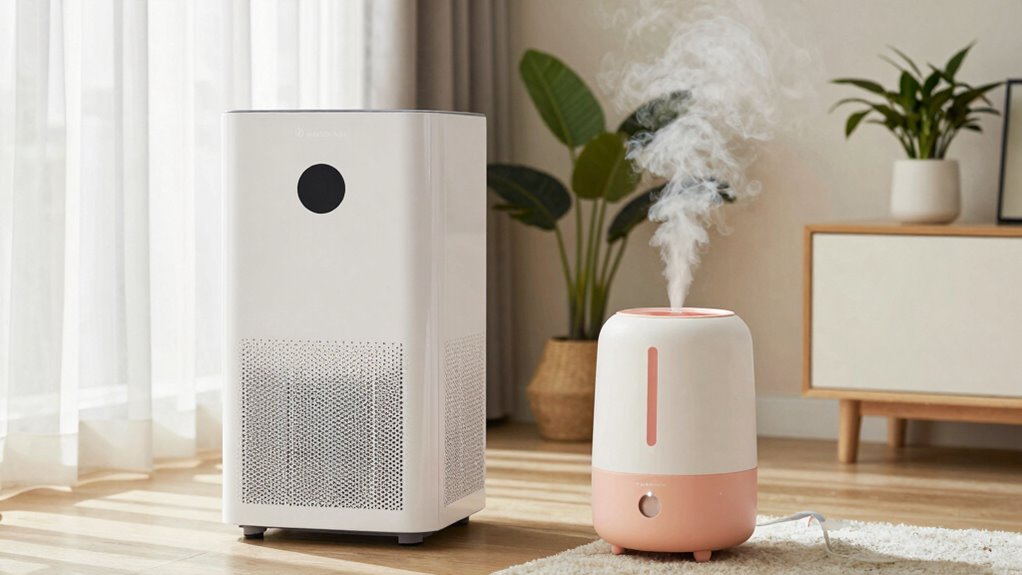

If your home feels damp, smells musty, or has visible mold, a dehumidifier makes sense to lower indoor moisture and improve air quality. On the other hand, if the air is dry, causing itchy skin, static, or cracked furniture, a humidifier can add necessary moisture. Monitoring humidity levels helps you decide the right device for your space. To discover the best ways to keep your indoor air comfortable and healthy, keep exploring the details.

Get comfort and care essentials delivered free — and shop member deals
- Fast, free delivery on millions of items
- Access to Prime Big Deal Days deals on October 6–7
- Prime Video, Amazon Music and more included
Key Takeaways
- Use a dehumidifier in damp areas with mold, musty smells, or high humidity levels (above 50%).
- Use a humidifier in dry environments, especially during winter or in heated spaces with low humidity.
- Monitor indoor humidity with a hygrometer to determine the need for moisture control devices.
- Dehumidifiers improve air quality and reduce allergy or mold-related health issues.
- Humidifiers soothe dry skin, throat irritation, and respiratory discomfort caused by low indoor moisture.
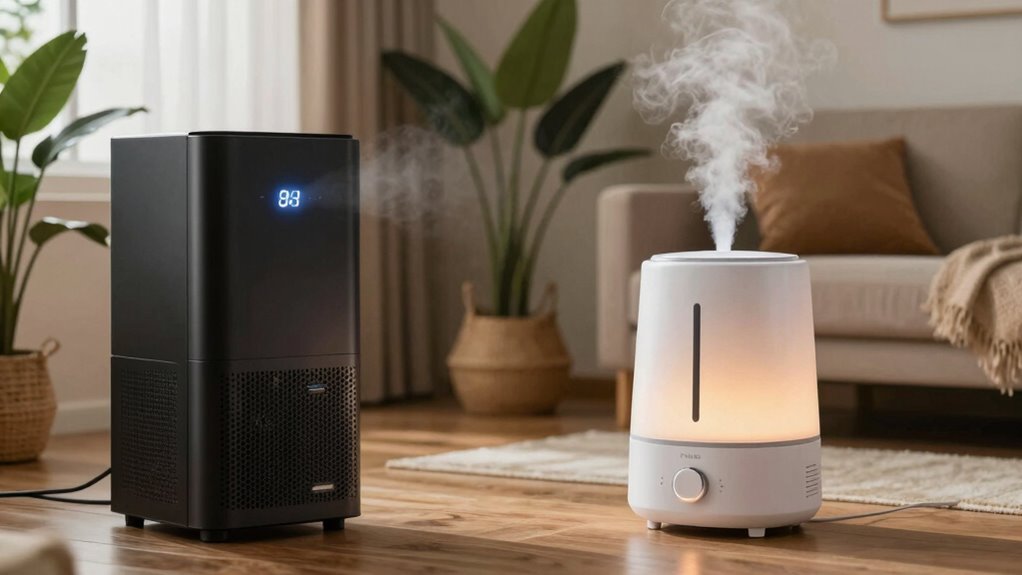
Have you ever wondered how to keep your indoor environment comfortable and healthy? The key lies in managing moisture levels effectively, and that’s where dehumidifiers and humidifiers come into play. Both devices influence your home’s air quality, but they serve opposite purposes. Knowing when each makes sense can dramatically improve your living space, especially when it comes to mold prevention and maintaining a comfortable atmosphere.
Managing indoor moisture with dehumidifiers and humidifiers improves air quality and prevents mold and discomfort.
If your home feels damp, smells musty, or shows visible signs of mold, a dehumidifier is probably what you need. Excess moisture in the air can lead to mold growth, which not only damages your property but also poses health risks, especially for allergy sufferers and those with respiratory issues. Using a dehumidifier reduces indoor humidity levels, helping to prevent mold from taking hold. It actively pulls moisture out of the air, making your environment less hospitable to mold spores and dust mites. Better air quality results, and you’ll notice fewer allergy symptoms and less mustiness. Dehumidifiers are especially useful in basements, bathrooms, or regions with high humidity, where moisture tends to accumulate.
On the other hand, if your indoor air feels dry, especially during winter or in heated spaces, a humidifier can restore comfort and health. Dry air can cause skin irritation, sore throats, and increased susceptibility to colds. It can also make you feel colder than you actually are, leading you to increase heating unnecessarily. By adding moisture to the air, a humidifier creates a more balanced environment, which can soothe respiratory issues and improve sleep quality. It’s particularly helpful if you notice static electricity, cracked wood furniture, or chapped lips—clear signs that your indoor humidity is too low. Using a humidifier during dry seasons helps maintain a suitable humidity level, typically between 30% and 50%, which supports overall health and comfort. Maintaining optimal indoor humidity levels can also reduce the growth of bacteria and viruses, contributing to a healthier living space. Proper moisture management is essential for creating a comfortable and healthy indoor environment, especially in climates with extreme weather variations. Additionally, understanding the impact of humidity on air quality can help you better control your environment for health and comfort.
Understanding the importance of biodiversity can also inspire you to create healthier indoor environments that support natural balance and reduce reliance on artificial devices. Knowing when to use each device depends on your environment. If you’re battling dampness and mold, a dehumidifier is your best choice. If your home feels dry and uncomfortable, then a humidifier is the way to go. In some cases, you might need both, especially in areas with fluctuating weather or specific health concerns. Regularly monitoring your indoor humidity with a hygrometer can guide your decisions. Properly managing moisture ensures your air quality stays high, mold prevention remains effective, and your living space stays comfortable all year round. Additionally, being aware of air quality can help you make more informed choices about when to use dehumidifiers or humidifiers, further supporting your health.
best dehumidifier for mold removal
As an affiliate, we earn on qualifying purchases.
As an affiliate, we earn on qualifying purchases.
Frequently Asked Questions
Can Dehumidifiers and Humidifiers Be Used Together Safely?
Yes, you can safely use dehumidifiers and humidifiers together if you monitor your air quality and guarantee device compatibility. Set them up in different areas or at different times to prevent conflicting effects, like over-humidifying or over-drying your air. Keep an eye on humidity levels with a hygrometer, and adjust each device accordingly to maintain a healthy, balanced environment. This way, you optimize comfort and air quality safely.
How Noisy Are Dehumidifiers Compared to Humidifiers?
Dehumidifiers tend to be noisier than humidifiers due to their larger motors and compressors, producing a noticeable operational sound. You might hear a humming or buzzing noise from dehumidifiers, especially during peak operation. Humidifiers, on the other hand, usually operate quietly, with minimal noise levels. If noise is a concern, you’ll find humidifiers more suitable for bedrooms or quiet spaces, while dehumidifiers may be better for basements or larger areas with higher humidity.
Do Portable Models Work as Effectively as Built-In Units?
Portable models provide practicality and flexibility, often working just as effectively as built-in units. You can move them easily to target specific problem areas, making them versatile for various spaces. Built-in units, however, tend to be more permanent and integrated into your home’s design, often offering higher capacity and efficiency. So, whether portable or built-in, choose based on your space, needs, and desired convenience.
Are There Health Risks Associated With Using These Devices?
Using dehumidifiers and humidifiers can pose health risks if not used properly, affecting your air quality and mold prevention efforts. Overusing a dehumidifier might dry out your skin and respiratory passages, while excessive humidifier use can promote mold growth and dust mites. Always monitor humidity levels, clean devices regularly, and follow manufacturer guidelines to maintain a healthy indoor environment and minimize health risks.
How Often Should I Clean or Replace Dehumidifier or Humidifier Filters?
You should clean or replace your dehumidifier or humidifier filters every 1 to 3 months to maintain proper filter maintenance and guarantee your device’s lifespan. Regularly checking filters prevents mold, bacteria, and dust buildup, which can cause health issues. Follow the manufacturer’s guidelines for specific replacement intervals, and promptly replace filters when they become worn or dirty. Proper maintenance keeps your device running efficiently and extends its durability.
Conclusion
Understanding when to use a dehumidifier or humidifier can dramatically improve your home’s comfort and air quality. Did you know that indoor humidity levels should ideally stay between 30-50%? Maintaining this balance helps prevent mold growth and respiratory issues. By choosing the right device at the right time, you create a healthier living space. Keep an eye on your home’s humidity, and you’ll enjoy a more comfortable, safer environment every day.
Cold & flu season Picks
humidifiers
As an affiliate, we earn on qualifying purchases.