
To understand a home repair estimate, look for a clear breakdown of costs showing each task, material, and labor involved. Verify the contractor’s qualifications, including licenses and insurance, and confirm the scope and timeline are detailed. Check the fairness of the estimate by understanding the methods used and review terms like warranties and payment schedules. If you want to know how to spot transparency and avoid surprises, keep going to learn more.

Turn quiet afternoons into listening time
- Thousands of audiobooks, podcasts and originals
- Listen on your phone, tablet or Echo — also offline
- Cancel anytime
Key Takeaways
- Examine the detailed cost breakdown to understand each task, material, and labor involved.
- Verify contractor qualifications, including licensing and insurance, for reliability and compliance.
- Review the scope of work and timeline to ensure clarity on what is included and when.
- Assess the estimation methods used to determine if the pricing is fair and industry-standard.
- Read terms and conditions carefully to understand warranties, payment schedules, and potential additional costs.
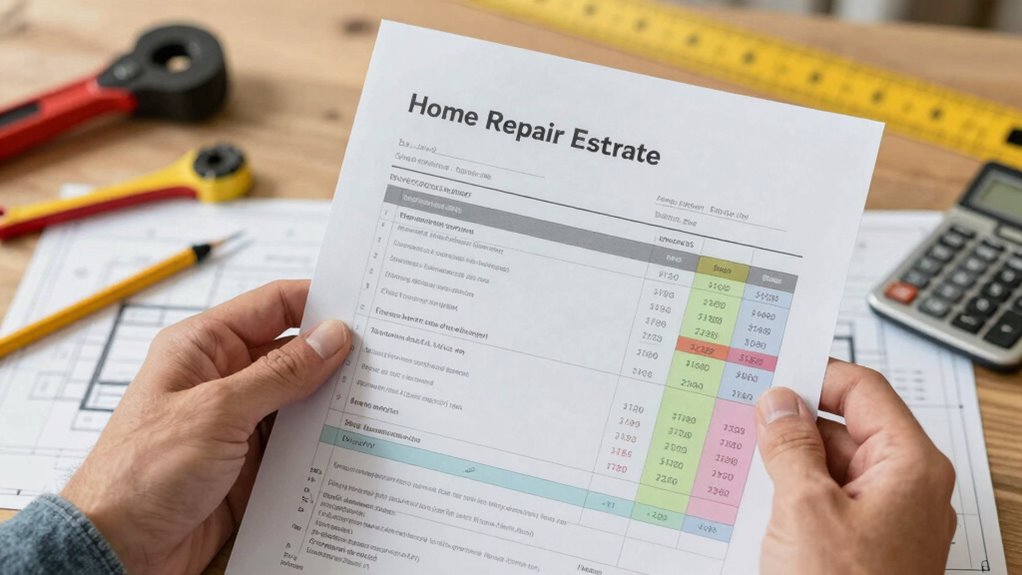
Ever wondered how to make sense of a home repair estimate? When you’re looking at a detailed quote, it can feel overwhelming. But breaking it down step-by-step helps you understand what you’re paying for and guarantees you’re getting value. Start by examining the cost breakdown. This section should itemize every task, material, and labor involved in the project. Look for clear descriptions of each service—things like replacing a roof shingle or repainting a wall. If the estimate lumps everything into a single total without detailed line items, ask for clarification. A transparent cost breakdown shows exactly where your money is going, helping you compare estimates from different contractors more effectively. Additionally, understanding the importance of contractor qualifications**** can help you choose a reliable professional who will stand behind their work.
Beyond the numbers, it’s essential to consider the contractor’s qualifications. A reputable contractor will include details about their licensing, insurance, and experience. These credentials aren’t just formalities; they’re safeguards for you. Proper licensing ensures the contractor complies with local building codes, while insurance protects you from liability if accidents happen on your property. Also, look for references or reviews that speak to their reliability and quality of work. An experienced contractor with solid qualifications is more likely to deliver lasting results and handle unexpected issues professionally. Keep in mind, the cheapest estimate isn’t always the best—sometimes, paying a bit more for a qualified professional saves you money in the long run.
Choosing qualified contractors with proper licensing and insurance ensures quality work and protects you from future liabilities.
As you review the estimate, pay attention to the scope of work. It should specify exactly what’s included and, just as important, what’s not. Clarify any vague language or ambiguous terms. For example, if your project involves replacing a window, the estimate should specify the window type, dimensions, and whether trim or paint is included. If something’s missing, ask whether it’s covered elsewhere or if it’s an additional charge. Also, note the timeline provided—an estimate isn’t just about costs but also about when the work will start and finish. Recognizing project scope can help prevent misunderstandings and ensure everyone is aligned on expectations. Understanding how cost estimation methods are used can also provide insight into the accuracy and fairness of the quote. Being aware of cost estimation techniques can help you evaluate whether the quote is reasonable based on industry standards.
Finally, check the terms and conditions. These should cover payment schedules, warranties, and policies on change orders. Understanding these details helps you avoid surprises later. When you approach a home repair estimate with a discerning eye, focusing on the cost breakdown and contractor qualifications, you empower yourself to make informed decisions. It’s your home and your investment—knowledge is your best tool for ensuring the project goes smoothly.
As an affiliate, we earn on qualifying purchases.
Frequently Asked Questions
How Do I Verify the Contractor’s Credentials?
To verify a contractor’s credentials, start by checking their license status through your state’s contractor licensing board online. Ask for proof of insurance verification to guarantee they’re covered for potential damages or injuries. Confirm that their license is current and relevant to your project. You can also request references or reviews from previous clients, which helps verify their credibility and professionalism before moving forward with the repair work.
What Should I Do if I Disagree With the Estimate?
If you disagree with the estimate, picture yourself sitting at a table, calmly discussing your concerns. Prioritize pricing transparency and open contractor communication to clarify costs or find alternatives. Ask questions about specific line items, request detailed explanations, and suggest adjustments if needed. Keep the conversation respectful and collaborative, aiming for an agreement that balances quality work with your budget. Clear communication helps you feel confident in your decision.
How Long Is a Home Repair Estimate Valid?
A home repair estimate is typically valid for about 30 to 90 days, depending on the contractor. During this time, you can do a cost comparison and decide whether to proceed. Keep in mind that the estimate timeline might shift if prices for materials or labor change. It’s wise to confirm the validity period when you receive the estimate and stay in touch with the contractor for updates.
Are There Hidden Costs to Watch Out For?
Watch out for hidden fees sneaking in like that last-minute surprise party. Contractors might hide extra charges under vague descriptions, so you get hit with costs you didn’t expect. Always demand cost transparency, ask for detailed breakdowns, and scrutinize every line. Don’t let hidden fees turn your dream repair into a nightmare. Stay vigilant, ask questions, and guarantee the estimate is crystal clear before signing on the dotted line.
Can I Negotiate the Repair Costs?
Yes, you can negotiate repair costs. Start with a thorough cost comparison to identify fair pricing and use negotiation tactics like requesting discounts or alternative options. Be polite but firm, and don’t hesitate to ask for a breakdown of charges to understand where you might cut costs. Remember, contractors often expect some negotiation, so approaching the conversation confidently can help you save money without compromising quality.
Conclusion
Now that you know how to read a home repair estimate, you’re ready to step into the contractor’s shoes, holding a blueprint of your home’s future. Picture yourself walking through your repaired space, each line item a stepping stone toward your dream home. With this knowledge, you’ll spot any surprises and guarantee your investment is solid. Confidence in your estimate turns your house into a home, built on clarity and trust.
Halloween Picks
halloween
As an affiliate, we earn on qualifying purchases.