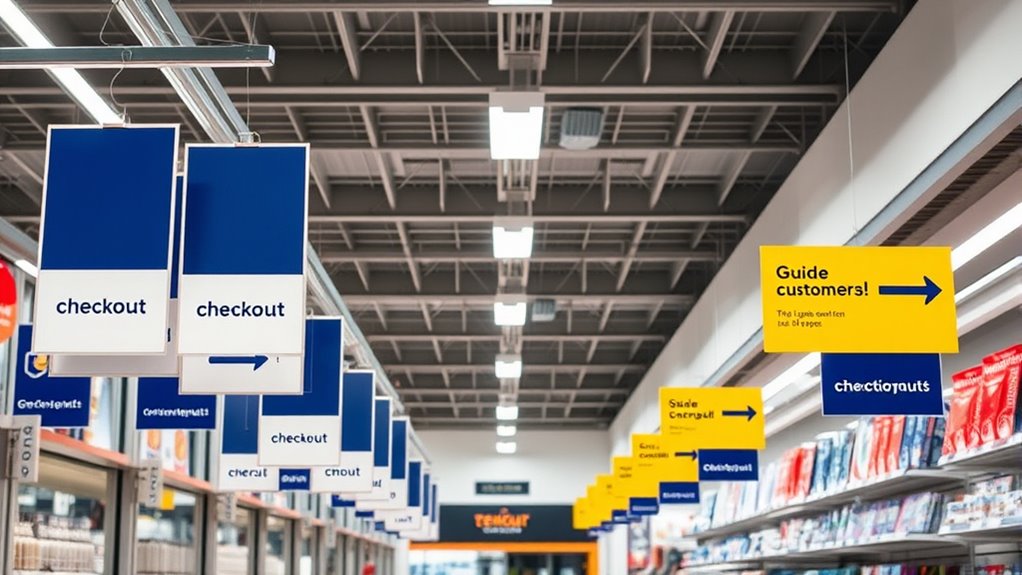

Effective labeling and signage guide you effortlessly through any space by using clear words, universal symbols, and strategic placement. You’ll want signs that are easy to see, with high contrast and consistent colors, fonts, and icons. Position signs at decision points and eye level for quick recognition. Good signage reduces confusion, saving time and boosting confidence. Keep exploring to discover more ways to create signs that truly work for everyone.
Key Takeaways
- Use clear, high-contrast text and symbols for maximum visibility and quick comprehension.
- Place signs at decision points and eye level for easy access and recognition.
- Maintain consistency in color schemes, fonts, and iconography to reinforce understanding.
- Incorporate universally recognized symbols to overcome language barriers.
- Combine physical signage with digital tools for layered, user-friendly navigation.
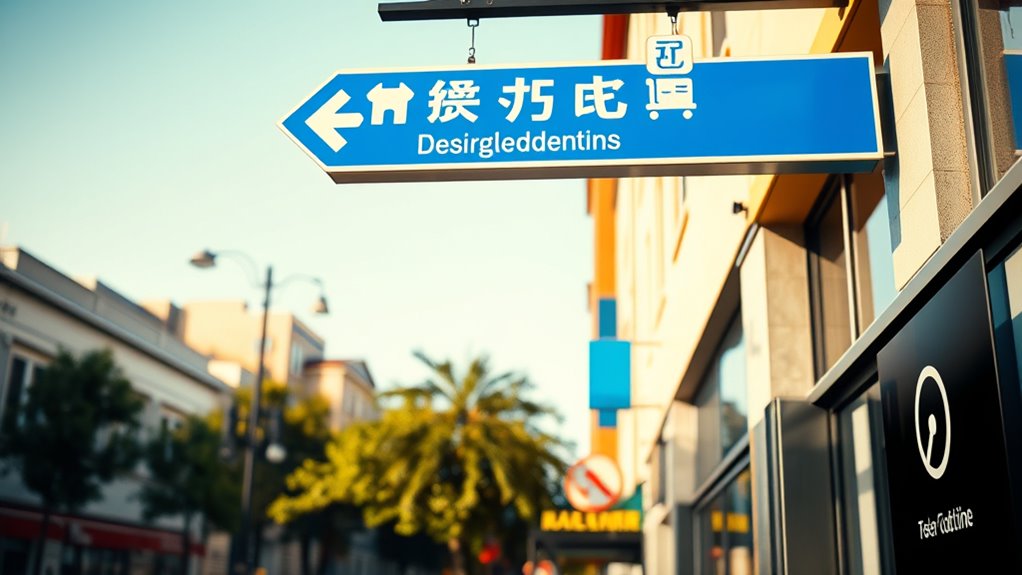
Have you ever wondered how clear labels and signs can make a difference in everyday life? The truth is, effective labeling and signage are essential for steering through spaces smoothly, whether you’re in a busy hospital, a sprawling shopping mall, or a complex office building. At the heart of this is the concept of wayfinding strategies—your plan for guiding people from point A to point B easily and confidently. When executed well, wayfinding strategies rely heavily on visual communication, which includes clear, intuitive signs, symbols, and labels that cut through confusion and help users find their way without frustration.
Visual communication in signage isn’t just about placing words or icons randomly; it’s about designing a system that communicates quickly and effectively. You need to contemplate color coding, font size, contrast, and placement to make sure that signs catch the eye and are understandable at a glance. For example, using bold, high-contrast text on a neutral background makes signs more legible from a distance, reducing the chances of misdirection. Incorporating universally recognized symbols alongside words can also bridge language barriers and make the message accessible to a diverse audience.
When developing wayfinding strategies, think about the flow of movement within the space. Signs should be positioned strategically at decision points—like intersections or doorways—so that users receive timely guidance rather than being left to figure things out on their own. This means placing signs at eye level or slightly above, and ensuring they’re visible from multiple angles. Consistency is key; using the same color schemes, fonts, and iconography throughout the environment reinforces the message and creates a cohesive visual language. This consistency helps users develop mental maps of the space, reducing anxiety and improving navigation.
Good signage also anticipates user needs. For instance, include directional signs for emergency exits, restrooms, and service areas. Clear labels on doors and rooms help visitors quickly identify their destination without wandering aimlessly. You should also consider how signage integrates with digital tools—like maps or mobile apps—creating a hybrid wayfinding approach that combines physical cues with technology. This layered strategy enhances overall clarity, especially in complex environments.
In essence, well-designed labeling and signage harness the power of visual communication to streamline navigation and improve user experience. By applying effective wayfinding strategies, you guarantee that everyone, regardless of familiarity or language, can find their way effortlessly. Furthermore, understanding the importance of color contrast can significantly improve sign visibility and readability in various lighting conditions. When signs speak clearly and intuitively, they eliminate confusion, save time, and foster a sense of confidence in steering through any space. That’s the true value of signage that works—making everyday journeys simpler and more accessible for all.
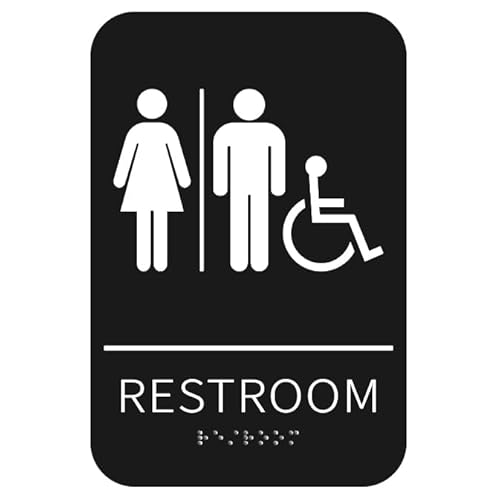
Citybasics ADA Braille Restroom Sign – Self Adhesive Signage with 3M Tape, High-Contrast Handicap Accessible Bathroom Sign for Office, Business, Home, Toilet Door or Wall – 9” x 6 (Unisex)
DIMENSIONS: Premium restroom sign measures 9 inches x 6 inches, perfect size for visibility while maintaining a professional…
As an affiliate, we earn on qualifying purchases.
As an affiliate, we earn on qualifying purchases.
Frequently Asked Questions
How Do Cultural Differences Affect Signage Effectiveness?
Cultural differences substantially impact signage effectiveness because cultural symbolism influences how signs are interpreted. You might find symbols meaningful in one culture confusing or offensive in another, and language barriers can hinder understanding if signs aren’t multilingual. To guarantee your signage works globally, you should incorporate culturally appropriate symbols and use clear, simple language. This approach helps your message resonate across diverse audiences, making your signs both effective and respectful.
What Materials Are Best for Outdoor Signage Durability?
You’ll want weather-resistant materials like aluminum, high-density polyethylene, or tempered glass for outdoor signage. These materials offer exceptional durability against rain, wind, and sun exposure, ensuring your signs stay clear and effective over time. Their material durability and weather resistance mean you won’t have to worry about fading, warping, or corrosion, even through harsh conditions. Choosing the right material helps your message endure, no matter what weather comes your way.
How Can Digital Signage Enhance Traditional Labeling?
Digital signage enhances traditional labeling through digital integration, allowing you to deliver dynamic messaging that captures attention. You can update information instantly, respond to real-time events, and customize content for specific audiences. This flexibility keeps your signage fresh and engaging, making it more effective than static labels alone. By combining both, you create a seamless experience that improves communication, boosts visibility, and adapts effortlessly to your changing needs.
What Are the Latest Trends in Eco-Friendly Signage?
Ever wonder how signage can be both impactful and eco-friendly? You should consider the latest trends in eco-conscious design, which focus on using sustainable materials like recycled plastics, bamboo, or biodegradable paper. These choices not only reduce environmental impact but also communicate your brand’s commitment to sustainability. Incorporating LED lighting, minimalistic designs, and digital options further enhances eco-friendly signage, making your message clear while supporting a greener future.
How to Measure the Impact of Signage on Behavior?
You can measure signage impact by implementing behavior tracking and signage analytics tools. Start by monitoring how people interact with your signs, like dwell time or movement patterns. Use surveys or digital sensors to gather data before and after installing signage. Analyzing this information helps you see if behaviors change, ensuring your signage effectively influences actions. Regularly review your metrics to refine and improve your signage strategies for better results.

Wheelchair Accessible Sign – Metallic Silver Aluminium Sign with Universal Wheelchair Symbol and 'Accessible' Text – Self-Adhesive Peel and Stick Installation (Large)
PREMIUM ALUMINIUM CONSTRUCTION: Our wheelchair accessible sign is crafted from high-quality aluminium, providing a sleek metallic silver finish…
As an affiliate, we earn on qualifying purchases.
As an affiliate, we earn on qualifying purchases.
Conclusion
Effective labeling and signage catch attention quickly, guiding people efficiently. Did you know that clear signage can reduce workplace accidents by up to 50%? By choosing the right signs and placing them strategically, you not only improve safety but also enhance navigation. Remember, simple and well-designed labels make a big difference. So, take the time to create signage that’s readable and noticeable—your safety and clarity depend on it.

Signage and Wayfinding Design: A Complete Guide to Creating Environmental Graphic Design Systems
As an affiliate, we earn on qualifying purchases.
As an affiliate, we earn on qualifying purchases.

Directional Arrow Signs with Stakes, Remiawy 4 Pack Blank Yard Signs 17 x 6 Inches Custom Plastic Parking Signs with Arrow Outdoor for Wedding This Way, Birthday Party, Estate Sale, Lawn Guidepost
[PREMIUM QUALITY] This arrow signs made of corrugated cardboard material with a thickness of 4 millimeters. It is…
As an affiliate, we earn on qualifying purchases.
As an affiliate, we earn on qualifying purchases.