
To create an effective calm space for de-escalation, guarantee it’s clutter-free, comfortable, and personalized with sensory tools like stress balls, calming scents, and textured fabrics. Incorporate mindful breathing techniques to help individuals relax and reduce stress quickly. Use soft lighting and calming visual stimuli to promote tranquility. By designing a space that’s accessible and tailored to individual needs, you help prevent conflicts from escalating. Continue exploring ways to enhance your calm space for better emotional regulation.

Turn quiet afternoons into listening time
- Thousands of audiobooks, podcasts and originals
- Listen on your phone, tablet or Echo — also offline
- Cancel anytime
Key Takeaways
- Incorporate sensory tools like stress balls, calming scents, and soft lighting to create a soothing environment.
- Design the space to be clutter-free, comfortable, and easily accessible for quick emotional regulation.
- Use mindful breathing techniques and visual cues to encourage relaxation and de-escalation.
- Personalize the space with preferred sensory items to enhance comfort and effectiveness.
- Ensure the environment promotes a sense of safety, support, and opportunities to pause and reset.
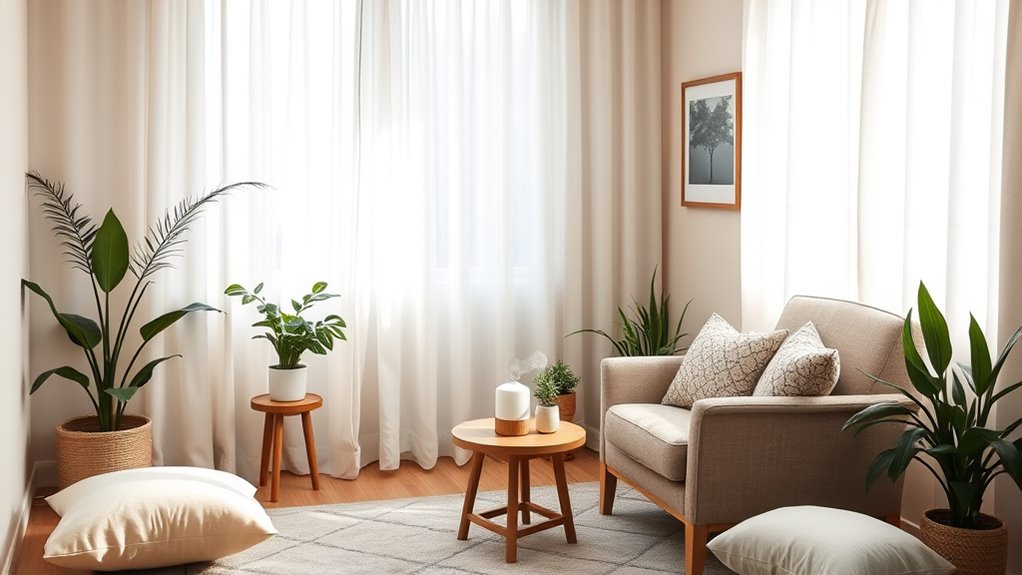
Have you ever wondered how a simple space can prevent conflicts from escalating? Creating a calm space is a powerful strategy that allows individuals to regain control and settle their emotions before situations intensify. At the heart of this approach is understanding that calming environments provide a safe haven, where people feel supported and less overwhelmed. To achieve this, you can incorporate mindful breathing techniques and sensory tools, which are proven to reduce stress and promote emotional regulation.
Mindful breathing is one of the most effective tools you can offer in a calm space. When someone begins to feel agitation rising, guiding them to take slow, deep breaths helps break the cycle of escalation. Encourage them to inhale deeply through the nose, hold for a moment, then exhale slowly through the mouth. This practice activates the body’s relaxation response, lowering heart rate and calming nerves. When you incorporate mindful breathing into a designated space, it becomes a quick and accessible way for individuals to center themselves. It’s important to model this behavior yourself, demonstrating patience and calmness, so others feel comfortable engaging in the practice.
Sensory tools are another essential component of a de-escalation space. These tools help individuals manage overwhelming sensations and regain focus. Items like stress balls, textured fabrics, calming scents, or visual stimuli such as soft lighting or calming images can make a significant difference. For example, a person experiencing heightened emotions might find relief by holding a stress ball, which provides tactile input that redirects focus from distressing thoughts to a physical sensation. Similarly, incorporating calming scents like lavender or chamomile can soothe the nervous system. Visual stimuli such as gentle lighting or nature pictures can create a tranquil atmosphere that encourages relaxation. The key is to personalize these tools based on individual preferences, making the space adaptable and inviting.
Designing a calm space with these elements in mind isn’t complicated, but it requires intentionality. Keep it clutter-free, comfortable, and accessible. Ensure that sensory tools are easily reachable, and that there’s ample room for someone to sit or lie down if needed. When you create a space that emphasizes mindful breathing and sensory engagement, you give individuals the opportunity to pause and reset before emotions escalate further. Incorporating comfort and support solutions can further enhance the effectiveness of the space by providing additional support options tailored to individual needs. This proactive approach not only prevents conflicts from spiraling but also teaches valuable self-regulation skills. Ultimately, a well-thought-out calm space becomes an invaluable resource in managing stress and fostering a sense of safety and control.
As an affiliate, we earn on qualifying purchases.
Frequently Asked Questions
How Do I Personalize a Calm Space for Individual Needs?
You personalize a calm space by incorporating sensory customization tailored to individual needs. Use personalization strategies like adding favorite calming objects, soft lighting, or soothing sounds that resonate with the person. Observe their reactions and adjust elements accordingly, ensuring they feel comfortable and safe. Involving them in choosing items helps create a space that truly supports their relaxation and de-escalation, making it a welcoming environment just for them.
What Materials Are Best for Soundproofing a Calm Space?
To create an oasis of tranquility, you’ll want materials that gently hush the environment. Acoustic panels are excellent for absorbing sound and reducing echo, while soundproof curtains can block external noise effectively. Combining these options provides a layered approach to soundproofing, ensuring your calm space feels secluded and serene. Choose high-density materials for curtains and quality acoustic panels to achieve the best sound dampening, fostering a peaceful retreat.
How Can Technology Enhance De-Escalation in Calm Environments?
You can enhance de-escalation in calm environments by using technology like virtual reality and biofeedback devices. Virtual reality immerses individuals in calming scenarios, helping them relax and shift focus away from stressors. Biofeedback devices monitor physiological responses, allowing you to guide individuals in controlling their breathing and heart rate. Together, these tools promote self-awareness and relaxation, making it easier to de-escalate tense situations effectively.
What Training Is Needed for Staff to Effectively Use Calm Spaces?
You need training that emphasizes staff communication and emergency procedures to use calm spaces effectively. Imagine calmly guiding a distressed individual to a quiet area; your clear instructions and understanding of protocols make all the difference. Practice active listening, non-verbal cues, and situational awareness regularly. This preparation guarantees you’re confident in de-escalation, knowing exactly how to maintain a safe, soothing environment and respond swiftly during emergencies.
How Do I Measure the Effectiveness of a Calm Space?
To measure the effectiveness of a calm space, you should conduct behavior assessments before and after its use to track changes in reactions and de-escalation success. Additionally, gather user feedback from staff and clients to understand their experiences and comfort levels. This combined approach helps you determine if the calm space reduces incidents, promotes calmness, and meets everyone’s needs effectively.
Conclusion
By designing calm spaces, you create a safe environment where tensions can ease. Imagine a school counselor setting up a cozy corner with soft cushions and calming visuals; when a student feels overwhelmed, they retreat there and regain control. Such spaces don’t just prevent conflicts—they foster trust and emotional regulation. When you prioritize calm environments, you empower others to de-escalate naturally, making your space a haven for peace and understanding.
Fall Picks
fall essentials
As an affiliate, we earn on qualifying purchases.