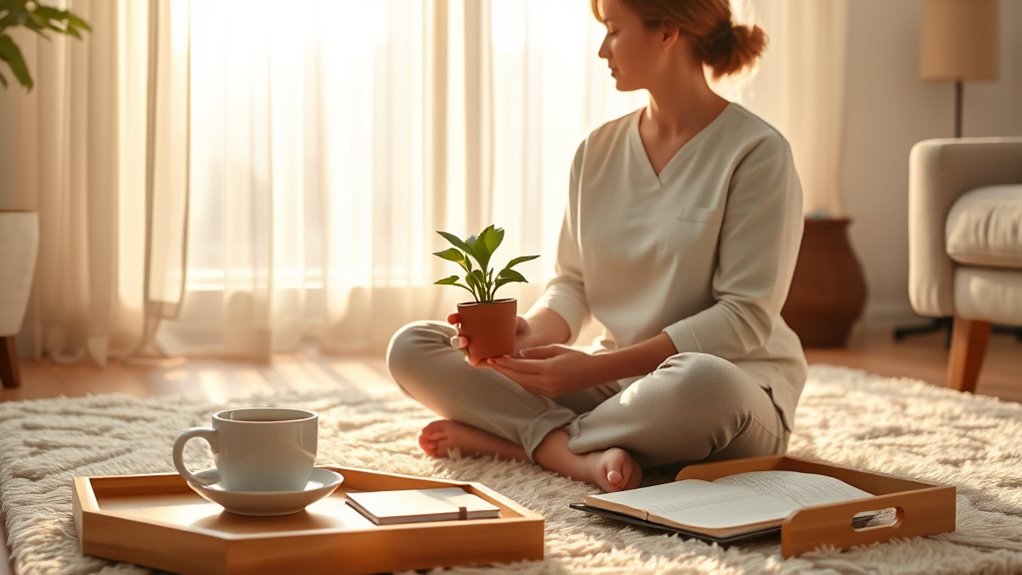

To incorporate gratitude into your caregiving routine, try simple mindfulness exercises like deep breaths or body scans to stay grounded and present. Journaling small victories or moments of kindness can help you reflect and recognize the good even during tough days. These practices boost emotional resilience, reduce burnout, and deepen your sense of connection. Keep exploring ways to nurture gratitude—more helpful tips are waiting just ahead.

Turn quiet afternoons into listening time
- Thousands of audiobooks, podcasts and originals
- Listen on your phone, tablet or Echo — also offline
- Cancel anytime
Key Takeaways
- Incorporate daily mindfulness exercises like deep breathing or body scans to stay present and reduce stress.
- Keep a gratitude journal by noting small victories, kind gestures, or personal strengths to foster positive reflection.
- Take brief pauses throughout the day to observe surroundings and acknowledge feelings, enhancing emotional resilience.
- Use simple prompts in journaling or mindfulness to recognize meaningful moments and reconnect with positive aspects of caregiving.
- Practice gratitude regularly as a self-care act to prevent burnout, deepen inner peace, and reinforce the purpose of caregiving efforts.

Caring for someone can be both rewarding and exhausting, making it easy to overlook the positive moments amid the daily challenges. When you’re constantly focused on meeting needs and steering stress, it’s essential to find ways to reconnect with the good in your life. One effective approach is incorporating mindfulness exercises into your routine. These practices help you stay present, reduce stress, and gain a clearer perspective on your caregiving journey. For example, taking a few deep breaths or doing a short body scan can ground you amidst chaos. As you become more aware of your surroundings and your own feelings, you start to notice moments of gratitude that might otherwise slip by unnoticed. Mindfulness exercises encourage you to pause, observe, and appreciate, fostering a sense of calm and resilience. Additionally, focusing on the breath can serve as a simple yet powerful mindfulness technique to anchor your attention in the present moment.
Alongside mindfulness, journaling techniques serve as powerful tools to cultivate gratitude. Setting aside just a few minutes each day to write down your thoughts can help you shift focus from frustrations to appreciation. You might jot down small victories, kind gestures from your loved one, or personal strengths that sustain you through tough times. The act of writing allows you to process emotions, gain insight, and develop a more optimistic outlook. Over time, your journal can become a personal record of gratitude, reminding you of the positive aspects that often get overshadowed by daily stressors. It’s a simple yet profound way to reinforce your gratitude practice, especially on challenging days when it’s hard to see the good.
Both mindfulness exercises and journaling techniques are adaptable and easy to integrate into your schedule. You don’t need hours or special equipment—just a quiet moment and a commitment to yourself. These practices encourage you to recognize and savor moments of joy, no matter how small they seem. By regularly engaging in mindfulness, you learn to notice the present rather than dwelling on worries about the future or regrets about the past. Similarly, journaling helps you articulate and celebrate your journey, making gratitude a tangible part of your daily life. Over time, these practices can reduce feelings of burnout, boost your emotional well-being, and remind you of the meaningful reasons you continue caring for your loved one. In the end, cultivating gratitude becomes not just an act of kindness toward others, but also an essential act of self-care. Incorporating mindfulness techniques can further deepen your sense of connection and inner peace during this caregiving journey.
mindfulness meditation for caregivers
As an affiliate, we earn on qualifying purchases.
As an affiliate, we earn on qualifying purchases.
Frequently Asked Questions
How Can Caregivers Maintain Gratitude During High-Stress Periods?
During high-stress periods, you can maintain gratitude by practicing mindfulness techniques to stay present and recognize positive moments. Use journaling prompts to reflect on what you’re thankful for, even in tough times. Take short breaks to breathe deeply and focus on your blessings, helping you shift your perspective. Consistently applying these strategies keeps gratitude alive, making challenging days more manageable and reminding you of the good amid the chaos.
Are There Specific Gratitude Exercises for Emotional Exhaustion?
Imagine you’re a modern-day Socrates, seeking clarity. To combat emotional exhaustion, try mindful journaling by writing three things you’re grateful for each day. Pair this with gratitude meditation—focusing on feelings of appreciation and breathing deeply. These exercises help shift your perspective, restore emotional resilience, and renew your energy. Incorporating them into your routine can make a significant difference when you’re feeling drained and overwhelmed.
How Often Should Caregivers Practice Gratitude for Effective Benefits?
You should practice gratitude daily for the best benefits, as it helps diminish emotional exhaustion and boosts resilience. Incorporating gratitude into your daily routines, like journaling or mindful reflection, guarantees consistency and strengthens positive emotions. Regular practice amplifies the frequency benefits, making it easier to manage stress and stay motivated. Even just a few minutes each day can create meaningful shifts, helping you maintain your well-being amidst caregiving challenges.
Can Gratitude Improve Relationships With Care Recipients?
Ironically, expressing gratitude might just be the secret to strengthening your relationship with your care recipient. When you show mutual appreciation, it fosters a deeper emotional connection, making both of you feel valued. This simple act can break down barriers and create a sense of trust. So yes, practicing gratitude regularly can genuinely improve your relationship, turning caregiving into a more meaningful and connected experience for both of you.
What Are Quick Gratitude Practices for Busy Caregivers?
You can quickly practice gratitude by spending a few minutes on mindful journaling, jotting down what you’re thankful for. Use simple gratitude prompts like “What moment today made me smile?” or “Who helped me today?” This helps refocus your energy and cultivates positivity, even on busy days. Incorporating these brief exercises into your routine boosts your well-being and keeps you grounded amidst caregiving demands.
Conclusion
As you embrace these gratitude practices, you’ll notice how small moments—like a shared smile or a quiet hug—seem to appear just when you need them most. It’s as if the universe gently reminds you that even amidst challenges, kindness and appreciation can turn everyday routines into meaningful connections. Keep noticing these coincidences; they’re signs that your gratitude is transforming your caregiving journey into one filled with hope and unexpected joy.
Fall Picks
fall essentials
As an affiliate, we earn on qualifying purchases.