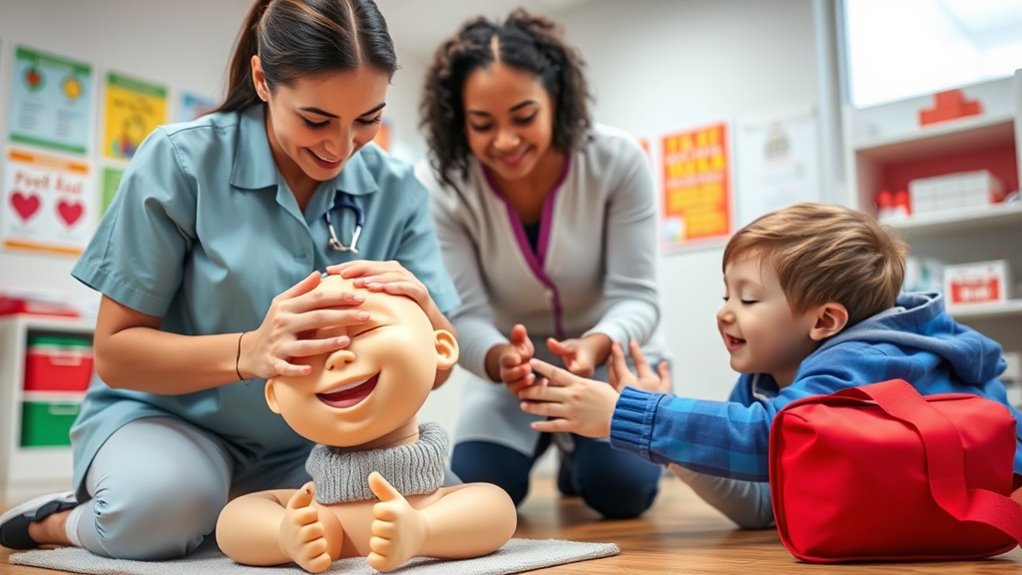

Knowing basic first aid skills like CPR and choking management empowers you to act confidently and quickly during emergencies. You should learn how to perform CPR to help someone who isn’t breathing or has no pulse, and how to clear an airway during choking by using abdominal thrusts. Staying calm and prepared can make all the difference. Keep exploring these essential techniques further—you’ll gain the skills to respond effectively when it matters most.
Key Takeaways
- Learn basic CPR techniques to restore breathing and circulation during cardiac emergencies.
- Recognize choking signs and perform abdominal thrusts to clear airway obstructions.
- Keep a well-stocked first aid kit and know how to use its contents effectively.
- Maintain calm, act quickly, and call emergency services when responding to injuries or emergencies.
- Regularly update your first aid skills through training to ensure confident, effective care.
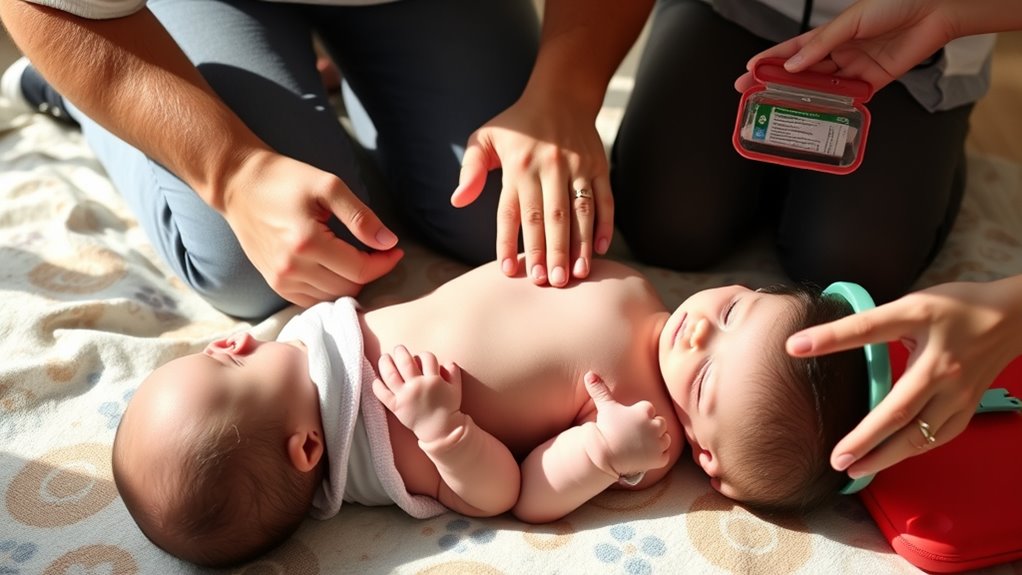
Have you ever wondered what to do when someone suddenly gets injured or feels unwell? Knowing basic first aid can make all the difference in these moments. It’s essential to be prepared, not only for immediate injury response but also for injury prevention and emergency preparedness. Being proactive can help you reduce the risk of injury and handle emergencies confidently when they happen.
Knowing basic first aid helps you respond confidently to injuries and emergencies.
The first step in effective first aid is understanding injury prevention. You can’t always control accidents, but you can minimize their chances. Keep your environment safe by removing hazards, such as loose rugs, clutter, or exposed wires. Ensure that furniture is sturdy and that walkways are clear. Use safety gates or locks to prevent falls, especially around children. Wearing appropriate safety gear during activities—like helmets when biking or gloves when handling sharp objects—also helps prevent injuries. Regularly checking your home or workplace for potential dangers allows you to stay ahead of accidents. Good injury prevention reduces the need for emergency intervention and keeps everyone safer.
Emergency preparedness goes hand-in-hand with injury prevention. Always have a well-stocked first aid kit readily accessible, containing essentials like bandages, antiseptic wipes, scissors, gloves, and pain relievers. Familiarize yourself with basic first aid procedures, including CPR and how to help someone who’s choking. Knowing how to perform CPR can be lifesaving if someone loses their pulse or stops breathing. For choking, quick action is critical—encourage the person to cough if possible, and if not, perform abdominal thrusts to clear the airway. Practice these skills regularly so they become second nature during an emergency. It’s also wise to have emergency contact numbers saved and accessible, and to establish a safety plan for your household or workplace. Additionally, understanding floral arrangements and their presentation can help create a calm and organized environment that supports safety and well-being.
Being prepared means not only knowing what to do but also staying calm under pressure. When someone’s injured or unwell, your composed response can prevent the situation from worsening. Keep yourself informed about first aid procedures and stay up-to-date with any training opportunities. The more prepared you are, the better you’ll handle unforeseen incidents. Remember, injury prevention and emergency preparedness are lifelong commitments that empower you to protect yourself and others. By taking these steps, you create a safer environment and ensure that you’re ready to act swiftly and effectively whenever the need arises.

Adult/Child CPR Manual Resuscitation Training Kit – Includes 1 Adult/Child CPR Training Mask, 1 Adult/Child Bag Valve Squeeze Bag, 1 Reservoir Bag and 1 Oxygen Line – BMV kit
ADULT & CHILD TRAINING MASK KIT- For Training Purposes Only. Full kit for medical training including CPR training…
As an affiliate, we earn on qualifying purchases.
As an affiliate, we earn on qualifying purchases.
Frequently Asked Questions
How Often Should I Update My First Aid and CPR Training?
You should update your first aid and CPR training every two years to guarantee your skills stay current. Regular training refreshers help you stay confident and prepared for emergencies. Certification renewal is essential to maintain your credentials and knowledge of the latest guidelines. Set reminders to complete your renewal before your certification expires, so you’re always ready to act effectively when needed.
What Supplies Are Essential in a Basic First Aid Kit?
You should keep your first aid kit well-organized with essential supplies like adhesive bandages, sterile gauze, antiseptic wipes, tweezers, scissors, gloves, and pain relievers. An organized first aid kit helps you quickly find what you need during emergencies. Make sure your essential supplies list includes items for cuts, burns, sprains, and choking. Regularly check and restock your supplies to stay prepared for any situation.
How Do I Recognize the Signs of a Stroke?
You recognize signs of a stroke by noticing sudden symptoms like weakness or numbness on one side of the body, slurred speech, difficulty understanding, or sudden vision changes. Recognizing symptoms quickly is crucial—call emergency services immediately if you see these signs. Keep alert for severe headache, dizziness, or loss of balance. Acting fast can save a life and prevent long-term disability. Stay vigilant and trust your instincts.
When Should I Call Emergency Services During an Incident?
You should call emergency services immediately during an incident when there’s a clear danger to the person’s life or health, such as severe bleeding, difficulty breathing, or unconsciousness. Conduct an emergency response and assess the danger first. If the situation worsens or the condition doesn’t improve quickly, don’t hesitate to call for professional help. Quick action can make a vital difference in ensuring safety and receiving proper medical care.
Can First Aid Techniques Vary for Infants and Children?
While the fundamentals of first aid remain consistent, you’ll find that techniques for infants and children differ notably. You need to use infant-specific procedures, like gentle chest compressions and smaller breaths, versus child-appropriate techniques that involve more force and larger compressions. These distinctions are essential because their bodies are more delicate, and applying adult methods could cause harm. Always adapt your approach to the age and size of the person you’re helping.

Wall Mount for LifeVac Choking Rescue Device – Emergency Storage Holder with Quick-Release Design, Easy Installation(Device not Included)
1. Secure Snap-In Holder for Your Device. Engineered with a precision locking mechanism, this holder firmly secures your…
As an affiliate, we earn on qualifying purchases.
As an affiliate, we earn on qualifying purchases.
Conclusion
Knowing first aid isn’t just a skill; it’s your superpower in moments of crisis. With CPR and choking rescue techniques, you hold the key to saving lives. Think of these skills as your safety net—ready to catch someone when they fall. So, stay prepared and confident. After all, in the game of life, being ready can turn the tide from tragedy to triumph. Your quick action truly makes all the difference.

First Aid Only 91248 OSHA-Compliant First Aid Kit, All-Purpose 50-Person Emergency First Aid Kit for Business, Worksite, Home, and Car, 260 Pieces
OSHA-Compliant Emergency Kit: Includes supplies including bandages, gauze, butterfly closures, burn cream packets, antibiotic ointment, BZK antiseptic towelettes,…
As an affiliate, we earn on qualifying purchases.
As an affiliate, we earn on qualifying purchases.

Bactine Max Pain Relieving Antiseptic Spray with Lidocaine, First Aid Pain + Itch Relief, No-Sting, Kills 99% of Germs*, 5oz
Bactine Max Pain Relieving Antiseptic Spray with Lidocaine, First Aid Pain + Itch Relief, No-Sting, Kills 99% of…
As an affiliate, we earn on qualifying purchases.
As an affiliate, we earn on qualifying purchases.