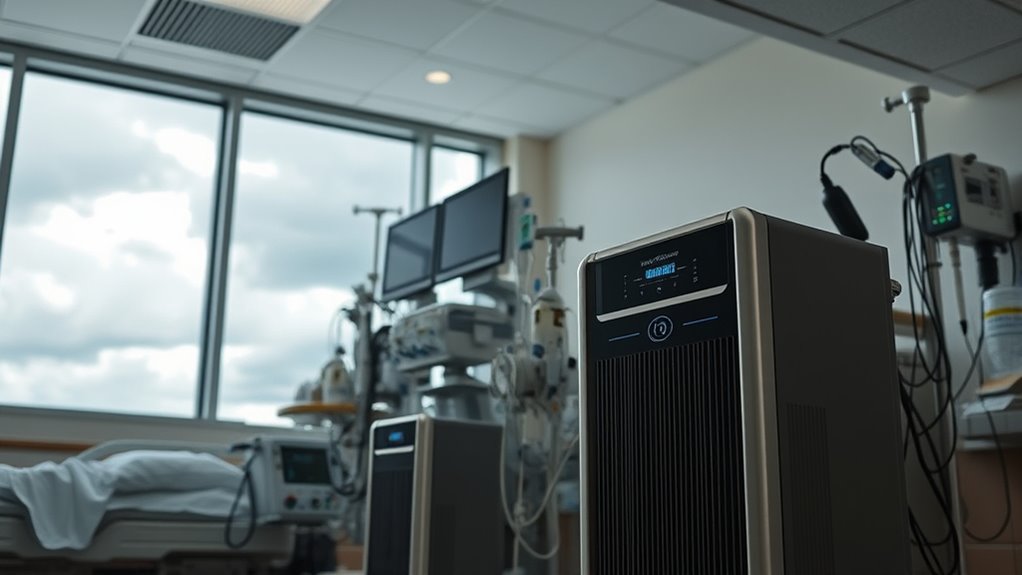

To prepare for outages, guarantee your medical equipment stays powered with reliable backup systems like generators and portable battery packs. Regularly inspect and maintain your generator to prevent failures, and keep spare batteries ready for immediate use. Combining these options offers better protection during power disruptions. Practice using your backup devices so you’re confident when an emergency occurs. For more tips on safeguarding essential medical devices, continue to explore effective backup strategies.
Key Takeaways
- Regularly inspect and maintain generators to ensure reliable operation during power outages.
- Use portable battery packs to provide immediate backup power for critical medical devices.
- Integrate generator and battery systems into a comprehensive backup plan tailored to specific equipment needs.
- Pre-charge, store, and practice using backup batteries to ensure quick deployment during emergencies.
- Conduct routine emergency drills and keep an updated kit to ensure preparedness for unexpected outages.
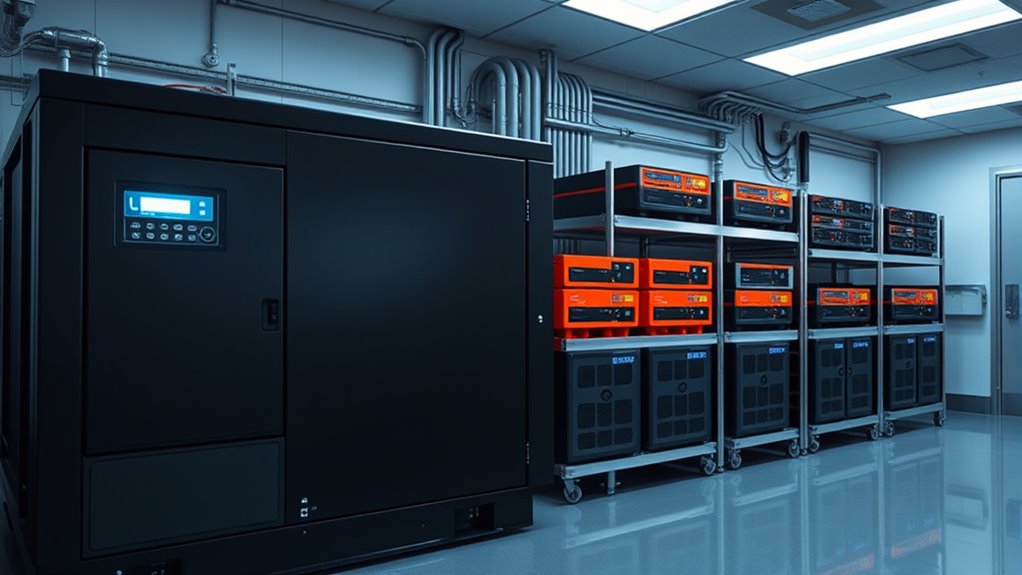
Have you ever considered what would happen if your medical equipment lost power unexpectedly? Power outages can strike without warning, leaving you vulnerable and potentially risking your health. To guarantee continuous care, it’s vital to have reliable backup power solutions in place. One of the most significant steps you can take is understanding the importance of generator maintenance. Regularly inspecting and servicing your generator guarantees it will operate smoothly when needed. Neglecting maintenance can lead to mechanical failures or reduced efficiency during an outage, which could be dangerous in critical moments. Scheduling routine checks, oil changes, and testing the generator under load conditions helps you identify issues early, so you’re not caught off guard when power is lost. Additionally, consider the significance of portable battery packs for short-term needs or when mobility is necessary. These compact, rechargeable devices can provide immediate backup power for essential equipment, such as oxygen concentrators, CPAP machines, or communication devices. Portable battery packs are especially valuable because they are easy to transport and quickly deploy, offering a reliable solution during sudden outages or when you’re on the go. They can be charged in advance and stored conveniently, ready to use at a moment’s notice. Combining portable battery packs with a well-maintained generator creates a thorough backup power plan. While generators are ideal for longer outages, portable battery packs ensure that your critical devices stay powered temporarily, giving you peace of mind. To make the most of these tools, familiarize yourself with their operation and capacity. Knowing how long your portable battery packs can sustain your essential equipment allows you to plan accordingly. Also, keep spare batteries or chargers on hand, so you’re never caught unprepared. Remember, the key to effective backup power is proactive planning. Don’t wait until a blackout occurs to test your systems. Regularly practicing how you’d use portable battery packs and verifying your generator’s readiness ensures everything functions properly when it counts. In addition, keep an updated emergency kit that includes these backup power resources, along with instructions for their use. This way, you won’t waste precious time during an emergency trying to figure out how to get your equipment back online. Ultimately, maintaining your generator and investing in portable battery packs are pivotal steps in safeguarding your health and well-being. Proper maintenance and preparation mean you’ll be ready to face power outages confidently, knowing your medical equipment will continue to operate seamlessly, no matter what. Incorporating reliable backup power systems into your planning can significantly reduce the risk of critical failures during outages.
Frequently Asked Questions
How Often Should Backup Power Systems Be Tested?
You should test your backup power systems monthly to guarantee reliability. During these tests, focus on battery testing to confirm the batteries hold a proper charge and perform power monitoring to detect any issues early. Regular testing helps identify potential problems before outages occur, so you can maintain continuous support for medical equipment. Consistent checks ensure your backup system remains ready, providing peace of mind during emergencies.
What Is the Typical Lifespan of Medical Backup Batteries?
Your backup batteries typically last around 3 to 5 years, but don’t let that lull you into false security—battery degradation can happen faster than you think, risking critical equipment failure. Regular replacement is essential to stay ahead of wear and tear. Stay vigilant, test often, and replace batteries promptly; neglecting this crucial step could mean the difference between life-saving power and catastrophic outages.
Are Portable Generators Suitable for Medical Facilities?
Portable generators can be suitable for medical facilities, especially during outages or emergencies. They provide flexible, on-demand power for essential medical equipment, guaranteeing patient safety and continuity of care. However, you need to choose a generator with enough capacity for your specific needs and confirm proper ventilation and maintenance. Always verify that the generator meets safety standards and is appropriate for healthcare environments before relying on it as a backup power source.
How Do Maintenance Routines Differ for Medical vs. Commercial Backup Power?
You should know that maintenance procedures for medical backup power are more rigorous than for commercial systems because safety protocols are critical. You’ll perform regular testing, detailed inspections, and make certain all alarms and safety features work correctly. In contrast, commercial routines focus more on general functionality. For medical facilities, meticulous documentation and adherence to healthcare standards are essential, so you must prioritize safety protocols and precise maintenance routines to ensure reliable, compliant backup power.
What Are the Regulatory Requirements for Backup Power in Healthcare?
You must guarantee your backup power systems meet regulatory compliance standards set by agencies like The Joint Commission and CMS. These rules require reliable emergency power sources to maintain patient safety during outages, with specific testing and maintenance protocols. Regularly review and update your backup plan to stay compliant, minimize risks, and ensure continuous care. Failing to meet these requirements can jeopardize patient safety and lead to penalties.
Conclusion
Make certain your backup power system is always ready, like a steady lighthouse guiding ships safely through storms. Just as a lighthouse symbolizes hope and safety amid darkness, your backup power offers reassurance during outages, protecting essential medical equipment. Stay prepared, so when the inevitable storm hits, your patients’ well-being remains illuminated and secure. Remember, a reliable backup isn’t just equipment; it’s a beacon of trust and life in times of uncertainty.