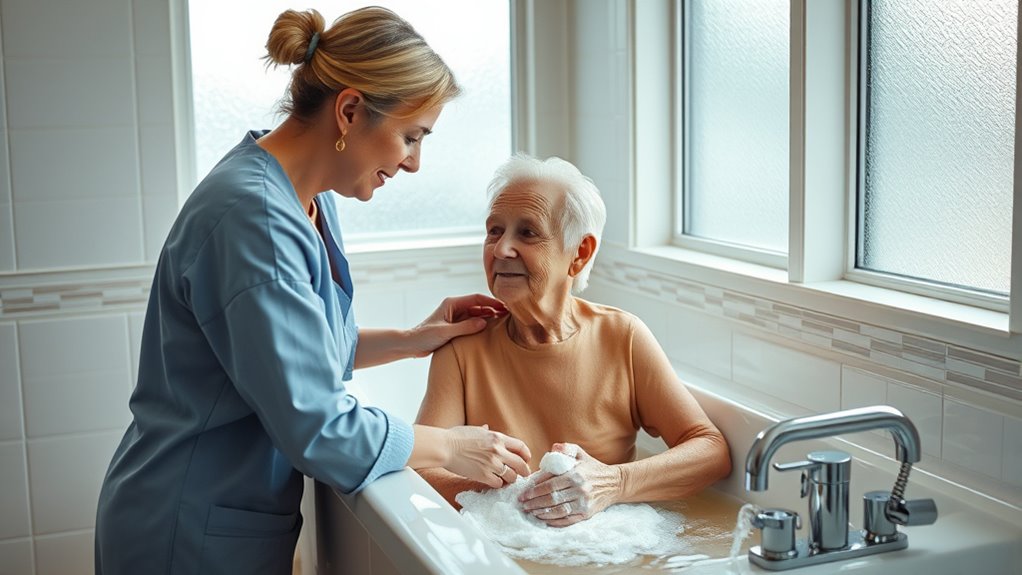

To assist with bathing, start by preparing the area, guaranteeing safety with non-slip mats and within arm’s reach of supplies. Support the person’s movements with adaptive equipment like a shower chair and grab bars. Use gentle, deliberate motions to wash, rinse with a handheld shower head, and check for comfort or fatigue. Assist with transfers and drying to maintain safety and dignity. If you’d like more detailed steps, you’ll find useful tips to ensure a safe, comfortable experience.
Key Takeaways
- Prepare the area with non-slip mats, necessary supplies, and adaptive equipment for safety and efficiency.
- Support the person’s movements, using transfer benches or grab bars as needed, while maintaining dignity.
- Use gentle, deliberate washing motions, starting with hair and then upper body, ensuring soap is fully rinsed.
- Rinse thoroughly with a handheld shower head, controlling water flow to prevent splashing and discomfort.
- Dry the person completely, assist with safe exit, and ensure skin is dry to prevent moisture-related issues.

Have you ever wondered how to make bathing safer and easier for someone who needs assistance? Ensuring safety during bathing starts with understanding the importance of safety precautions. Before beginning, clear the area of any obstacles or clutter that could cause slips or falls. Place a non-slip mat inside and outside the tub or shower to provide stability. Keep all necessary supplies within arm’s reach, including soap, shampoo, towels, and any adaptive equipment you might need. This prevents unnecessary movement and reduces the risk of accidents. Make sure the water temperature is comfortable—test it with your wrist or elbow to avoid burns or discomfort. Never leave the person alone in the bathroom, especially if they have mobility challenges or cognitive impairments.
Using adaptive equipment can considerably enhance safety and independence. Shower chairs or benches allow the person to sit comfortably, reducing fatigue and the risk of slipping. Grab bars are essential for support when entering or exiting the shower or tub; install them securely on sturdy walls. Handheld shower heads are another valuable tool because they give the individual more control over the water and make rinsing easier. If the person has limited balance or strength, consider using a transfer bench, which helps them move in and out of the tub more securely. Cushioned mats or padding can also prevent pressure sores and provide additional comfort. Proper projector technology can improve the clarity and safety of visual aids used during bathing routines, especially for individuals with visual impairments. Always check that the adaptive equipment is properly installed and in good condition before use.
When you’re ready to begin, help the person undress carefully, supporting their movements and maintaining their dignity. If they need assistance with washing, use gentle, deliberate motions. Start with the hair, then move to the upper body, taking care to avoid overexertion. Use a washcloth or sponge, and ensure soap is fully rinsed off to prevent skin irritation. When rinsing, utilize the handheld shower head to control the water flow and avoid splashing. Be attentive to their comfort and cues—if they seem uneasy or tired, take a break or stop the process altogether. Once bathing is complete, gently help them out of the shower or tub, supporting their weight and balance. Dry them thoroughly with a towel, paying attention to skin folds to prevent moisture buildup.
Furinno PASIR Book Shelf, 3-Tier Bookshelf, Storage Shelves Bookcase, 9.7 x 23.7 x 31.5, for Living Room, Bedroom, Home Office, Plain White
WIDE & FUNCTIONAL DESIGN: This book shelf features a wide, open design rectangular shape shelves, making it ideal...
As an affiliate, we earn on qualifying purchases.
Frequently Asked Questions
How Can I Ensure Safety During Bathing for Elderly Individuals?
To guarantee safety during bathing for elderly individuals, you should focus on fall prevention by using non-slip mats and grab bars. Always check the water temperature to prevent burns, keeping it comfortably warm but not hot. Support their movements, and never leave them unattended. These steps help create a safe, comfortable environment, reducing risks and promoting confidence during bathing.
What Are the Best Bathing Aids for People With Limited Mobility?
You should consider using non-slip mats to prevent falls and waterproof clothing to keep them comfortable and dry. These aids enhance safety and comfort during bathing for people with limited mobility. Non-slip mats provide stability on wet surfaces, while waterproof clothing helps protect against chills. Combining these aids creates a safer, more comfortable bathing experience, reducing risks and promoting independence for elderly individuals with mobility challenges.
How Often Should Someone With Medical Conditions Bathe?
You should bathe based on your medical bathing schedule and frequency considerations, which vary depending on your specific conditions. Usually, people with medical conditions might need to bathe less often to prevent skin irritation or infections, but daily bathing is common for others. Always follow your healthcare provider’s recommendations to guarantee proper hygiene without compromising skin health. Adjust your bathing routine as needed to stay comfortable and healthy.
What Are Signs of Skin Irritation From Bathing Products?
A picture is worth a thousand words, so watch for signs of skin irritation from bathing products. You might notice redness, itching, or swelling, which indicate skin sensitivity or possible product allergies. Dry, flaky patches or blistering also point to irritation. If you see these signs, stop using the product immediately and consult a healthcare professional. Always choose gentle, hypoallergenic products to protect sensitive skin.
How Can I Help a Reluctant Person Accept Bathing Assistance?
You can help a reluctant person accept bathing assistance by offering emotional support and respecting their privacy considerations. Gently explain why it’s important and listen to their concerns. Reassure them that you’ll be respectful and discreet throughout the process. Giving them some control, like choosing the time or helping with certain steps, can also ease their anxiety. Your patience and understanding will make them feel safer and more willing to accept help.

NUMENN Bookshelf, 5 Tier Bookshelves, Home Office Bookcase Shelf Storage Organizer, Free Standing Storage Shelving Unit for Bedroom, Living Room and Home Office, Vintage
5 Tier Open Multifunctional Bookshelf: This five shelf bookcase provides a very wide storage space, you can use...
As an affiliate, we earn on qualifying purchases.
Conclusion
Remember, helping someone bathe can be a gentle, caring experience. For instance, imagine helping your elderly parent feel comfortable and safe during their bath—your calm presence makes all the difference. By following these steps, you guarantee their dignity and hygiene are maintained with respect. With patience and kindness, you make bathing a positive, reassuring routine. Your support can truly brighten their day and strengthen your bond.

FOTOSOK 6-Tier Open Bookcase and Bookshelf, Freestanding Display Storage Shelves Tall Bookcase for Bedroom, Living Room and Office, Black
Never Outdated: The design of this black bookcase is simple, stylish and exquisite. It can be placed in...
As an affiliate, we earn on qualifying purchases.

FOTOSOK 6-Tier Open Bookcase and Bookshelf, Freestanding Display Storage Shelves Tall Bookcase for Bedroom, Living Room and Office, White
Never Outdated: The design of this white bookcase is simple, stylish and exquisite. It can be placed in...
As an affiliate, we earn on qualifying purchases.