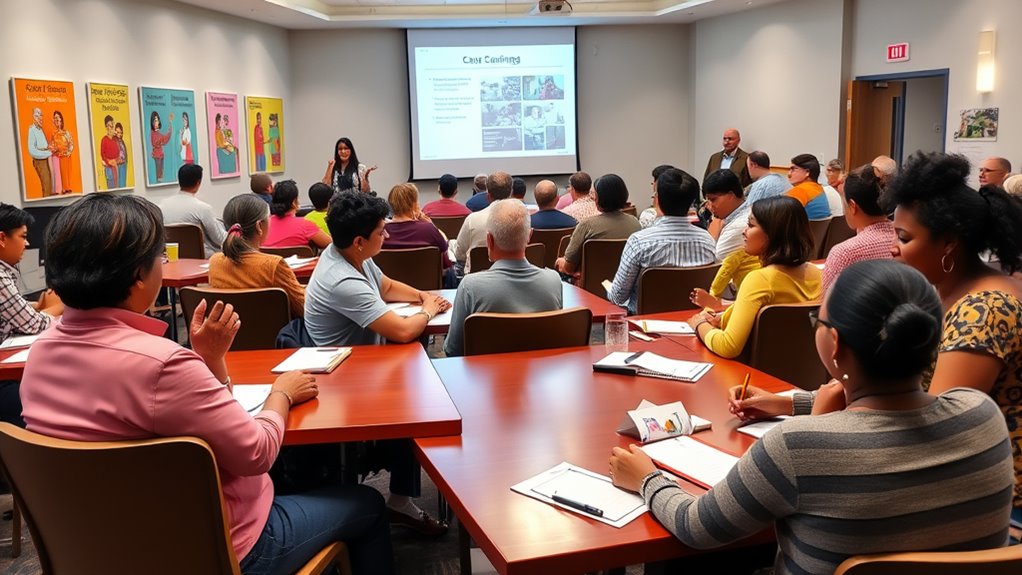

During care conferences, effective communication is key. Speak respectfully, listen actively, and show empathy to help families feel understood and valued. Engage in honest, positive dialogue focused on solutions, and involve families in setting realistic goals for their child’s progress. Celebrate strengths and offer practical support and resources. Follow up to monitor progress and keep ongoing engagement. If you keep exploring, you’ll discover even more ways to foster trust and meaningful collaboration.

Turn quiet afternoons into listening time
- Thousands of audiobooks, podcasts and originals
- Listen on your phone, tablet or Echo — also offline
- Cancel anytime
Key Takeaways
- Use respectful, clear communication and active listening to make families feel valued and understood.
- Foster a supportive environment that encourages honest dialogue and collaboration.
- Set specific, achievable goals with family input; revisit and adjust them regularly.
- Celebrate the child’s strengths and provide practical resources to support ongoing development.
- Follow up after conferences with ongoing engagement to monitor progress and address concerns.

Care conferences are essential opportunities to collaborate effectively with families and team members to support a child’s well-being. When you approach these meetings with a focus on strong family communication, you set the stage for meaningful dialogue and shared understanding. Clear, respectful communication helps families feel valued and understood, making it easier to discuss concerns, strengths, and progress. Start by actively listening to the family’s perspectives, showing empathy and openness. This fosters trust and encourages honest conversations, which are crucial for developing effective strategies together.
Effective care conferences focus on respectful communication, active listening, and building trust to support child and family well-being.
Goal setting is a cornerstone of productive care conferences. As you work with families, aim to establish specific, achievable goals that reflect the child’s needs and the family’s priorities. Engage families in the goal-setting process by asking open-ended questions about what they hope for their child’s growth and development. Collaboratively, you can identify targeted objectives that are realistic and meaningful. This shared approach ensures everyone is on the same page and committed to working toward common outcomes. Be sure to document these goals clearly and revisit them regularly to track progress and make adjustments as needed.
Throughout the conference, maintain a positive and solution-focused attitude. Celebrate the child’s strengths and achievements, which helps build confidence and motivation for continued growth. When discussing challenges, do so in a constructive way that emphasizes collaboration rather than blame. Use language that is supportive and encouraging, empowering families to feel confident in their role and contributions. Consistently reinforce the importance of ongoing communication and teamwork, emphasizing that the conference is just one part of a continuous process of support.
Additionally, providing families with practical tools and resources can enhance family communication outside the meeting. Share strategies for reinforcing goals at home and offer guidance on how they can stay involved in their child’s development. Incorporate knowledge of legal requirements and available support systems to help families navigate any challenges they may face. Follow up after the conference to check on progress and address any new concerns. This ongoing engagement demonstrates your commitment to the child’s success and strengthens the partnership with the family.
Products Worth Considering

Bowflex PR1000 Home Gym

Philips Sonicare DiamondClean 9000 Electric Toothbrush Bundle, HX9912/72

Oral-B iO Series 3 Rechargeable Electric Toothbrush for Adults, Black, with 2 Brush Heads and Travel Case
As an affiliate, we earn on qualifying purchases.
Frequently Asked Questions
How Can I Prepare My Child for the Care Conference?
To prepare your child for the care conference, involve them in child role play to help them understand what to expect and express their feelings. Talk openly about the process, addressing any concerns they might have, and guarantee they’re emotionally ready by reassuring them of your support. Keep the conversation positive and age-appropriate, helping your child feel safe and confident during the conference.
What Should I Bring to the Care Conference?
You should bring any relevant documentation, like assessments or reports, for easy review during the conference. It’s also helpful to prepare questions or notes about your child’s progress. Don’t forget to bring emotional support for yourself and your child—comfort items or a trusted friend can make a big difference. Being organized with your documentation review and ensuring emotional support can help you actively participate and advocate effectively.
How Do I Address Disagreements With Professionals During the Meeting?
Did you know that 85% of conflicts are resolved through effective communication? During the meeting, stay calm, listen actively, and express your concerns clearly. When disagreements arise, focus on conflict resolution by asking questions and seeking common ground. Remember, maintaining respectful dialogue helps foster understanding, so stay patient and open-minded. This approach encourages productive conversations and ensures your child’s needs stay the priority.
Who Else Can Attend the Care Conference Besides Parents and Professionals?
You can invite extended family members, like grandparents or aunts and uncles, to the care conference if they play a key role in your child’s life. Support groups or advocates can also attend to provide additional guidance and reassurance. Make sure to check with the meeting organizer beforehand to guarantee everyone’s invited and understands the purpose, so your child’s needs stay the focus.
How Can I Follow up After the Care Conference?
After the care conference, you can follow up by sending a friendly email or making a call to address any post-meeting questions. Use feedback strategies like asking for input on the discussed plans or next steps. This helps clarify misunderstandings, shows your engagement, and guarantees everyone stays on the same page. Regular check-ins and providing updates also foster ongoing communication, strengthening collaboration for your child’s needs.
Conclusion
By following these care conference best practices, you create a space where everyone’s voice is valued, like threads woven into a strong fabric. Remember to stay organized, listen actively, and communicate openly to foster collaboration. When you approach these meetings with compassion and clarity, you build trust and understanding, making the process smoother for all involved. Ultimately, your efforts can transform care conferences into powerful tools—like a lighthouse guiding families safely through the storm.