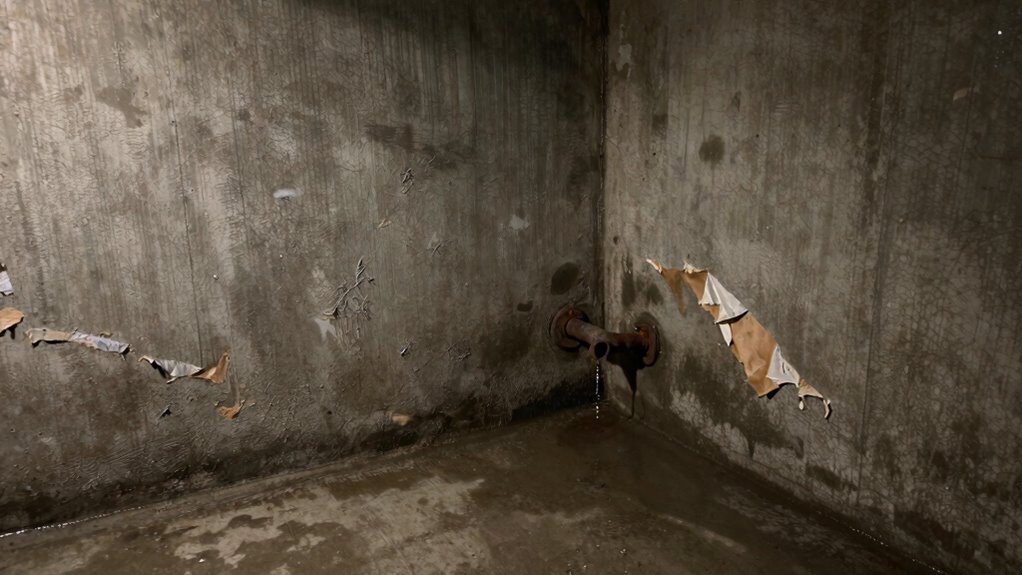

You might overlook subtle signs like a damp, musty smell or small water stains on walls and floors, which often indicate hidden moisture issues. Peeling paint, warped surfaces, or increased allergy symptoms can also signal trouble. Inadequate ventilation, leaky pipes, or condensation might be quietly raising humidity levels without obvious signs. Catching these early can protect your home and health. Keep exploring to discover more essential clues you might be missing.
Key Takeaways
- Visible water stains or peeling paint may indicate hidden moisture problems often overlooked by homeowners.
- Musty odors in the basement are early signs of mold growth and excess humidity.
- Warped walls or flooring suggest long-term moisture exposure that can be missed without regular inspections.
- Increased allergy symptoms could point to mold or dust mites thriving due to moisture issues.
- Poor ventilation and trapped humidity can silently promote mold growth, often unnoticed until significant damage occurs.
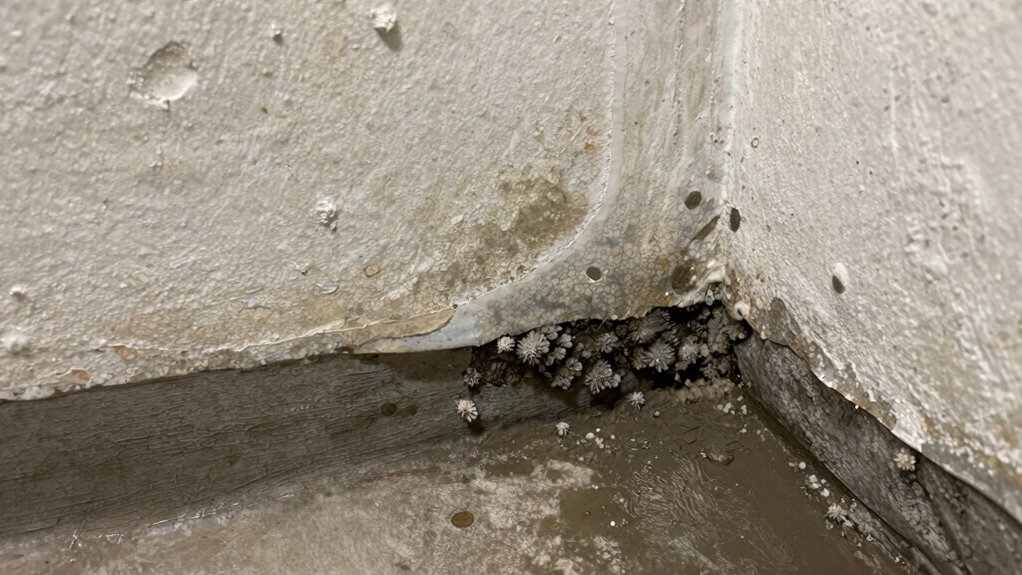
A damp or musty basement often signals underlying moisture issues that can lead to mold growth, structural damage, and health problems. If you notice persistent odors or visible water stains, it’s a warning sign that moisture is accumulating somewhere unseen. Many homeowners overlook the importance of proper basement ventilation, but it plays a crucial role in preventing these issues. Good ventilation helps circulate fresh air, reducing humidity levels and discouraging mold development. Without adequate airflow, moisture becomes trapped, creating an environment where mold spores thrive. Ensuring your basement has proper ventilation isn’t just about comfort; it’s a key step in mold prevention.
Proper basement ventilation is essential to prevent mold, moisture buildup, and structural damage.
You might also miss signs like peeling paint, warped walls, or a sudden increase in allergy symptoms among household members. These subtle clues often point to hidden moisture problems. When moisture lingers, it seeps into porous materials, weakening structural components over time. You could be unaware that your basement’s ventilation system isn’t functioning correctly or that vents are blocked by clutter or debris. Regularly checking and maintaining these ventilation pathways can make a significant difference in controlling humidity levels. Installing exhaust fans or dehumidifiers can further improve airflow and moisture control, preventing mold spores from settling and multiplying. Additionally, understanding the sources of indoor moisture can help you address issues before they escalate. Recognizing how indoor moisture sources contribute to basement dampness is essential for effective prevention.
Many homeowners forget that moisture can come from sources within the house, like leaky pipes, condensation, or even inadequate drainage outside. These internal sources can raise humidity levels without obvious water intrusion. If you notice condensation on windows or walls, it’s often a sign that your basement’s ventilation isn’t sufficient. Addressing this early can save you from more costly repairs later, and maintaining proper airflow is essential to this effort. Mold prevention isn’t just about cleaning; it’s about managing the environment to make it inhospitable for mold growth in the first place. Proper ventilation techniques and regular inspections are vital components of this strategy. Additionally, understanding the importance of building envelope integrity can help prevent moisture intrusion.
In addition to improving ventilation, sealing cracks and leaks and ensuring the exterior drainage system is effective can help keep moisture at bay. Paying attention to these warning signs and acting promptly can safeguard your home’s foundation and your health. Proper basement ventilation is often overlooked, but it’s one of the simplest and most effective ways to prevent moisture buildup and mold growth. By making it a priority, you protect your home from hidden damage and create a healthier living space. Proper indoor air quality management is essential for a safe and healthy home environment.

BEDRED Dehumidifier, 95OZ Dehumidifier for Home 1000 sq ft – Quiet with Auto Shut Off & Relaxing 7 Color Ambient Light, Ideal for Livingroom, Bedroom, Basement (Black)
- Cooling Technology: Thermoelectric dehumidification for moisture removal
- Auto Shut-Off: Automatically powers down when tank is full
- Ambient Lighting: 7-color soothing LED light for ambiance
As an affiliate, we earn on qualifying purchases.
As an affiliate, we earn on qualifying purchases.
Frequently Asked Questions
How Often Should I Inspect My Basement for Moisture Issues?
You should inspect your basement monthly to catch moisture issues early. During these inspections, check for dampness, mold, or musty odors. Guarantee proper basement ventilation to reduce humidity and prevent mold growth. Also, regularly maintain your sump pump to ensure it functions correctly during heavy rain or flooding. Consistent inspections help you identify problems before they escalate, keeping your basement dry and protected.
Can Minor Water Stains Indicate Serious Moisture Problems?
Minor water stains might seem small, but they can signal serious moisture issues. Mold growth can quickly follow, risking health, while structural damage might silently develop behind walls. Don’t dismiss even seemingly slight stains; they could be signs of ongoing problems. Regular inspections help detect early warning signs, preventing extensive damage and costly repairs. Stay vigilant, so moisture mishaps don’t multiply into mold, decay, or structural compromise.
Are There DIY Methods to Test Basement Humidity Levels?
Yes, you can use DIY sensors like hygrometers or digital humidity meters to test your basement’s humidity levels. Place these devices in different areas and compare readings to standard humidity charts, which indicate healthy ranges (ideally between 30-50%). Regularly monitoring with DIY sensors helps you identify excess moisture early, preventing mold and structural issues. Keep a record to track changes over time and take action when levels are too high.
What Are the Long-Term Effects of Ignoring Basement Moisture?
What happens if you ignore basement moisture? You risk serious long-term effects like basement mold growth and structural damage. Mold can cause health issues and damage your belongings, while unchecked moisture weakens your foundation over time. Don’t overlook these signs—ignoring moisture problems can lead to costly repairs and compromised safety. Address issues early to protect your home’s integrity and your family’s health.
How Does Outdoor Weather Impact Basement Moisture Levels?
Outdoor weather considerably impacts your basement moisture levels. Poor soil drainage can cause water to pool around your foundation, increasing moisture intrusion. Wind-driven rain can seep through cracks or poorly sealed walls, raising humidity inside. Heavy rain and rapid snowmelt worsen these effects, making it essential to maintain proper drainage systems and seal foundation cracks. Staying proactive helps prevent moisture build-up and long-term damage to your basement.
Conclusion
So, next time your basement starts whispering damp secrets or your walls sport a lovely mold mosaic, don’t pretend you don’t see. Ignoring these signs is like missing the flashing neon “moisture alert” sign while you’re busy binge-watching your favorite show. Catch these signs early, or risk turning your basement into a swampy, moldy swamp adventure—minus the fun. Stay vigilant, or soon you’ll have a waterpark you never booked!