Mini split systems are an efficient way to heat and cool your home without ductwork. You install an indoor unit on the wall or ceiling and connect it to an outdoor compressor, providing flexible zoning options. They operate quietly, require minimal maintenance, and can be adapted to various home layouts, including older buildings. Plus, they save energy and money over time. Keep exploring to discover how these systems could fit your home’s comfort needs.
Key Takeaways
- Mini split systems are ductless units that provide efficient heating and cooling by connecting indoor and outdoor components.
- They are easy to install, requiring minimal disruption and professional assistance for refrigerant and electrical connections.
- Suitable for zoning, allowing independent temperature control in multiple rooms or areas.
- Operate quietly, with low maintenance needs, making them ideal for home comfort.
- Offer energy savings and flexibility, especially for retrofitting older buildings or spaces without ductwork.
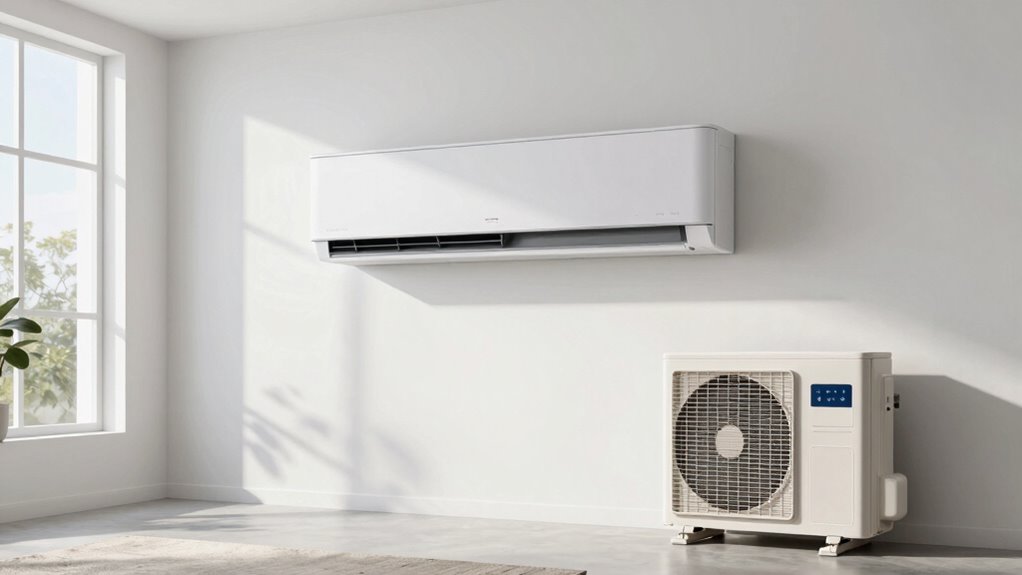
When considering a mini split system, understanding the installation process is key. The good news is that it’s generally straightforward compared to installing a traditional ducted system. The installation process involves mounting an indoor unit on your wall or ceiling, connecting it to an outdoor compressor via a small conduit, and then sealing the connections. Because the system doesn’t rely on extensive ductwork, it can be installed in less time and with less disruption. You’ll likely need a professional technician to handle refrigerant lines and electrical connections, ensuring everything is set up safely and efficiently. Proper installation is essential for maximizing energy efficiency and system performance, so it’s worth investing in experienced installers. Additionally, the installation process typically produces less noise and mess, making it a popular choice for homeowners. Mini split systems are also highly flexible. They work well in a variety of settings, from single rooms to multiple zones within a larger space. You can install multiple indoor units connected to a single outdoor compressor, giving you precise control over different areas. This zoning capability not only boosts energy efficiency but also enhances comfort, as each room can be set to a preferred temperature independently. Moreover, mini splits tend to operate quietly and require minimal maintenance, making them a convenient choice for homeowners seeking a low-hassle heating and cooling solution. Their adaptability makes them suitable for various home layouts, including older buildings, where ductwork might be difficult or impossible to retrofit. Additionally, understanding the air quality benefits of mini split systems can help homeowners appreciate their overall value beyond just temperature control. Recognizing the energy efficiency features of these systems can further assist homeowners in making informed decisions about their comfort and utility savings. In terms of cost, mini split systems may have a higher upfront investment than portable units or window air conditioners, but their energy-saving benefits quickly offset these initial expenses. Over time, you’ll notice lower energy bills and increased comfort, especially if you’re replacing an outdated or inefficient system. Their compact design and ease of installation make them suitable for various home layouts, including older buildings where ductwork might be difficult or impossible to retrofit. Additionally, some models incorporate smart technology, allowing for remote monitoring and control to optimize energy use and comfort.
mini split system air conditioner
As an affiliate, we earn on qualifying purchases.
As an affiliate, we earn on qualifying purchases.
Frequently Asked Questions
How Much Does a Mini Split System Cost to Install?
A mini split system typically costs between $2,000 and $5,000 to install, depending on the size and complexity. You’ll appreciate the ductless advantages, like easier installation and energy efficiency, which save you money long-term. Plus, zoning benefits allow you to control temperatures in different rooms individually, increasing comfort and reducing energy waste. Keep in mind, higher-end models may cost more, but they often provide better efficiency and features.
Are Mini Split Systems Energy-Efficient Compared to Traditional HVAC?
Mini split systems are more energy-efficient than traditional HVAC, saving you money on energy bills and reducing environmental impact. Unlike bulky central systems, they target specific zones, minimizing waste. With better temperature control, you experience comfort while consuming less power. This combination of energy savings and eco-friendliness makes mini splits a smart choice for homeowners looking to cut costs and lessen their carbon footprint.
Can Mini Split Units Be Used for Heating and Cooling Simultaneously?
Yes, mini split units can be used for heating and cooling simultaneously, thanks to zoning options that allow you to control different areas independently. This setup provides personalized comfort and energy efficiency. However, you should be aware of potential installation challenges, such as the need for proper placement and sometimes complex wiring. Consulting a professional guarantees your system is set up correctly, maximizing its benefits for both heating and cooling needs.
What Maintenance Is Required for Mini Split Systems?
Think of maintaining your mini split system like tending to a garden; regular care keeps it thriving. You should replace filters every 1-2 months to guarantee ideal airflow and air quality. Additionally, schedule system cleaning annually or biannually to remove dust and debris, helping your unit run efficiently. Keeping up with these simple tasks prevents breakdowns, extends lifespan, and keeps your home comfortable year-round.
How Noisy Are Mini Split Systems During Operation?
Mini split systems are generally quiet during operation, with noise levels typically ranging from 20 to 40 decibels, comparable to a soft whisper or rustling leaves. Their acoustic performance is designed to minimize disturbance, so you might barely notice them running. If you choose a high-quality unit and guarantee proper installation, you’ll enjoy efficient comfort without loud noises disrupting your daily activities or sleep.
Conclusion
So, after all this talk about mini split systems, you might think they’re perfect—quiet, efficient, and easy to install. But don’t forget, the irony is that the more you invest in a sleek, modern system, the more you might find yourself obsessing over tiny adjustments or troubleshooting quirks. Isn’t it funny how what’s supposed to make life easier can sometimes keep you on your toes? Still, it’s a small price to pay for comfort, right?