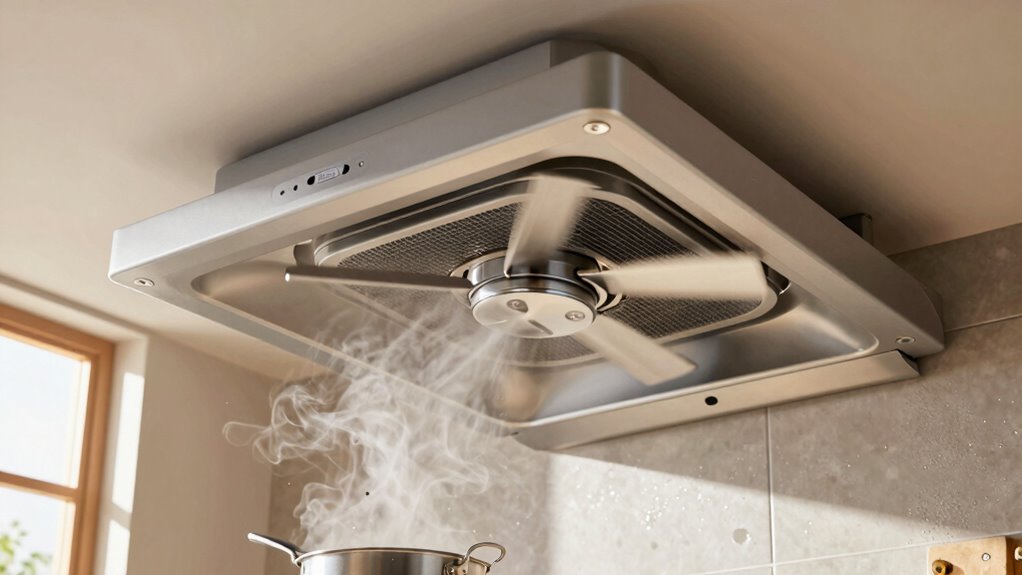

Exhaust fans improve your indoor air quality by actively removing pollutants, odors, and excess moisture from your space. They control air exchange, preventing buildup of fumes from cooking or cleaning, and help reduce humidity that can lead to mold and dust mites. Proper installation and regular maintenance guarantee they work efficiently, supporting a healthier, more comfortable environment. To learn how to optimize your exhaust fan use and maximize its benefits, keep exploring.

Turn quiet afternoons into listening time
- Thousands of audiobooks, podcasts and originals
- Listen on your phone, tablet or Echo — also offline
- Cancel anytime
Key Takeaways
- Exhaust fans remove indoor pollutants, odors, and excess moisture, improving overall air quality.
- They help control humidity levels, preventing mold growth and structural damage.
- Proper ventilation with exhaust fans reduces airborne contaminants like cooking fumes and cleaning chemicals.
- Regular use and maintenance ensure efficient removal of pollutants and moisture.
- Correct installation and sizing enhance airflow, optimizing indoor air quality and comfort.
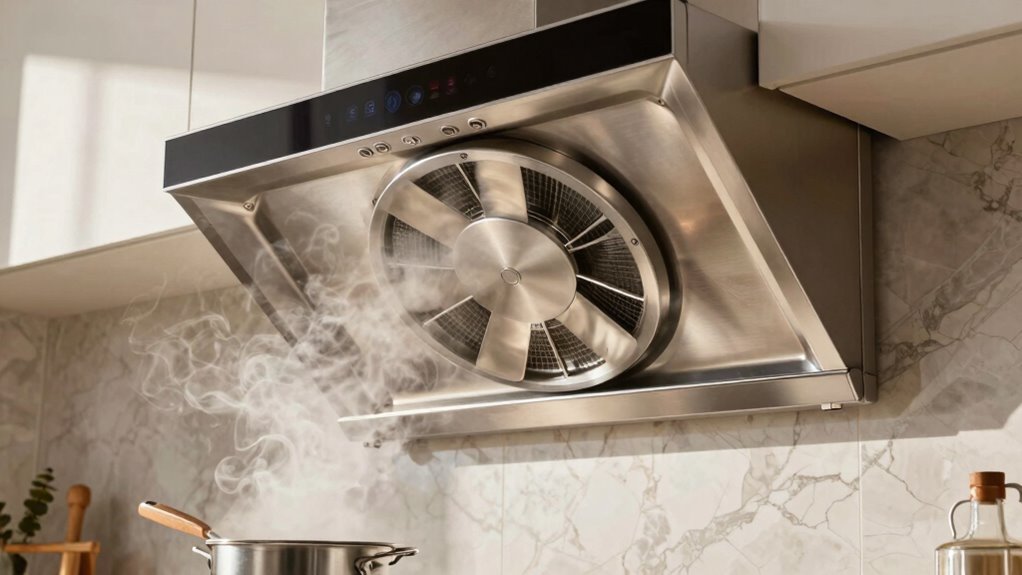
Exhaust fans play an essential role in maintaining healthy indoor air quality by removing pollutants, moisture, and odors from your home. When properly used, they greatly improve ventilation efficiency, ensuring your living space stays fresh and safe. You might not always notice it, but when you turn on an exhaust fan in your bathroom or kitchen, you’re actively controlling the air exchange process. This helps prevent the buildup of airborne contaminants, such as cooking fumes, cleaning chemicals, or bathroom aerosols, which can otherwise linger and compromise your indoor environment.
A key benefit of exhaust fans is their ability to manage moisture levels within your home. Excess humidity creates an environment conducive to mold, mildew, and dust mites, all of which can trigger allergies and respiratory issues. By effectively venting moist air outside, exhaust fans help maintain ideal moisture control. This process not only protects your health but also preserves the integrity of your home’s structure, preventing damage caused by condensation and dampness. When moisture is allowed to escape efficiently, your walls, ceilings, and furniture stay dry, reducing the risk of mold growth and structural deterioration over time.
Ventilation efficiency is essential because it determines how well your exhaust fan performs its job. An efficient fan quickly draws out contaminated or humid air and replaces it with fresh air from outside, maintaining a balanced indoor environment. If your exhaust fan is weak or improperly installed, it might not move enough air to make a difference, leaving pollutants or moisture trapped inside. This can lead to stuffy rooms, lingering odors, and increased health risks. Ensuring your exhaust fans are appropriately rated for the size of your space and are regularly maintained keeps them functioning at peak performance, maximizing ventilation efficiency. Additionally, choosing fans with adequate airflow capacity**** tailored to your space can significantly improve overall air quality.
Using exhaust fans consistently, especially in high-moisture areas like kitchens and bathrooms, supports ongoing moisture control and air quality management. It’s a simple step that can dramatically reduce indoor air pollutants, prevent mold growth, and improve overall comfort. When you prioritize proper ventilation, you’re actively creating a healthier living environment for yourself and your family. Keep in mind that installing high-quality fans with good airflow capacity and ensuring they’re used correctly is key to reaping these benefits. Properly maintained ventilation systems, which include proper installation, are crucial for long-term indoor air quality and moisture management. Regular inspection and maintenance of your ventilation system can prevent blockages and ensure optimal performance, further supporting indoor air health. With good ventilation efficiency and moisture control, your home becomes a more comfortable, healthier space to live in.
Products Worth Considering

Levoit Eleva 300X HEPA Air Purifier for Home and Bedroom

Bowflex PR1000 Home Gym

Garmin Forerunner 165 GPS Running Smartwatch, 43 mm, Black
As an affiliate, we earn on qualifying purchases.
Frequently Asked Questions
Can Exhaust Fans Remove All Indoor Pollutants Effectively?
Exhaust fans can’t remove all indoor pollutants effectively because their pollutant removal depends on ventilation efficiency. While they do help eliminate airborne contaminants like smoke, odors, and humidity, they may not reach every corner or remove pollutants trapped in surfaces. To improve indoor air quality, you should combine exhaust fans with proper ventilation, air purifiers, and regular cleaning, ensuring better overall pollutant removal and healthier indoor environments.
How Often Should Exhaust Fans Be Maintained for Optimal Air Quality?
You should maintain your exhaust fans at least once every 6 to 12 months for best air quality. Follow a regular maintenance schedule that includes cleaning the fan blades and vents, and replacing filters as needed. Regular maintenance prevents dust buildup and guarantees efficient operation, helping to remove indoor pollutants effectively. Staying consistent with maintenance and filter replacement keeps your indoor air fresh and healthy.
Do Exhaust Fans Increase Energy Consumption Significantly?
Exhaust fans do increase energy consumption, but the impact varies based on energy efficiency and noise levels. On average, a typical fan uses about 50-100 watts, which isn’t much compared to other household appliances. Upgrading to energy-efficient models can reduce this impact considerably. While some fans can be noisy, quieter models tend to consume slightly more energy but offer better comfort. Overall, proper use minimizes energy costs without sacrificing air quality.
Can Exhaust Fans Cause Indoor Drafts or Temperature Changes?
Exhaust fans can cause indoor drafts or temperature fluctuations if not properly installed or balanced. You might notice draft concerns when the fan pulls in cooler air from outside or creates uneven airflow. These temperature changes happen because the fan affects air circulation, especially in small or poorly ventilated spaces. To minimize this, guarantee your exhaust fan is correctly vented, and consider using a damper or timer to control airflow and maintain comfort.
Are There Specific Types of Exhaust Fans Better for Air Quality?
Yes, some exhaust fans are better for air quality. Look for models with high airflow capacity and compatibility with air purifiers to maximize filtration. Choose fans with low noise levels to guarantee they don’t disrupt your space. These features help improve indoor air by efficiently removing pollutants while maintaining comfort. Selecting the right exhaust fan ensures better air quality without excessive noise or interference with your existing air purifiers.
Conclusion
In summary, exhaust fans play a vital role in improving indoor air quality by removing pollutants and excess humidity. Did you know that proper ventilation can reduce indoor air pollution by up to 30%? By using exhaust fans effectively, you’re not just eliminating odors—you’re also protecting your health and creating a fresher living environment. So, make sure your exhaust fans are working efficiently to keep the air inside your home clean and safe.