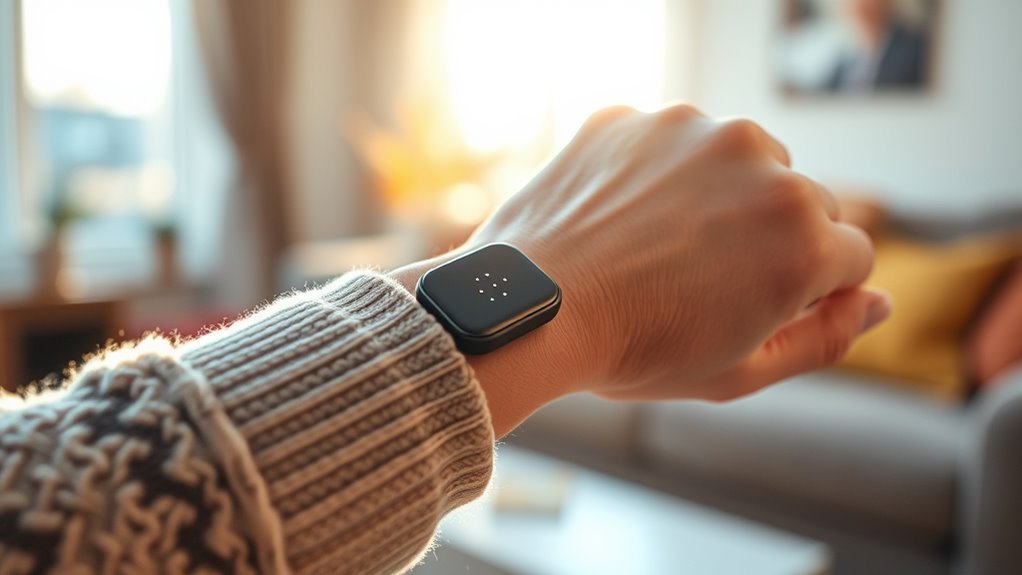

Fall detection sensors range from wearable devices that can call for help away from home to room-based systems that monitor movement without a pendant. My best overall pick is the Nomo Medical Alert System for older adults who want a home-focused service with fall detection; the ADT On-The-Go is a standout for mobile coverage, while Sentinare offers a privacy-preserving, videoless approach. The key tradeoffs are whether monitoring works at home or on the go, whether a person will wear a device, and how much setup or service involvement the system requires. Room sensors can avoid wearable compliance problems, but they may need careful placement and may not provide the same emergency response as a monitored alert system. Read on for the full comparison and guidance on choosing a setup that fits the person’s routine.

Give the gift of listening to someone you love
- Choose a 1-, 3-, 6- or 12-month membership
- They pick the audiobooks they love
- Easy to send by email
Complete the kit


Key Takeaways
- Coverage determines the shortlist: Nomo is home-focused, while ADT On-The-Go and the Fajocru GPS watch are more suited to people who leave home and need a wearable.
- Wearable acceptance is a deciding factor: watches and pendants only help if the wearer keeps them on; the room-based Nomo, Sentinare, and mmWave options avoid that daily habit.
- Passive sensing comes with a setup tradeoff: Sentinare and the mmWave devices monitor a space without a wearable, but placement, coverage, and system configuration matter.
- The two MR60FDA2 options serve different buyers: the standalone-style sensor is aimed at indoor detection, while the XIAO kit adds Wi-Fi, BLE, and Home Assistant compatibility for technically confident users.
- Not every sensor includes a response service: the Arduino, ESP32, and Micro:bit-oriented DFROBOT unit and the XIAO kit are sensor projects, not turnkey monitored medical alert systems.
| Fajocru Fall Detection Smart Watch for Seniors with GPS and SOS Alert |  | Best Wearable for Location-Aware Alerts | Connectivity: 4G cellular | Fall detection: Automatic detection with SOS alerts | Location features: Real-time GPS tracking and geo-fencing | VIEW ON AMAZON | See Our Full Breakdown |
| Senior Fall Monitor with 24/7 Passive Monitoring and Automated Alerts |  | Best Wearable-Free Indoor Monitor | Sensor technology: AI-powered passive infrared and motion sensing with machine-learning analytics | Intended monitoring: Falls, wandering, and nighttime movement | Maximum range: 30 feet | VIEW ON AMAZON | See Our Full Breakdown |
| DFROBOT C1001 60GHz mmWave Indoor Fall Detection Sensor for Arduino / ESP32 / Micro:bit (11 Meters) |  | Best for DIY Sensor Projects | Sensor type: 60GHz mmWave human detection sensor | Fall-detection method: Human posture recognition using point-cloud imaging algorithms | Maximum range: 11 meters | VIEW ON AMAZON | See Our Full Breakdown |
| mmWave Fall Detection and Human Presence Sensor – MR60FDA2 |  | Best for Home Assistant Integration | Fall-detection range: 3 × 3 × 3 meters | Human-presence range: Up to 6 meters | Connectivity and integration: Wi-Fi integration with ESPHome and Home Assistant | VIEW ON AMAZON | See Our Full Breakdown |
| Nomo Medical Alert System with Fall Detection for Seniors at Home |  | Best for Monitored Home Alerts | Included components: Smart hub, two satellite range extenders, and wearable tags | Fall detection: Included | Emergency alerts: Included | VIEW ON AMAZON | See Our Full Breakdown |
| XIAO MR60FDA2 60GHz mmWave Human Fall Detection Sensor Kit |  | Best for Home Assistant Tinkerers | Sensing frequency: 60 GHz mmWave | Maximum presence range: 6 meters | Breathing and heartbeat range: Up to 1.5 meters | VIEW ON AMAZON | See Our Full Breakdown |
| ADT On-The-Go Mobile Medical Alert System, Fall Detection Pendant |  | Best for Monitored Mobile Protection | Model: MD5 | System type: Mobile medical alert system | Fall detection: Included | VIEW ON AMAZON | See Our Full Breakdown |
| Sentinare Fall Detection & Activity Sensor |  | Best No-Wearable Room Sensor | Coverage: Up to 6 meters (20 feet) | Fall detection: Claims detection of slow falls | Wearable required: No | VIEW ON AMAZON | See Our Full Breakdown |
| fall detection sensor | Connectivity | Fall detection | Mounting |
|---|---|---|---|
| Fajocru Fall Detection Smart W | 4G cellular | Automatic detection with SOS alerts | — |
| Senior Fall Monitor with 24/7 | — | — | Wall mount; stick-on installation described |
| DFROBOT C1001 60GHz mmWave Ind | — | — | Pole mount |
| mmWave Fall Detection and Huma | — | — | Wall mount |
| Nomo Medical Alert System with | Wi-Fi; no landline required | Included | — |
| XIAO MR60FDA2 60GHz mmWave Hum | Wi-Fi, Bluetooth LE, Zigbee, and Thread | — | — |
| ADT On-The-Go Mobile Medical A | — | Included | — |
| Sentinare Fall Detection & Act | Wi-Fi | Claims detection of slow falls | Wall mount; screw-in installation |
More Details on Our Top Picks
Fajocru Fall Detection Smart Watch for Seniors with GPS and SOS Alert
For an older adult who may leave home or wants an alert device close at hand, the Fajocru watch combines automatic fall detection with GPS tracking, geo-fencing, and two-way communication. Unlike the Senior Fall Monitor, which monitors a room without anything to wear, this watch can share location when its wearer is away from home. Its large touchscreen and Android/iOS compatibility also make it a more self-contained choice than the DIY DFROBOT C1001.
The tradeoff is that this is a wearable: it only helps when the senior wears and charges it, and its full features depend on cellular coverage. The included data-only SIM does not support voice calls, so calling requires a separate SIM. Heart-rate and blood-pressure readings are reference-only, not medical-grade measurements.
Pros:- Automatic fall detection can send SOS alerts to emergency contacts.
- GPS tracking and geo-fencing add location awareness beyond indoor-only sensors.
- Two-way voice communication works with Android and iOS, with a compatible calling SIM.
- Includes a pre-installed data SIM with one year of data service.
Cons:- The included data-only SIM does not support voice calls; a separate SIM is needed for calling.
- Fall alerts and location features depend on cellular network coverage.
- Health readings for blood pressure and heart rate are for reference, not medical use.
Best for: Older adults who regularly go out independently and families who want fall alerts plus GPS location and caregiver communication.
Not ideal for: Seniors who resist wearing or charging a watch, or households that need reliable alerts where cellular coverage is weak.
- Connectivity:4G cellular
- Fall detection:Automatic detection with SOS alerts
- Location features:Real-time GPS tracking and geo-fencing
- Communication:Two-way voice; separate SIM required for calling
- Water resistance:IP67, rated for immersion up to 1 meter
- Compatibility:Android and iOS
- Included SIM:Data-only SIM with one year of free data
- Charging:Magnetic cable
Our verdict“Choose the Fajocru if an older adult will wear a watch and needs fall alerts that can follow them beyond the home.”
Senior Fall Monitor with 24/7 Passive Monitoring and Automated Alerts
The Senior Fall Monitor suits households where an older adult may forget or refuse to wear a pendant or watch. Its passive motion sensing and AI-based monitoring are designed to detect falls, wandering, and nighttime movement indoors, then send caregivers alerts by call, text, or notification. That makes it a different kind of choice from the Fajocru watch: it monitors a room rather than following the wearer outside.
Its small, stick-on installation and privacy-focused approach may appeal to families who want indoor coverage without a camera. But the 30-foot range limits coverage, and the device needs an outlet, so it will not provide protection during power loss or away from home. Full functionality also requires a subscription. Compared with the Nomo Medical Alert System, it avoids wearable tags but does not offer the same stated two-way voice contact.
Pros:- Monitors without requiring the senior to wear a watch or pendant.
- Designed to detect falls, wandering, and nighttime movement.
- Caregiver alerts can arrive by phone call, text, or app notification.
- Compact wall-mounted unit uses a stick-on installation method.
Cons:- Full functionality requires a subscription.
- Indoor monitoring is limited to a stated range of 30 feet.
- No battery backup; the unit depends on AC power.
Best for: Families seeking passive, camera-free indoor monitoring for an older adult who is unlikely to wear a device consistently.
Not ideal for: People who need fall coverage outside the home, battery-backed operation, or a system without a subscription requirement.
- Sensor technology:AI-powered passive infrared and motion sensing with machine-learning analytics
- Intended monitoring:Falls, wandering, and nighttime movement
- Maximum range:30 feet
- Mounting:Wall mount; stick-on installation described
- Power:AC corded; no battery required
- Alerts:Phone calls, notifications, and texts
- Control method:App
- Dimensions:3.5 × 3 × 3 inches
Our verdict“Pick this monitor for passive indoor coverage when wearing compliance is the main concern and subscription-based service is acceptable.”
DFROBOT C1001 60GHz mmWave Indoor Fall Detection Sensor for Arduino / ESP32 / Micro:bit (11 Meters)
The DFROBOT C1001 is aimed at builders who want to add fall and presence detection to a custom monitoring setup. Its 60GHz mmWave sensing uses posture-recognition algorithms, and the product describes reporting fall status, how long someone stays down, and stationary-body status. With a stated range of 11 meters, it reaches farther than the MR60FDA2’s described 3 × 3 × 3 meter fall-detection zone, making it appealing for a larger sensor project.
This is not a ready-to-use alert system for most families. It is designed to work with Arduino, ESP32, or Micro:bit, and the supplied information does not describe caregiver notifications, emergency response, or a complete app service. Unlike the Nomo Medical Alert System, it requires a builder to supply the surrounding system that turns sensing into useful help. Its sleep and presence functions add flexibility, but also make setup more involved.
Pros:- 60GHz mmWave sensing uses posture recognition for fall detection.
- Reports fall status, stationary-body status, and duration of stay.
- Stated 11-meter range supports broader project coverage than the MR60FDA2 fall zone.
- Also provides human presence and sleep-related sensing features.
Cons:- Requires integration with compatible development hardware such as Arduino or ESP32.
- Product details do not specify a built-in caregiver alert or emergency response service.
- Corded power and indoor sensing do not provide wearable or away-from-home coverage.
Best for: Technically capable caregivers, makers, or integrators building a custom indoor fall-detection system with compatible development boards.
Not ideal for: Families seeking a plug-and-play senior alert device, built-in caregiver notifications, or an included emergency response service.
- Sensor type:60GHz mmWave human detection sensor
- Fall-detection method:Human posture recognition using point-cloud imaging algorithms
- Maximum range:11 meters
- Additional sensing:Human presence and sleep-related sensing
- Reported status:Fall status, duration of stay, and stationary-body status
- Compatible devices:ESP32, Arduino UNO, and Micro:bit
- Power source:Corded electric
- Mounting:Pole mount
Our verdict“Choose the C1001 if you can build the alert system around the sensor; skip it if you need a ready-made safety service.”
mmWave Fall Detection and Human Presence Sensor – MR60FDA2
The MR60FDA2 makes the most sense for a smart-home enthusiast who wants to connect fall detection with other home automations. It detects falls within a stated 3 × 3 × 3 meter zone and human presence up to 6 meters, while its light sensor can support lighting routines. The listing also describes Wi-Fi integration through ESPHome, giving technically confident users a route to connect it with Home Assistant. Compared with the DFROBOT C1001, this model emphasizes smart-home integration; the C1001 instead lists Arduino, ESP32, and Micro:bit compatibility and a longer stated range.
This sensor is not a standalone alert service. Full functionality calls for compatible hardware or a hub, and the setup may be a barrier for families who simply want a senior-ready device. Its wall-mounted, USB-powered format also means it stays in one place. For a wearable option that can track someone away from home, the Fajocru watch is a better fit.
Pros:- Detects falls within a defined 3 × 3 × 3 meter area.
- Human-presence detection reaches up to 6 meters.
- ESPHome and Home Assistant compatibility support smart-home integration.
- Built-in light sensing can link safety monitoring with lighting automation.
Cons:- Requires compatible hardware or a hub for full functionality.
- Setup may be challenging for users without smart-home experience.
- Wall-mounted and USB-powered, so it is not portable or wearable.
Best for: Smart-home users comfortable with ESPHome or compatible microcontrollers who want to add indoor fall detection to an automation setup.
Not ideal for: Caregivers who need a simple, standalone alert system or mobile fall coverage outside the sensor’s room.
- Fall-detection range:3 × 3 × 3 meters
- Human-presence range:Up to 6 meters
- Connectivity and integration:Wi-Fi integration with ESPHome and Home Assistant
- Power source:USB
- Mounting:Wall mount
- Built-in sensor:BH1750 ambient-light sensor
- Compatible devices:ESPHome, ESP32-C6, Grove Relay, Home Assistant, and XIAO ESP32-C6
- Maximum listed range:19.69 feet
Our verdict“Choose the MR60FDA2 if you can integrate a fixed indoor sensor with Home Assistant; choose a wearable or monitored system for ready-made alerts.”
Nomo Medical Alert System with Fall Detection for Seniors at Home
The Nomo Medical Alert System is the most service-oriented option in this group for an older adult living independently at home. Its hub, two range extenders, and wearable tags combine fall detection with emergency alerts and two-way voice communication. Unlike the Senior Fall Monitor, which is designed for passive room monitoring, Nomo includes wearable tags and a stated 24/7 monitoring option. It also avoids the technical integration required by the MR60FDA2.
The main tradeoff is dependence on a stable Wi-Fi connection and an ongoing subscription after the included 30-day trial for monitoring services. The product information also gives limited detail about wearable-tag battery life, which matters for a device intended to be worn regularly. This system is best suited to home use; the Fajocru watch is a stronger match when GPS and coverage outside the home matter more than a home-based response setup.
Pros:- Includes a hub, two range extenders, and wearable tags for home coverage.
- Combines fall detection with emergency alerts and two-way voice communication.
- Wi-Fi connectivity works without a landline.
- Offers 24/7 monitoring with an included 30-day trial.
Cons:- Monitoring requires a subscription after the trial.
- Operation depends on Wi-Fi stability.
- Wearable-tag battery life is not detailed in the supplied product information.
Best for: Older adults living independently at home whose families want wearable fall alerts, two-way contact, and an available monitoring service.
Not ideal for: People without dependable Wi-Fi, seniors who will not wear tags, or buyers who need GPS-based protection outside the home.
- Included components:Smart hub, two satellite range extenders, and wearable tags
- Fall detection:Included
- Emergency alerts:Included
- Communication:Two-way voice
- Connectivity:Wi-Fi; no landline required
- Monitoring:24/7 monitoring available with optional subscription
- Trial:30-day free trial
Our verdict“Choose Nomo for a home-based wearable alert system with two-way communication and monitoring, provided Wi-Fi and subscription service suit your household.”
XIAO MR60FDA2 60GHz mmWave Human Fall Detection Sensor Kit
For a technically confident household, the XIAO MR60FDA2 offers a way to build fall-related monitoring into a smart-home setup without asking an older adult to wear a pendant. Its 60GHz mmWave sensor detects presence up to 6 meters, while the listed breathing and heartbeat sensing range is much shorter, at 1.5 meters. Pre-loaded ESPHome firmware and Home Assistant support make it more adaptable than the ADT On-The-Go, but that flexibility comes with setup and integration work rather than ADT’s included professional monitoring. Wi-Fi, Bluetooth LE, Zigbee, and Thread support add options for connected projects, and the light sensor and Grove connector support expansion. I would skip it as a standalone emergency alert: the product data does not specify a staffed response service or a caregiver notification path.
Pros:- Non-wearable 60GHz sensing covers presence up to 6 meters.
- Pre-loaded ESPHome firmware supports Home Assistant integration and customizable detection zones.
- Wi-Fi, Bluetooth LE, Zigbee, and Thread provide multiple connectivity options.
- Light sensor and Grove connector offer room for added automations and hardware.
Cons:- Requires smart-home setup and does not list professional emergency monitoring.
- Breathing and heartbeat detection is specified only up to 1.5 meters, much less than the presence range.
- Product information does not establish how falls trigger caregiver alerts or how those alerts are delivered.
Best for: Home Assistant users or technically capable families who want non-wearable room sensing and are comfortable configuring automations.
Not ideal for: Older adults who need a ready-to-use emergency response service, or households without someone able to configure and maintain a smart-home system.
- Sensing frequency:60 GHz mmWave
- Maximum presence range:6 meters
- Breathing and heartbeat range:Up to 1.5 meters
- Processor:XIAO ESP32C6
- Connectivity:Wi-Fi, Bluetooth LE, Zigbee, and Thread
- Smart-home compatibility:Home Assistant via pre-loaded ESPHome firmware
- Additional sensor:BH1750 light sensor, up to 65,535 lux
- Weight:0.04 kg
Our verdict“Choose this kit for customizable, non-wearable fall-related sensing in a Home Assistant home, not as a substitute for a monitored medical alert system.”
ADT On-The-Go Mobile Medical Alert System, Fall Detection Pendant
The ADT On-The-Go is the clearest choice here for an older adult who needs a direct route to human help, including when away from home. Its fall detection, GPS location, cellular SOS, and 24/7 professional monitoring make it more of an emergency-response system than the XIAO MR60FDA2, which is a configurable room sensor without a listed monitoring service. The pendant is rechargeable, waterproof, and has a one-button call option, so it suits someone willing to keep a wearable close. The tradeoff is dependence on a monthly monitoring plan and a battery life listed as 40 hours, which calls for a regular charging routine. Unlike Sentinare’s room-based, no-wearable approach, ADT may not help if the user removes or forgets the pendant.
Pros:- Fall detection is paired with 24/7 professional monitoring.
- GPS location and cellular SOS support use away from home.
- Waterproof design suits everyday wear and active routines.
- One-button emergency calling provides a simple manual way to request help.
Cons:- Requires a monthly monitoring plan.
- Listed battery life is 40 hours, so charging needs to be part of the routine.
- Protection depends on the user wearing the pendant; it is not a room-based sensor.
Best for: Older adults who leave home, can wear and charge a pendant, and want GPS-backed access to professional monitoring.
Not ideal for: People who refuse wearables, may forget to charge a device, or need fall protection without a recurring monitoring plan.
- Model:MD5
- System type:Mobile medical alert system
- Fall detection:Included
- Monitoring:24/7 professional monitoring
- SOS connectivity:Cellular
- Location:GPS
- Battery:Rechargeable; listed battery life 40 hours
- Waterproof:Yes
- Dimensions and weight:0.63 x 1.75 x 2.75 inches; 1.76 ounces
Our verdict“Pick ADT for an older adult who needs wearable fall detection and monitored help both at home and on the move, and accepts regular charging and a monitoring plan.”
Sentinare Fall Detection & Activity Sensor
Sentinare suits families who want fall and activity monitoring without asking an older adult to wear a device. It covers up to 6 meters, claims detection of slow falls, and can track bed exits, room absence, and restricted-area activity—useful signals beyond a pendant’s emergency button. Its AI-generated stick-figure view is designed to avoid sending ordinary video, a privacy-oriented alternative to camera-based monitoring. Compared with the ADT On-The-Go, Sentinare avoids a wearable and a listed monthly fee for basic features, but it does not offer the same stated 24/7 professional response or GPS support. Wi-Fi, wall mounting, and app-based features also make it a fixed indoor system, not protection for someone who goes out. Its many activity and alert functions may take more setup than a simple pendant.
Pros:- No wearable is required, which can help when a user forgets or refuses a pendant.
- Up to 6-meter coverage and claimed slow-fall detection suit room monitoring.
- Bed-exit, absence, and restricted-area features add activity context beyond fall alerts.
- AI stick-figure output is designed to avoid sending ordinary video; basic features have no monthly fee.
Cons:- Indoor Wi-Fi monitoring does not provide the GPS and mobile coverage offered by ADT On-The-Go.
- Product details do not specify a 24/7 professional emergency response service.
- Camera-derived sensing may not suit households seeking a device with no visual sensor, even with stick-figure processing.
Best for: Families monitoring an older adult at home who will not reliably wear a pendant and want room-level fall and activity alerts.
Not ideal for: People who need protection outside the home, a stated professional monitoring service, or a device with no camera-derived sensing at all.
- Coverage:Up to 6 meters (20 feet)
- Fall detection:Claims detection of slow falls
- Wearable required:No
- Privacy processing:AI-generated stick-figure view; product description says video is not sent
- Monitoring features:Fall, bed exit, absence, restricted-region, and overstay detection
- Connectivity:Wi-Fi
- Mounting:Wall mount; screw-in installation
- Dimensions and weight:4.09 x 1.97 x 0.75 inches; 0.43 kg
Our verdict“Choose Sentinare for non-wearable fall and activity monitoring in a fixed indoor space, but choose ADT if the priority is monitored help away from home.”
How We Picked
I compared these fall detection sensors by the job they can realistically perform: detecting a fall, notifying someone, and fitting into the older adult’s daily routine. I gave more weight to clear response pathways, appropriate coverage at home or away, and low-friction use than to extra features that do not directly help after a fall. I also considered privacy, installation and configuration demands, and whether the product appears to be a ready-to-use alert system or a component that requires a DIY build.
The ranking reflects those differences rather than treating every device as interchangeable. Nomo leads for a home-centered alert setup, while ADT On-The-Go ranks well for people who need a wearable beyond the home. Sentinare stands out for privacy-minded passive monitoring, and the technical mmWave kits rank lower for most families because building or integrating a reliable alert path takes more work. Wearable devices and passive room sensors each have limits, so I favor a match to the person’s routine over a feature list alone.
| fall detection sensor | Fall detection | Mounting |
|---|---|---|
| Fajocru Fall Detection Smart W | Automatic detection with SOS alerts | — |
| Senior Fall Monitor with 24/7 | — | Wall mount; stick-on installation described |
| DFROBOT C1001 60GHz mmWave Ind | — | Pole mount |
| mmWave Fall Detection and Huma | — | Wall mount |
| Nomo Medical Alert System with | Included | — |
| XIAO MR60FDA2 60GHz mmWave Hum | — | — |
| ADT On-The-Go Mobile Medical A | Included | — |
| Sentinare Fall Detection & Act | Claims detection of slow falls | Wall mount; screw-in installation |
Factors to Consider When Choosing Fall Detection Sensors
Before choosing a device, I would map the person’s actual routine and the help they could reach after a fall. A sensor’s detection method matters, but so do coverage, notification delivery, setup, and whether someone will respond. These broader checks can prevent a technically capable device from becoming an unused or incomplete safety measure.
Match Coverage to Daily Life
Start by listing where the person spends time alone: bedroom, bathroom, garden, neighborhood, or shops. A room sensor can be a sensible fit for a homebound older adult, but it cannot provide the same coverage outdoors as a mobile wearable. A GPS watch or mobile alert pendant may help away from home, yet its location and connection limits still matter. Check whether the system needs a phone, Wi-Fi, cellular service, a base station, or a paid monitoring service. A common mistake is buying for the most alarming scenario while overlooking the places the person is actually alone most often. Choose coverage that matches everyday movement, then decide whether a second device is needed for gaps.
Separate Detection From Getting Help
A fall alert is only one link in the response chain. Find out who receives the notification, whether the system contacts a monitoring center, and what happens if the wearer cannot speak or the first contact does not answer. Some sensors detect activity but need a separate controller, phone, or home-automation setup to route an alert. Families sometimes assume that “fall detection” automatically means emergency services are contacted; verify the response process in the product’s service terms. Ask how accidental alerts can be canceled and whether a two-way voice connection is available. The best fit is the one whose response path is understood by both the older adult and the people supporting them.
Choose Wearable or Passive Sensing Around Habits
Wearables depend on a person remembering to put the device on and, for some models, keeping it charged. That can be a poor match for someone who removes jewelry, dislikes a pendant, or forgets routine tasks. Passive room sensors avoid that daily step, but they monitor only the spaces they cover and may require installation or careful positioning. Privacy preferences matter too: a videoless activity sensor may feel more acceptable than a camera, while still collecting movement data. Avoid choosing solely by detection style; ask the wearer which device they would tolerate in ordinary life. If no option feels acceptable, a trial or clinician’s input may clarify the tradeoff before committing to a full setup.
Check Room Coverage and Installation Limits
For indoor sensors, examine the stated range alongside room layout, mounting position, walls, furniture, and areas where a person might fall. A published distance is not a guarantee of reliable detection throughout a home. Bathrooms, narrow hallways, and rooms with partitions may need a different placement plan or more than one sensor. Technical kits can offer flexibility, but that flexibility shifts responsibility for power, connectivity, software, and alert testing to the buyer. A frequent mistake is treating a sensor module as a finished safety system. Before purchase, draw a simple floor plan and confirm how each monitored area will send an alert to a real person.
Weigh Privacy Against Monitoring Detail
Different systems collect different kinds of information, from basic movement events to location, activity patterns, or visual representations. Decide what level of monitoring the older adult finds acceptable and who can view stored or live data. A privacy-preserving, videoless design may be preferable when cameras feel intrusive, but ask what activity information is still recorded and how it is shared. Wearables can reduce in-home visual monitoring while tracking location or device status instead. Read the data and account terms rather than assuming “no camera” means no personal data. The right balance should support safety without creating a monitoring arrangement the person will reject.
Budget for Service, Upkeep, and Backup Plans
Compare the full ownership requirements, not just the hardware: monitoring subscriptions, connectivity, batteries, charging, replacement parts, and technical support can shape long-term usability. A DIY sensor may avoid a managed service but require ongoing configuration and troubleshooting. A monitored system may reduce the family’s response burden, though it still depends on power and communications working. Ask what happens during an internet or power outage and whether the device has backup connectivity or a battery. Plan who will test alerts and check that contacts remain current. A fall sensor should complement, not replace, a wider plan for check-ins, medical advice, and emergency access.
Frequently Asked Questions
Should I choose a wearable fall detector or a sensor that monitors a room?
I would base this choice on where the person spends time alone and whether they will reliably wear and charge a device. A wearable makes more sense for someone who goes outdoors or moves between locations, especially if it supports mobile alerts. A room sensor can suit someone who stays mainly at home and dislikes pendants or watches, though it only covers its installed area. Some households may need both approaches to cover indoor and outdoor routines. Ask the wearer what feels comfortable before deciding, since a device left in a drawer cannot help.
Does fall detection automatically contact emergency services?
No; the alert route varies by product and service. Some devices notify chosen contacts, some connect to a monitoring center, and some sensor components need another device or software integration before an alert can reach anyone. Confirm whether an operator can speak with the user, what happens if there is no response, and whether emergency services are contacted under defined conditions. Also check whether the response feature requires an ongoing service plan. I would not rely on a product description alone—read the response terms and test the alert process with the intended contacts.
Can a room-based sensor protect someone throughout the house?
Not automatically. Coverage depends on the sensor’s range, mounting position, room layout, and whether walls or furniture obstruct the monitored area. One unit may cover a main room but leave a hallway or bathroom outside its effective zone. Ask the manufacturer for placement guidance and confirm whether additional sensors or a hub are needed. After installation, test the alert path in the places where a fall is most likely, while following the maker’s instructions. Treat advertised range as a planning reference, not proof that every part of a home is covered.
Are the Arduino and ESP32 mmWave sensors ready-to-use medical alert systems?
They are better understood as technical sensor products or kits than as complete monitored alert services. Depending on the setup, a buyer may need to configure a controller, network connection, software, and a method for sending alerts to a caregiver. That can suit a technically confident person who wants Home Assistant integration or a custom project. It may frustrate a family looking for a simple device with a clearly managed response process. Before buying, confirm exactly what is included and who will build, maintain, and test the alert chain.
What should I check before relying on fall detection for an older adult who lives alone?
Check the full chain from detection to human response: device coverage, connection requirements, alert recipients, escalation steps, and what happens if the user cannot answer. Confirm how the device handles charging, battery loss, internet outages, and accidental alerts. Make sure the older adult understands how to request help manually as well as what the sensor does automatically. Ask a clinician about personal fall risk and whether other safety measures are appropriate. I would also set up regular alert tests and keep emergency contacts and access instructions current.
Conclusion
For most older adults who want a home-centered setup, I would start with the Nomo Medical Alert System as the best overall match in this lineup. The Fajocru GPS watch is the best value-style choice for buyers who want a wearable with GPS and SOS features, while ADT On-The-Go is the better premium-leaning pick for people who need mobile alert coverage and a pendant format. For beginners, I would favor a managed alert system over an Arduino or ESP32 project; Nomo is the clearest starting point for home use, while ADT suits someone regularly away from home. Choose Sentinare for privacy-conscious passive monitoring, or the DFROBOT and XIAO MR60FDA2 options for technically capable buyers who want to build or integrate a room sensor. If the older adult will not wear a device, prioritize passive coverage; if they spend time out of the house, do not rely on a room sensor alone.