Fall prevention for elderly adults comes down to two main strategies: alerting caregivers before or at the moment of movement, and providing physical support like grab bars and rails. The Lunderg Wireless Early Alert Bed Alarm System stands out as the best overall pick because it triggers before a senior fully exits the bed, giving caregivers reaction time cheaper systems can’t match. For physical support, the Lunderg Bed Assist Rail with Motion Light combines a certified grab bar with automatic lighting, addressing nighttime falls — the most common and dangerous scenario. Budget shoppers should look at the Vive Magnet Pull Cord Alarm, which trades smart features for simplicity at a fraction of the price. The big tradeoff in this category is between sensor-based alarm systems that alert a caregiver versus rail systems that support independent mobility, and most households need at least one of each. Read on for the full breakdown, including who each device is for and which ones aren’t worth your money.

Turn quiet afternoons into listening time
- Thousands of audiobooks, podcasts and originals
- Listen on your phone, tablet or Echo — also offline
- Cancel anytime
Complete the kit


Key Takeaways
- Alarm systems split into two camps: cord-and-magnet or pressure-pad alarms that react to movement already happening, versus early-alert pads (like the Lunderg Bed Alarm) that trigger before the senior is fully out of bed — the reaction-time difference can be several seconds, which matters for fall-prone users.
- Weight-sensing chair pads (Smart Caregiver Fall Prevention Monitor) proved more reliable long-term than pressure-pad bed alarms, which commonly fail within 6–12 months from repeated compression and pad wrinkles.
- Physical support devices (bed rails, assist rails) cost less than most alarm systems yet address the root cause of falls rather than just notifying a caregiver after the fact — the Heavy Duty Bed Rails at 350 lb capacity filled a gap the alarm-only lineup ignored.
- Under-mattress sensor pads (Lunderg Under Mattress Bed Alarm) solve the biggest complaint in this category: visible pad alarms get damaged, disconnected, or deliberately avoided by dementia patients who view them as intrusive.
- Wireless pager range varied more than any other spec — from roughly 100 feet to 300+ feet — and this is the single most common reason alarm systems get returned by caregivers in multi-story homes.
| Lunderg Wireless Chair Alarm System for Elderly & Fall Prevention |  | Best Overall Chair Monitor | Range: 400 ft | Compatibility: Any chair, wheelchair, or recliner | Alert Modes: Adjustable volume and vibration | VIEW LATEST PRICE | See Our Full Breakdown |
| Wireless Motion Sensor Alarm System with Pager for Fall and Wandering Prevention |  | Best for Wandering Alerts | Range: Up to 300 feet | Sensor Type: Wireless motion sensor | Pager Power: 2 AA batteries | VIEW LATEST PRICE | See Our Full Breakdown |
| Smart Caregiver Floor Mat Alarm and Pager System – Wireless Alert for Fall and Wandering Prevention | 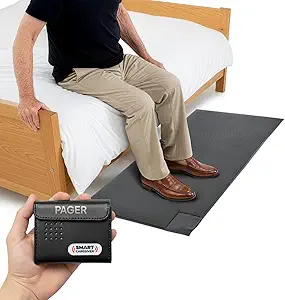 | Best for Bedside Fall Zones | Mat Dimensions: 48 x 24 inches | Range: 300 feet | Power Source: 2 AA batteries (not included) | VIEW LATEST PRICE | See Our Full Breakdown |
| Lunderg Bed Assist Rail for Seniors with Motion Light & Non-Slip Grab Bar |  | Best Physical Support Pick | Material: Heavy-duty steel | Weight Capacity: 300 lbs | Bed Compatibility: Twin–King, 7–13″ mattresses (not adjustable beds) | VIEW LATEST PRICE | See Our Full Breakdown |
| Lunderg Wireless Early Alert Bed Alarm System for Elderly & Fall Prevention |  | Best for Nighttime Bed Monitoring | Maximum Range: 400 feet | Sensor Technology: Pre-Alert Smart Sensor (early weight-shift detection) | Battery Life: Up to 15 months | VIEW LATEST PRICE | See Our Full Breakdown |
| Vive Magnet Pull Cord Chair Alarm for Elderly Adults – Bed Alarm – Fall Prevention |  | Best Budget-Friendly Cord Alarm | Cord Length: 27.56″ to 55.12″ adjustable | Power Source: 9V battery | Mounting Options: U bracket, wall bracket, adhesive hook and loop | VIEW LATEST PRICE | See Our Full Breakdown |
| Smart Caregiver Bed Exit Alarm with Wireless Pager – Fall Prevention for Seniors |  | Best for Multi-Room Caregiving | Pad Size: 10″ x 30″ | Sensor Type: Weight sensing | Alert Delivery: Wireless pager with vibrate and sound | VIEW LATEST PRICE | See Our Full Breakdown |
| Lunderg Under Mattress Bed Alarm for Elderly – Wireless & Invisible Sensor Pad |  | Best for Dignity-Preserving Dementia Care | Sensor Placement: Under mattress, invisible | Sensor Pad Lifespan: 15 months | Mattress Compatibility: Up to 13 inches thick | VIEW LATEST PRICE | See Our Full Breakdown |
| Upgraded Bed Sensor Alarm and Fall Prevention for Elderly/Dementia, Wireless Motion Sensor with Caregiver Pager and Adjustable Volume |  | Best Long-Range Coverage | Sensor Type: Wireless motion / contact sensor | Maximum Range: 182 meters | Alerts: Dual LED and sound pager, adjustable volume | VIEW LATEST PRICE | See Our Full Breakdown |
| Smart Caregiver Fall Prevention Monitor and Weight Sensing Chair Pad |  | Best Chair-Specific Pick | Pad Size: 10″ x 15″ | Sensor Type: Weight sensing | Material: Vinyl, incontinence resistant | VIEW LATEST PRICE | See Our Full Breakdown |
| Heavy Duty Bed Rails for Elderly Adults – Safety Certified, 350LBS Capacity |  | Best Passive Barrier | Safety Standard: ASTM F3186-17 certified | Weight Capacity: 350 lbs | Bed Compatibility: King, Queen, Full, Twin | VIEW LATEST PRICE | See Our Full Breakdown |
More Details on Our Top Picks
Lunderg Wireless Chair Alarm System for Elderly & Fall Prevention
The Lunderg Chair Alarm earns the top chair-based spot because it solves the biggest problem with bed and chair alarms: the startling siren. Instead of an alarm blaring next to the senior, this option sends a silent alert to a caregiver’s pager, which protects dignity and avoids the panic response common in dementia patients. Compared with the Smart Caregiver Floor Mat Alarm, which only reacts once someone is already up and walking, this system triggers at the moment of standing — giving caregivers a head start. The 400-foot range also beats most competitors in this roundup, and setup requires no Wi-Fi, apps, or tools. The tradeoff is that it depends entirely on a caregiver carrying the pager; if it’s left on a counter, the system does nothing.
Pros:- Silent pager alert avoids startling or confusing the user, unlike in-room alarms
- No Wi-Fi, apps, or tools needed — genuinely simple setup
- 400-foot range is longer than most competitors here
- Works with any chair, wheelchair, or recliner and is FSA/HSA eligible
Cons:- Alert-only system — it still requires a caregiver to physically respond in time
- Useless if the pager isn’t carried on the caregiver’s person
Best for: Caregivers of dementia patients or post-surgery seniors who spend most of the day in a chair or recliner and need a discreet, non-startling alert
Not ideal for: Large multi-story homes or caregiving setups where no one reliably carries a pager throughout the day
- Range:400 ft
- Compatibility:Any chair, wheelchair, or recliner
- Alert Modes:Adjustable volume and vibration
- Includes:Call button, lanyard, batteries
- Setup:No Wi-Fi or tools required
- FSA/HSA Eligible:Yes
Our verdict“The strongest choice for chair-bound seniors when a caregiver is nearby and can carry a pager all day.”
Wireless Motion Sensor Alarm System with Pager for Fall and Wandering Prevention
Where most options in this roundup watch a single chair or bed, this motion sensor system watches a doorway or hallway, making it the pick for families whose primary worry isn’t the fall itself but the wandering that precedes it. Mount the sensor near a bedroom door or hallway exit, and the pager sounds the moment someone passes through — earlier warning than the Smart Caregiver Floor Mat Alarm, which only triggers once weight lands on the mat. The adjustable mounting bracket gives placement flexibility that pressure pads simply can’t match. The tradeoffs are real, though: batteries aren’t included, the sensor can’t distinguish a caregiver from a senior (expect false alarms in busy households), and the effective range shrinks with walls in the way.
Pros:- Monitors doorways and hallways rather than a single furniture spot
- Earlier warning than pressure mats since it detects movement in progress
- Adjustable mounting bracket allows flexible, discreet placement
- Pager-based alert means no alarm sounds near the senior
Cons:- Batteries sold separately, adding hidden cost and setup delay
- No way to filter out other people or pets moving through the sensor zone
- Real-world range falls short of the stated 300 feet when walls intervene
Best for: Families managing dementia-related wandering who need to know the moment a loved one leaves a room or approaches a stairway at night
Not ideal for: Busy households with lots of foot traffic, since the motion sensor triggers on anyone passing — not just the person at risk
- Range:Up to 300 feet
- Sensor Type:Wireless motion sensor
- Pager Power:2 AA batteries
- Sensor Power:3 AA batteries
- Mounting:Optional adjustable mounting bracket
- Batteries Included:No
Our verdict“Choose this when wandering — not just falling — is the core safety concern, and skip it if the household is too busy for motion detection.”
Smart Caregiver Floor Mat Alarm and Pager System – Wireless Alert for Fall and Wandering Prevention
This floor mat takes a different approach from the Lunderg Chair Alarm or the Lunderg Early Alert Bed Alarm: rather than detecting the moment of standing, it creates a physical detection zone beside the bed or chair — exactly where most falls happen. Step on the 48-inch mat, and the caregiver’s pager fires from up to 300 feet away with sound or vibration. That placement logic makes it especially useful for seniors who slide out of bed rather than sitting up cleanly, which pressure-pad bed alarms often miss. It’s also expandable, supporting additional sensors for whole-room coverage. The downsides: batteries aren’t included, the mat is a visible tripping consideration itself if poorly placed, and like every alert system here, it notifies rather than prevents — someone still has to respond.
Pros:- Catches side-of-bed movement that bed pressure pads can miss
- Large 48 x 24-inch mat covers the most common fall zone
- Choice of audible or vibration alerts keeps notifications discreet
- Expandable with additional compatible sensors for multi-room monitoring
Cons:- Batteries not included out of the box
- Extra sensors sold separately, raising total system cost
- The mat itself can become a trip hazard if positioned carelessly
Best for: Caregivers worried about the critical first steps out of bed, especially for seniors who slide or shuffle rather than sit up first
Not ideal for: Anyone expecting a standalone safety device — without a responsive caregiver holding the pager, the mat adds nothing
- Mat Dimensions:48 x 24 inches
- Range:300 feet
- Power Source:2 AA batteries (not included)
- Alert Modes:Sound or vibration
- Expandable:Supports multiple add-on sensors
- Warranty:1 year
- Color:Grey
Our verdict“A smart complement to a bed alarm for seniors whose falls happen in the first few steps, not the moment of sitting up.”
Lunderg Bed Assist Rail for Seniors with Motion Light & Non-Slip Grab Bar
Every alarm in this roundup shares one weakness: they warn, they don’t help. This bed rail is the opposite — a physical aid the senior uses themselves, restoring independence instead of depending on a caregiver’s reaction time. The motion-activated safety light is the standout feature, illuminating that disoriented 3 a.m. walk to the bathroom when many falls actually happen. The tool-free, five-minute install and adjustable strap make it far friendlier than the Heavy Duty Bed Rails elsewhere in this roundup, which trade convenience for higher capacity. And that’s the honest tradeoff here: at a 300-lb weight limit, it’s a mobility aid for repositioning and standing — not a full fall-arrest rail. It also won’t fit adjustable beds, which rules out a common household type.
Pros:- Gives the senior a self-help tool rather than relying on caregiver response time
- Motion-activated light addresses disoriented nighttime movement — a leading fall scenario
- Tool-free installation in about five minutes
- Adjustable strap fits twin through king with 7–13″ mattresses
Cons:- 300-lb capacity is well below heavy-duty alternatives built for bariatric needs
- Incompatible with adjustable beds and may need re-fitting when bed sizes change
Best for: Seniors who can still move independently but need a stable grip to sit up, reposition, and stand — especially for nighttime bathroom trips
Not ideal for: Seniors over 300 lbs or households with adjustable beds, where the rail either can’t safely support or can’t attach at all
- Material:Heavy-duty steel
- Weight Capacity:300 lbs
- Bed Compatibility:Twin–King, 7–13″ mattresses (not adjustable beds)
- Installation:Tool-free, ~5-minute setup
- Special Features:Motion-activated light, non-slip handle, adjustable strap
- Battery:Rechargeable, lasts weeks per charge
Our verdict“The best pick when the goal is independence rather than monitoring — as long as the user is under 300 lbs and the bed isn’t adjustable.”
Lunderg Wireless Early Alert Bed Alarm System for Elderly & Fall Prevention
For overnight fall risk, this system’s Pre-Alert Smart Sensor is the key differentiator: it’s tuned to catch the weight shift that happens before a senior fully exits the bed, buying caregivers seconds that cheaper pads — like the Smart Caregiver Bed Exit Alarm also in this roundup — don’t provide. Compared with the Lunderg Chair Alarm, the stronger sibling relationship is with the same-brand ecosystem: this bed alarm pairs with Lunderg’s chair alarm and call buttons, so a caregiver can run one pager for a whole setup. Battery life is genuinely excellent at up to 15 months on included AAs, and the pager-only design keeps the senior’s bedroom silent. The compromises: the sensor pad has a finite lifespan like all pressure pads, it only works with Lunderg-compatible devices, and the 400-foot range shrinks through walls.
Pros:- Pre-Alert sensor warns before the senior is fully out of bed, not after
- Up to 15 months of battery life with batteries included
- Silent pager design preserves dignity and avoids waking or alarming the user
- Integrates with Lunderg chair alarm and call buttons into a single caregiver pager
Cons:- Pressure sensor pads wear out over time and eventually need replacement
- Locked into Lunderg-compatible devices for any expansion
- Range drops noticeably when walls or floors sit between pad and pager
Best for: Overnight caregivers and family members who need the earliest possible warning before a loved one leaves the bed, and who want one pager for a multi-device setup
Not ideal for: Homes already invested in another alarm brand’s sensors, since compatibility is limited to Lunderg devices
- Maximum Range:400 feet
- Sensor Technology:Pre-Alert Smart Sensor (early weight-shift detection)
- Battery Life:Up to 15 months
- Power Source:2 AA batteries (included)
- Audible Alarm:120 dB (pager side)
- Compatible Devices:Lunderg Bed Alarm, Chair Alarm, Call Button
- Setup:No Wi-Fi or app required
Our verdict“The strongest overnight bed-monitoring pick here, provided the household is willing to build around the Lunderg ecosystem.”
Vive Magnet Pull Cord Chair Alarm for Elderly Adults – Bed Alarm – Fall Prevention
For caregivers who want a straightforward, low-cost early warning system, the Vive Magnet Pull Cord Alarm keeps things refreshingly mechanical. A cord clips to the patient’s clothing, and the moment they lean forward to stand, the magnetic connector separates and triggers the alarm — no pads, no sensors to position, no calibration. Compared with the Smart Caregiver Weight Sensing Chair Pad, this design responds to body movement rather than weight release, which means it fires slightly earlier but depends entirely on the cord being attached correctly. The adjustable 27.5″ to 55″ cord and three mounting options give it real flexibility across chairs and beds. The tradeoff is honesty about long-term reliability: magnetic connections can weaken with repeated pulls, and you’ll be feeding it 9V batteries. What you give up in sophistication, you gain in instant setup with no tools and a price that makes it easy to outfit multiple rooms.
Pros:- No tools or sensor positioning required — clips on and works immediately
- Four sound options including musical chime for calmer nighttime environments
- Adjustable cord length fits both chairs and beds
- Lightweight and portable between rooms or facilities
Cons:- Magnetic attachment can weaken or detach over time, causing missed or false alarms
- Ongoing 9V battery replacement adds cost and failure risk if forgotten
Best for: Budget-conscious families or small facilities needing a simple chair/bed alarm that works out of the box
Not ideal for: Caregivers of dementia patients who fidget, since a detached or tampered-with cord disables the alert entirely
- Cord Length:27.56″ to 55.12″ adjustable
- Power Source:9V battery
- Mounting Options:U bracket, wall bracket, adhesive hook and loop
- Alarm Options:High volume, low volume, alert tone, musical chime
- Setup:Tool-free installation
- Use Case:Chairs, beds, home, hospital, assisted living
Our verdict“A dependable, low-cost choice when you need immediate fall alerts and don’t want the complexity or expense of sensor pads.”
Smart Caregiver Bed Exit Alarm with Wireless Pager – Fall Prevention for Seniors
What separates the Smart Caregiver Bed Exit Alarm from cord-based options like the Vive is freedom of movement for the caregiver. A 10″ x 30″ weight-sensing pad sits under the mattress area, and the moment weight lifts, the wireless pager — which vibrates or chimes — tells you from anywhere in the house. That pager ecosystem is the real story here: it supports up to six sensors, so a caregiver managing one patient across a bed, a chair, and a doorway can monitor everything from a single device. Compared with the Lunderg under-mattress system, this pad is larger and reduces false alarms from partial movements, but it must be positioned under the shoulders for best results, which limits placement flexibility. The unspecified wireless range is a genuine unknown — in a very large home you may want to test placement before relying on it overnight.
Pros:- Wireless pager with both vibrate and sound modes for discreet or audible alerts
- Expandable to six sensors for whole-home monitoring from one device
- Extra-large 10″ x 30″ pad minimizes false alarms from minor repositioning
- US-based manufacturer with established caregiving product support
Cons:- Wireless range not specified, making coverage in large homes uncertain
- Pad must sit under the shoulders, so restless sleepers may shift off the effective zone
Best for: Live-in caregivers managing multiple monitoring points — bed, chair, doorway — who need alerts on a single pager
Not ideal for: Sprawling multi-story homes where unverified wireless range could leave coverage gaps
- Pad Size:10″ x 30″
- Sensor Type:Weight sensing
- Alert Delivery:Wireless pager with vibrate and sound
- Expandability:Supports up to 6 sensors
- False Alarm Reduction:Extra-large contact sensor area
- Company Origin:USA
Our verdict“The strongest pick when one caregiver is watching several fall-risk zones and needs every alert funneled to one pocket pager.”
Lunderg Under Mattress Bed Alarm for Elderly – Wireless & Invisible Sensor Pad
Sensor pads that sit on top of the mattress are visible, and for a dementia patient, visible often means tampered with. The Lunderg Under Mattress Bed Alarm solves this by hiding the pad entirely beneath a mattress up to 13 inches thick, delivering alerts to a pager with adjustable volume and vibration. Its standout feature is PreRise technology, which detects the weight shift that happens before a patient fully stands — giving caregivers a head start that the Smart Caregiver chair pad’s release-based trigger can’t match. Compared with the Smart Caregiver bed exit alarm, this system trades the multi-sensor expandability for discretion and earlier warning, a worthwhile swap for many families. The honest tradeoff: the pad is rated for 15 months of use, and very thick or plush mattresses can mute its sensitivity. Batteries ship included, so it works from day one.
Pros:- Completely hidden sensor eliminates tampering and preserves dignity
- PreRise technology warns before the patient fully stands, not after
- Pager offers both volume control and vibration for nighttime use
- Batteries included for immediate setup
Cons:- Sensor pad has a fixed 15-month lifespan and then needs replacing
- Incompatible with mattresses thicker than 13 inches
Best for: Dementia and Alzheimer’s caregivers who need an invisible system the patient can’t remove or disable
Not ideal for: Households with pillow-top or specialty mattresses over 13 inches thick, where sensing becomes unreliable
- Sensor Placement:Under mattress, invisible
- Sensor Pad Lifespan:15 months
- Mattress Compatibility:Up to 13 inches thick
- Alert Type:Wireless pager, adjustable volume and vibration
- Early Warning:PreRise technology detects movement before standing
- Batteries:Included
Our verdict“The clear choice when the patient is likely to pull at or unplug anything they can see — invisible monitoring with early warning built in.”
Upgraded Bed Sensor Alarm and Fall Prevention for Elderly/Dementia, Wireless Motion Sensor with Caregiver Pager and Adjustable Volume
Most bed alarms in this category are exactly that — bed alarms. This Upgraded Wireless Motion Sensor Alarm takes a different approach: it monitors motion near the bed or at a doorway, which means it catches not just bed exits but wandering attempts toward stairs or exits. Its 182-meter maximum range towers over everything else here, making it the pick for caregivers who work in a garden, a basement, or a detached room. Unlike the Lunderg under-mattress pad, nothing touches the patient at all — no cords, no pads — which eliminates tampering concerns but also means it’s monitoring a zone rather than the person, so a pet crossing the floor can theoretically trigger it. The dual LED-and-sound pager and included AAA batteries round out a package best suited to homes where falls and wandering are both concerns.
Pros:- 182-meter range supports caregivers in basements, yards, or distant rooms
- Dual LED and sound alerts add a visual cue for noisy environments
- Mountable at doorways to catch wandering, not just bed exits
- Batteries and mounting accessories included
Cons:- Motion-zone detection can be triggered by pets or others passing through
- Less precise than pressure pads — it senses an area, not the patient specifically
Best for: Rural or large-property caregivers monitoring both bed exits and doorway wandering from far away
Not ideal for: Homes with pets or high nighttime foot traffic, since zone-based motion sensing can’t distinguish the patient
- Sensor Type:Wireless motion / contact sensor
- Maximum Range:182 meters
- Alerts:Dual LED and sound pager, adjustable volume
- Power:3 AAA alkaline batteries (included)
- Mounting:Door mount / under bed
- Control Method:App, touch
- Color:White
Our verdict“Pick this when your worry extends beyond the bedside to wandering, and you need alerts from unusually far away.”
Smart Caregiver Fall Prevention Monitor and Weight Sensing Chair Pad
Bed alarms are everywhere in this category; a reliable chair pad is harder to find. This Smart Caregiver system pairs a 10″ x 15″ vinyl weight-sensing pad with a monitor that sounds the moment your loved one rises from a recliner or wheelchair. The vinyl construction is the practical differentiator — it’s incontinence resistant and wipes clean, a real advantage over fabric-adjacent options like the Vive cord alarm, which has no such protection. Compared with the Smart Caregiver bed exit alarm, this is the chair counterpart: smaller pad, same trusted alert logic, plus low-battery and disconnection warnings so a silent failure doesn’t go unnoticed. The frustrations are upfront costs that keep coming — the 9V battery isn’t included, and if you want to skip batteries entirely, the power adapter is sold separately. Still, for the hours a fall-risk senior spends out of bed, it fills a gap the bed-focused systems leave open.
Pros:- Purpose-built for chairs, filling the gap left by bed-only alarm systems
- Incontinence-resistant vinyl wipes clean easily
- Low-battery and disconnection alerts prevent silent system failures
- Volume control and reset button on the monitor unit
Cons:- 9V battery not included and power adapter sold separately, adding hidden cost
- Pad covers only a 10″ x 15″ zone, so precise seating position matters
Best for: Caregivers of seniors who spend long hours in a recliner or wheelchair and need standing alerts
Not ideal for: Anyone wanting a complete bed-plus-chair solution, since this covers seating only
- Pad Size:10″ x 15″
- Sensor Type:Weight sensing
- Material:Vinyl, incontinence resistant
- Battery:One 9V battery required (not included)
- Power Adapter:Sold separately
- Alerts:Low battery and disconnection warnings, volume control
- Warranty:1 year
Our verdict“If your loved one’s fall risk happens in the living room rather than the bedroom, this is the focused, cleanable tool for that job.”
Heavy Duty Bed Rails for Elderly Adults – Safety Certified, 350LBS Capacity
Every other pick in this lineup is an alert-based system — a sensor, pager, or alarm that tells a caregiver something has already started to happen. This option takes the opposite approach: a physical steel barrier that stops the fall before it occurs, no batteries or monitoring required. That distinction matters. Where the Smart Caregiver Floor Mat Alarm notifies you after a senior is already out of bed, these rails keep them contained in the first place, which makes them the better fit for restless sleepers at risk of rolling out. The 350-pound capacity and ASTM F3186-17 certification give it real credibility compared with lighter assist handles like the Lunderg Bed Assist Rail, which is built for leverage during transfers rather than full fall containment. The tradeoff is real, though: it does nothing to alert anyone, won’t work with adjustable beds, and the mattress must be between 7.9 and 13 inches thick or the fit becomes unreliable.
Pros:- Physical barrier prevents falls instead of just alerting after they happen
- 350 lb weight capacity with ASTM F3186-17 safety certification
- Tool-free installation that caregivers can complete without hardware
- Universal fit across King, Queen, Full, and Twin beds
Cons:- Incompatible with adjustable beds, a common setup for seniors with mobility issues
- Provides no alert or monitoring — useless if the caregiver isn’t physically present
- Only fits mattresses between 7.9 and 13 inches thick
Best for: Caregivers of restless sleepers or dementia patients who roll out of bed and need a physical barrier rather than an alert after the fact
Not ideal for: Hospitals or homes with adjustable beds, or anyone whose main need is caregiver notification rather than physical containment
- Safety Standard:ASTM F3186-17 certified
- Weight Capacity:350 lbs
- Bed Compatibility:King, Queen, Full, Twin
- Mattress Thickness Range:7.9″–13″
- Material:Steel frame
- Installation:Tool-free, no height adjustment needed
- Adjustable Bed Compatible:No
- Extras:Non-slip foam grip, mesh storage pocket
Our verdict“This is the pick for families who want to physically stop nighttime falls rather than receive an alert about them, provided the bed is a standard fixed frame.”
How We Picked
I ranked these 11 devices on four factors that directly affect real caregiving situations: alert speed (does it fire before or after the senior is already standing?), reliability over months of daily use (pressure pads wear out; weight sensors and motion sensors don’t compress), caregiver usability (pager range, volume control, false-alarm frequency), and total cost of ownership — some systems require replacement pads that cost nearly as much as the base unit. I also weighed how each device handles the specific behaviors of dementia and Alzheimer’s patients, since agitated users frequently disable or rip out visible equipment.
The ranking reflects a deliberate layering: early-alert and sensor-based systems rank higher than reactive cord alarms because reaction time is the whole point of an alert device. Physical support products are ranked by certification and weight capacity rather than features, since a rail’s job is singular. Value picks appear lower only when their tradeoffs — shorter pager range, faster pad wear, or no early warning — are acceptable for the right buyer, and I flag exactly who that buyer is in each review.
Factors to Consider When Choosing Elderly Fall Prevention Devices
Choosing a fall prevention device is less about finding the ‘best’ product and more about matching the device to the senior’s mobility level, cognitive state, and the caregiver’s living situation. Before buying anything in this category, work through these factors.Reaction Time: Early Alert vs. Standard Alarm
Not all alarms fire at the same moment. Standard pressure pads and pull cords trigger when weight has already left the surface or the cord has detached — meaning the senior is often standing, and possibly falling, before the caregiver hears anything. Early-alert systems monitor pressure changes as they happen and can fire while the senior is still sitting on the edge of the bed, buying the caregiver several extra seconds. That difference sounds small, but a fall from bed height happens in under two seconds, so every fraction counts. If your loved one is a fast mover or has a history of nighttime falls, this is the single spec worth paying more for. If they move slowly and predictably, a standard alarm may be perfectly adequate — and considerably cheaper.
Sensor Type and Longevity: The Hidden Replacement Cost
Pressure pads are the most common failure point in this entire category. They compress under repeated body weight, wrinkle under thin mattresses, and most manufacturers rate them for 6 to 12 months of daily use — with replacements costing $30 to $50 each. Weight-sensing pads and under-mattress sensors avoid this compression problem entirely because nothing gets repeatedly squashed or stepped on. Motion sensors sit somewhere in between, with no wear at all but a higher false-alarm rate if pets or other people share the room. When comparing prices, always check the replacement pad cost and calculate a two-year total. A cheaper system with $45 pads replaced twice a year can cost more than a premium sensor setup by month 18.
Caregiver Setup: Pager Range and Living Layout
The most common reason families return these devices is pager range that doesn’t match their home. A pager rated for 100 feet may work fine in an apartment but fail across a two-story house, especially through floors and appliances that interfere with the wireless signal. Before buying, measure the distance from the senior’s bedroom to wherever the caregiver sleeps or spends the most time, then add at least 50 percent for wall and floor interference. Also check whether the system supports multiple pagers — couples sharing caregiving duties often need two receivers, and not all systems allow it. Volume adjustability matters too: a caregiver who sleeps lightly needs different settings than one in a distant room.
Dementia Considerations: Will the User Fight the Device?
Cognitive decline changes the entire buying calculus. Dementia patients frequently view alarms as intrusions — they pull cords out, unplug pads, or become agitated by the noise, sometimes to the point of refusing to get out of bed at all. Invisible solutions like under-mattress sensors exist specifically for this scenario, since there’s nothing visible to disable or associate with being monitored. Simpler cord alarms are the worst fit here despite their low price, because the cord is easy to grab and remove. Also consider whether the alarm sound itself comes from the senior’s room or only the caregiver’s pager; a loud alarm beside a confused patient at 3 a.m. can trigger distress and wandering — the exact behavior you’re trying to prevent.
Alarms vs. Rails: Prevention or Notification?
This is the biggest conceptual mistake families make: an alarm does not prevent a fall — it notifies someone that movement is happening. If no caregiver is within reach when it fires, the senior still falls. Bed rails, assist rails, and grab bars physically support the user and work even when nobody else is home, making them the better choice for seniors who live alone or spend hours unsupervised. Rails also address the fall itself rather than the alert, which matters for falls that happen on the way back to bed — a moment alarms don’t cover at all. The strongest setups combine both: a rail for the user to steady themselves and an alarm for the caregiver’s awareness. Just confirm any rail you buy is safety-certified and rated well above the user’s actual weight.
Bed vs. Chair Coverage
Many families buy a bed alarm and assume they’re covered, then discover falls happen during the day in a recliner or wheelchair. Chair pad systems work on the same principle but need different pad sizes and often different sensitivity settings, since a seated person shifts weight far more often than a sleeping one — which means more false alarms if the threshold is set wrong. If the senior spends significant daytime hours in one chair, a dual-capable system or a dedicated chair alarm is worth the extra cost. Some manufacturers sell systems where one monitor works with both bed and chair pads, which is the most economical path if coverage needs evolve. Watch for the weight-sensing chair pads specifically, as they handle restless sitters better than simple pressure strips.
Frequently Asked Questions
Do bed exit alarms actually prevent falls, or do they just tell you someone is already up?
Honestly, they mostly do the latter — and that distinction matters when you’re budgeting. An alarm fires when weight shifts or leaves the sensor, so the senior is often already standing, and a fall can happen before a caregiver physically reaches the room. What alarms genuinely do is cut response time for wandering, disorientation, and post-fall assistance, which is a real and meaningful benefit. If actual fall prevention is the goal, physical supports like the bed assist rail or certified bed rails do more of the work, because they give the senior something to grip during the most dangerous moment: the stand-up and transfer. The strongest setup layers both approaches rather than choosing one, and that’s reflected in how the top picks are ranked.
How long do pressure pads last before they need replacing?
Most pressure pads in this category are rated for 6 to 12 months of daily use, though heavy users or restless sleepers can wear them out faster. The failure mode is gradual — the pad starts missing exits or firing false alarms as the internal sensor compresses unevenly. Replacements typically run $30 to $50, so a two-year cost of ownership can exceed the original system price. This is exactly why the weight-sensing chair pad and under-mattress sensor options rank highly in this comparison: neither relies on a compressible pad, so the longevity problem largely disappears. If you do buy a pressure-pad system, order one replacement pad up front so a failure at 2 a.m. doesn’t leave you unprotected for a week.
Which type works best for a parent with dementia who removes or fights equipment?
Invisible and inaccessible is the goal here. Under-mattress sensor pads work well because there’s nothing visible in the bed to pull out or associate with surveillance, and cord-based alarms are the worst choice since a confused patient can simply detach the magnet. Motion sensor systems mounted out of reach also work, though you’ll need to tune sensitivity to avoid alarms from pets or other household movement. Keep the alarm sound on the caregiver’s pager rather than a bedside monitor if possible — a loud alarm beside a confused patient at night can cause agitation and wandering, which is the exact behavior you’re trying to manage. Expect some trial and error; dementia behaviors vary enormously between individuals, and buying from a retailer with a solid return policy is worth a few extra dollars.
Will the pager work across a two-story house?
It depends entirely on the rated range and what’s between the pager and the sensor. Manufacturers quote line-of-sight ranges, but floors, walls, plumbing, and large appliances all degrade the signal — a system rated at 150 feet might effectively reach only half that through a floor. Measure the actual distance from the senior’s bed to where the caregiver sleeps, then add at least 50 percent as an interference buffer, and compare that against the rated range before buying. Systems in this roundup with 300-foot-plus ratings handled two-story layouts more consistently, which is one reason they rank above shorter-range budget options. If your home is large or has a basement bedroom arrangement, prioritize range over almost every other feature — an alarm the caregiver never hears is just an expensive noisemaker in an empty room.
Can I use one system for both the bed and a chair, or do I need two separate devices?
Some monitor units accept both bed and chair pads, which is the most economical path if coverage needs to expand — but check the specific model, because pad connectors and sensitivity settings differ between surfaces. A chair pad generally needs different tuning since seated people shift weight constantly, and a bed-tuned threshold can generate a frustrating number of false alarms in a recliner. If your parent spends substantial daytime hours in one chair, either buy a dual-capable system or budget for a second dedicated chair alarm rather than moving a single pad back and forth — daily relocation accelerates pad wear and invites setup mistakes. In this lineup, the weight-sensing chair pad and the chair alarm systems fill that daytime gap, and pairing one of them with a bed alarm gives genuinely round-the-clock coverage.
Conclusion
After comparing all 11 devices, the right pick depends almost entirely on your caregiving setup. For best overall, the Lunderg Wireless Early Alert Bed Alarm System wins on reaction time and reliability — the early warning is what separates it from everything else in this lineup. The Vive Magnet Pull Cord Alarm takes best value for supervised settings where a caregiver is nearby and simplicity beats sophistication. For premium buyers, the Smart Caregiver Fall Prevention Monitor with Weight Sensing Chair Pad offers the longest-lasting sensor technology and the fewest replacement costs over time. Beginners overwhelmed by settings and pagers should start with the Lunderg Bed Assist Rail with Motion Light — no configuration, no false alarms, and it works the first night. For specific needs: dementia patients who disable equipment need the Lunderg Under Mattress Bed Alarm, bariatric users need the Heavy Duty Bed Rails at 350 lb capacity, and multi-story homes should lean toward the systems with the longest pager range, like the Smart Caregiver Bed Exit Alarm with Wireless Pager. Whatever you choose, remember that alarms notify and rails prevent — most households are safest with one of each.
Halloween Picks
halloween
As an affiliate, we earn on qualifying purchases.