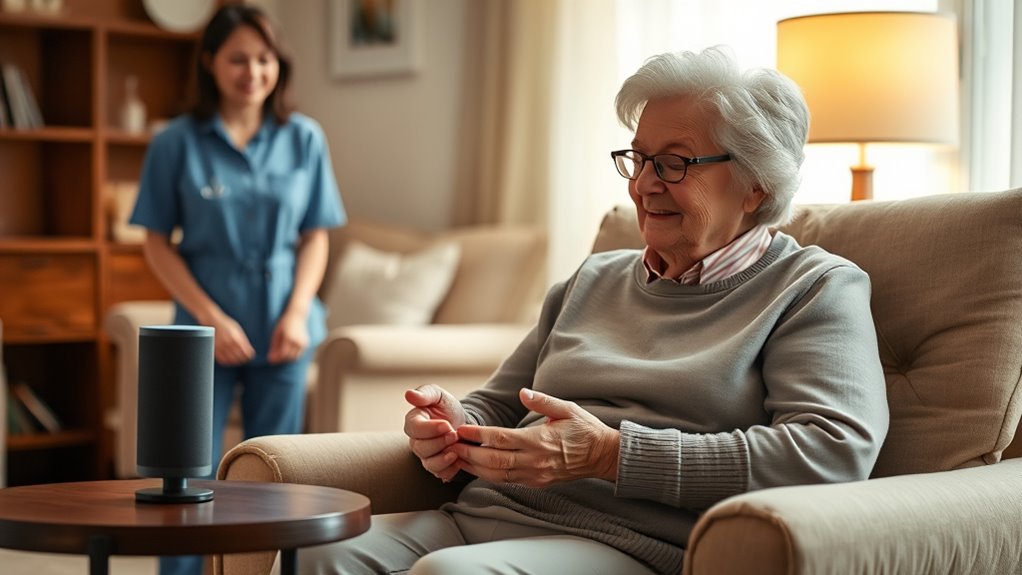

Voice assistants in caregiving support your loved ones by providing reminders, emergency help, and companionship, helping them live independently. They enhance interaction with visual displays and adapt to individual needs, making daily routines easier. However, privacy concerns about constant listening and data security are common, so trust depends on clear policies and secure devices. Understanding these benefits and challenges can prepare you to make informed choices about integrating voice assistants into care. If you keep exploring, you’ll discover ways to balance technology and privacy effectively.
Key Takeaways
- Voice assistants support caregiving by providing medication reminders, emergency assistance, and companionship for older adults and individuals with disabilities.
- Privacy concerns stem from constant listening and data sharing, requiring transparent policies and robust security measures.
- Building user trust involves demonstrating device benefits, involving caregivers, and ensuring easy-to-understand instructions.
- Personalization enhances user experience by tailoring interactions to individual routines and preferences, increasing acceptance.
- Balancing technology and privacy is essential to foster trust, requiring clear data protection explanations and privacy-respecting design.
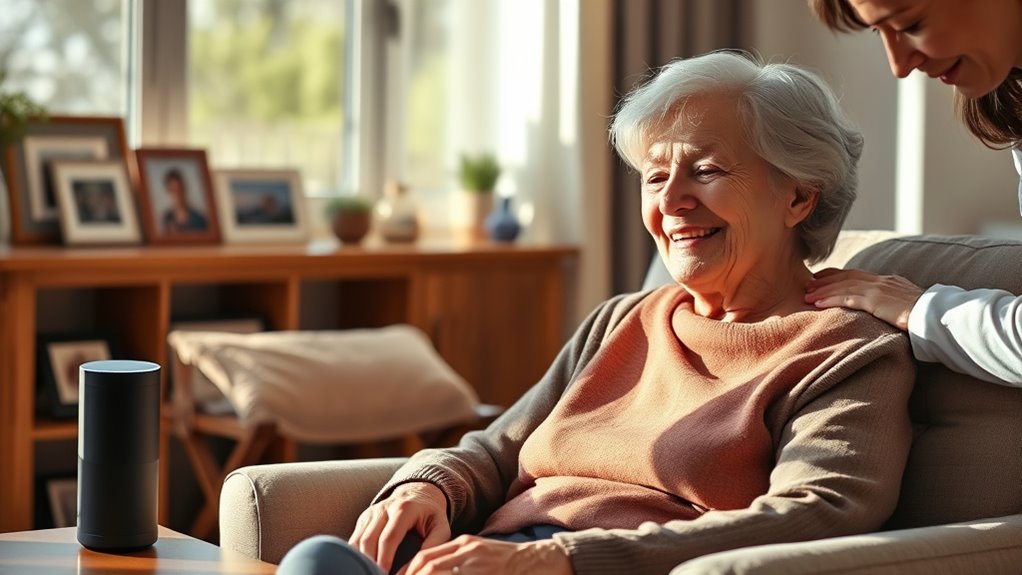
Have you ever wondered how voice assistants are transforming caregiving? These devices are becoming increasingly popular for supporting older adults and people with disabilities, offering convenience, independence, and a sense of companionship. But as you consider integrating voice assistants into caregiving routines, it’s essential to understand the challenges that come with their adoption, particularly around privacy concerns and user acceptance. Many individuals worry about how their personal data is collected, stored, and used when interacting with these smart devices. Since voice assistants constantly listen for commands, some fear their conversations could be inadvertently recorded or accessed by unauthorized parties. This concern about privacy isn’t unfounded, especially given the sensitive nature of health and daily life information shared during interactions. Developers and caregivers need to ensure transparency about data policies and implement robust security measures to reassure users that their privacy is protected. Building trust is critical to encouraging acceptance; if users don’t feel confident their information is safe, they’re less likely to fully embrace the technology. The integration of vetted home theater projectors can also enhance the user experience by providing clear visual displays for notifications and reminders, making interactions more intuitive.
User acceptance plays a pivotal role in the successful integration of voice assistants in caregiving settings. Many older adults or individuals unfamiliar with smart technology might initially feel hesitant or skeptical about relying on these devices. They might question whether the voice assistant can truly understand their needs or if it’s just a novelty. Overcoming this skepticism requires designing user-friendly interfaces and providing clear, accessible instructions. When users experience the benefits firsthand—such as easier communication, medication reminders, or emergency assistance—they’re more inclined to accept the technology as a helpful part of their daily routine. Additionally, involving caregivers and family members in the education process can foster comfort and familiarity. Personalization options also matter; when voice assistants adapt to individual preferences and routines, users see them as more trustworthy and relevant, which boosts acceptance. Addressing privacy concerns directly and demonstrating that user data remains confidential can profoundly improve user acceptance. When users understand how their information is protected and see tangible benefits, they tend to be more open to using voice assistants regularly. Careful design that prioritizes privacy, combined with ongoing support and education, helps bridge the gap between initial skepticism and full acceptance. As voice assistants continue to evolve, balancing technological capabilities with respect for privacy and user comfort will be key to making them valuable, trusted tools in caregiving.

Passages in Caregiving: Turning Chaos into Confidence
As an affiliate, we earn on qualifying purchases.
As an affiliate, we earn on qualifying purchases.
Frequently Asked Questions
How Do Voice Assistants Handle Emergencies in Caregiving Settings?
When an emergency occurs, voice assistants activate emergency protocols automatically or upon your command. They use voice recognition to identify the user and confirm the situation quickly. Once triggered, they can alert emergency services, notify caregivers, or send alerts to designated contacts. This rapid response helps guarantee timely assistance, making caregiving safer and more efficient. You can rely on voice assistants to handle urgent situations promptly and accurately.
Are Voice Assistants Customizable for Individual Care Needs?
Yes, voice assistants are customizable for individual care needs. You can explore various personalization options to tailor the device’s responses, reminders, and alerts to suit your loved one’s routines. Caregiver customization features allow you to set specific commands or preferences, ensuring the assistance feels more personal and effective. This helps you deliver better, more attentive care, making the technology a seamless part of your caregiving routine.
What Privacy Measures Protect Users’ Personal Information?
You can trust that your personal information is safeguarded through data encryption, which secures your data during transmission and storage. Additionally, voice assistants require your explicit user consent before collecting or sharing any sensitive information. Always review privacy settings and permissions, so you stay in control. These measures ensure your data remains private, giving you peace of mind while using voice assistants for your caregiving needs.
Can Voice Assistants Support Multiple Users Simultaneously?
Think of voice assistants as a busy conductor managing a symphony; they can indeed support multiple users simultaneously. With multi-user support, they listen to each voice, providing tailored assistance in real-time. This simultaneous help allows everyone to interact naturally without waiting their turn, creating a seamless experience. So, yes, your voice assistant can juggle multiple users, ensuring each person gets the personalized attention they need without missing a beat.
How Affordable Are Voice Assistant Solutions for Caregivers?
Voice assistant solutions are generally quite affordable for caregivers, especially when you compare costs across different options. The cost comparison shows that entry-level devices like Amazon Echo or Google Nest are budget-friendly, often costing under $100. Affordability factors include device features, subscription plans, and long-term savings in caregiver time. You can find options that fit various budgets, making voice assistants a practical and cost-effective tool for caregiving.

ORKA Talking Clock. Voice Recordable Ex Large Medication Pill Reminder. Talking Alarm Clock for Dementia, Hearing, Visually impaired Seniors-Digital Day Clock with Multiple Customized Alarms White
LARGE DISPLAY PILL ALARM CLOCK-ORKA Talking Alarm Clock is a unique Medicine Reminder Day clock specifically designed for…
As an affiliate, we earn on qualifying purchases.
As an affiliate, we earn on qualifying purchases.
Conclusion
Imagine a voice assistant as a gentle lighthouse guiding you through the fog of caregiving. Just like a lighthouse provides steady light in uncertain waters, these devices offer reassurance and support when you need it most. Studies show that over 70% of caregivers find voice assistants help reduce stress and improve daily routines. With each command, you’re not just managing tasks—you’re steering a calmer, more connected journey for yourself and your loved ones.

YoLink SpeakerHub – Smart Home Speaker Hub, Plays Tones/Alarms and Your Text-to-Speech Custom Messages, Voice Announcements, Audio Voice Alert, Spoken Alerts, LoRa-Powered ¼ Mile Range, WiFi Required
Audible Notifications – be informed of system alerts and events with your selected sounds/tones as well as text-to-speech…
As an affiliate, we earn on qualifying purchases.
As an affiliate, we earn on qualifying purchases.

DEWENWILS Matter Smart Plug, Work with Alexa, Apple Home, Google, SmartThings, Smart Outlet with Schedule and Timer, FFS Easy Setup, 100% Privacy 15A/1800W, APP Voice Control, 2.4G Wi-Fi Only, 2 Pack
[Matter-Certified Smart Plug] Connect directly to your existing Matter platform—no extra apps needed; control devices through Apple Home,…
As an affiliate, we earn on qualifying purchases.
As an affiliate, we earn on qualifying purchases.