Remote monitoring uses wearable devices to continuously track your crucial signs like heart rate, blood pressure, and oxygen levels. It sends this data in real time to central systems for analysis, allowing your healthcare providers or managers to respond quickly to any abnormalities. This technology also supports alert systems for equipment or environmental issues, helping to prevent risks. As advancements improve device comfort and security, you’ll see more seamless, proactive health and safety management—discover how all this works in more detail.
Key Takeaways
- Wearable devices continuously collect vital signs, providing real-time health and operational data for monitoring.
- Secure data transmission and storage ensure privacy and compliance with regulatory standards.
- Automated alerts notify care teams or managers of abnormalities like irregular heartbeats or equipment issues.
- Immediate responses enable prompt interventions, reducing risks and enhancing safety.
- Advancements in connectivity and device technology improve accuracy, comfort, and data security.
Have you ever wondered how businesses and healthcare providers keep tabs on critical systems and patient health in real time? The answer lies in remote monitoring, a technology that’s transforming how we track vital signs and respond to health alerts. At the heart of this innovation are wearable devices—compact, user-friendly gadgets that continuously collect data on heart rate, blood pressure, oxygen levels, and other vital metrics. These wearables allow you to stay connected to your health or your business’s operational status without being tethered to a clinic or control room. As data flows seamlessly from these devices to centralized systems, care teams or managers can identify potential issues before they escalate, ensuring prompt intervention. Proper storage and security of this data are essential to maintain compliance with regulatory requirements, especially when dealing with sensitive health information. However, with this constant data exchange comes a crucial concern: data security. When sensitive health information or operational details are transmitted over wireless networks, safeguarding that data becomes essential. Robust encryption protocols, secure authentication methods, and strict access controls are necessary to protect against cyber threats. You need to trust that your health data or business information remains confidential, especially when handling personal health records or proprietary operational data. The integrity of data security measures directly impacts the effectiveness of remote monitoring systems, fostering confidence among users and providers alike.
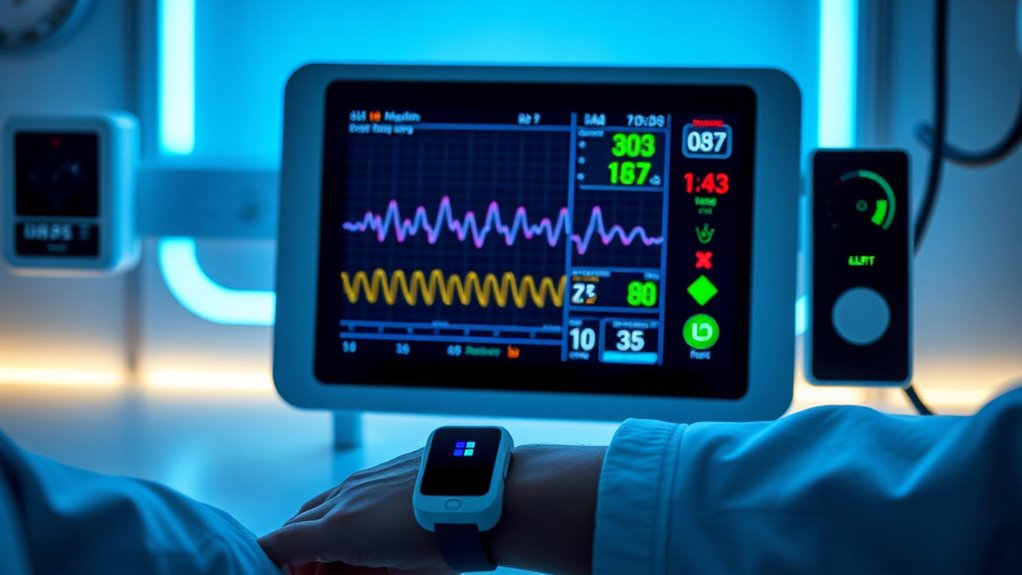
Wearable devices enable real-time health and operational monitoring for proactive care and management.
The real-time alerts generated by these systems are game-changers. When a wearable detects a sudden abnormality—like an irregular heartbeat or a drop in oxygen saturation—it triggers an instant alert to healthcare professionals or monitoring centers. This rapid notification enables immediate action, whether that’s adjusting medication, scheduling a medical review, or dispatching emergency services if needed. In business environments, similar alerts can flag equipment malfunctions or environmental hazards, helping teams respond swiftly to minimize downtime or damage. The immediacy of these alerts reduces risks, improves outcomes, and enhances overall safety.
Thanks to advancements in wireless connectivity and data processing, remote monitoring is becoming more accessible and dependable. Wearable technology is not only more precise but also more comfortable to wear, encouraging consistent use. Meanwhile, ongoing improvements in data security guarantee that the benefits of remote monitoring do not come at the expense of privacy or confidentiality. Together, these innovations empower both individuals and organizations to maintain better oversight over vital systems and health conditions, all while ensuring that sensitive information remains protected. As remote monitoring continues to evolve, expect even smarter alerts, more seamless integrations, and stronger protections—all working behind the scenes to keep you safe and informed.

Fluest Queen Bed Frame, Platform Bed Frame with Velvet Upholstered Headboard, No Box Spring Needed, Sturdy Metal Support, Noise Free, Easy Assembly, Modern Bedroom Furniture, Beige
【Quiet & Strong Support – No Box Spring Needed】 Tired of squeaky beds? This one’s built with a...
As an affiliate, we earn on qualifying purchases.
Frequently Asked Questions
How Secure Is the Data Transmitted During Remote Monitoring?
The data transmitted during remote monitoring is generally very secure. It uses strong data encryption to protect your sensitive information and follows strict cybersecurity protocols to prevent unauthorized access. These measures guarantee your vitals and alerts stay confidential and safe from cyber threats. You can trust that your health data is handled with care and kept private, giving you peace of mind with every transmission.
Can Remote Monitoring Replace In-Person Doctor Visits Entirely?
Remote monitoring can’t fully replace in-person doctor visits because virtual doctor visits and remote health assessments lack certain in-depth examinations and personal interactions. While it offers convenience and continuous data, you still need face-to-face evaluations for complex issues. Think of remote tools as a complement, not a substitute, ensuring your healthcare remains thorough. This way, you get the benefits of technology without sacrificing detailed, personalized care when it’s most needed.
What Are the Costs Associated With Remote Vitals Monitoring?
The costs of remote vitals monitoring vary based on devices, setup, and ongoing fees. Conduct a thorough cost analysis to understand initial investments and monthly expenses. Reimbursement policies can offset some costs, especially through insurance programs like Medicare. Keep in mind that investing in reliable technology and understanding coverage options helps guarantee your remote monitoring is affordable and sustainable, reducing the need for frequent in-person visits.
How Is Patient Privacy Maintained During Data Collection?
You guarantee patient privacy by using data encryption, which secures all collected information from unauthorized access. Additionally, you follow strict privacy regulations like HIPAA, which mandate secure data handling and patient confidentiality. By implementing these measures, you protect sensitive health data during collection, transmission, and storage, maintaining trust and compliance. Regular audits and staff training further reinforce privacy standards, ensuring patient information remains protected at all times.
Are There Specific Devices Recommended for Different Health Conditions?
For different health conditions, you should use condition-specific devices recommended by healthcare providers. For example, diabetics benefit from continuous glucose monitors, while heart patients might need ECG monitors. These device recommendations guarantee accurate monitoring tailored to your needs. Always consult your healthcare professional to determine the best devices for your condition, and make certain they meet medical standards for safety and reliability.

MCombo Power Lift Recliner Chair with Extended Footrest for Elderly People, Fabric 7287/7087 (Brown, Medium)
Power Lift Assistance: Counter-balanced lift mechanism to assist the senior stand up easily, smoothly adjust to lift or...
As an affiliate, we earn on qualifying purchases.
Conclusion
By embracing remote monitoring, you can stay constantly aware of essential signs and receive immediate alerts, ensuring timely interventions. This technology visually represents your health data, making complex ideas clear and actionable. Investigating the truth behind these tools proves they’re reliable, empowering you to take control of your health from anywhere. With real-time insights, you’re better equipped to prevent emergencies and maintain well-being, proving that remote monitoring truly transforms healthcare into a more proactive and connected experience.

Sven & Son Classic Adjustable Bed Base, Head and Foot Lift, Massage, Under-Bed Lights, USB, Gel Memory, Zero Gravity Smart Frame - Split King + 14 inch Hybrid Spring Matt (Medium Soft)
Unmatched Comfort & Adjustability: Elevate your sleeping experience with our head (up to 75°) and foot (up to...
As an affiliate, we earn on qualifying purchases.

EGOHOME Split King Adjustable Bed Frame and 14 Inch Cooling Memory Foam Mattress, Wireless Remote Head and Foot Incline, 12 inch Legs, Zero Gravity
Universal Compatibility with Mattresses: Adjustable bed frame fits seamlessly with all mattress types (8"-14" thickness for memory foam,...
As an affiliate, we earn on qualifying purchases.