Supporting a stroke survivor at home involves offering emotional support, encouragement, and patience to boost their confidence and resilience. Focus on assisting with mobility exercises—start simple, follow professional guidance, and celebrate small wins to motivate progress. Establish a structured routine, gradually introduce more challenging activities, and stay positive. Balancing practical help with empathy creates a supportive environment. Keep exploring these strategies to better understand how to foster their recovery and independence.
Key Takeaways
- Provide consistent emotional support to boost motivation and resilience throughout recovery.
- Assist with gentle mobility exercises, following healthcare guidance to regain strength safely.
- Celebrate small victories and progress to foster positivity and encouragement.
- Establish a structured routine with regular, tailored exercises to promote steady improvement.
- Offer patience and empathy, creating a supportive environment that encourages independence and confidence.
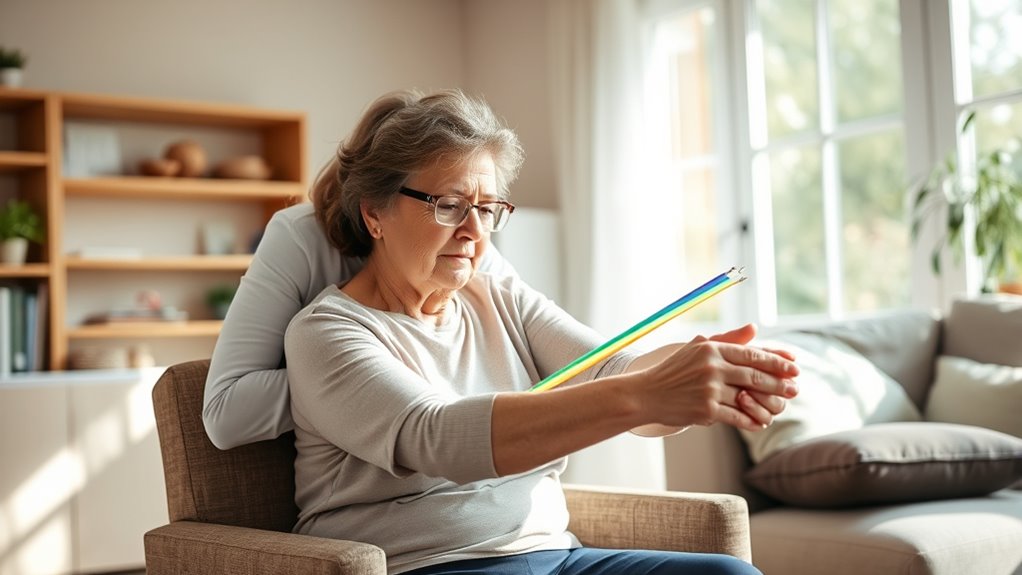
Caring for a stroke survivor at home can be challenging, but your support plays a vital role in their recovery and well-being. One of the most important ways you can help is by providing emotional support. Stroke recovery isn’t just about physical healing; it’s equally about mental and emotional resilience. Your encouragement, patience, and reassurance help your loved one stay motivated through tough days. Celebrate small victories and remind them of their progress, no matter how minor it seems. Listening without judgment and offering a comforting presence can make a significant difference in reducing feelings of frustration or depression. Remember, recovery isn’t linear, and setbacks are normal, so your steady emotional support keeps their spirits high and fosters a positive outlook.
In addition to emotional support, assisting your loved one with mobility exercises is essential. These exercises are key to regaining strength and independence and should be incorporated into their daily routine. Start with simple activities like sitting up in a chair or moving their affected limbs gently, always following their healthcare provider’s guidance. Consistency is vital, so encourage them to perform these exercises regularly, but avoid pushing too hard. As they progress, you can introduce more advanced movements, ensuring they are safe and comfortable throughout. Use positive reinforcement to motivate them, praising their efforts rather than just the results. Creating a structured routine helps instill discipline and provides a sense of normalcy, which can boost their confidence. If possible, work with a physical therapist to tailor exercises to their specific needs, ensuring safety and effectiveness.
Supporting a stroke survivor at home involves balancing emotional encouragement with practical physical assistance. Your presence and proactive involvement help bridge the gap between clinical therapy sessions and daily life. Be patient and adaptable, understanding that recovery takes time and varies from person to person. Celebrate milestones, no matter how small, and always emphasize progress rather than setbacks. By fostering a supportive environment filled with empathy and encouragement, you empower your loved one to regain independence and rebuild confidence. Remember, your role extends beyond physical help—your emotional backing sustains their motivation and resilience throughout their journey to recovery.

Ergonomic Walking Aid for Stroke Recovery & Daily Mobility Support – Reduces Effort by 50% for Hiking, Travel, & Rehabilitation – Lightweight & Durable Design
Walking Aid: This innovative Walking Rehabilitation Tool is designed to assist users in improving their mobility and accelerating…
As an affiliate, we earn on qualifying purchases.
As an affiliate, we earn on qualifying purchases.
Frequently Asked Questions
How Can I Motivate a Stroke Survivor During Recovery?
You can motivate a stroke survivor by using motivational strategies like setting small, achievable goals and celebrating each success. Offer encouragement techniques such as positive reinforcement and active listening to show your support. Keep communication uplifting, remind them of progress made, and focus on their strengths. Your consistent encouragement boosts confidence, making them feel empowered and motivated to continue their recovery journey.
What Are Common Emotional Challenges Faced by Stroke Survivors?
Nearly 30% of stroke survivors experience depression, highlighting emotional challenges they face. You might notice emotional resilience fluctuates, causing frustration or sadness. Providing consistent mental health support helps them cope better. Be patient, listen actively, and encourage open conversations about feelings. Recognize that managing these emotional challenges is essential for their recovery, and your support plays a critical role in helping them regain confidence and emotional stability during this difficult time.
How Do I Manage Sudden Behavioral Changes Post-Stroke?
When managing sudden behavioral changes post-stroke, you should seek professional help to identify underlying causes. Behavioral therapy can be effective in addressing these shifts, helping your loved one develop coping strategies. Additionally, medication management might be necessary to control mood swings or agitation. Stay patient, communicate calmly, and maintain a structured routine. Regularly consult healthcare providers to adapt the approach as needed, ensuring your loved one’s safety and well-being.
Are There Specific Dietary Guidelines for Stroke Recovery?
Think of meal planning for stroke recovery like building a sturdy bridge; every healthy choice connects your loved one to better health. Focus on a balanced diet rich in fruits, vegetables, lean proteins, and whole grains. Consult their doctor about nutritional supplements if needed. Avoid high-sodium and processed foods to reduce stroke risk. Proper nutrition supports brain healing, energy, and overall progress, making each meal a step toward recovery.
How Can I Coordinate With Healthcare Professionals Effectively?
You should stay proactive by scheduling and attending all medical appointments, making a list of questions, and sharing updates with healthcare professionals. Keep open communication about your loved one’s progress and any concerns. Assist with medication management by organizing prescriptions, tracking doses, and noting side effects. Regularly consult with doctors and therapists to coordinate care plans, ensuring everyone’s on the same page and your loved one receives ideal support.

roygra Grip Strength Trainer (8 Pack), Forearm Strengthener, Stress Balls for Adults, Hand Strengthening Devices, Wrist Finger Strengthener, Physical Therapy Exercise Equipment, Golf Baseball Climbing
𝗜𝗻𝗰𝗹𝘂𝗱𝗲𝗱 𝗖𝗼𝗻𝘁𝗲𝗻𝘁 — Hand exercise ball (2.15 x 1.63’’) x 3, hand grip ring (2.75’’ diameter) x 2,…
As an affiliate, we earn on qualifying purchases.
As an affiliate, we earn on qualifying purchases.
Conclusion
Just as a lighthouse guides ships safely to shore, your support can help a stroke survivor find their way back to independence. Remember, patience and encouragement are your guiding stars on this journey. Every small victory is a step forward, a proof to resilience and hope. With your unwavering presence, you become their anchor and compass, illuminating the path toward recovery. Together, you can turn challenges into triumphs, inspiring a brighter tomorrow.

Stroke Recovery and Care Guide: Practical Strategies Emotional Support, and Holistic Tools for Caregivers and Loved Ones
As an affiliate, we earn on qualifying purchases.
As an affiliate, we earn on qualifying purchases.

24 Hour Daily Planner with To Do List for Work & Personal Life,105 Days for Productivity Planner, No Bleed Everyday Planner, Daily Schedule, 6.5 x 9.8
✔1. A time-axis design with precise hourly markings eliminates the need for manual time labeling; start planning the…
As an affiliate, we earn on qualifying purchases.
As an affiliate, we earn on qualifying purchases.