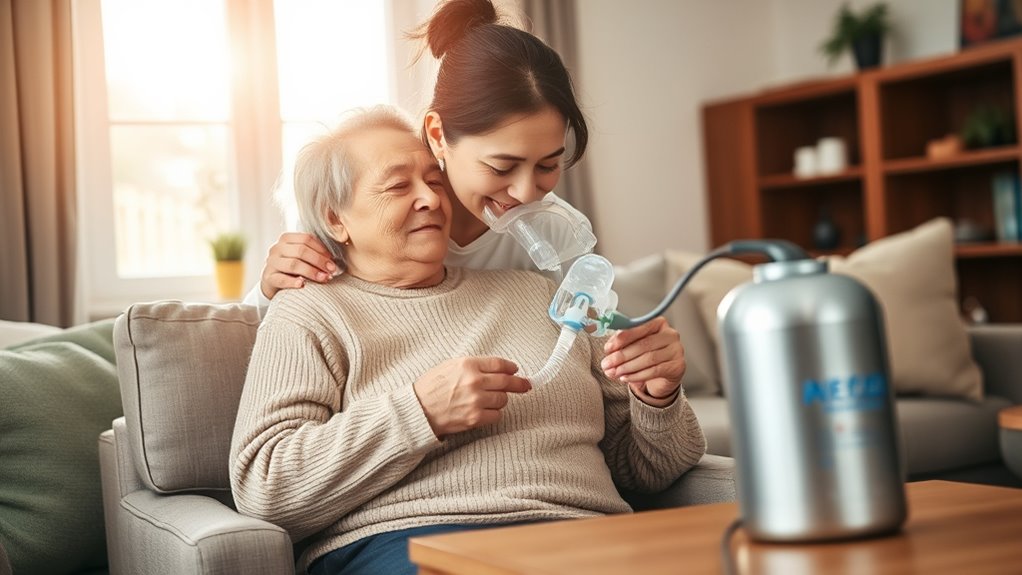

To assist someone with COPD at home, stay calm and monitor their breathing closely. Keep emergency contact numbers handy and make certain their medications, like inhalers, are organized and up to date. Follow their care plan, watch for signs of worsening, and help them use inhalers correctly. Preparing an emergency kit and practicing response steps can make a difference. If you want to learn more about managing COPD effectively, keep exploring these vital safety strategies.
Key Takeaways
- Monitor symptoms closely and recognize early signs of worsening to seek prompt medical attention.
- Ensure medications and inhalers are organized, accessible, and used correctly to maintain effective treatment.
- Keep emergency contact numbers and supplies, including oxygen and a medical kit, readily available at home.
- Develop and rehearse an emergency plan to respond quickly during severe breathing crises.
- Educate caregivers and the patient about proper management, symptom tracking, and when to seek urgent care.

Caring for someone with COPD at home can be challenging, but your support makes a significant difference in their quality of life. One of the most important aspects is being prepared for emergencies. COPD can cause sudden breathing difficulties, so having an emergency plan in place is essential. Make sure both of you know how to recognize signs of a severe flare-up, such as extreme shortness of breath, bluish lips, or confusion. Keep emergency contact numbers readily accessible, including their healthcare provider, local emergency services, and nearby hospital. Having a well-stocked emergency kit with oxygen supplies, medications, and a list of allergies or medical conditions can save valuable time during a crisis. Regularly review and update your plan, practicing it so you can act swiftly if needed. Utilizing immersive soundscapes and visual aids can also improve understanding of emergency procedures and make training more effective.
Being prepared for COPD emergencies ensures quick, effective responses and peace of mind at home.
Medication management is another critical component of caring for someone with COPD. Properly managing medications helps prevent exacerbations and keeps symptoms under control. You should help your loved one organize their inhalers, nebulizers, or pills, ensuring they are taken exactly as prescribed. Use a medication schedule or reminder system to avoid missed doses, which can lead to worsening symptoms. Always check expiration dates and store medications in a cool, dry place, out of children’s reach. If your loved one uses multiple inhalers, learn the correct technique to ensure effective delivery of medication. Sometimes, inhalers can become clogged or malfunction, so having a backup or knowing how to troubleshoot can be lifesaving.
Monitoring their breathing and keeping an eye on any changes in symptoms allows for early intervention. Encourage your loved one to track their breathing patterns, noting any increased shortness of breath, coughing, or mucus production. If you notice signs that their condition is worsening, consult their healthcare provider promptly. Maintaining a clear communication line with their medical team ensures adjustments can be made swiftly to medication or treatment plans.
Additionally, educating yourself about COPD and its management empowers you to provide better care. Attend medical appointments with your loved one when possible and ask questions about medication adjustments or emergency procedures. By staying informed, you can assist in managing their condition more effectively and reduce the risk of crises. Overall, being prepared for emergencies and managing medications diligently are fundamental steps that help guarantee safety, stability, and peace of mind for both you and your loved one. Your proactive approach can make a meaningful difference in managing COPD at home.
Top picks for "assist someone copd"
Open Amazon search results for this keyword.
As an affiliate, we earn on qualifying purchases.
Frequently Asked Questions
How Can I Tell if Their Breathing Difficulty Is Worsening?
You can tell if their breathing difficulty is worsening by monitoring symptoms closely. Look for signs like increased shortness of breath, faster breathing, or difficulty speaking. Recognizing deterioration involves noting if they use extra effort to breathe or if their lips or face turn blue. Keep track of these changes and seek medical help if symptoms escalate, ensuring you respond quickly to any worsening condition.
What Are Emergency Signs Indicating Immediate Medical Help Is Needed?
When breathing feels like gasping for air through a storm, seek help immediately. Watch for signs like blue lips or face, severe difficulty speaking or walking, or sudden chest pain. Respiratory infections can worsen symptoms, and if oxygen therapy isn’t helping, it’s time to call emergency services. Don’t delay—these are critical signs your loved one needs urgent medical attention to prevent serious complications.
Are There Specific Exercises to Improve Their Lung Capacity?
You can help improve lung capacity with breathing exercises like diaphragmatic breathing and pursed-lip breathing. These techniques strengthen your lungs and make breathing easier. Pulmonary rehabilitation programs often include tailored exercises to boost lung function and endurance. Regular practice can enhance airflow, reduce shortness of breath, and improve overall quality of life. Always consult a healthcare provider before starting any new exercise routine to guarantee safety and effectiveness.
How Do I Manage Medications Effectively at Home?
You manage medications effectively at home by prioritizing medication adherence and daily symptom monitoring. Picture your routine as a well-oiled machine—set alarms or reminders to take medicines on time, and keep a journal to track symptoms like shortness of breath or coughing. This helps catch issues early, ensuring you stay in control. Consistency is key, making your loved one’s breathing easier and their health more stable every day.
What Environmental Factors Should I Minimize to Ease Breathing?
To ease breathing, you should minimize indoor pollutants and control allergens. Keep your home well-ventilated by opening windows when possible, and use air purifiers to reduce dust, pet dander, and smoke. Avoid strong cleaning chemicals and scented products, which can worsen symptoms. Regularly vacuum with a HEPA filter, wash bedding frequently, and maintain low humidity to prevent mold growth. These steps help create a healthier environment for easier breathing.
Conclusion
By staying calm and attentive, you create a safe harbor amid the storm of breathing struggles. Picture yourself gently supporting them as their chest rises and falls, like waves on a calm sea. Your presence becomes a steady anchor, guiding them through each breath. With patience and care, you help turn a moment of difficulty into one of comfort. Together, you can navigate these rough waters, bringing hope and relief with every gentle touch and reassuring word.