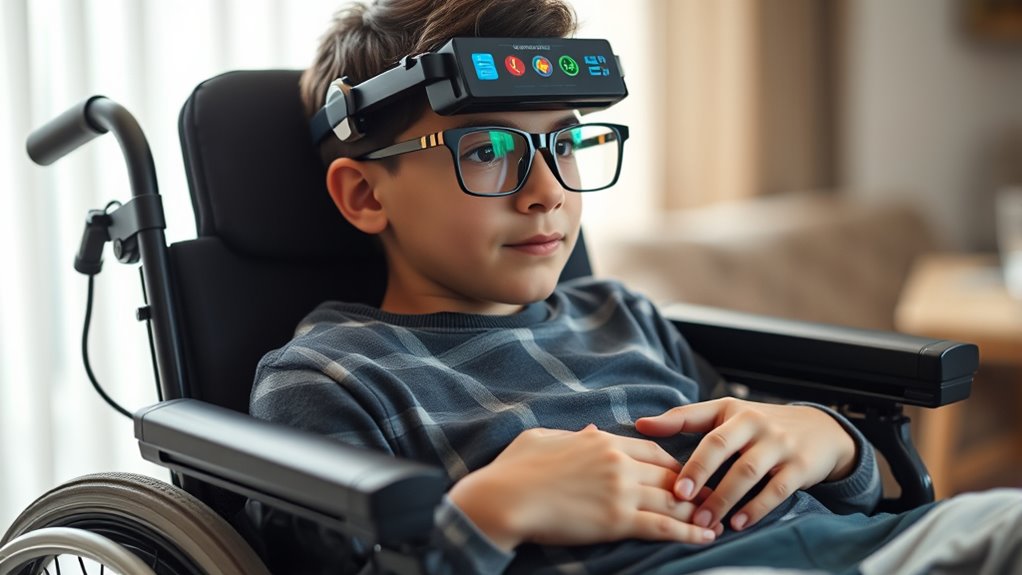

As someone with ALS, you can use innovative communication tools like speech-generating apps and customizable boards to express yourself clearly. Mobility aids such as power wheelchairs and eye-tracking devices help you move freely and stay independent. Many systems integrate communication and mobility support, making daily tasks easier. These advancements aim to keep you connected, autonomous, and engaged. To learn how these solutions can support you through different stages, explore the options that may suit your needs best.
Key Takeaways
- Augmentative communication tools like speech-generating apps assist individuals with ALS in expressing themselves as speech declines.
- Advanced adaptive technology offers intuitive, customizable devices that improve communication and mobility for changing needs.
- Assistive mobility devices, including powered wheelchairs and eye-tracking systems, help maintain independence and mobility outside the home.
- Integration of communication and mobility aids enhances overall daily functioning and supports self-expression and movement.
- These tools empower individuals to stay connected, engaged, and autonomous despite ALS progression.
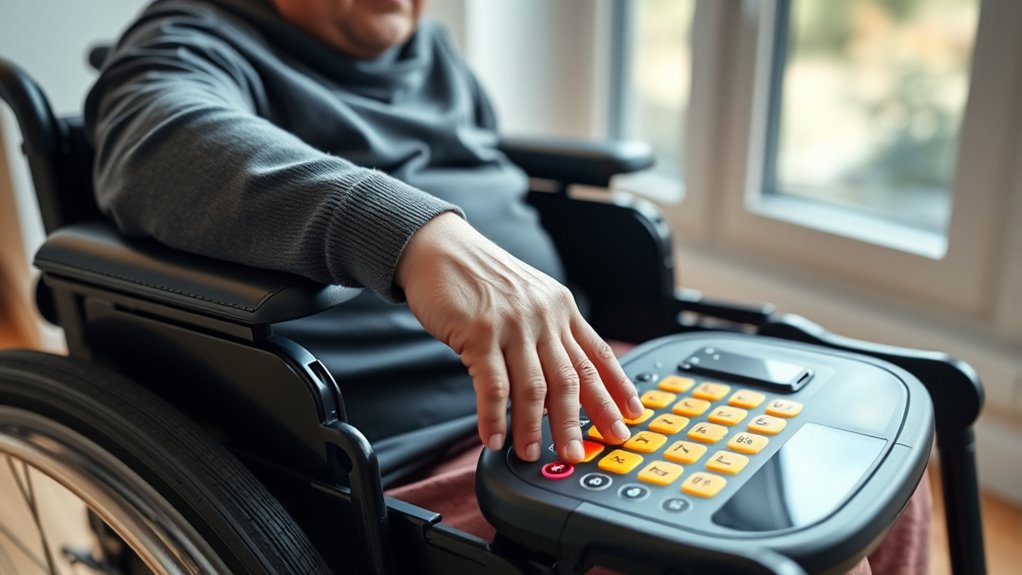
Have you ever wondered how individuals with ALS maintain their independence and stay connected? It’s inspiring to see how technology and adaptive tools empower them to navigate daily life despite the challenges ALS presents. One key aspect is augmentative communication, which provides alternative ways to express thoughts and needs when speech becomes difficult. Devices like speech-generating apps and communication boards allow you to select words or symbols that are then voiced aloud, enabling you to stay in touch with loved ones and participate in conversations. These tools are customizable, so you can tailor them to your preferences and abilities, making communication more natural and less frustrating. As your muscles weaken, relying on augmentative communication becomes essential for maintaining your social connections and emotional well-being. Additionally, ongoing advancements in adaptive technology are continuously improving the quality of life for those with ALS, offering more intuitive and user-friendly options to meet individual needs.
Augmentative communication tools help maintain social connections as muscle strength declines in ALS.
Assistive mobility is another indispensable component that helps you preserve your independence. Mobility aids, such as wheelchairs, walkers, or scooters, are designed to match your evolving needs, ensuring that you can move around safely and comfortably. You might start with simple devices like canes, but as your strength diminishes, advanced assistive mobility tools become invaluable. Power wheelchairs with joystick controls or eye-tracking technology allow you to navigate your environment with less physical effort. These aids not only increase your mobility but also expand your freedom to participate in activities outside your home. They enable you to visit friends, run errands, or enjoy outdoor outings, all while maintaining your autonomy.
The integration of assistive mobility and augmentative communication plays an essential role in supporting your daily life. For example, if you’re unable to speak but want to tell someone about your needs or preferences, your communication device can be linked with your mobility aids, giving you more control and independence. As technology advances, these systems are becoming more intuitive and accessible, helping you adapt to changing abilities without feeling isolated or dependent. Many devices are portable, allowing you to carry them easily and use them in various settings, whether at home, work, or out in the community.
Ultimately, these tools are designed to empower you, helping you retain as much independence as possible. They’re about giving you the means to express yourself clearly and move freely, despite the progression of ALS. By embracing augmentative communication and assistive mobility, you can continue to engage with your world, maintain relationships, and pursue your goals with confidence. The right support can make a significant difference, helping you live your life with purpose and dignity.
Frequently Asked Questions
Are There New Experimental Treatments for ALS?
Yes, there are new experimental treatments for ALS. You might consider exploring experimental drugs that are currently in clinical trials, which aim to slow disease progression. Additionally, gene therapy shows promise by targeting the genetic causes of ALS, potentially offering more personalized treatment options. While these therapies are still under investigation, staying informed about ongoing research can help you access cutting-edge options and participate in trials if you’re eligible.
How Does ALS Affect Cognitive Functions?
Imagine your mind as a vibrant library, but with ALS, some shelves start to fade and blur. You’ll notice cognitive decline, making it harder to process complex ideas or remember details, like losing books in a dimming room. Behavioral changes may appear as shifts in mood or personality, like your thoughts flickering like faulty lights. These effects vary, but they challenge your mental clarity and emotional stability, impacting daily life.
Can ALS Patients Participate in Clinical Trials?
Yes, you can participate in clinical trials if you meet specific patient eligibility criteria. Trial participation offers access to new treatments and contributes to research. To get involved, you need to undergo screening to determine if you qualify based on your disease stage, health status, and other factors. Discuss with your healthcare team to explore suitable clinical trials and understand the potential benefits and risks involved.
What Are the Latest Advancements in Assistive Technology?
Like Da Vinci’s innovations, recent advancements in assistive technology are groundbreaking. You now have access to smarter speech devices that adapt to your voice, making communication more natural. Mobility aids are more lightweight, versatile, and connected, helping you stay independent longer. These innovations empower you to express yourself more clearly and move freely, transforming daily life with increased ease and confidence.
How Do Lifestyle Changes Impact ALS Progression?
You can influence ALS progression through lifestyle modifications by maintaining a balanced diet, regular exercise, and avoiding smoking or excessive alcohol. These changes may help preserve your strength and overall health longer. Using adaptive devices can also support mobility and daily activities, reducing fatigue and preventing complications. While lifestyle adjustments don’t stop ALS from advancing, they empower you to manage symptoms better and maintain independence for as long as possible.
Conclusion
As you explore the latest in ALS communication and mobility support, you realize just how vital these advancements are. But what’s coming next could revolutionize your experience even further—tools you never imagined, breakthroughs on the horizon. Are you ready to embrace the future and open new possibilities? The journey isn’t over yet, and the next chapter might hold surprises that will change everything you thought you knew. Stay tuned—you won’t want to miss what’s coming next.