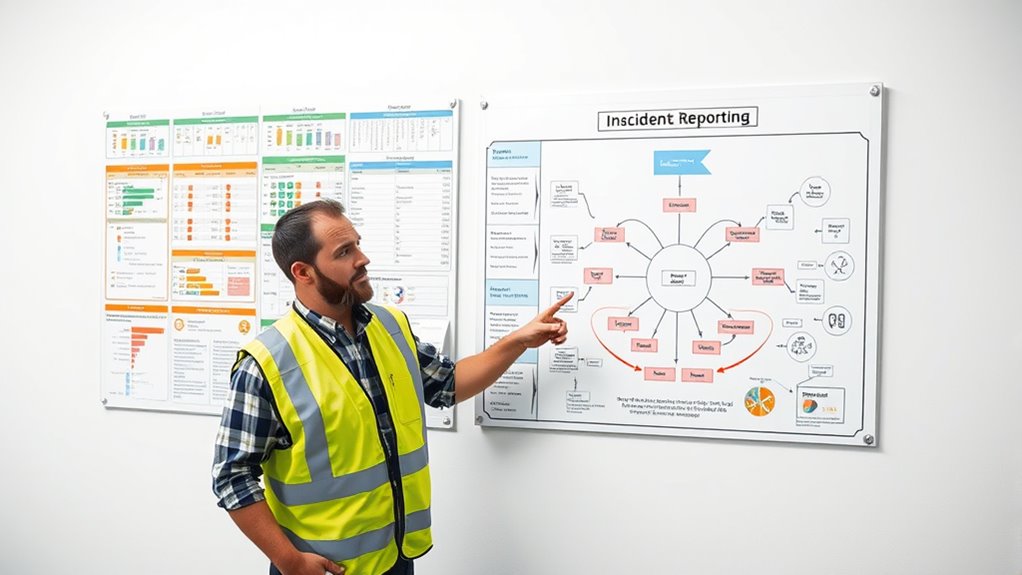

When you report incidents accurately and detail all relevant facts, you help identify underlying issues that cause hazards. Incident reports provide raw data, which you or analysts can examine for patterns and root causes. By focusing on systemic problems rather than surface issues, you can develop effective preventive measures. Embracing a safety culture and using new technologies makes this process easier and smarter, leading to more effective prevention strategies—learn how this all fits together to improve safety, step by step.
Key Takeaways
- Incident reporting should be detailed, objective, and include all relevant facts to facilitate effective analysis.
- Data analysis identifies patterns and root causes that contribute to recurring incidents.
- Leveraging breakthrough technologies accelerates data collection, analysis, and systemic problem identification.
- Preventive measures target systemic issues uncovered through root cause analysis to reduce future risks.
- Promoting a safety culture encourages honest reporting, continuous review, and improvement of safety strategies.
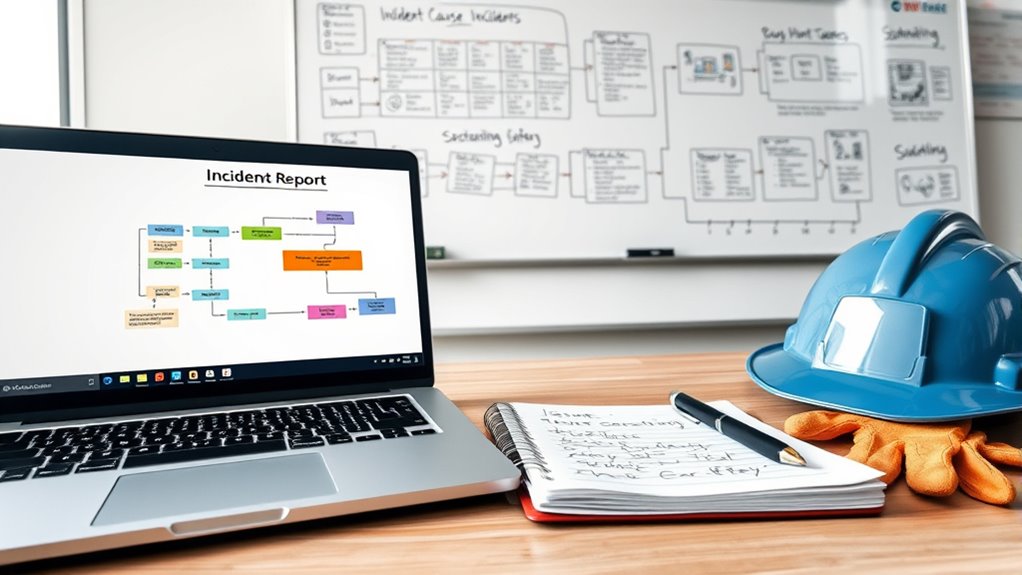
Understanding incident reporting and root cause analysis is essential for maintaining a safe and efficient workplace. When an incident occurs, your immediate goal should be to gather accurate information quickly. This helps identify what went wrong and prevents future occurrences. Incident reports serve as the foundation for understanding the circumstances around an incident. They should be detailed, objective, and include all relevant facts, from the time and location to the people involved. Once you have thorough reports, data analysis becomes an indispensable tool. By examining patterns and trends within the collected data, you can pinpoint underlying issues that contribute to recurring incidents. This process turns raw information into actionable insights, enabling you to develop effective preventive measures.
Accurate incident reports and data analysis are key to preventing future workplace incidents.
Furthermore, integrating emerging Breakthrough Technologies can enhance your incident investigation processes, making them more efficient and accurate. Preventive measures are your frontline defense against future incidents. After analyzing the data, you can identify specific risks and implement strategies to mitigate them. For example, if data analysis reveals frequent slips and trips in a particular area, you might focus on improving lighting, cleaning procedures, or flooring. These targeted actions reduce the likelihood of similar incidents happening again. The key is to view incident reporting and data analysis as interconnected tools. Incident reports provide the raw data, while analysis uncovers the root causes that need addressing. Without proper analysis, you might only treat surface-level issues instead of tackling deeper systemic problems.
It’s also essential to foster a culture of transparency and continuous improvement. When employees see that incident reports lead to meaningful changes, they’re more likely to report issues honestly and promptly. This creates a cycle where incident data continuously informs your safety strategies. Regularly reviewing incident reports and the results of your preventive measures ensures you stay proactive rather than reactive. Over time, this approach helps reduce the frequency and severity of workplace incidents, creating a safer environment for everyone.
Additionally, involving employees in the process encourages shared responsibility for safety. When team members understand how incident data analysis informs preventive measures, they become active participants in maintaining a secure workplace. This collaborative effort enhances overall safety culture and ensures that safety protocols are meaningful and effective. In summary, understanding how incident reporting and root cause analysis work together empowers you to create smarter, data-driven safety strategies. By focusing on preventive measures grounded in thorough data analysis, you can considerably reduce risks and foster a safer, more productive work environment.

Furinno PASIR Book Shelf, 3-Tier Bookshelf, Storage Shelves Bookcase, 9.7 x 23.7 x 31.5, for Living Room, Bedroom, Home Office, Plain White
WIDE & FUNCTIONAL DESIGN: This book shelf features a wide, open design rectangular shape shelves, making it ideal...
As an affiliate, we earn on qualifying purchases.
Frequently Asked Questions
How Can I Encourage Staff to Report Incidents Honestly?
You can encourage staff to report incidents honestly by fostering an environment of trust and implementing trust-building strategies. Offer anonymous reporting options so they feel safe sharing concerns without fear of repercussions. Regularly remind your team that honesty is valued and essential for improvement. Recognize and appreciate those who report incidents promptly. When staff see that their input leads to positive change, they’ll be more motivated to report honestly and openly.
What Are Common Mistakes in Root Cause Analysis?
You often make mistakes in root cause analysis by rushing the data collection process or overlooking bias minimization. You might jump to conclusions without gathering enough evidence or fail to take into account all contributing factors. To improve, make certain thorough data collection and actively minimize bias. This helps you identify the true root causes accurately, preventing recurrence and fostering a culture of continuous improvement.
How Often Should Incident Reports Be Reviewed?
Like checking your phone regularly, you should review incident reports often enough to catch issues early. Typically, you should establish an incident review frequency, such as weekly or monthly, depending on your organization’s size and risk level. Set a report analysis schedule that keeps reports fresh in your mind, ensuring timely identification of root causes and preventing future incidents. Consistent reviews help maintain safety and continuous improvement.
What Tools Assist in Effective Incident Investigation?
You should use tools like data visualization software and risk assessment frameworks to assist in effective incident investigation. Data visualization helps you identify patterns and root causes quickly, while risk assessment tools prioritize hazards and determine their impact. Combining these tools enables you to analyze incident data thoroughly, uncover underlying issues, and develop targeted corrective actions, ultimately improving safety and preventing future incidents.
How Do Cultural Differences Impact Incident Reporting?
Cultural barriers often influence how comfortable you feel reporting incidents, leading to reporting hesitation. Investigating this reveals that differing cultural norms about hierarchy and accountability can make individuals reluctant to speak up, fearing repercussions. These differences impact incident reporting by creating gaps in transparency and communication. To address this, fostering an inclusive environment where everyone feels safe and respected encourages open reporting, ultimately improving safety and organizational learning.

NUMENN Bookshelf, 5 Tier Bookshelves, Home Office Bookcase Shelf Storage Organizer, Free Standing Storage Shelving Unit for Bedroom, Living Room and Home Office, Vintage
5 Tier Open Multifunctional Bookshelf: This five shelf bookcase provides a very wide storage space, you can use...
As an affiliate, we earn on qualifying purchases.
Conclusion
Now that you understand incident reporting and root cause basics, picture yourself as the detective in a busy workshop. Every detail you uncover, every cause you identify, helps prevent future accidents. Like piecing together a puzzle, your vigilance transforms chaos into clarity. By mastering these tools, you become the guardian of safety, turning a tangled web of mistakes into a clear path forward. Remember, your actions today create a safer environment for everyone tomorrow.

FOTOSOK 6-Tier Open Bookcase and Bookshelf, Freestanding Display Storage Shelves Tall Bookcase for Bedroom, Living Room and Office, Black
Never Outdated: The design of this black bookcase is simple, stylish and exquisite. It can be placed in...
As an affiliate, we earn on qualifying purchases.

FOTOSOK 6-Tier Open Bookcase and Bookshelf, Freestanding Display Storage Shelves Tall Bookcase for Bedroom, Living Room and Office, White
Never Outdated: The design of this white bookcase is simple, stylish and exquisite. It can be placed in...
As an affiliate, we earn on qualifying purchases.