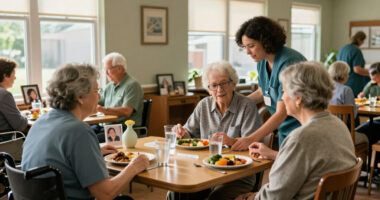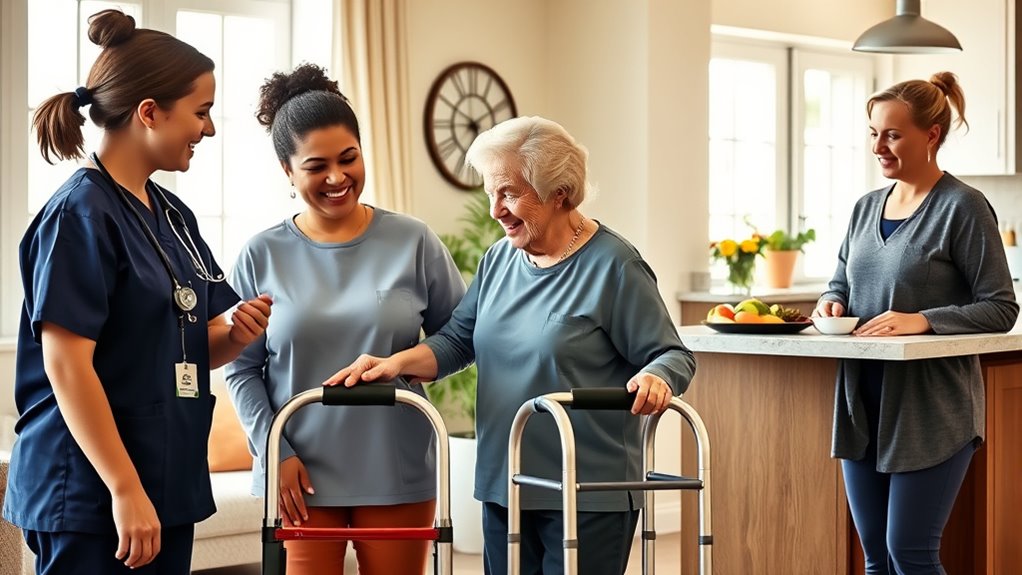

Your scope of practice varies depending on whether you’re a CNA, HHA, or PCA. CNAs handle basic nursing tasks like vitals and mobility under supervision, often in healthcare settings. HHAs focus on personal care such as bathing and light housekeeping in clients’ homes. PCAs provide non-medical support like meal prep and companionship, typically in home or community environments. To fully understand your specific responsibilities and limits, keep exploring how each role is defined and regulated.

Turn quiet afternoons into listening time
- Thousands of audiobooks, podcasts and originals
- Listen on your phone, tablet or Echo — also offline
- Cancel anytime
Key Takeaways
- CNAs assist with basic nursing tasks like vital signs and mobility under supervision, mainly in healthcare facilities.
- HHAs focus on personal care and light housekeeping in patients’ homes, emphasizing independence and privacy.
- PCAs provide non-medical support such as meal prep and companionship, typically in home or community settings.
- All roles require adherence to scope of practice, respecting patient rights, and proper documentation standards.
- Operating within legal boundaries ensures safety, professionalism, and compliance with regulations across all roles.

Understanding the differences in scope of practice among Certified Nursing Assistants (CNAs), Home Health Aides (HHAs), and Personal Care Aides (PCAs) is essential if you’re considering a career in healthcare or seeking appropriate care. Recognizing what each role entails helps guarantee that patient rights are upheld and that care providers operate within their legal boundaries. Each position has specific tasks they’re authorized to perform, and adhering to these limits is critical for maintaining high standards of safety and professionalism.
As a CNA, your scope primarily involves assisting with fundamental nursing duties under the supervision of a licensed nurse or healthcare provider. You’re responsible for tasks like taking vital signs, assisting with mobility, and providing basic hygiene care. Because CNAs often work in hospitals or long-term care facilities, understanding patient rights is vital—you must respect their dignity, privacy, and autonomy at all times. Accurate documentation standards are also crucial; you need to record all patient interactions, vital signs, and care provided precisely. These records support effective communication among healthcare team members and ensure continuity of care, while also safeguarding you legally.
Home Health Aides operate in a more flexible environment, often providing care in patients’ homes. Their scope overlaps somewhat with CNAs, focusing on personal care such as bathing, dressing, and light housekeeping. However, because they work in private homes rather than institutional settings, they must be particularly vigilant about respecting patient rights, including privacy and independence. Documentation standards for HHAs emphasize detailed and timely recording of care activities, observations, and any changes in the patient’s condition. This documentation not only informs family members and healthcare providers but also protects you from liability, especially when care is delivered in a less controlled environment.
Personal Care Aides typically provide non-medical support, assisting with daily activities like meal preparation, companionship, and light housekeeping. Unlike CNAs and HHAs, PCAs generally aren’t permitted to perform clinical tasks such as taking vital signs or medication management. Their scope focuses on enhancing quality of life and ensuring safety. While they don’t handle clinical documentation, maintaining thorough records of the services they provide is still essential. This documentation supports the overall care plan and guarantees that patient rights are respected by providing consistent, reliable support.
In all roles, understanding and adhering to scope of practice, patient rights, and documentation standards isn’t just about compliance—it’s about delivering safe, respectful, and effective care. Operating within your authorized scope protects both you and the patient, fostering trust and guaranteeing the highest standards of healthcare are maintained. Additionally, being aware of the regulations and guidelines that govern each role ensures that care delivery remains within legal and ethical boundaries.
As an affiliate, we earn on qualifying purchases.
Frequently Asked Questions
Can a CNA Administer Medication Independently?
No, as a CNA, you cannot administer medication independently. Your scope limitations prevent you from performing medication administration without direct supervision or a licensed nurse’s oversight. You may assist with tasks like basic care or reporting changes, but medication administration requires specific training and authorization. Always follow your scope of practice to make certain patient safety and stay within legal boundaries.
Are There Any Specific Certifications Required for HHAS?
Imagine a world where you get to wear a superhero cape without any training—sounds fun, right? Well, as an HHA, you do need specific certification requirements and training prerequisites. You must complete an approved home health aide training program and pass a competency exam. These certifications guarantee you’re ready to provide quality care in the home, making you a true healthcare hero without the need for a cape!
Can PAS Perform Medical Procedures Outside Their Scope?
You can’t perform medical procedures outside your scope of practice as a PCA. Doing so can compromise patient safety and violate regulations. Equipment requirements and continuing education are essential for staying within your authorized duties. Always follow your training and state guidelines, and seek guidance when unsure. Your role is to assist safely, respecting limits and ensuring proper use of equipment and ongoing learning to maintain competence.
Do Scope of Practice Laws Vary by State?
Think of scope of practice laws as the rules of a game, and yes, they do vary by state. You need to verify each state’s licensing and legal variations because what’s allowed in one state might be off-limits in another. Staying within these boundaries ensures you’re playing fair and avoiding trouble. So, always stay informed on your state’s specific regulations to keep your practice safe and legal.
How Does Supervision Differ Among CNAS, HHAS, and PAS?
You’ll find that supervision levels differ among CNAs, HHAs, and PCAs, affecting responsibility boundaries. CNAs often work under direct supervision of nurses, with clear oversight. HHAs usually operate with some independence but still follow specific care plans, with supervision depending on state rules. PCAs typically have the most autonomy, but supervision varies across settings. Understanding these distinctions helps you know your responsibilities and when to seek guidance.
Conclusion
Understanding the differences in scope of practice between CNAs, HHAs, and PCAs helps you choose the right path for your career and guarantees patient safety. Did you know that nearly 80% of home health aides work directly with elderly clients? This highlights how crucial their roles are in providing essential care. By knowing your responsibilities, you can deliver quality support and make a meaningful impact in patients’ lives every day.
Fall Picks
fall essentials
As an affiliate, we earn on qualifying purchases.